
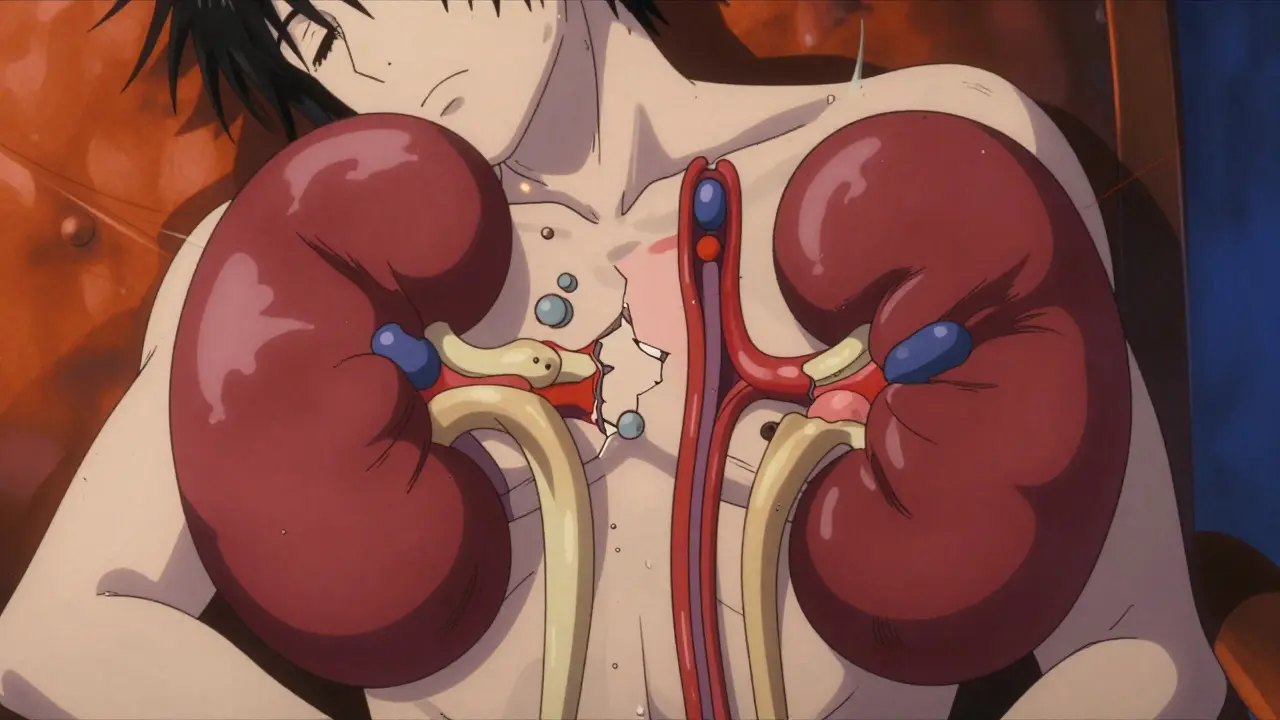
Over 70% of people with advanced chronic kidney disease (CKD) develop anemia. This isn't just about feeling tired-it's your body struggling to carry oxygen properly. The problem starts with your kidneys. When they're damaged, they can't make enough erythropoietin, the hormone that tells your bone marrow to produce red blood cells. Without it, your blood can't deliver enough oxygen to your muscles and brain. But here's the good news: modern treatments like erythropoietin therapy and iron supplements can fix this. Let's break down how these treatments work, what guidelines say today, and what you might experience.
Why kidneys cause anemia
Your kidneys play a key role in making erythropoietin. When CKD damages them, they produce less of this hormone. But it's not just about erythropoietin. Inflammation from kidney disease also blocks iron absorption. Plus, many CKD patients lose blood during dialysis treatments. All these factors combine to cause anemia. Symptoms like constant fatigue, shortness of breath, or pale skin often appear when hemoglobin drops below 10 g/dL. hemoglobin is the protein in red blood cells that carries oxygen-low levels mean your body isn't getting enough oxygen.
How erythropoietin therapy works
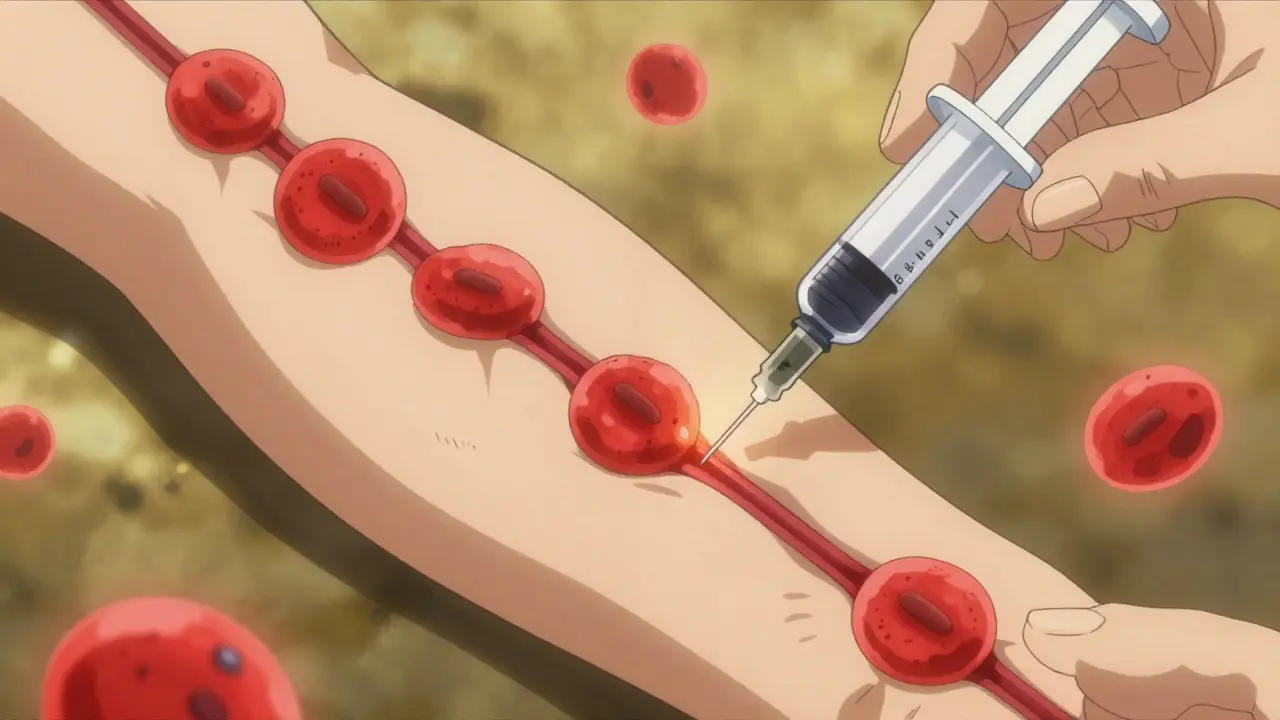
The cornerstone of treatment is erythropoietin therapy, which replaces the hormone your kidneys can't produce enough of. Doctors use erythropoiesis-stimulating agents (ESAs), which are lab-made versions of erythropoietin. Common ESAs include epoetin alfa (sold as Epogen or Procrit), darbepoetin alfa (Aranesp), and biosimilars like Retacrit. These are given as injections-subcutaneous for non-dialysis patients or intravenous for those on hemodialysis. Most people see hemoglobin rise by 1-2 g/dL within 2-6 weeks. For example, a 62-year-old diabetic CKD patient saw hemoglobin jump from 8.2 to 10.5 g/dL in 8 weeks using darbepoetin alfa plus IV iron.
| ESA Type | Typical Dose | Administration Route | Frequency |
|---|---|---|---|
| Epoetin alfa | 200-10,000 units | Subcutaneous or IV | Weekly to monthly |
| Darbepoetin alfa | 0.45 mcg/kg | Subcutaneous or IV | Every 1-4 weeks |
| Retacrit (biosimilar) | Same as epoetin alfa | Subcutaneous or IV | Weekly to monthly |
Iron therapy's critical role
Iron therapy is just as important. Many CKD patients have iron deficiency, either absolute (low iron stores) or functional (iron is present but not usable due to inflammation). Doctors check ferritin levels and transferrin saturation (TSAT) to decide. Ferritin below 100 mcg/L means absolute deficiency. Functional deficiency is ferritin between 100-500 mcg/L with TSAT under 20-30%. Intravenous iron works better than oral iron for CKD patients. Why? Inflammation blocks iron absorption from the gut. IV iron like iron sucrose (Venofer) bypasses this problem. For hemodialysis patients, guidelines recommend 400 mg monthly IV iron unless ferritin exceeds 700 μg/L or TSAT is above 40%.
Here's why IV iron is preferred for kidney disease:
- Works faster: raises hemoglobin by about 1.5 g/dL in 4 weeks
- Fewer side effects: only 15% report stomach issues vs 40% with oral iron
- No absorption issues: bypasses gut problems caused by inflammation
But IV iron isn't perfect. Some people notice a metallic taste (45% of users) or flu-like symptoms (28%) after infusions. Rarely, it can cause serious allergic reactions. Always report side effects to your care team.
Current treatment guidelines
Current guidelines from Kidney Disease: Improving Global Outcomes (KDIGO) published in their 2024 public review draft for 2025 set clear targets. They recommend keeping hemoglobin between 10-11.5 g/dL. Why not higher? The TREAT trial in 2009 showed targeting hemoglobin above 11.5 g/dL increases stroke risk by 32%. Other risks include blood clots and high blood pressure. European Renal Best Practice and National Institute for Healthcare Excellence (NICE) guidelines agree on this range. Doctors now focus on how you feel-not just the number. If you're tired despite a hemoglobin of 10.5, they might adjust treatment. If you're doing fine at 10.2, no need to push higher.
KDIGO guidelines emphasize individualized care. Professor Iain Macdougall (King's College Hospital, London) states, "The one-size-fits-all approach to hemoglobin targets is outdated and potentially harmful." The 2025 draft also warns against routine hemoglobin targets above 11.5 g/dL based on evidence from 27 randomized controlled trials.
Risks and side effects
ESA therapy carries risks. When hemoglobin rises too high (above 11.5 g/dL), you face higher chances of blood clots, heart attacks, and strokes. The FDA requires black box warnings for ESAs about these dangers. Hypertension is common too-about 25-30% of patients need extra blood pressure meds. For iron therapy, IV iron can cause allergic reactions in 0.03-0.2% of cases. Some report metallic taste or muscle aches. Always report side effects to your care team. Your doctor will monitor you closely with regular blood tests.
Emerging treatments
New treatments are changing the game. Hypoxia-inducible factor prolyl hydroxylase inhibitors (HIF-PHIs) like roxadustat (Evrenzo) are oral medications that work differently. Instead of replacing erythropoietin, they boost your body's natural response to low oxygen. Roxadustat got FDA approval in December 2023 after safety reviews. Early data shows it may lower cardiovascular risks compared to ESAs. However, concerns remain about tumor growth in cancer patients. Future treatments might include personalized dosing using machine learning. Mayo Clinic's pilot study found it reduced ESA dose variability by 22%. The goal? Treatments tailored to your unique needs.
Why is IV iron better than oral iron for kidney disease?
Inflammation from kidney disease blocks iron absorption in the gut. IV iron bypasses this problem, giving 90-100% absorption versus 30-40% for oral iron. It works faster too-raising hemoglobin by about 1.5 g/dL in 4 weeks. Doctors typically recommend IV iron for hemodialysis patients because it's more effective and has fewer stomach-related side effects.
What happens if hemoglobin goes too high during treatment?
When hemoglobin exceeds 11.5 g/dL, risks of blood clots, heart attacks, and strokes increase significantly. The TREAT trial showed a 32% higher stroke risk when targeting 13 g/dL versus 9-11 g/dL. Doctors adjust ESA doses immediately if hemoglobin rises too fast or too high. Regular blood tests help catch this early.
Can I take oral iron supplements instead of IV iron?
Oral iron rarely works well for CKD patients because inflammation blocks gut absorption. Studies show only 30-40% of oral iron gets absorbed versus nearly 100% for IV iron. If ferritin is below 100 mcg/L or TSAT is under 20%, IV iron is necessary. Some patients try oral iron first, but most need IV therapy for effective results.
What are the signs of ESA hyporesponsiveness?
ESA hyporesponsiveness happens when hemoglobin doesn't rise after 12 weeks of adequate dosing. Signs include persistent fatigue despite treatment, or needing higher ESA doses to maintain hemoglobin. Causes often include uncorrected iron deficiency, severe inflammation, or aluminum toxicity. Your doctor will check ferritin, TSAT, and inflammation markers to find the root cause.
How often do I need blood tests during treatment?
Initially, blood tests happen every 1-2 weeks to monitor hemoglobin and iron levels. Once stable, tests usually occur monthly. The KDIGO guidelines recommend checking hemoglobin at least once a month and iron studies every 3 months. This helps adjust doses before problems develop. Skipping tests risks over- or under-treatment.
Lakisha Sarbah
February 6, 2026 AT 19:37IV iron is way better than oral for me. My ferritin was real low so the shots really helped. I get that metallic taste sometimes but it's worth it. Also, the kidney docs check my hemaglobin every month like they should.
Ariel Edmisten
February 7, 2026 AT 08:16ESAs work but need to watch hemoglobin. Too high risks blood clots. IV iron better than oral for CKD patients. Keep it simple: monitor levels, follow guidelines.
Niel Amstrong Stein
February 8, 2026 AT 17:26It's fascinating how the body's natural response to low oxygen can be harnessed with HIF-PHIs. 🌍 Iron therapy is crucial, but the IV vs oral debate shows how medicine adapts to individual needs. Just need to balance risks and benefits. 😌
Paula Sa
February 9, 2026 AT 11:50It's important to remember that each person's journey with kidney disease is unique. Tailoring treatment based on how you feel, not just the numbers, makes sense. Supporting each other through this process is key.
Mary Carroll Allen
February 10, 2026 AT 12:43I've been struggling with anemia for years and the part about IV iron being the way to go really hit home. My ferritin was like 45 so I needed IV for sure. But sometimes the infusions make me feel like I'm getting the flu. Ugh! But hey, at least my hemaglobin is up now! 🙌
Joey Gianvincenzi
February 11, 2026 AT 08:27It is imperative to adhere strictly to the KDIGO guidelines regarding hemoglobin targets. Exceeding 11.5 g/dL significantly elevates the risk of adverse cardiovascular events. The evidence is unequivocal; thus, clinical practice must reflect this reality without exception.
Amit Jain
February 13, 2026 AT 04:17ESAs are dangerous! The FDA black box warnings should scare everyone. Doctors keep pushing these drugs despite causing harm. I've seen patients have strokes from this nonsense. Time to stop the madness!
Sarah B
February 14, 2026 AT 00:16IV iron is the only way to go for CKD patients oral iron is useless stop wasting time
Tola Adedipe
February 15, 2026 AT 09:39While HIF-PHIs are promising, we must be cautious. The long-term safety data isn't complete yet. For now, sticking to ESAs and IV iron under careful monitoring is the safest approach. Let's not jump the gun on new treatments.