
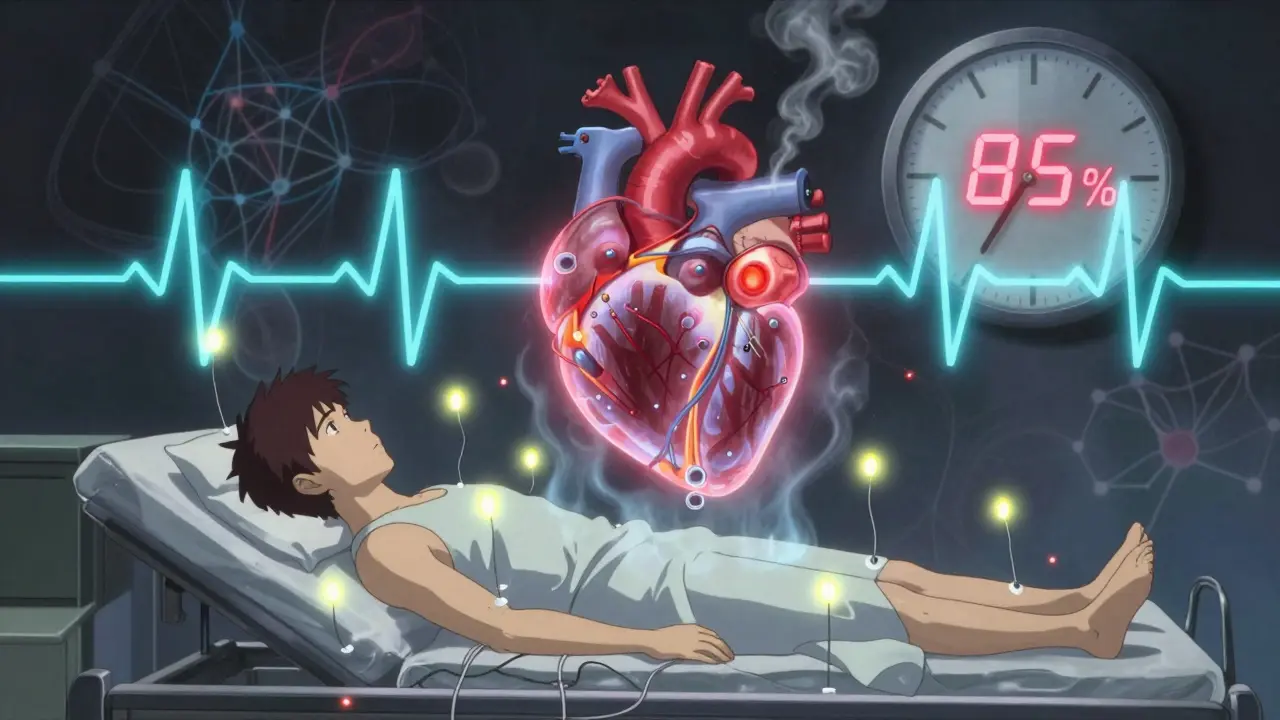
When your doctor says you need an ECG or a stress test, it’s not because they’re being overly cautious-it’s because they’re looking for answers your heart won’t give you at rest. These tests aren’t just routine checkups; they’re powerful tools that can catch problems before they become emergencies. Millions of people get them every year, and most walk out with clarity, not panic. But if you’ve never had one, it’s easy to feel lost. What’s actually happening? Why do they make you run on a treadmill? And why does your chest feel weird during a chemical stress test?
What an ECG Really Shows
An electrocardiogram, or ECG (sometimes called an EKG), is a snapshot of your heart’s electrical activity. It doesn’t measure blood flow or pumping strength-it shows the timing and pattern of your heart’s electrical signals. Those signals tell your heart muscle when to contract, and any glitch in that rhythm can signal trouble. The test itself is simple: ten small electrodes stick to your chest, arms, and legs. You lie still for about five minutes while the machine records the electrical impulses. No needles, no pain, no radiation. The result is a graph with peaks and valleys-P waves, QRS complexes, T waves-that trained eyes read like a language. A flat line where there should be a peak? That could mean a past heart attack. A rapid, irregular rhythm? That might be atrial fibrillation. A stretched-out QRS complex? Could point to an enlarged heart chamber. ECGs are the first line of defense when someone has chest pain, dizziness, or palpitations. But here’s the catch: a normal ECG doesn’t mean your heart is perfectly healthy. Many people with blocked arteries have perfectly normal resting ECGs. That’s why doctors often follow up with a stress test.Why Stress Tests Are Different
Your heart works harder when you’re active. That’s the whole idea behind a stress test. While an ECG catches problems at rest, a stress test reveals what happens when your heart is under pressure-literally. When your muscles demand more oxygen, your heart needs to pump harder. If a coronary artery is narrowed by plaque, it might not be able to deliver enough blood during exertion. That’s when symptoms like chest tightness, shortness of breath, or abnormal ECG changes show up. The most common type is the exercise stress test. You walk on a treadmill, starting slow and getting harder every three minutes. The speed and incline increase according to the Bruce protocol-this is the standard that’s been used for decades. Your heart rate, blood pressure, and ECG are monitored the whole time. The goal isn’t to push you to exhaustion, but to reach about 85% of your maximum predicted heart rate (220 minus your age). So if you’re 55, your target is around 142 beats per minute. For people who can’t walk because of joint pain, lung disease, or other limits, there’s a chemical stress test. Instead of running, you get an IV with drugs like adenosine or dobutamine. These mimic the effects of exercise by making your heart beat faster or widening your blood vessels. It’s not fun-some people feel flushing, dizziness, or a brief sensation of chest pressure. But it lasts only a few minutes, and the team watching you is trained to stop it instantly if something goes wrong.What the Results Actually Mean
A stress test doesn’t show blockages directly. It shows how your heart responds. The most telling signs are changes in your ECG pattern-especially ST-segment depression-and how long you can keep going on the treadmill. Every extra minute you last on the test lowers your risk of a future heart event by about 12%. That’s a powerful predictor. If your ECG changes during the test, or you develop chest pain, your doctor will suspect reduced blood flow to the heart. That doesn’t always mean you need a stent. It means you need more testing. That’s where imaging comes in. Stress echocardiography uses ultrasound to take pictures of your heart before and after exercise. If part of the heart wall doesn’t move as well under stress, it’s likely because blood flow to that area is blocked. This method is especially good at spotting problems in women, who often have smaller arteries and different symptoms than men. Nuclear stress tests use a tiny amount of radioactive tracer to show blood flow to the heart muscle. They’re more sensitive than standard stress tests-catching about 85% of blockages-but they involve radiation. Modern machines have cut that dose by 35% since 2021, so it’s now roughly equal to what you’d get from natural background radiation over three years.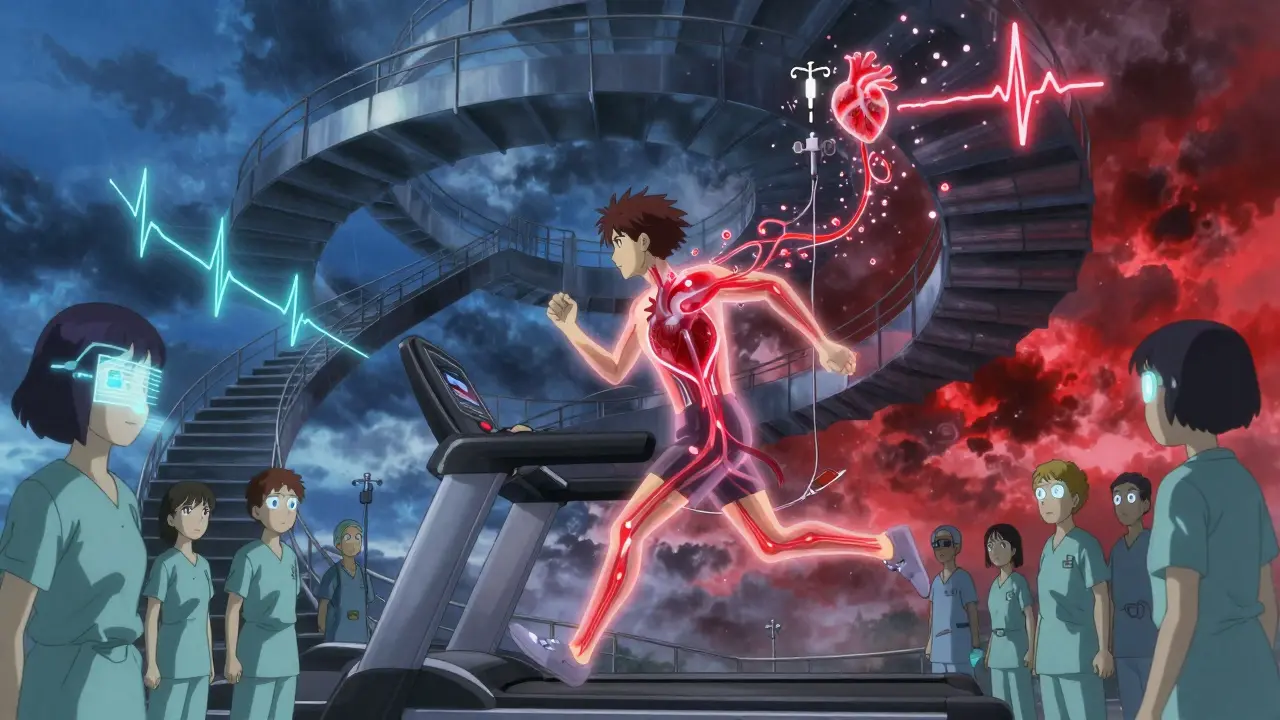
Who Gets Tested and Why
Not everyone needs a stress test. Guidelines say they’re most useful for people with a 15% to 65% chance of having coronary artery disease. That’s usually someone with chest discomfort, especially if it happens during activity, and who has risk factors like high blood pressure, smoking, diabetes, or a family history of early heart disease. For low-risk people-say, a healthy 40-year-old with no symptoms-a stress test is rarely helpful. It can lead to false alarms, unnecessary follow-ups, and even risky procedures. For high-risk patients-those with known heart disease or recent heart attacks-doctors skip the stress test and go straight to more advanced imaging or treatment. Women, especially premenopausal ones, are more likely to get false-negative results on standard ECG stress tests. Their heart disease often affects smaller vessels, not the big arteries, so the classic ECG changes don’t show up. That’s why stress echocardiography is now recommended for women with symptoms and intermediate risk. It doesn’t use radiation and is better at spotting microvascular issues.What to Expect Before, During, and After
Preparation is simple but important. Avoid caffeine for 24 hours before the test-it can interfere with the drugs used in chemical stress tests. Don’t eat a heavy meal two hours before. Wear loose, comfortable clothes and walking shoes. You’ll be asked to stop certain heart medications, like beta-blockers, the day before. Your doctor will tell you exactly what to do. During the test, you’ll be monitored closely. Nurses check your blood pressure every few minutes. A technician watches the ECG screen. If you feel dizzy, short of breath, or have chest pain, tell them immediately. That’s not a sign of failure-it’s part of the test. Many people worry about having a heart attack during the test, but serious complications are extremely rare. The risk is less than 1 in 10,000. Afterward, you can usually go home right away. If you had a chemical stress test, you might feel a bit off for a few minutes, but the effects wear off quickly. Results aren’t always instant, but most clinics give you a preliminary read before you leave. The full report, with detailed measurements and interpretations, comes from your cardiologist within a few days.What’s New in Cardiac Testing
Technology is making these tests smarter. Artificial intelligence is now being used to analyze ECG patterns during stress tests. Studies show AI can improve accuracy by up to 22% compared to human interpretation alone. It picks up subtle changes even experienced cardiologists might miss. Portable devices like the Cardiac Dynamics StressPal, cleared by the FDA in late 2022, allow stress testing in doctor’s offices or even at home in some cases. These devices match the accuracy of traditional treadmill tests in 94% of cases. At Stanford, researchers are using advanced ultrasound techniques called speckle-tracking strain analysis to detect early signs of heart muscle strain in women with chest pain but no major artery blockages. This could change how we diagnose microvascular disease-a condition that’s been underdiagnosed for decades.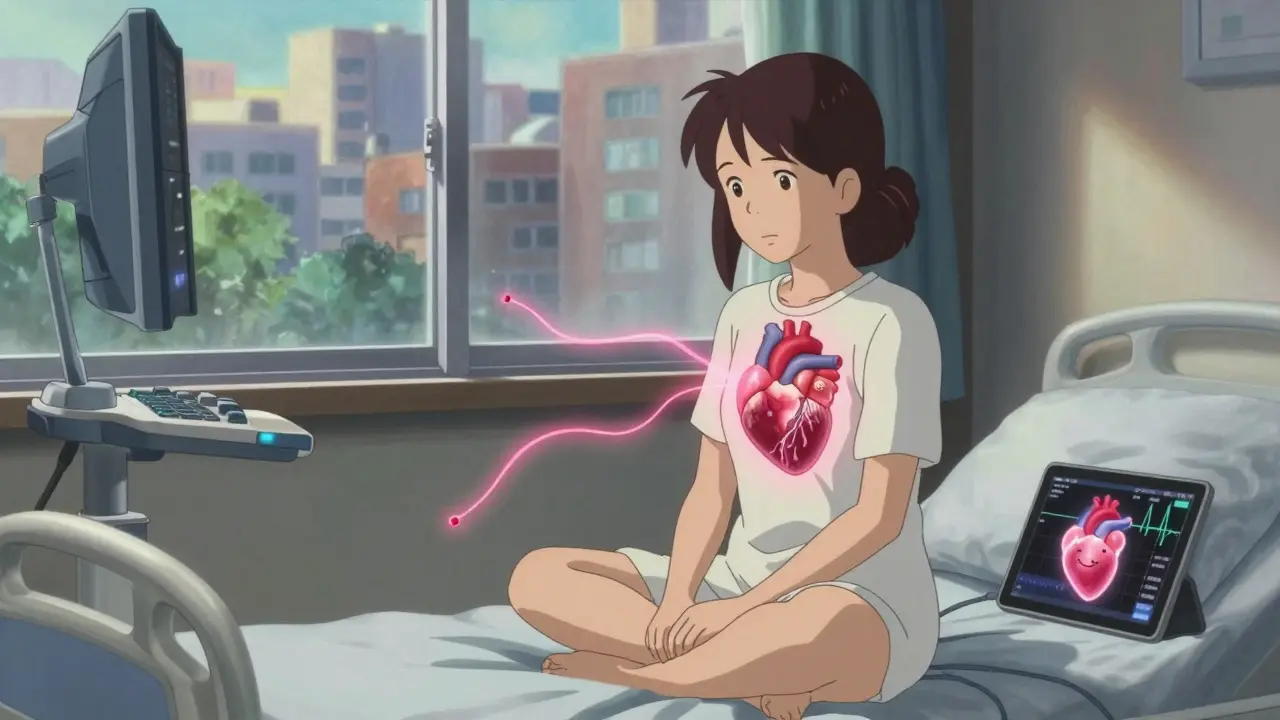
Costs and Accessibility
Costs vary widely. A standard exercise ECG stress test can cost between $200 and $500. Stress echocardiography runs about $500-$700. Nuclear stress tests are the most expensive-often over $900. CT scans of the heart’s arteries are cheaper, around $400, but they expose you to radiation and aren’t always the right first step. Insurance usually covers these tests if they’re medically necessary. Medicare and most private plans follow guidelines from the American College of Cardiology, so if your doctor explains why you need it, you’re likely covered. Most tests are done in hospitals or outpatient cardiology clinics. Only about 7% are done in standalone imaging centers. If you’re getting tested, ask where the results will be interpreted. Academic centers often have more detailed reports than small clinics.When Stress Tests Don’t Help
There are times when these tests aren’t recommended. If you’ve had a heart attack in the last 48 hours, you’re not a candidate. Same if you have unstable angina, severe heart failure, or dangerous arrhythmias. Stress testing in those cases could be risky. Also, if you’re completely symptom-free and have no risk factors, there’s no benefit to getting a stress test just because you’re “over 50.” Screening healthy people leads to more harm than good-false positives, unnecessary procedures, anxiety. The goal isn’t to test everyone. It’s to test the right people at the right time.Real Stories, Real Results
One Reddit user, ‘CardiacWarrior87,’ said his resting ECG was normal, but the treadmill test caught silent ischemia-his heart wasn’t getting enough blood during exertion. He had no symptoms before, but after the test, he got treatment and avoided a future event. Another person, ‘AnxiousPatient22,’ described the chemical stress test as terrifying: “I felt like I was dying for three minutes.” But they also said the staff was calm, explained everything, and the test gave them peace of mind. No blockages. No surgery. Just answers. These aren’t scary procedures. They’re tools. And like any tool, they’re most useful when used correctly.Is an ECG the same as a stress test?
No. An ECG records your heart’s electrical activity while you’re at rest. A stress test checks how your heart performs under physical or chemical stress. You often get an ECG during a stress test, but the stress test adds movement or medication to reveal problems that don’t show up when you’re sitting still.
Can I drive after a stress test?
Yes, if you had an exercise stress test, you can usually drive home right away. If you had a chemical stress test, you might feel dizzy or tired for a short time. Most clinics recommend waiting 30-60 minutes before driving. Always check with your provider.
Do stress tests hurt?
The test itself doesn’t hurt. The electrodes on your chest might feel cold or sticky. On the treadmill, you’ll feel tired or breathless-that’s normal. Chemical stress tests can cause temporary side effects like flushing, chest pressure, or nausea, but these last only a few minutes and are closely monitored.
How accurate are stress tests?
Standard exercise ECG stress tests are about 68% sensitive and 77% specific for detecting coronary artery disease. Stress echocardiography improves accuracy, with specificity around 88%. Nuclear stress tests are more sensitive (about 85%) but involve radiation. AI-assisted interpretation is now improving accuracy by up to 22%.
Why do women get false negatives on stress tests?
Women’s heart disease often affects the small arteries (microvascular disease), not the main coronary arteries. Standard stress tests are designed to detect blockages in large arteries, so they miss these smaller problems. That’s why stress echocardiography is now preferred for women-it can detect abnormal heart muscle movement even when blood flow is normal in large vessels.
Are there alternatives to stress tests?
Yes. Coronary CT angiography (CTA) gives detailed images of the arteries without exercise. But it uses radiation and isn’t always the best first step. For people with low risk, doctors may start with blood tests or lifestyle changes. For high-risk patients, they may skip to invasive angiography. Stress tests remain the first functional test for most people with intermediate risk.
How long does a stress test take?
The actual exercise part lasts 7-12 minutes on average. But the whole process-setup, monitoring, recovery-takes about 45 to 60 minutes. Chemical stress tests take longer, around 60-90 minutes, because the drugs need time to work and wear off.
What if my stress test is inconclusive?
About 25% of intermediate-risk patients get inconclusive results. That doesn’t mean you’re fine or you’re in danger-it means more info is needed. Your doctor may recommend a stress echocardiogram, nuclear test, or CT angiography. Sometimes, they’ll monitor you over time with follow-up visits and repeat testing.
Janice Holmes
December 26, 2025 AT 18:30Okay so I just had a chemical stress test last week and let me tell you-it felt like my soul was being ripped out through my IV port. Like, one minute I’m fine, the next I’m sweating bullets, my chest is tight, and I swear I heard my heart screaming in Latin. The nurse just smiled and said, ‘This is normal.’ NORMAL? I thought I was having a spiritual awakening or a heart attack. Turns out? Just blocked arteries. And now I’m on meds. So yeah. Don’t sleep on these tests. They’re not optional. They’re your heart’s last cry for help.
Alex Lopez
December 27, 2025 AT 12:42While I appreciate the thoroughness of this post, I must respectfully note that the reliance on ECG-based stress testing remains statistically suboptimal for populations with microvascular dysfunction-particularly women, as you rightly pointed out. The sensitivity of standard treadmill ECGs hovers around 68%, whereas stress echocardiography achieves 88% specificity. One might argue that the persistence of ECG-centric protocols reflects institutional inertia rather than clinical necessity. Perhaps it is time to elevate imaging-guided diagnostics as first-line for intermediate-risk cohorts, particularly where radiation exposure can be mitigated via modern protocols.
Gerald Tardif
December 28, 2025 AT 20:04Been there. Did the treadmill thing at 52. Felt like I was running from my own mortality. But here’s the thing-I didn’t quit. Kept going past the target HR. The tech said, ‘You’re either crazy or your heart’s a tank.’ Turns out it was the latter. No blockages. Just a guy who walks his dog every day and eats kale like it’s his job. Point is: if you’re active, your heart might surprise you. Don’t panic at the first weird reading. Keep moving. Stay curious. And don’t let fear decide your health.
Monika Naumann
December 29, 2025 AT 03:06It is unfortunate that Western medicine continues to prioritize invasive diagnostics over holistic, traditional healing methods. In India, we have used Ayurvedic pulse diagnosis for millennia to assess cardiac health without radiation, electrodes, or pharmaceutical interference. Why must we submit to this technocratic spectacle when ancient wisdom has already provided answers? This post glorifies a system that profits from fear, not healing. We must return to balance.
Elizabeth Ganak
December 30, 2025 AT 04:51hi! i just had my first stress test last month and honestly? it wasn’t that bad. i was scared but the nurses were so sweet and kept telling me ‘you’re doing great’ even when i was huffing on the treadmill. i got a normal result and now i feel like a superhero. if you’re nervous-just go. you got this. ❤️
Liz MENDOZA
December 31, 2025 AT 08:17I want to say thank you to everyone who shared their stories here. This post and the comments have been such a comfort. I’ve been avoiding testing because I thought it meant I was ‘failing’ at being healthy. But hearing how many of you went in scared and came out with answers-it’s not weakness to get tested. It’s courage. And if you’re reading this and you’re on the fence? Please don’t wait. Your future self will thank you. You’re not alone in this.
Anna Weitz
December 31, 2025 AT 22:58So we’re just supposed to believe that a machine that reads electrical noise is the answer to heart disease? What if the whole system is built on a lie? What if the real issue is inflammation from processed food and corporate greed? They don’t want you to know that your heart can heal with fasting and sunlight. They want you hooked on drugs and scans and bills. The ECG? Just a money printer disguised as medicine
Andrew Gurung
January 2, 2026 AT 22:32Oh wow. A 22% accuracy boost from AI? How adorable. I bet the algorithm still can’t tell the difference between a normal variant and a true ischemic pattern. I mean, I’ve read 37 papers on this. The real experts? The ones who’ve seen 10,000 ECGs in person. Not some intern in Silicon Valley feeding data into a black box. 😒
Paula Alencar
January 4, 2026 AT 18:47It is imperative to underscore that the diagnostic paradigm surrounding cardiac stress testing must be recontextualized within the broader framework of preventive cardiovascular medicine. The emphasis on reactive testing-rather than proactive, longitudinal biomonitoring-represents a systemic failure in public health prioritization. Furthermore, the commodification of cardiac diagnostics, particularly in for-profit imaging centers, introduces significant conflicts of interest that undermine the ethical foundation of clinical practice. A paradigm shift toward population-based risk stratification, utilizing non-invasive biomarkers such as lipoprotein(a) and coronary calcium scoring, must be institutionalized as the new standard of care.
Nikki Thames
January 5, 2026 AT 22:33Have you ever considered that these tests are designed to create patients? That the ‘normal’ ranges were arbitrarily adjusted in 2010 to increase the number of people flagged as ‘at risk’? I’ve spoken to a cardiologist who admitted that 40% of stress tests are ordered because of insurance incentives, not clinical need. And the radiation? It’s cumulative. You think one test is harmless? What about the five you get over your lifetime? The system is rigged. Don’t be a lab rat.
Olivia Goolsby
January 6, 2026 AT 15:28So… what if the treadmill isn’t the problem… but the electrodes? What if the electrical signals are being manipulated by 5G towers? I read a paper-well, a blog post by a guy who used to work for GE-that said the electrodes can be used as covert transmitters. And the ‘chemical stress test’? That’s not adenosine. It’s a nano-iron compound designed to trigger arrhythmias so they can sell you a pacemaker. They’ve been doing this since the 90s. The FDA? Bought and paid for. Your heart isn’t failing… it’s being hacked.