

High blood pressure doesn’t always come with warning signs, but it’s silently straining your heart, arteries, and kidneys. If you’ve been told to eat better but don’t know where to start, the DASH diet isn’t just another trend-it’s the most proven eating plan doctors recommend to bring down blood pressure, naturally. And yes, it can help you lose weight too, even if that’s not its main goal.
What Is the DASH Diet, Really?
The DASH diet stands for Dietary Approaches to Stop Hypertension. It wasn’t created by a fitness influencer or a supplement company. It was developed in the 1990s by scientists at the National Heart, Lung, and Blood Institute (NHLBI) after running two major clinical trials with over 5,000 people. The results? People lowered their blood pressure as much as they would with a single medication-without taking a pill. This isn’t about cutting carbs or skipping meals. It’s about swapping out the wrong foods for the right ones. Think more vegetables, fruits, whole grains, beans, nuts, lean chicken, fish, and low-fat dairy. Less salt, less red meat, fewer sweets, and no sugary drinks. The standard version allows 2,300 mg of sodium a day-the equivalent of about one teaspoon of salt. The lower-sodium version cuts that to 1,500 mg, which is even more effective. You don’t need to count calories. You don’t need to buy special shakes or bars. You just follow a simple serving guide:- 6-8 servings of grains (half should be whole grain)
- 4-5 servings of vegetables
- 4-5 servings of fruits
- 2-3 servings of low-fat dairy
- 6 or fewer servings of lean meat, poultry, or fish
- 4-5 servings of nuts, seeds, or legumes per week
- 2-3 servings of healthy fats (like olive oil)
- 5 or fewer servings of sweets per week
How Fast Does It Lower Blood Pressure?
One of the biggest surprises about the DASH diet is how quickly it works. In just two weeks, people with high blood pressure see systolic numbers drop by 6 to 11 points. That’s the same as starting a blood pressure pill. For someone with a reading of 145/90, that could mean dropping to 135/85-or even lower. When you combine DASH with cutting sodium to 1,500 mg a day, the results get even better. One study showed a 16.1 mmHg drop in systolic pressure among overweight people with hypertension. That’s more than double the drop you’d get from just general advice like “eat healthier.” And it’s not just about pressure. The diet also lowers LDL (bad) cholesterol by 11 mg/dL and total cholesterol by 14 mg/dL. That means less plaque in your arteries, less strain on your heart, and a 10% lower risk of a heart attack or stroke over the next decade. For Black adults and women, the risk reduction is even higher-14% and 13% respectively.Does the DASH Diet Help You Lose Weight?
The short answer: yes, but not dramatically-unless you combine it with calorie control. The DASH diet wasn’t designed for weight loss. It was designed to lower blood pressure. And it does that even if you don’t lose any weight. That’s why it’s so powerful. But if you’re also trying to shed pounds, DASH makes it easier. In clinical trials, people following DASH without trying to lose weight still dropped 1 to 3 kilograms (2-6 pounds) over a few months. Why? Because they replaced calorie-dense, processed foods with fiber-rich, filling foods like vegetables, beans, and whole grains. These foods take up more space in your stomach and keep you full longer. When people added intentional weight loss strategies-like portion control or cutting out snacks-weight loss jumped to 4.5 kg (10 pounds) on average. That’s not as fast as keto or intermittent fasting, but it’s sustainable. And unlike those diets, you’re not losing muscle or risking nutrient gaps. Real people report the same thing. One 54-year-old man in a case study dropped his systolic pressure from 148 to 126 mmHg in six weeks by following DASH and cutting salt. He lost 5 kg without even trying. Another woman on Reddit said she lost 7 pounds in a month just by swapping her daily bagel and cream cheese for oatmeal and berries.DASH vs. Other Diets: What Makes It Different?
You’ve probably heard of the Mediterranean diet, keto, or plant-based eating. How does DASH stack up? - DASH vs. Mediterranean: Both are heart-healthy. But DASH lowers blood pressure more. In head-to-head trials, DASH beat Mediterranean by 2 mmHg in systolic reduction. Mediterranean is more flexible and easier for long-term adherence, but DASH is more targeted for hypertension. - DASH vs. Keto: Keto can drop weight fast-5-8% more than DASH in the first few months. But it often raises LDL cholesterol and isn’t safe for people with kidney issues. DASH doesn’t have those risks. - DASH vs. Low-Sodium Only: Cutting salt alone helps, but not as much. The original DASH trial showed a fruit-and-vegetable diet lowered blood pressure by 2.8 mmHg. The full DASH diet? 5.5 mmHg. The combination of nutrients matters. The key difference? DASH is structured. You get exact serving counts. That makes it easier to follow if you’re not a seasoned cook. It’s less vague than “eat more plants” and less extreme than “no carbs.”
Who Struggles With DASH-and Why?
It’s not perfect. And it doesn’t work for everyone. People with lactose intolerance often struggle with the 2-3 daily servings of low-fat dairy. But that’s fixable. Fortified almond milk, soy milk, or lactose-free yogurt work just as well. You just need to check the label-make sure it’s fortified with calcium and vitamin D. Others find meal planning overwhelming. Preparing five servings of vegetables a day sounds like a full-time job. But you don’t need to cook from scratch every night. Frozen veggies, canned beans (rinsed to reduce sodium), and pre-washed salads make it easy. Cultural barriers exist too. A 2021 study found Hispanic communities had 30% lower adherence because traditional dishes often rely on salt, lard, or processed meats. But newer versions-like “DASH Latino”-have solved this by using beans, corn, and plantains in place of processed ingredients. The same can be done with African, Asian, or Middle Eastern cuisines. And then there’s the sodium trap. Most people don’t realize that 70% of their salt comes from packaged foods-bread, soup, sauces, deli meats, and frozen dinners. You can eat perfectly healthy salads and still be consuming too much sodium if you’re eating store-bought dressings or canned tomatoes.How to Start the DASH Diet (Without Getting Overwhelmed)
You don’t need to overhaul your life overnight. Here’s how to begin:- Swap one thing at a time. Replace your morning sugary cereal with oatmeal topped with berries and a sprinkle of almonds.
- Track your sodium. Use a free app like DASH Diet Helper to scan barcodes and see sodium content. Aim to cut 500 mg per day this week.
- Make vegetables easy. Keep pre-cut carrots, bell peppers, and cucumbers in the fridge. Dip them in hummus instead of ranch.
- Choose lean protein. Swap bacon for grilled chicken or tofu. Pick skinless chicken breast over fried.
- Drink water. Replace one sugary drink a day with sparkling water and lemon.
What the Experts Say
The American Heart Association calls DASH the “Gold Standard” for heart-healthy eating. U.S. News & World Report has ranked it #1 for heart health every year since 2018. Cardiologists recommend it more than any other diet-68% of them, according to a 2023 survey. Dr. Sean Mendez, a cardiologist in New York, puts it simply: “Even a little elevation in blood pressure is something that people need to be aware of. The DASH diet plan is proven to help address hypertension.” But not everyone is a fan. Dr. David Cutler points out that DASH doesn’t include explicit weight loss strategies, which can be a problem for obese patients. That’s why the PREMIER trial combined DASH with weight management-and saw even better results. If you’re overweight and hypertensive, pair DASH with portion control or regular walking. You’ll get more out of it.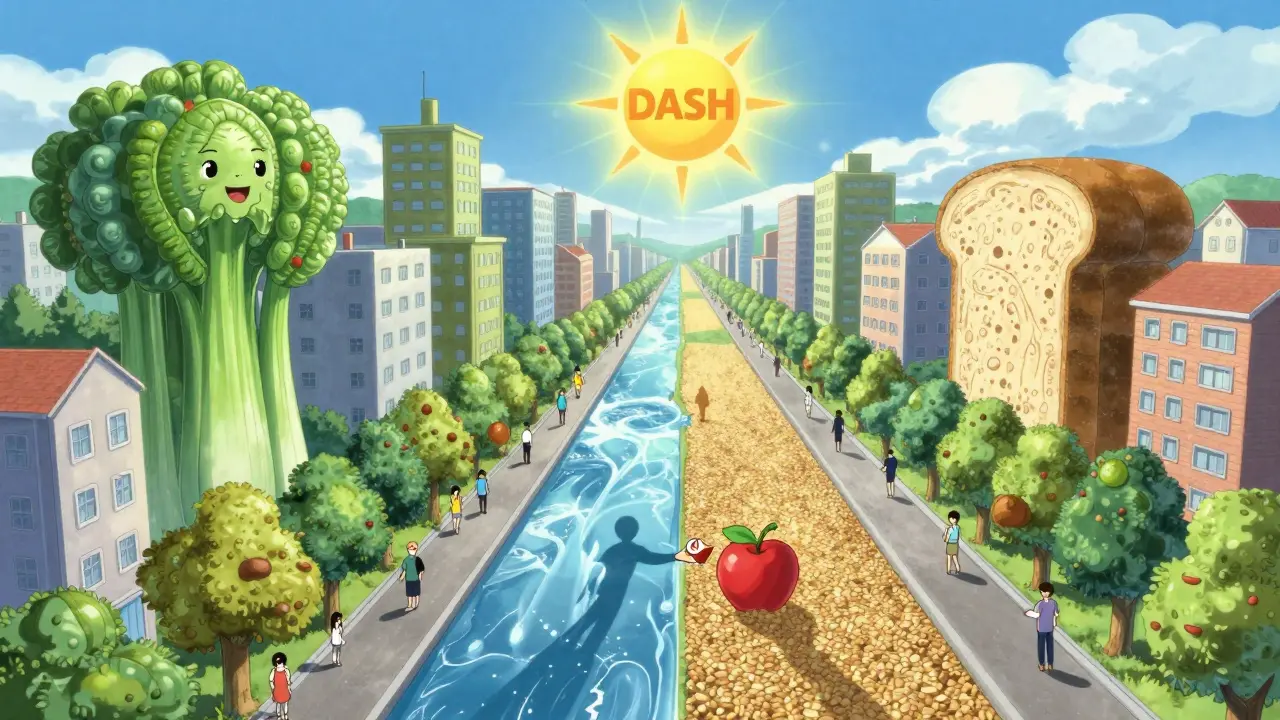
Real Results, Real People
A 2022 Mayo Clinic survey of 1,200 DASH dieters found 68% reached their target blood pressure within 8 weeks. That’s higher than most medications in real-world use. One woman in her 60s with prehypertension (135/88) started DASH after her doctor warned her about early signs of heart strain. She replaced her daily soda with sparkling water, swapped white rice for brown, and added a banana to her breakfast. In six weeks, her pressure dropped to 122/80. She didn’t lose weight, but she stopped worrying about her heart. Another man, 58, had stage 1 hypertension and was prescribed a pill. He refused. He tried DASH and cut salt. In 10 weeks, his systolic pressure dropped from 146 to 124. His doctor took him off the medication.What’s Next for DASH?
The NHLBI just released DASH 2.0 in 2023, which adds time-restricted eating-eating only within a 12-hour window each day. Early results show an extra 8.2 mmHg drop in blood pressure. That’s promising. Researchers are also testing AI tools that adjust your DASH plan based on your blood sugar, sleep, and activity levels. A $2.3 million NIH trial is underway and will finish in late 2025. But the biggest challenge isn’t science-it’s access. One in three Americans with high blood pressure lives in a food desert. They don’t have easy access to fresh produce or low-sodium options. The USDA is starting to fix that by adding DASH-friendly recipes to SNAP-Ed programs. That’s the real next step: making healthy food available to everyone.Can I follow the DASH diet if I’m vegetarian or vegan?
Yes, absolutely. The DASH diet is naturally plant-forward. Swap dairy for fortified plant-based milk and yogurt. Get protein from beans, lentils, tofu, tempeh, and edamame. Nuts and seeds count toward your daily servings. You’ll still hit all the nutrient targets-just skip the animal products.
How much weight can I expect to lose on the DASH diet?
Without changing portion sizes or cutting calories, most people lose 1-3 kg (2-6 pounds) over a few months. If you combine DASH with calorie control or regular movement, you can lose 4-5 kg (9-11 pounds) in 3 months. It’s slower than keto or intermittent fasting, but the weight loss is more likely to stick.
Is the DASH diet safe for people with kidney disease?
It depends. DASH is generally safe for early-stage kidney disease and helps control blood pressure, which protects the kidneys. But if you’re on dialysis or have advanced kidney disease, you may need to limit potassium and phosphorus-which are high in fruits, vegetables, and dairy. Always talk to your nephrologist before starting.
Do I need to buy special foods or supplements?
No. DASH uses regular grocery store items: oats, brown rice, apples, carrots, beans, chicken breast, low-fat yogurt, olive oil. You don’t need protein powders, detox teas, or expensive superfoods. The only tool you might find helpful is a sodium-tracking app.
Can I still eat out on the DASH diet?
Yes, but you need to be smart. Skip the bread basket. Ask for sauces and dressings on the side. Choose grilled over fried. Order steamed vegetables instead of fries. Avoid soups, pasta dishes, and anything labeled “creamy” or “crispy.” Many restaurants now label low-sodium options-ask for them.
Kevin Narvaes
January 21, 2026 AT 15:38Philip Williams
January 22, 2026 AT 13:56Rod Wheatley
January 23, 2026 AT 12:28Jarrod Flesch
January 25, 2026 AT 03:56Stephen Rock
January 25, 2026 AT 10:58michelle Brownsea
January 25, 2026 AT 19:38Roisin Kelly
January 27, 2026 AT 09:24lokesh prasanth
January 28, 2026 AT 05:43Malvina Tomja
January 28, 2026 AT 20:49Samuel Mendoza
January 29, 2026 AT 10:10