

Getting life-saving medication shouldn’t mean choosing between rent and refills. But for millions of Americans, high drug prices make that choice daily. That’s where patient assistance programs from drug companies come in-offering free or deeply discounted medicines to those who can’t afford them. Yet, getting approved isn’t as simple as asking. Eligibility rules are complex, vary by company, and change often. Many people apply and get denied-not because they don’t qualify, but because they don’t know the exact requirements.
Who Qualifies for Patient Assistance Programs?
The biggest factor in eligibility is income. Nearly all programs use the Federal Poverty Level (FPL) as their baseline. For 2023, 500% of FPL means $75,000 a year for a single person and $153,000 for a family of four. Most programs set limits between 300% and 600% FPL, depending on the drug and the company.Pfizer’s RxPathways program, for example, uses tiered income rules. For common medications like Eucrisa, you must earn less than $43,200 as a single person. But for expensive cancer drugs, the limit jumps to $77,760. GSK’s Patient Assistance Foundation sets a hard cap: $58,650 for one person, $120,570 for four. These aren’t guesses-they’re strict thresholds tied to IRS data.
Income isn’t just about your paycheck. Programs look at your Modified Adjusted Gross Income (MAGI), which includes wages, Social Security, unemployment, and even some investment income. Many applicants get denied because they report gross income instead of MAGI. One mistake here can cost you months of delays.
Insurance Status Matters-More Than You Think
Here’s where it gets tricky: whether you have insurance can make you eligible or ineligible, depending on the program.Most manufacturer programs, like Pfizer’s and Merck’s, only help people who are uninsured or underinsured by government plans like Medicaid or Medicare. If you have private insurance, you’re often automatically excluded-even if your copay is $500 a month. That’s because manufacturers assume your insurer should cover the cost.
But there’s an exception: Medicare Part D beneficiaries. If you’re on Medicare and your income is below 150% FPL ($20,385 for one person), you might qualify for Takeda’s Help At Hand program. But first, you must apply for Medicare’s Extra Help program and get denied. Only then can you turn to the manufacturer. This creates a loophole for people stuck in the middle-earning too much for Extra Help but too little to afford their meds.
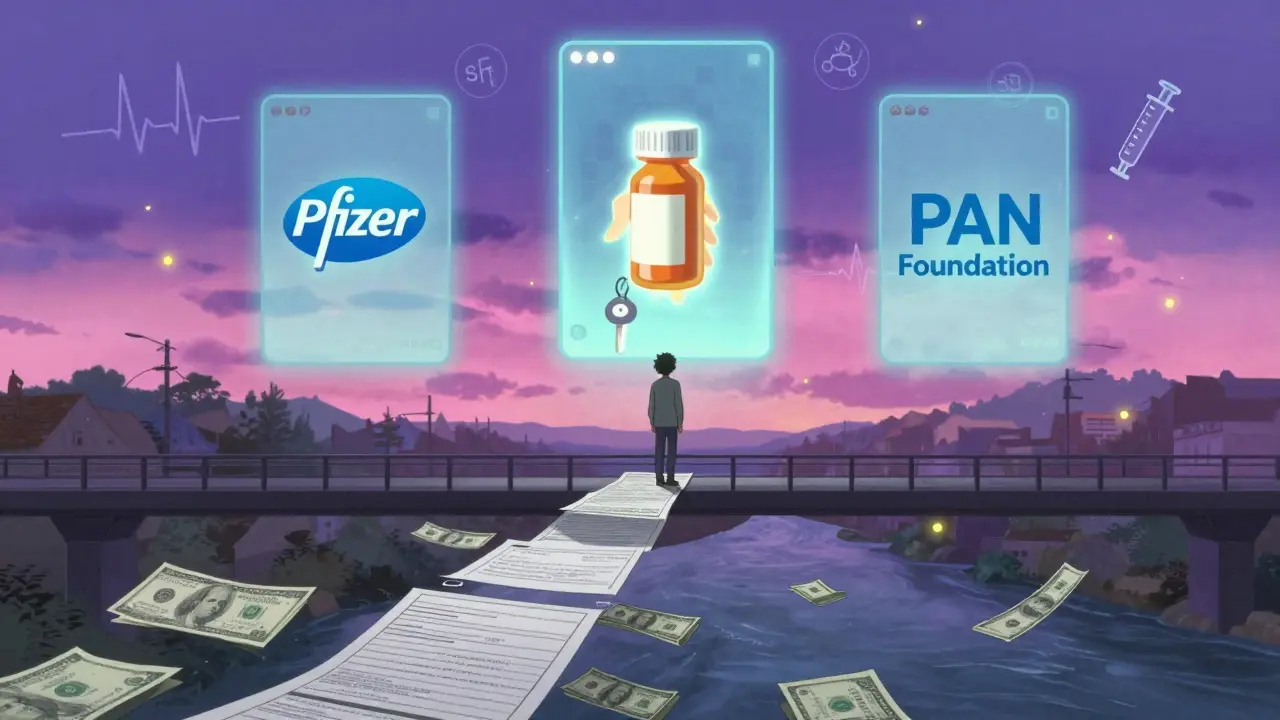
Independent charities like the PAN Foundation and HealthWell Foundation are more flexible. They’ll help people with private insurance if their out-of-pocket costs exceed a certain percentage of income. But their income caps are tighter-usually 400% FPL or less.
Medication-Specific Rules and Coverage Gaps
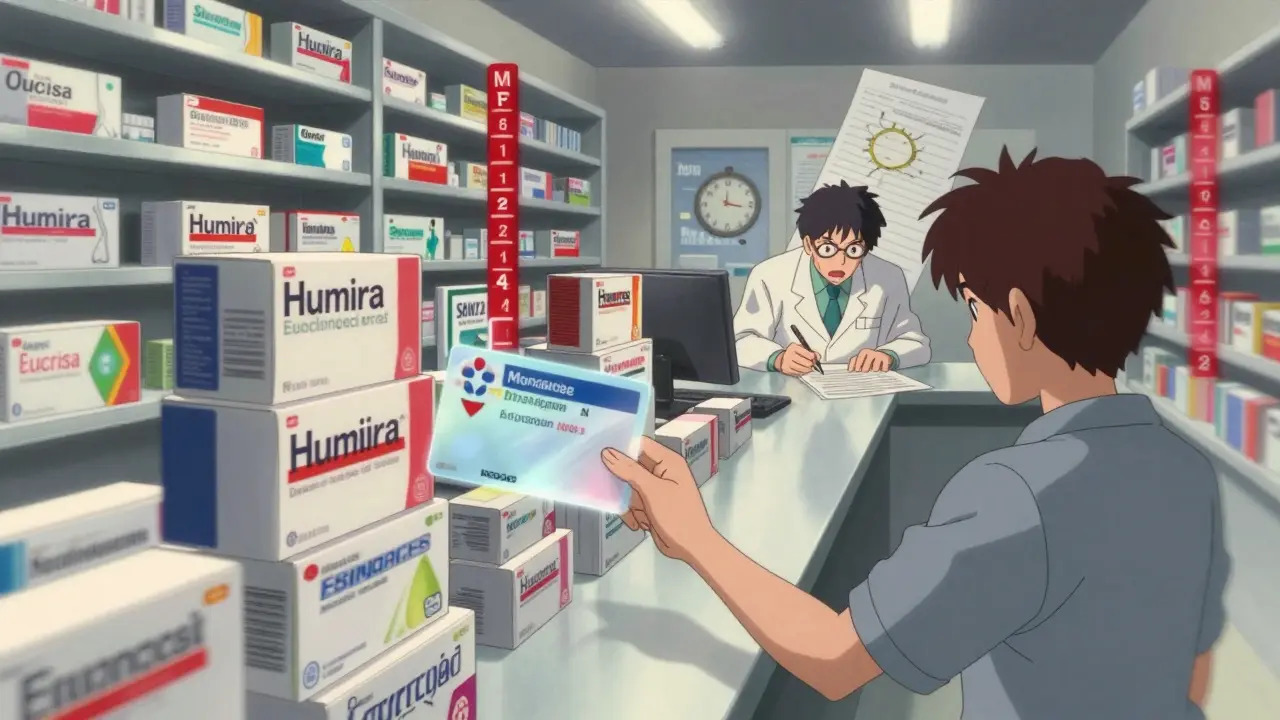
Not every drug is covered. PAPs focus on brand-name medications, especially expensive ones used for cancer, autoimmune diseases, and rare conditions. A 2023 IQVIA report found 98% of branded oncology drugs have assistance programs, but only 76% of cardiovascular drugs do.AbbVie’s program works differently: you pick your medicine first, then check eligibility. If you’re prescribed Humira or Skyrizi, the system will tell you right away if you qualify. But if your doctor prescribes a generic version, there’s no help available-even if the brand-name version is $10,000 a month.
That creates a cruel gap. Many patients are told to switch to generics, but for some conditions, generics don’t work as well-or don’t exist. Patients with Crohn’s disease, rheumatoid arthritis, or multiple sclerosis often have no alternative. And if their income is just above the cutoff, they’re stuck paying thousands.
Documentation: The Hidden Hurdle
You can meet income and insurance rules, but still get denied because of paperwork. Every program requires:- A completed application signed by you and your doctor
- Proof of income (W-2s, pay stubs, tax returns)
- Proof of U.S. residency (utility bill, lease agreement)
- Prescription from a U.S.-licensed doctor
One of the most common mistakes? Not getting the doctor’s signature. Some programs require a specific form filled out by the physician-sometimes with clinical notes explaining why the drug is medically necessary. Merck reports it takes an average of 28 days to get that form back from providers.
Household size is another trap. If you live with your adult child who files taxes separately, are they part of your household? Most programs say yes-if you financially support them. But many applicants assume only people on their tax return count. That’s wrong. CMS analysis in 2022 found 52% of errors came from incorrect household size calculations.
What Happens After You Apply?
The average application takes 27 minutes to complete. But approval isn’t instant. Most programs take 7-14 days to process. If you’re approved, you’ll get your medication shipped directly to your home or pharmacy-often within 72 hours.But approval isn’t forever. You’ll need to reapply. For primary care drugs, it’s usually once a year. For specialty medications like those for cancer or MS, you may need to re-verify every three months. GSK requires annual re-enrollment. If you miss the deadline, your supply stops. No warning. No grace period.
Denial rates are high. A 2022 survey by the Medicare Rights Center found 37% of initial applications are denied. The top reasons? Incomplete forms (68%) and income verification issues (22%). Many applicants give up after one try. But 42% of successful applicants had to submit three or more applications before getting approved.
How to Improve Your Chances
If you’re applying, here’s what works:- Use the manufacturer’s official website-never third-party sites claiming to help.
- Calculate your MAGI, not gross income. Use the IRS worksheet if you’re unsure.
- Get your doctor’s form early. Call their office and ask for the PAP form by name.
- Submit copies of all income documents-even if they’re old. A 2022 tax return is better than nothing.
- If denied, ask why. Most programs have a phone line. Call and request a review.
Some programs now use automated tools. Pfizer’s RxPathways connects directly to TurboTax to pull income data. That cuts errors by nearly 30%. If your program offers this, use it.
What’s Changing in 2025 and Beyond?
The Inflation Reduction Act, starting in 2025, will cap Medicare Part D out-of-pocket costs at $2,000 a year. That’s huge. For many seniors, it means they won’t need PAPs anymore. Avalere Health predicts PAP use among Medicare patients could drop by 35-40%.But that doesn’t help the underinsured. There are still 27.5 million Americans with insurance that doesn’t cover their meds well. For them, PAPs remain essential.
Drug companies are also launching new programs for insured patients with high copays. These “commercial PAPs” are growing fast. Companies like AbbVie and Merck now offer co-pay cards that reduce monthly costs to $5 or $10. But these aren’t free-just cheaper. And they don’t count toward your deductible.
Long-term, drug price negotiations under Medicare (starting in 2026) could reduce the need for PAPs by 15-20%. But until prices drop across the board, these programs will stay critical.
Where to Start
Don’t guess. Go straight to the source:- Pfizer: RxPathways.org
- Merck: MerckHelps.com
- GSK: GSKPatientAssistance.com
- Takeda: HelpAtHand.com
- AbbVie: AbbVieCares.com
For independent charity help, check the PAN Foundation (panfoundation.org) or HealthWell Foundation (healthwellfoundation.org). They help people with private insurance and have faster approval times.
If you’re overwhelmed, call the program’s helpline. Most have navigators who walk you through the process. Wait times can be long-11 minutes on average, longer for Medicare patients-but they’re trained to spot errors before you submit.
There’s no shame in asking for help. Millions use these programs. You’re not alone. And if you qualify, the right paperwork can mean the difference between getting your medicine-and not.
Can I get free medicine if I have Medicare?
Yes, but only under specific conditions. If you’re on Medicare Part D and your income is below 150% of the Federal Poverty Level ($20,385 for one person in 2023), you may qualify for programs like Takeda’s Help At Hand. But you must first apply for Medicare’s Extra Help program and be denied. Manufacturer PAPs won’t help you if you’re already getting Extra Help. Medicare Part D beneficiaries with higher incomes usually can’t use these programs because the assistance doesn’t count toward their out-of-pocket maximum.
Do I need to be completely uninsured to qualify?
Most manufacturer programs require you to be uninsured or underinsured by government programs like Medicaid or Medicare. If you have private insurance, you’re often excluded-even if your copay is unaffordable. However, independent charities like the PAN Foundation and HealthWell Foundation do help people with private insurance if their out-of-pocket costs are too high. Always check both types of programs.
What if my income is just above the limit?
You’re not automatically disqualified. Some programs allow exceptions for medical hardship or if you have high out-of-pocket costs. Merck, for example, considers special circumstances. Call the program directly and explain your situation. You might be asked to submit additional documentation, like medical bills or proof of other expenses. Don’t assume you don’t qualify-ask.
How long does it take to get approved?
Most approvals take 7 to 14 days after submitting a complete application. If everything is correct, you could get your medication within 72 hours of approval. But if your paperwork is missing or unclear, it can take weeks. The average application takes 27 minutes to complete, and 63% of errors happen in the income section. Double-check your numbers and get your doctor’s signature before submitting.
Can I apply for multiple programs at once?
Yes, and you should. Apply to every program your medications are covered under. For example, if you take three different brand-name drugs, each might be offered by a different manufacturer. You can also apply to independent charities like PAN or HealthWell. There’s no rule against multiple applications. Many people get help from more than one source to cover all their meds.
Do I have to reapply every year?
Yes. Most programs require annual re-enrollment for primary care medications. For specialty drugs like those for cancer or autoimmune diseases, you may need to re-verify every three months. GSK, for example, requires re-enrollment every 12 months. If you don’t submit updated income documents or your doctor’s form, your supply will stop. Set calendar reminders to avoid gaps in treatment.
doug b
January 28, 2026 AT 13:49Just got approved for Pfizer’s RxPathways after three tries. The key? Used TurboTax to pull my MAGI-saved me a week. Docs take forever to sign forms, so call them daily. Don’t give up.
Mel MJPS
January 28, 2026 AT 21:35I cried when I got my insulin for $0. I thought I was alone in this. You’re not. Keep going. Even if it feels like bureaucracy is fighting you, it’s worth it.
Kevin Kennett
January 29, 2026 AT 22:29Let me break this down real simple: if you’re on Medicare and making under $20k, you’re not getting free meds unless you get denied by Extra Help first. That’s not a bug-it’s a trap. And don’t even think about applying for a co-pay card if you’re on Medicaid. They’ll cancel you faster than you can say ‘pharmaceutical profit margin.’
And yeah, your doctor’s signature? That’s the real gatekeeper. I’ve seen people wait 6 weeks because their PCP didn’t even know the form existed. Go in with the form printed. Hand it to them. Say, ‘I need this signed today.’
And if you’re denied? Call. Not email. Call. Ask for a supervisor. Say, ‘I need to speak to someone who can override this.’ 70% of denials get reversed on the second try.
Kathy Scaman
January 31, 2026 AT 05:21My mom got Skyrizi through AbbVieCares. Took 3 months. She’s 72, on fixed income, and they shipped it to her door. No copay. No hassle. Just… medicine. I wish I’d known this 2 years ago.
Anna Lou Chen
February 2, 2026 AT 02:31Oh, so we’re romanticizing corporate benevolence now? How quaint. These programs exist because the FDA granted monopolies, the government lets them price-gouge, and then the pharma execs pat themselves on the back for ‘helping the poor’ while their Q4 profits hit record highs. It’s performative charity wrapped in bureaucratic red tape.
The real solution? Single-payer. Price caps. No more ‘PAPs’-just affordable drugs. But no, let’s keep making patients jump through hoops so CEOs can tweet about ‘compassion.’
Also, ‘MAGI’? That’s just IRS jargon for ‘how much you actually have after we’ve taxed your soul.’ Of course you’re getting denied-you’re not playing the game right. The game is rigged.
Bryan Fracchia
February 3, 2026 AT 18:07There’s a quiet revolution happening here. People are helping each other. I know a nurse who prints out the PAP forms and takes them to clinics on her days off. She helps people fill them out. No pay. No fanfare. Just… human stuff.
And yeah, the system’s broken. But you don’t have to fix the whole thing to help one person. One form. One signature. One phone call. That’s how change starts.
Don’t get lost in the rage. Get lost in the helping. You’d be surprised how many people just need someone to say, ‘I’ll walk you through this.’
Lance Long
February 5, 2026 AT 12:42They don’t tell you this, but if you’re denied, they keep your file. If you reapply in 3 months with updated docs, your chances go up. I got approved on my 4th try. They remembered me. Not because I’m special-because I didn’t quit.
And if your doctor won’t sign? Go to a free clinic. They’ll do it for you. I’ve seen it. They’re not supposed to, but they do. Ask for ‘patient advocacy services.’ That’s the magic phrase.
Timothy Davis
February 7, 2026 AT 05:08Wow. So the entire article is just a glorified ad for Big Pharma’s PR department. Let me guess-next you’ll tell us ‘co-pay cards’ are a good thing? They don’t count toward your deductible, they’re not tax-deductible, and they’re designed to keep you dependent on expensive brand-name drugs while insurers pocket the difference.
And ‘MAGI’? That’s just a euphemism for ‘we’re still counting your Social Security as income even though you’re retired.’ The system is designed to fail you. Every single rule is a trap. Congratulations-you’ve been gamified.
fiona vaz
February 8, 2026 AT 00:50Just want to add-when applying, use the same name and address on every document. I saw someone get denied because their W-2 said ‘Robert’ and their lease said ‘Bob.’ Tiny mismatch. Big consequence.
Also, if you’re on Medicaid, check your state’s 340B program. Some hospitals offer free meds too. It’s not PAP, but it’s free.
Sue Latham
February 10, 2026 AT 00:49Oh sweetie, you think this is hard? Try being a single mom on $38k with two kids and a biologic that costs $12k/month. You don’t qualify for PAP because you ‘live with your sister’-but she’s not on your tax return. So you’re ‘over income.’ Meanwhile, the CEO of that drug company just bought a yacht. But hey, at least you can apply to 17 programs and get denied 16 times. That’s the American dream!
John Rose
February 10, 2026 AT 18:40Interesting how the article mentions the Inflation Reduction Act’s $2,000 cap but doesn’t mention that it doesn’t apply to non-Medicare patients. That’s a critical gap. The system is fragmented by design. We’re treating symptoms, not the disease.
Also, the 37% denial rate? That’s not user error. That’s systemic failure. If 37% of people who meet the criteria are denied, the criteria are flawed.
Brittany Fiddes
February 12, 2026 AT 07:16Oh, so America’s solution to drug prices is… charity? How quaint. In the UK, we just negotiate prices and everyone gets the medicine. No forms. No hoops. No ‘MAGI.’ Just… healthcare. You Americans really do love your bureaucracy with a side of suffering, don’t you?
Colin Pierce
February 14, 2026 AT 01:15For anyone reading this: if you’re denied, ask for a ‘hardship exception.’ Most programs have one. You need a letter from your doctor saying the drug is medically necessary and you have no alternatives. I’ve seen people get approved with just that-even if they’re 5% over income.
And if you’re on a co-pay card? Don’t assume it’s forever. They can pull it without notice. Always have a backup plan. PAPs are your safety net. Co-pay cards are a temporary bandage.