
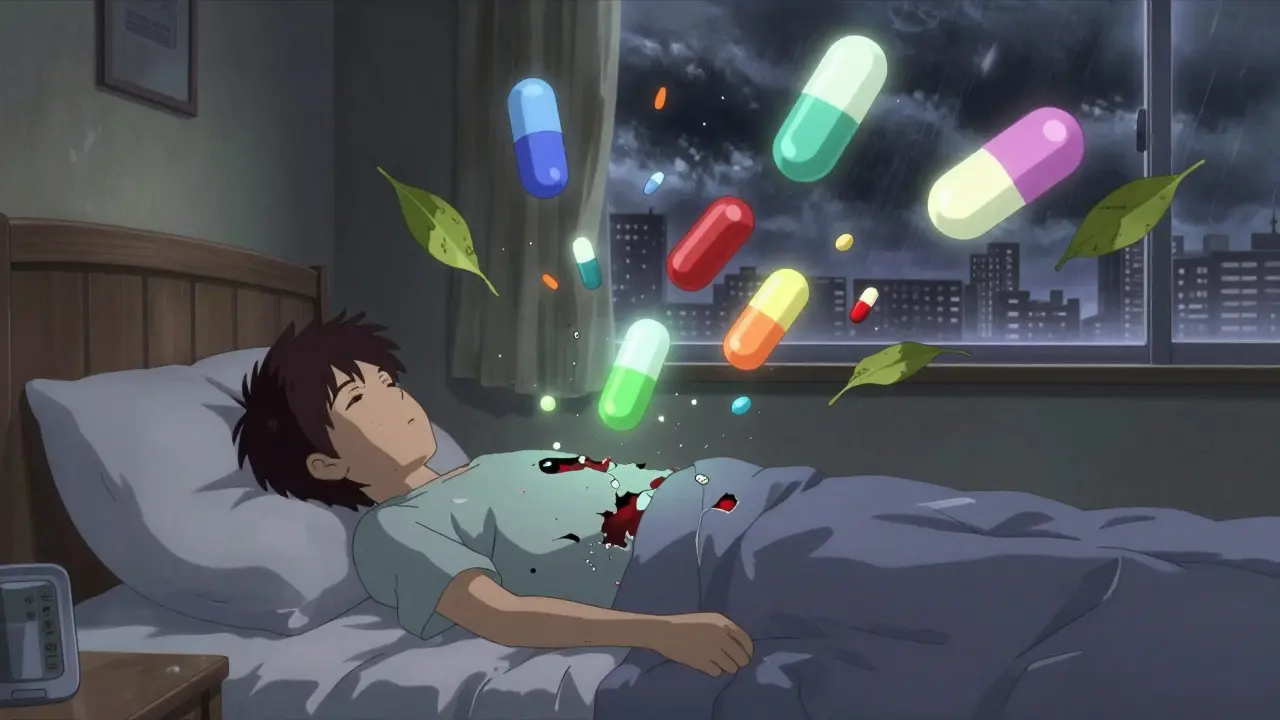
Every year, medication adherence becomes a silent crisis in homes, clinics, and hospitals across the country. It’s not about forgetting your pills once in a while-it’s about the real, lasting damage that happens when you skip doses, stop early, or never fill the prescription at all. You might think it’s harmless if you feel fine. But the truth is, not taking your meds as your doctor meant them to be taken isn’t just a small mistake. It’s one of the leading causes of preventable death and hospital stays in the U.S.
What Happens When You Skip Your Medication?
If you’re on blood pressure medicine and you skip a dose because you forgot, or because you didn’t want to deal with the dizziness, you might not notice right away. But over time, that skipped dose adds up. Your blood pressure spikes. Your heart works harder. Your arteries get damaged. Eventually, you could have a stroke or heart attack-and it could have been avoided.
The same goes for diabetes. Missing insulin or oral meds causes blood sugar to climb. That doesn’t just mean feeling tired or thirsty. It leads to nerve damage, kidney failure, vision loss. One study found that nearly half of all treatment failures in chronic diseases happen because patients don’t take their meds as directed. That’s not the drug failing. That’s the person not getting the full benefit because the regimen wasn’t followed.
And it’s not just chronic conditions. If you’re on antibiotics and you stop after three days because you feel better, you’re not cured-you’re breeding superbugs. Bacteria that survive the partial treatment come back stronger. That’s how antibiotic resistance grows. And now, we’re facing infections that no drug can kill.
The Real Cost of Nonadherence
People talk about the cost of healthcare. But they rarely talk about how much of that cost comes from people not taking their pills. In 2016, nonadherence cost the U.S. healthcare system over $529 billion. That’s more than the entire annual budget of the Department of Education.
Why so high? Because skipped meds lead to hospital visits. About 1 in 5 Medicare readmissions within 30 days are directly tied to patients not taking their medications. And half of those readmissions are completely preventable. Think about that: someone gets discharged from the hospital, goes home, doesn’t take their heart failure pill, ends up back in the ER with fluid in their lungs-and it all could’ve been stopped with a daily tablet.
It’s not just hospitals. It’s emergency rooms, ambulance rides, lab tests, specialist visits-all triggered by something as simple as not filling a prescription or forgetting to take a pill.
Why Do People Stop Taking Their Meds?
It’s never just one reason. It’s a mix of things that pile up.
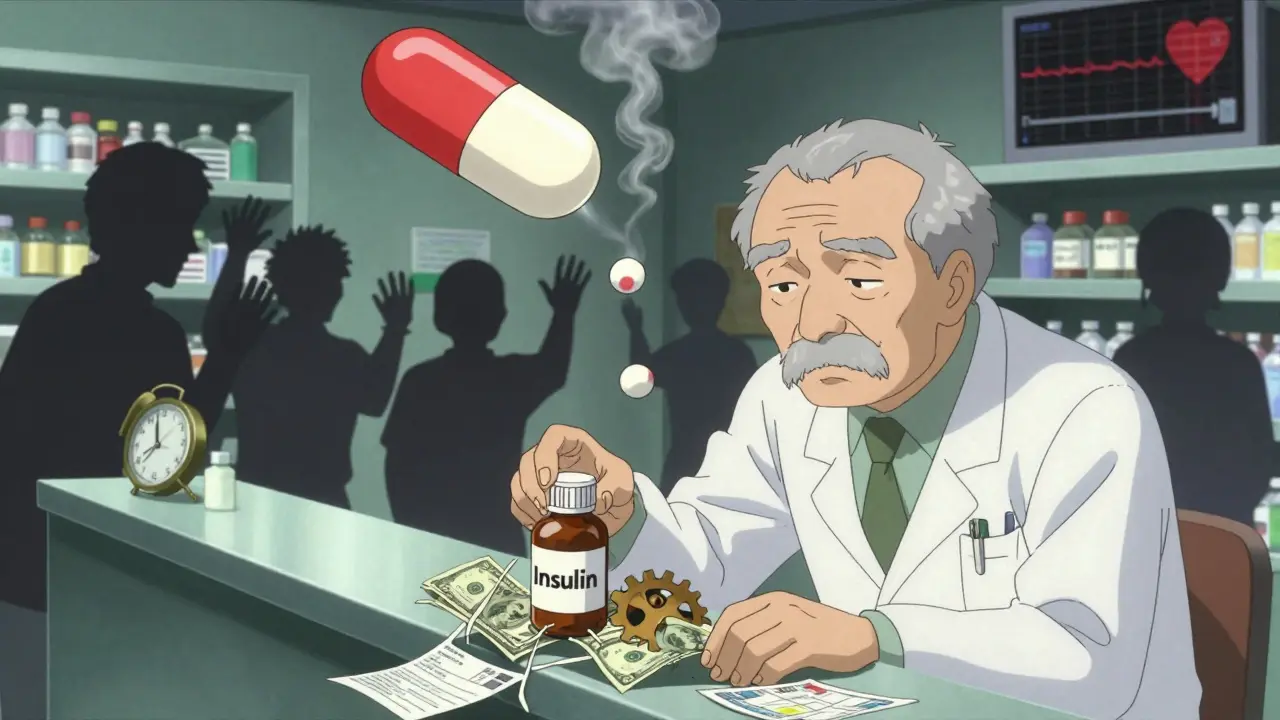
Cost is the biggest one. In 2021, 8.2% of working-age adults in the U.S. said they didn’t take their medication because they couldn’t afford it. That’s nearly 1 in 12 people. For older adults on fixed incomes, it’s worse. Some choose between paying for insulin or buying groceries. That’s not a choice anyone should have to make.
Side effects scare people off. If your antidepressant makes you feel numb, or your statin gives you muscle pain, you might stop. You don’t tell your doctor because you think they’ll just say, “Tough it out.” But those side effects? Often they can be managed. A different dose. A different drug. A timing change. But you won’t know unless you talk about it.
Complex regimens are another killer. Ten pills a day? Four different times? That’s not a treatment plan-it’s a full-time job. People get overwhelmed. They mix up what to take and when. Some stop because it’s just too hard to keep up.
Lack of understanding plays a role too. Many patients don’t know why they’re on a drug. They think, “I don’t have symptoms, so I don’t need it.” But high blood pressure doesn’t make you feel bad until it’s too late. Cholesterol doesn’t cause pain. Diabetes doesn’t scream until it’s ruined your kidneys. If you don’t understand the invisible threat, it’s easy to ignore the pill.
Who’s Most at Risk?
This isn’t an equal-opportunity problem. Minority communities-Black, Latino, Indigenous-are hit harder. Why? Because they’re more likely to live in areas without pharmacies nearby. They’re more likely to be uninsured or underinsured. They’re more likely to have had bad experiences with the medical system in the past. And they’re less likely to feel heard when they raise concerns.
Older adults are another high-risk group. One estimate says up to 100,000 preventable deaths each year happen among seniors because they don’t take their meds. Some forget. Some can’t open bottles. Some are on 10 or more drugs and don’t know what’s for what. And in many cases, their doctors don’t take the time to simplify things.
People with mental illness are especially vulnerable. Nearly 6 in 10 with conditions like depression or schizophrenia skip or stop their meds. It’s not laziness. It’s stigma. It’s feeling better and thinking they’re cured. It’s fear of side effects like weight gain or sedation. And without consistent support, they fall through the cracks.
What Can Be Done?
There are solutions-but they require action from patients, doctors, pharmacists, and the system.
First, talk to your doctor. If a pill makes you feel awful, or costs too much, or you’re confused about how to take it-say something. Don’t wait until you’re in the ER. Your doctor can switch you to a cheaper version, reduce the number of daily doses, or connect you with patient assistance programs.
Pharmacists are underused allies. Many offer free medication reviews. They can sort your pills into daily blister packs. They can call you with reminders. They can tell you if a cheaper generic exists. Ask them.
Technology helps. Apps that send text reminders have been shown to improve adherence by 12-18%. Simple tools like pill boxes with alarms, or smart caps that track when you open the bottle, make a real difference.
And on the policy side, we need better reimbursement for adherence support. Right now, insurance doesn’t pay for pharmacists to spend 20 minutes explaining a regimen. But if they did, hospitalizations would drop. Lives would be saved. And the system would save money in the long run.
It’s Not About Being Perfect
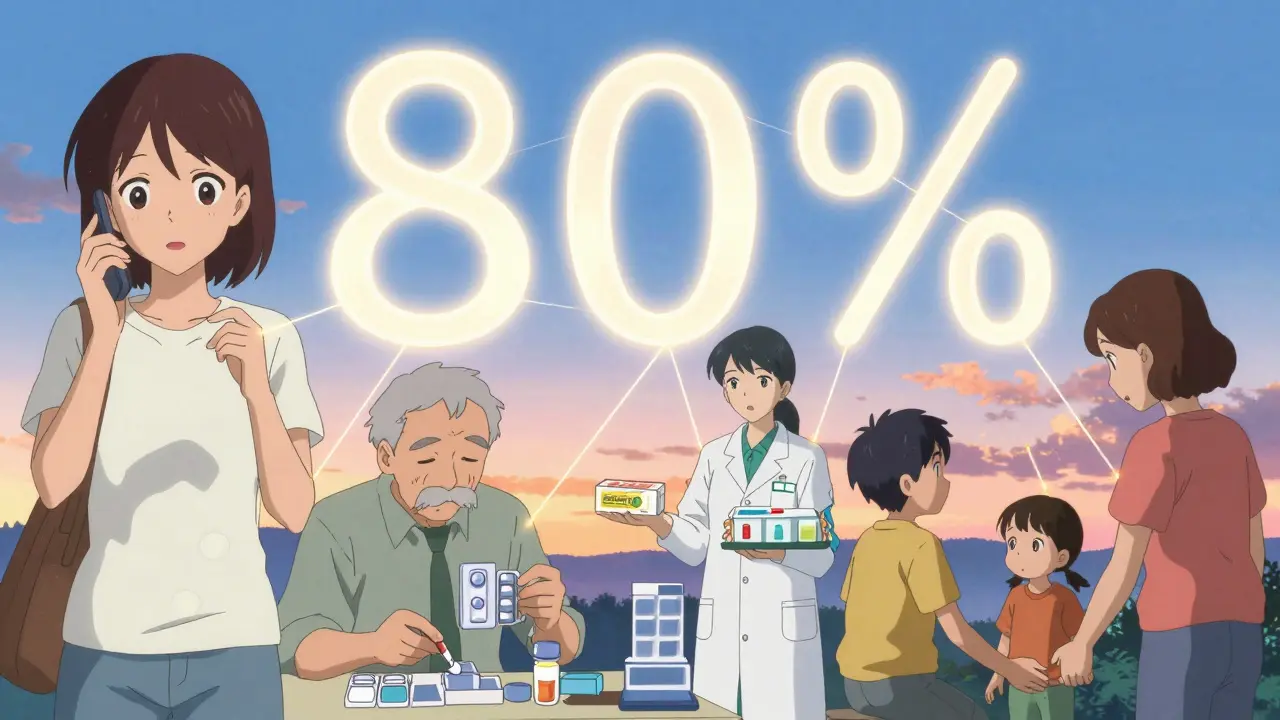
You don’t have to take every pill at exactly the same time every day. But you do need to get close. Studies show you need at least 80% adherence to get the full benefit of most medications. That means missing no more than one dose a week on a daily drug.
If you miss a dose, don’t panic. Don’t double up unless your doctor says so. Just take it as soon as you remember, then go back to your normal schedule. The goal isn’t perfection. It’s consistency.
And if you’re struggling, you’re not alone. Millions of people are right there with you. The difference between those who stay healthy and those who end up hospitalized often comes down to one thing: whether they asked for help when things got hard.
What You Can Do Today
- Write down every medication you take-name, dose, time, reason.
- Ask your pharmacist if they offer free pill organizers or reminder services.
- Set phone alarms for your doses-even if you think you’ll remember.
- If cost is an issue, ask your doctor: “Is there a generic? Is there a patient assistance program?”
- Call your doctor if you’re having side effects. Don’t stop on your own.
- Bring a family member to your next appointment. Two sets of ears hear more than one.
Medications aren’t magic. They’re tools. And like any tool, they only work if you use them right. Skipping doses doesn’t make you a bad patient. It just means you need better support. And you deserve that.
What happens if I miss one dose of my medication?
Missing one dose occasionally usually won’t cause serious harm, but it depends on the drug. For blood pressure or heart meds, skipping even one dose can cause your numbers to spike. For antibiotics, it can let bacteria survive and grow resistant. Never double up unless your doctor says to. Instead, take the missed dose as soon as you remember, then return to your normal schedule. If it’s almost time for the next dose, skip the missed one and continue as usual.
Why do doctors say adherence matters more than the drug itself?
The World Health Organization says that how well you take your medicine has a bigger impact on your health than the actual drug you’re taking. A powerful medication won’t help if you never take it. A simple, cheap drug taken consistently can keep you out of the hospital. That’s why doctors focus so much on making sure you understand your regimen and can stick with it.
Can I stop my medication if I feel better?
For some medications, like antibiotics or short-term painkillers, yes-you finish the course or stop when symptoms go away. But for chronic conditions like high blood pressure, diabetes, or cholesterol, feeling better means the medication is working. Stopping can cause your condition to return, often worse than before. Always check with your doctor before stopping any prescription.
Are there programs to help pay for medications?
Yes. Many drug manufacturers offer patient assistance programs that give free or low-cost meds to people who qualify based on income. Pharmacies often have discount cards. Medicare Part D has a coverage gap help program. Ask your pharmacist or visit the website of your medication’s maker. You’d be surprised how many people don’t know these exist.
How do I know if I’m adherent enough?
Aim for at least 80% adherence. That means if you’re supposed to take a pill once a day, you miss no more than two days a month. If you’re taking it twice a day, you miss no more than four doses. Many apps and smart pill bottles track this for you. If you’re unsure, ask your pharmacist-they can often tell from refill patterns whether you’re taking it regularly.
Can my pharmacist help me manage my meds?
Absolutely. Pharmacists are trained to review all your medications for interactions, side effects, and simplification. Many offer free Medication Therapy Management (MTM) services. They can pack your pills into daily doses, set up refill reminders, and even call your doctor if something doesn’t add up. You don’t need a referral-just walk in and ask.
What’s Next?
If you’re taking multiple medications, the next step is simple: schedule a med review. Bring all your pills-bottles, supplements, over-the-counter drugs-to your doctor or pharmacist. Ask: “Is this still necessary? Can it be simpler? Is there a cheaper option?”
And if you’re worried about someone else-your parent, your partner, your friend-don’t wait for them to ask for help. Offer to help them organize their pills. Set up a reminder system. Go with them to the pharmacy. Sometimes, the biggest barrier isn’t the cost or the side effect. It’s loneliness. And showing up for someone can change their health-and maybe even their life.
Bryan Coleman
January 31, 2026 AT 02:52Been there. Took my blood pressure med for a week, felt fine, stopped. Ended up in the ER with a headache that felt like my skull was splitting. Turns out my BP was 190/110. Doc said I got lucky. Now I use a pill box with an alarm. Best $8 I ever spent.
vivian papadatu
February 1, 2026 AT 19:26It’s heartbreaking how often we treat medication like a suggestion instead of a lifeline. I work with seniors who skip doses because they’re scared of side effects or can’t open bottles-and no one ever asks them how to make it easier. Pharmacists can help, but only if we stop treating them like order-fillers and start treating them like healthcare partners.
Lilliana Lowe
February 2, 2026 AT 08:18Let’s be clear: nonadherence isn’t a behavioral issue-it’s a systemic failure. The fact that 8.2% of working-age Americans skip meds due to cost is a moral indictment of a healthcare system that prioritizes profit over physiology. The WHO’s data is unambiguous: adherence matters more than drug efficacy. Yet insurance companies won’t reimburse for medication therapy management because it’s not a procedure-it’s care. And care doesn’t generate revenue.
Meanwhile, patients are left to navigate labyrinthine patient assistance programs, confusing dosing schedules, and stigmatized side effects without a single advocate. This isn’t negligence-it’s neglect. And it’s killing people in plain sight.
Doctors need to stop prescribing and start coaching. Pharmacists need to be compensated for counseling. Legislators need to cap insulin prices. And we need to stop blaming patients for a system that was never designed to help them succeed.
Naomi Walsh
February 3, 2026 AT 09:31It’s amusing how people act like skipping antibiotics is some harmless personal choice. You’re not just risking your own health-you’re actively contributing to the collapse of modern medicine. The CDC has been screaming about antibiotic resistance for decades, and yet here we are, treating life-saving drugs like candy. If you don’t finish your course, you’re not a rebel-you’re a public health hazard. And no, your ‘natural remedies’ won’t save you when MRSA takes over.
Melissa Melville
February 4, 2026 AT 14:35my aunt took her diabetes med for 3 years then just stopped because she ‘felt fine’. now she’s on dialysis. the sad part? she still says ‘i didn’t know it would do that’. like, ma’am, you had a whole folder of papers from the doc. you just didn’t read them. 😔
Deep Rank
February 6, 2026 AT 08:00you know what really kills people? not the meds, but the silence. the silence when you’re too ashamed to say you can’t afford insulin, too tired to fight the pharmacy for a generic, too scared to admit you stopped taking your antidepressant because you felt like a zombie. we don’t talk about this because it’s too messy, too human, too full of shame. but the truth? the pills are simple. the system is broken. and the people? they’re just trying to survive. i’ve seen people choose between rent and refills. i’ve seen grandmas cry because their hands shake too much to open bottles. this isn’t about willpower. it’s about dignity. and we’ve taken that away from them, one pill at a time.
Sami Sahil
February 8, 2026 AT 01:35if you’re struggling with meds, you’re not weak. you’re just human. i used to forget my meds all the time until i started leaving the bottle next to my toothbrush. now i brush and take it together. tiny habits change lives. also, ask your pharmacist-they’ll help you for free. no judgment. just real help. you got this 💪
franklin hillary
February 8, 2026 AT 16:07Let me tell you something real-medications don’t care if you’re busy, broke, or burned out. They don’t care if you think you’re fine. They don’t care if you’re tired of the side effects. They just do their job if you let them. And when you don’t? Your body pays the price. Not your doctor. Not your insurance. You. And then you wonder why you’re tired all the time. Why your legs swell. Why you’re back in the hospital. It’s not bad luck. It’s a chain reaction. One skipped pill. One ignored symptom. One silent decision. And suddenly, your life is on fire. But here’s the good part-you can still put it out. Today. Right now. Call your doc. Ask your pharmacist. Set a damn alarm. You’re not alone. And you’re not broken. You just need a little help. And that’s okay.
Naresh L
February 9, 2026 AT 16:40There’s a quiet paradox here: the more effective a medication is, the less you feel its necessity. Blood pressure pills don’t make you feel alive-they prevent you from dying quietly. That’s invisible work. And invisibility breeds neglect. We treat symptoms like the disease, not the underlying rupture. The pill is not the cure; it’s the bridge. But bridges only hold when walked upon. And we’ve forgotten how to walk.
Perhaps the real question isn’t why people skip doses, but why we’ve stopped believing in the quiet, daily acts of care that sustain life. It’s not about discipline. It’s about meaning. And meaning requires witness. Someone must see your struggle and say: I’m here. Let me help.