
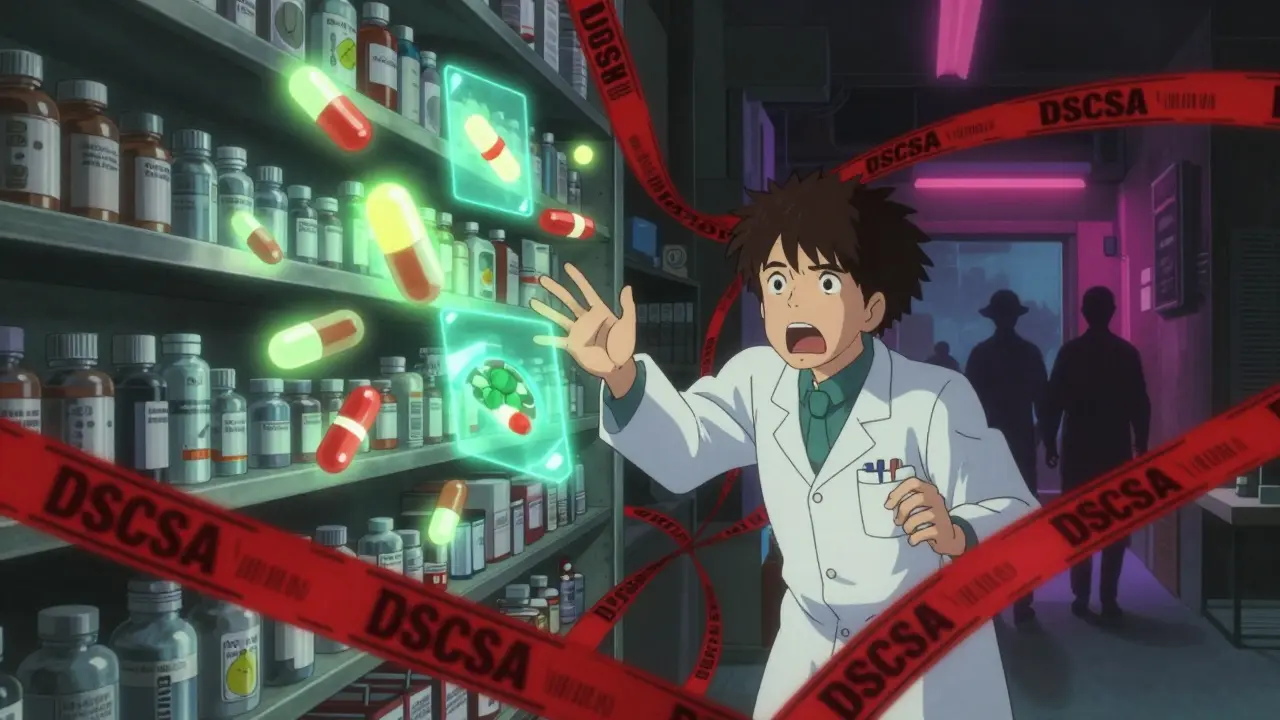
When you buy medicine, you expect it to work. You don’t expect it to be fake. But counterfeit drugs are more common than most people realize - and the risks aren’t just theoretical. A pill that looks like your prescribed treatment could contain no active ingredient, the wrong dose, or even toxic chemicals. In 2025, the global trade in fake medicines still runs into the hundreds of billions of dollars annually, with cancer drugs, antibiotics, and heart medications among the most commonly faked. For pharmacies, distributors, and even hospitals, the danger isn’t just legal or reputational - it’s financial. That’s where insurance comes in.
What Insurance Actually Covers (And What It Doesn’t)
Most companies in the pharmaceutical supply chain carry professional liability, product liability, and errors and omissions (E&O) insurance. These policies are designed to protect businesses when they unknowingly handle counterfeit drugs. If a pharmacy buys a batch of fake Avastin from a supplier who forged the paperwork, and a patient is harmed, the insurance can cover legal defense, settlements, and medical costs - if the pharmacy had no reason to suspect the drugs were fake. But here’s the catch: insurance won’t cover you if you were negligent. If you ignored red flags - like a price that’s 70% lower than market rate, a supplier with no verifiable history, or packaging that looks slightly off - your claim could be denied. Insurers don’t pay for willful ignorance. They pay for honest mistakes in a system that’s hard to fully control. The Drug Supply Chain and Security Act (DSCSA), fully implemented by November 2023, requires electronic tracing of prescription drugs from manufacturer to pharmacy. This means companies now have digital records of every transfer. Insurers use this data to assess risk. A pharmacy that uses the system properly and documents every transaction is seen as lower risk. One that still relies on handwritten logs or unverified suppliers? That’s a red flag.The Real Cost of Counterfeit Drugs - Beyond Patient Harm
Counterfeit drugs don’t just hurt patients. They hurt businesses. When a fake version of Gleevec or Keytruda shows up on the market, it doesn’t just steal sales - it destroys trust. Patients who get sick from a fake drug may stop taking their real medication altogether. That’s a loss of long-term revenue for the manufacturer. The financial damage goes deeper. Bristol Myers Squibb estimates the counterfeit drug industry costs the global pharmaceutical sector over $200 billion a year. That’s not just lost sales. It’s the cost of investigations, lab testing, legal action, and public awareness campaigns. Pfizer has prevented over 302 million counterfeit doses from reaching patients since 2004. That’s not cheap. And it’s not something most companies can absorb without insurance. Even the act of investigating a suspected counterfeit drug can be expensive. Sanofi runs a dedicated anti-counterfeit lab that analyzes suspect products using advanced equipment. They monitor millions of webpages daily for illegal sales. These aren’t optional expenses - they’re necessary defenses. And insurers take note. Companies that invest in detection tools often get better premiums because they reduce the chance of a claim ever happening.Regulations Are Changing - And So Is Insurance
The Medicrime Convention, which became active in January 2016, made manufacturing and trafficking counterfeit drugs a criminal offense across 30+ countries. But enforcement varies wildly. In some places, penalties are light. In others, traffickers are rarely caught. This inconsistency creates uncertainty for insurers. In the U.S., the FDA works with Customs and Border Protection to intercept fake drugs at ports. But with over 15 million packages entering the country daily, they can’t catch them all. That’s why insurers now look at whether a company has partnered with Verified Internet Pharmacy Practice Sites (VIPPS) or uses FDA-recommended imprinting on pills. These aren’t just best practices - they’re becoming underwriting requirements. For example, if you’re a distributor and you don’t use serialization (unique codes on each package), your E&O policy might exclude coverage for counterfeit-related claims. The same goes for companies that don’t verify supplier credentials through official databases. Insurance isn’t just a safety net anymore - it’s tied to compliance.
High-Risk Drugs and the Insurance Gap
Not all counterfeit drugs are created equal. Cancer drugs like Avastin, Xeloda, Abraxane, and Keytruda are prime targets because they’re expensive and in high demand. A single vial of fake Keytruda can sell for $5,000 on the black market. That’s a huge incentive for fraudsters. But here’s the problem: many small clinics and independent pharmacies can’t afford the technology to verify these drugs. They rely on distributors who promise low prices. When a patient dies from a fake cancer drug, the lawsuit doesn’t just hit the distributor - it can drag the pharmacy into court too. Most standard insurance policies don’t have special riders for oncology drugs. That’s a gap. Companies that handle high-risk medications should ask their brokers: Does my policy cover liability for counterfeit cancer drugs? What’s the limit? What documentation do I need to prove I did due diligence? The Roswell Park Cancer Institute reported in 2025 that counterfeit versions of FDA-approved cancer therapies are rising. Insurers are starting to respond. Some now offer enhanced coverage for oncology supply chains - but only if the company uses real-time authentication tools, trains staff on counterfeit detection, and keeps digital audit trails.What You Can Do Right Now to Protect Yourself
You don’t need to be a Fortune 500 company to reduce your risk. Here’s what actually works:- Only buy from suppliers listed in official databases like the NABP VIPPS directory.
- Check packaging for tampering, spelling errors, or mismatched lot numbers.
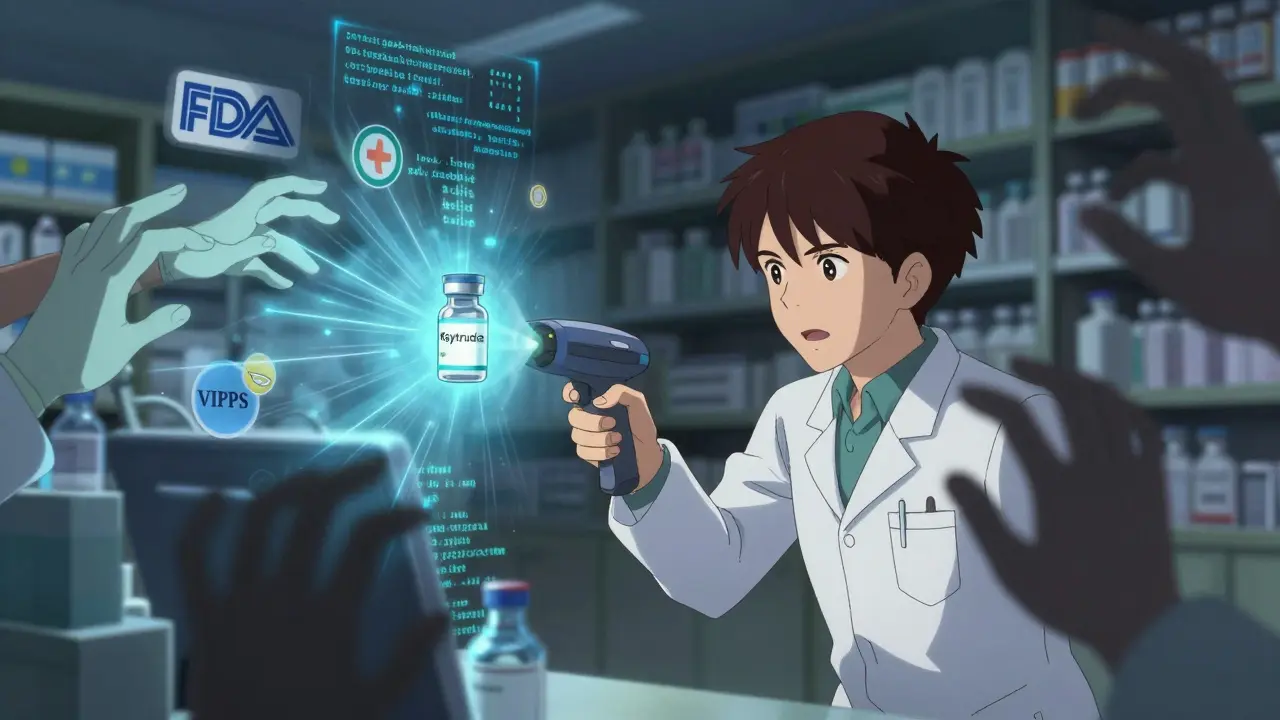
- Use serialization scanners if you handle high-value drugs - even small pharmacies can rent them.
- Train your staff to recognize red flags: unusually low prices, pressure to buy quickly, or suppliers who refuse to provide documentation.
- Keep digital records of every transaction. Even a simple spreadsheet with dates, supplier names, and batch numbers can save your insurance claim.
- Ask your insurer: Do I need a specific rider for counterfeit drug liability?
Why Technology Alone Isn’t Enough
It’s tempting to think that better tech will solve this problem. RFID tags, blockchain tracking, AI-powered image recognition - all of these help. But as one industry expert put it: “There’s no way you’re going to monitor every single pill.” Counterfeiters adapt faster than regulations. They change packaging, use real containers from stolen shipments, and exploit gaps in international shipping. Even the most advanced system can be fooled if the person receiving the shipment doesn’t know what to look for. That’s why insurance still matters. Technology reduces risk. But insurance covers the risk that slips through. The best defense is a combination: good tech, trained staff, solid documentation, and the right policy.What Happens When a Claim Is Made
If a patient is harmed by a counterfeit drug you distributed, your insurer will investigate. They’ll look at:- Did you verify the supplier’s credentials?
- Did you check batch numbers against official databases?
- Did you document every step of the supply chain?
- Were there any warnings you ignored?
Counterfeit drugs aren’t going away. But with the right insurance, the right tools, and the right habits, you don’t have to be the one who pays the price.
Does my pharmacy insurance cover me if I unknowingly sell counterfeit drugs?
Yes - but only if you can prove you acted in good faith. Most professional liability and product liability policies cover accidental distribution of counterfeit drugs, as long as you didn’t ignore obvious warning signs. Insurers require proof of due diligence: verified suppliers, documented transactions, and staff training. If you bought from a shady vendor or ignored mismatched packaging, your claim could be denied.
What types of drugs are most commonly counterfeited?
Cancer drugs like Avastin, Keytruda, and Gleevec are top targets because they’re expensive and life-saving. Antibiotics, heart medications, and erectile dysfunction pills are also common. Fake versions may contain no active ingredient, the wrong dose, or toxic substances. These drugs are especially dangerous because patients assume they’re getting real treatment.
Can I get insurance that specifically covers counterfeit cancer drugs?
Standard policies don’t always have separate coverage for oncology drugs, but some insurers now offer enhanced riders for high-risk medications. If your pharmacy handles cancer drugs, ask your broker about specialized coverage. You’ll need to show you use authentication tools, track serial numbers, and train staff - but the extra cost is often worth it given the high liability exposure.
How does the DSCSA affect my insurance coverage?
The Drug Supply Chain and Security Act requires electronic tracing of prescription drugs by November 2023. Insurers now use this data to assess your risk. If you’re not using the system, you’re seen as higher risk - and your premiums could go up. In some cases, failing to comply may void coverage entirely. Compliance isn’t optional anymore; it’s part of your policy.
Are online pharmacies more likely to sell counterfeit drugs?
Yes. The IFPMA estimates that 96% of online pharmacies operate illegally. Many sell fake versions of popular drugs at steep discounts. Even if you’re not selling online, you might still be affected - patients sometimes bring in drugs they bought online, and you may be held liable if you dispense them. Always ask patients where they got their medication, and never dispense drugs without verifying their source.
What should I do if I suspect I’ve received counterfeit drugs?
Stop using or distributing the product immediately. Contact your supplier for clarification, then report it to your local health authority and the FDA’s MedWatch program. Document everything: photos of packaging, batch numbers, dates of receipt, and communications. Notify your insurer right away - delays can hurt your claim. Many insurers have special protocols for counterfeit drug reports and may even help cover testing costs.
Can I reduce my insurance premiums by improving my supply chain?
Absolutely. Companies that use verified suppliers, implement digital tracking, train staff, and maintain detailed records often see premium reductions of 15-30%. Insurers reward proactive risk management. Even small steps - like checking for FDA imprint codes on pills or using a simple digital log - can make a difference. Ask your broker about discounts for compliance programs.
bob bob
January 5, 2026 AT 19:32Man, I just saw a guy on TikTok buy 'Keytruda' for $300 off some shady site. He thought he was saving money. Turned out it was just sugar and glitter. His mom ended up in the ER. Insurance won't cover that if he didn't ask questions. We gotta stop treating meds like Amazon impulse buys.
Charlotte N
January 7, 2026 AT 14:11So if I keep a spreadsheet of every batch number and supplier name... even if it's just in Google Sheets... that actually helps my insurance claim? I thought that was just for auditors. I've been doing that since last year... kinda just because I'm neurotic... but maybe it's not pointless?
Jacob Milano
January 9, 2026 AT 01:06Look I get it, counterfeit drugs are terrifying. But let's not pretend this is just about pharmacies. The real problem is the global supply chain is a dumpster fire. We outsource everything to countries with zero oversight, then act shocked when the pills turn out to be chalk and regret. Insurance is just patching a leak in a sinking ship.
Oluwapelumi Yakubu
January 9, 2026 AT 19:15My friend in Lagos runs a small clinic. He buys meds from a guy who drives a van with no license plate. Pays in cash. Says 'if the patient lives, it's real.' I told him this isn't Nigeria in 2005 anymore. Now he's got a printer and scans QR codes. He says he sleeps better. And his premiums dropped 18%. Small steps, man. Small steps.
Akshaya Gandra _ Student - EastCaryMS
January 11, 2026 AT 03:32wait so if i buy a drug online and bring it to my pharmacy to give to a patient... and they get sick... i get sued? even if i didn't sell it? that's wild. i thought only the seller was liable. so like... should i refuse to give out any med that wasn't bought at the pharmacy? even if it's legit? this is so confusing
Uzoamaka Nwankpa
January 12, 2026 AT 16:20I just lost my cousin to fake antibiotics. They said it was 'pneumonia' but it was just his body shutting down because the pill had no medicine in it. No one was punished. No one even apologized. The system doesn't care. Insurance companies care about paperwork, not people. I'm just tired.
en Max
January 13, 2026 AT 11:12Per the DSCSA Title 21 CFR Part 203, the implementation of electronic pedigree systems has fundamentally altered the risk exposure profile for downstream dispensers. Non-compliance constitutes a material adverse condition under ISO 31000 risk management standards, thereby triggering exclusionary clauses in E&O policies. Documentation must be immutable, time-stamped, and blockchain-verified to satisfy underwriting criteria.
Allen Ye
January 14, 2026 AT 14:54Let’s be honest - we’ve outsourced our moral responsibility to algorithms and compliance checklists. We think if we scan a QR code, we’re absolved. But ethics isn’t a checkbox. It’s a habit. It’s asking the supplier why the price is too good to be true. It’s staying up late to cross-reference batch numbers. It’s refusing to cut corners even when the boss says, ‘Just this once.’ Insurance doesn’t protect character - it just pays the bills after you’ve lost it. And the real tragedy? Most people don’t even realize they’ve stopped caring until someone dies.
Chris Cantey
January 15, 2026 AT 05:54It’s not about insurance. It’s about the illusion of control. We think if we have a policy, we’re safe. But the system is designed to make us feel safe while it quietly collapses. The real counterfeit isn’t the pill - it’s the belief that bureaucracy can protect us from greed. We’re all just waiting for the next scandal to break, hoping we’re not the ones holding the bag.
Terri Gladden
January 15, 2026 AT 09:19OK so I just found out my mom's blood pressure med was fake?? I'm crying rn. Like... I trusted the pharmacy. I trusted the label. I trusted everything. And now I'm scared to even let her take her pills. WHO DO I CALL?? I NEED TO KNOW IF I CAN SUE??
Aaron Mercado
January 16, 2026 AT 16:16THIS IS WHY WE NEED TO CRACK DOWN ON CHINA!! THEY’RE FLOODING OUR COUNTRY WITH DEADLY FAKE PILLS!! WE NEED BANNED! BANNED! BANNED! AND WE NEED TO PUT EVERYONE WHO SELL THIS IN PRISON!! AND MAKE THEM PAY FOR THE FUNERALS!!
Angie Rehe
January 18, 2026 AT 06:12So let me get this straight - if I don't use blockchain, serialization, AI-powered imaging, and a certified compliance officer on staff, my insurer will deny my claim? That’s not insurance. That’s extortion disguised as risk mitigation. And now they’re charging extra for ‘oncology riders’? Like, what, cancer patients are premium customers now? This is capitalism at its most grotesque.
Enrique González
January 19, 2026 AT 00:20My uncle’s a pharmacist in rural Iowa. He uses a $200 handheld scanner. Checks every box. Logs everything. Got a 25% discount last year. Doesn’t use fancy tech. Just does the work. Sometimes the simplest thing is the most powerful.
mark etang
January 19, 2026 AT 15:24As a fiduciary entrusted with the stewardship of public health infrastructure, it is imperative that all stakeholders recognize that regulatory adherence is not discretionary, but rather an existential imperative. The integrity of the pharmaceutical supply chain is predicated upon rigorous, non-negotiable compliance with DSCSA protocols. Failure to uphold these standards constitutes a breach of the social contract between healthcare providers and the communities they serve. Proactive diligence is not merely prudent - it is morally obligatory.