
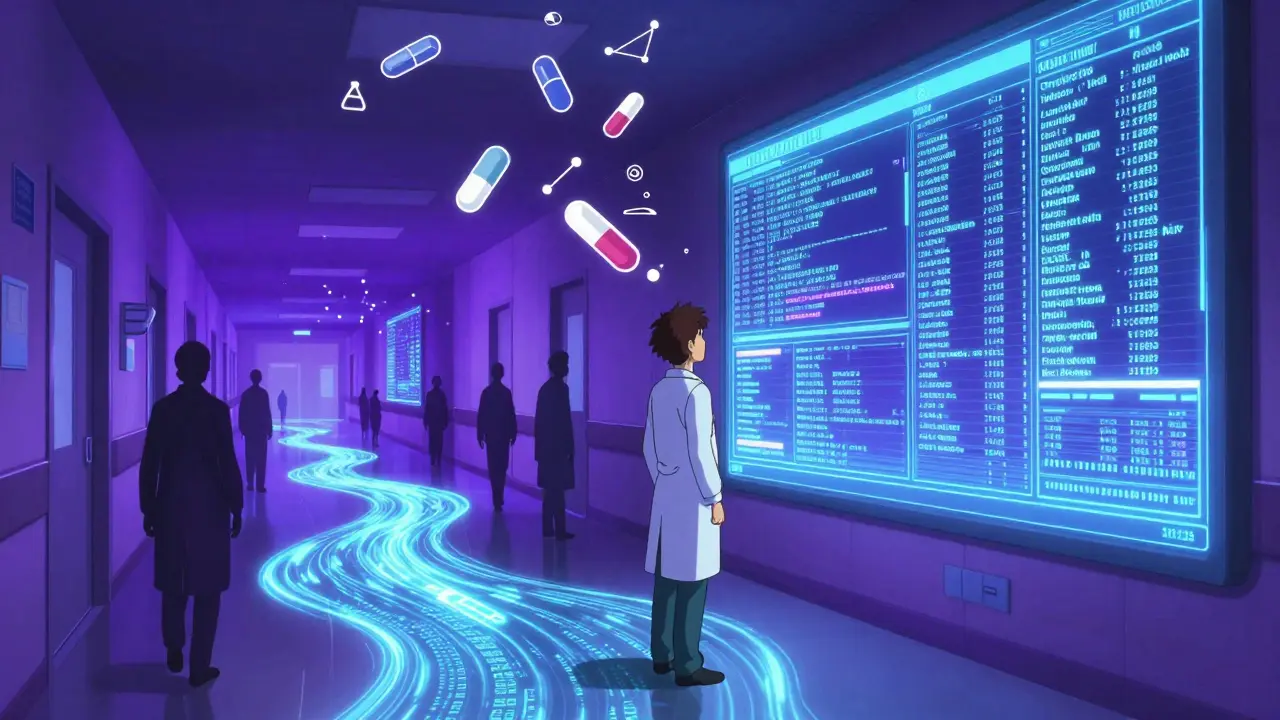
Every time someone takes a pill, there’s a hidden calculation happening: risk versus benefit. Is this drug going to help? Or could it hurt? And how do we really know? This isn’t guesswork. It’s science - and it’s happening right now, every day, in hospitals, labs, and government agencies around the world.
What Happens After a Drug Is Approved?
Clinical trials are the first step. But they’re not perfect. Most involve only 1,500 to 5,000 people over 6 to 24 months. That’s enough to catch common side effects - nausea, dizziness, headaches. But what about the rare ones? The ones that only show up in 1 out of 10,000 people? Or the ones that take years to appear? That’s where real-world evidence steps in.
After a drug hits the market, regulators and researchers don’t just sit back. They watch. They track. They compare. Using data from millions of patients - Medicare records, electronic health systems, pharmacy claims - scientists look for patterns. Did people who took Drug X have more kidney problems than those who didn’t? Did older adults on this combo of meds end up in the ER more often? These aren’t theoretical questions. They’re urgent ones.
The Tools of the Trade
There’s no single way to study medication safety. Instead, experts use a toolkit of methods, each with strengths and limits.
Randomized controlled trials (RCTs) are still the gold standard. They’re the reason a drug gets approved in the first place. But they’re expensive - averaging $26 million per trial - and too small to catch rare events. That’s why they’re not used for long-term safety.
Observational studies fill the gap. These look at what actually happens when drugs are used in real life. Cohort studies follow groups over time. Case-control studies compare people who had a bad outcome with those who didn’t. Then there are smarter designs like the self-controlled case series (SCCS), which uses each patient as their own control. If someone had a heart attack right after starting a new medication, but never had one before, that’s a red flag worth investigating. SCCS cuts out a lot of noise - like age, lifestyle, or pre-existing conditions - because it only looks at changes within the same person.
These methods rely on massive data sets. The FDA’s Sentinel Initiative tracks over 190 million U.S. patients. Kaiser Permanente’s system covers 12.5 million. Medicare data includes more than 57 million beneficiaries. That’s not just big data - it’s population-scale evidence.
When the Evidence Conflicts
Here’s the uncomfortable truth: sometimes, what looks dangerous in observational studies turns out to be harmless in a randomized trial. A 2021 review in JAMA Internal Medicine found that 22% of drug safety signals from observational studies were later disproven by RCTs. Why? Because correlation isn’t causation. Maybe people taking a certain blood pressure drug also smoke more, or have worse diabetes. The drug isn’t the problem - the other factors are.
That’s why experts don’t trust one type of evidence alone. Dr. Wayne Ray from Vanderbilt says it plainly: “The ideal evidence ecosystem combines the internal validity of randomized trials with the external validity of observational studies.” In other words, RCTs tell us what *could* happen under strict conditions. Observational studies tell us what *does* happen in messy, real life.
Where It All Goes Wrong
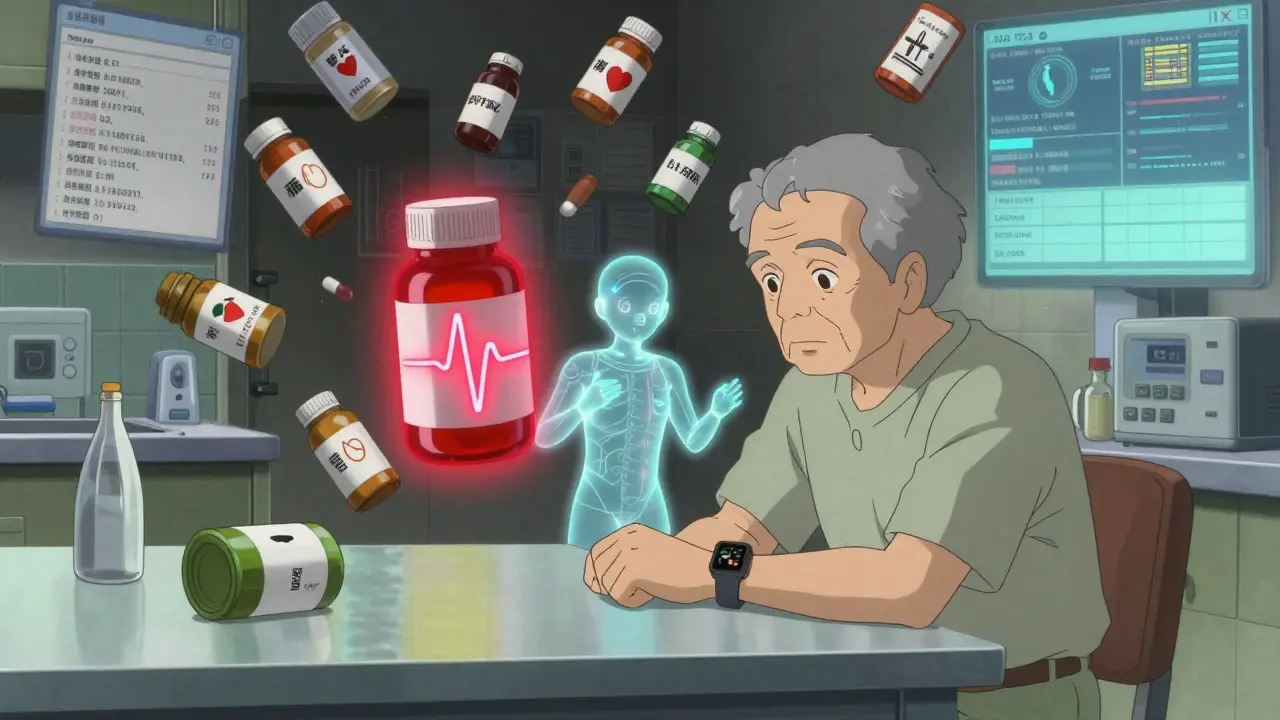
Even with all this science, mistakes still happen - often at the bedside.
One major problem? Alert fatigue. In emergency rooms and hospitals, clinical decision support systems warn doctors about drug interactions. But too many alerts - especially for common drugs - mean prescribers start ignoring them. One study found that 89% of drug interaction alerts get overridden. Why? Because most are low-risk, repetitive, or poorly timed. The system is screaming, but no one’s listening.
Another issue? Fragmented systems. Nurses in AHRQ focus groups reported that 68% of near-miss errors happened because patient data was stuck in different systems - one for prescriptions, another for lab results, another for allergies. No one had the full picture.
And then there’s adherence. A patient might say they’re taking their blood thinner every day. But pharmacy refill data shows they only picked it up twice in three months. That gap - between what’s prescribed and what’s taken - is a silent killer. It’s why 38% of preventable adverse drug events are linked to nursing errors in medication administration.
Who’s Leading the Charge?
This isn’t just academic. It’s regulatory. The FDA requires risk evaluation and mitigation strategies (REMS) for high-risk drugs like opioids, blood thinners, and certain cancer treatments. These aren’t just warnings - they’re mandatory training, patient monitoring, and restricted distribution programs.
The National Institutes of Health (NIH) and the Patient-Centered Outcomes Research Institute (PCORI) fund studies that put patients at the center. For example, one major project tracked how older adults on five or more medications fared with different dosing schedules. Another looked at whether pharmacist-led medication reviews reduced hospital readmissions.
At Kaiser Permanente Washington, a simple change - standardizing phenobarbital use for alcohol withdrawal - cut severe withdrawal events by 42%. That’s not magic. That’s science applied.
What’s Next?
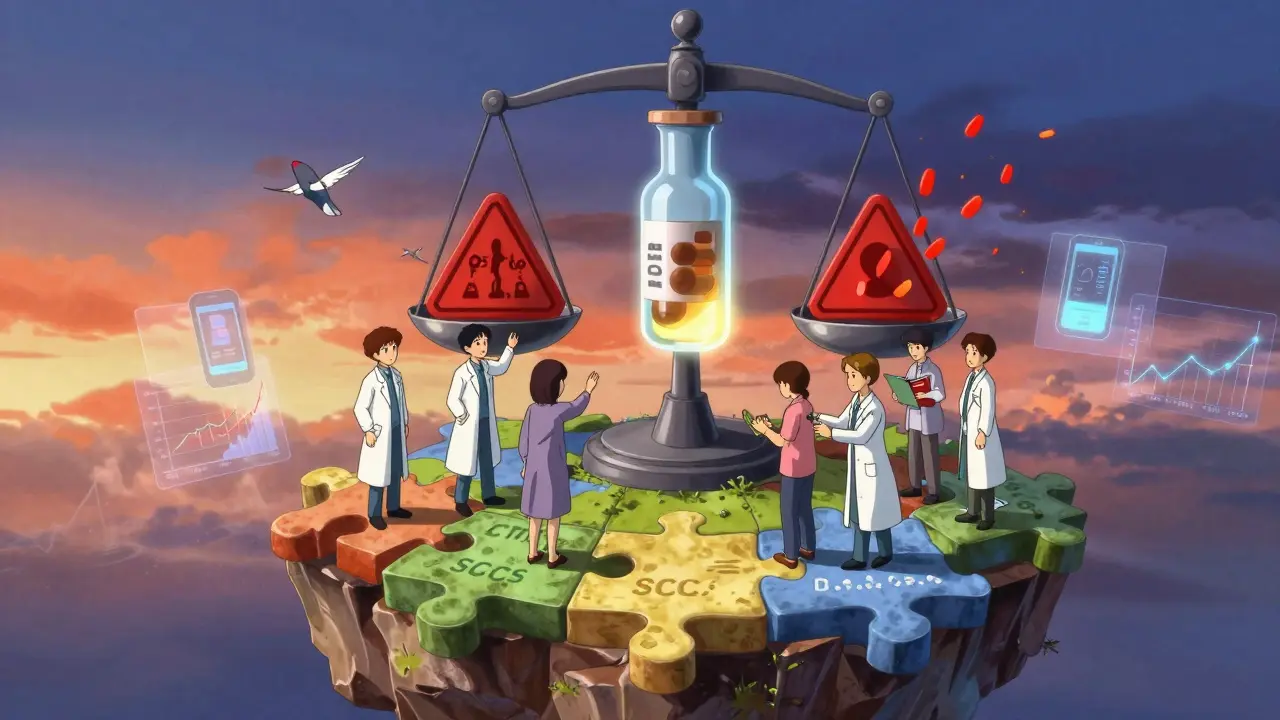
The field is evolving fast. In 2023, the FDA launched Sentinel System 3.0, which can now monitor drug safety in near real-time across 12 health systems. AI is being tested to predict which patients are most at risk of an adverse event before it happens. Early results show 22-35% fewer errors with high-alert drugs like insulin and heparin.
By 2025, the FDA plans to start using data from wearable devices - heart rate, sleep patterns, activity levels - to spot early signs of drug toxicity. Imagine a smartwatch alerting a doctor that a patient on a new antidepressant is sleeping less and moving more than usual. That could be a warning sign of serotonin syndrome.
And the demand is growing. The global pharmacovigilance market is projected to hit $11.7 billion by 2028. Why? Because the population is aging. By 2030, 16% of Americans will be over 65. And 35% of them will be taking five or more medications daily. More drugs. More combinations. More risk.
What You Can Do
As a patient, you’re not just a data point. You’re part of the system.
- Keep a written list of every medication you take - including over-the-counter pills, vitamins, and supplements.
- Ask your pharmacist: “Could this interact with anything else I’m taking?”
- Don’t ignore refill reminders. If you can’t afford a medication, say so. There are often alternatives.
- Speak up if something feels off. A new rash, unexplained fatigue, or confusion isn’t just “getting older.” It could be a drug reaction.
Medication safety isn’t just about scientists in labs. It’s about communication. It’s about systems. It’s about asking the right questions - and listening to the answers.
How do researchers know if a drug is really causing harm or if it’s just coincidence?
They use statistical methods to separate coincidence from causation. For example, in a self-controlled case series, they compare how often an adverse event happened after a patient started the drug versus during times they weren’t taking it. If the event only happens after starting the medication - and never before - that’s a strong signal. They also adjust for other factors like age, existing conditions, and other drugs. Still, no method is perfect. That’s why multiple studies and data sources are needed.
Why are observational studies used if randomized trials are more reliable?
Randomized trials are great for proving a drug works under controlled conditions - but they’re too small and too short to catch rare or long-term side effects. Observational studies use real-world data from millions of people, making them the only practical way to detect problems like a 1-in-10,000 risk of liver damage that shows up after two years. They’re not perfect, but they’re essential.
What’s the biggest threat to medication safety today?
Polypharmacy - especially in older adults. More than 35% of people over 65 take five or more medications daily. The more drugs someone takes, the higher the chance of harmful interactions, missed doses, or confusing instructions. The real danger isn’t one drug - it’s the combination, and how poorly we manage them.
Can AI really help prevent medication errors?
Yes - but not yet perfectly. Early AI tools are predicting which patients are at highest risk of an adverse event by analyzing patterns in lab results, prescriptions, and vital signs. One pilot program at Kaiser Permanente cut high-alert medication errors by 28% by flagging patients with rising creatinine levels who were also on NSAIDs. The challenge is reducing false alarms so clinicians don’t ignore them.
Are generic drugs less safe than brand-name ones?
No. Generic drugs must meet the same strict standards for quality, purity, and effectiveness as brand-name drugs. The FDA requires them to have the same active ingredient, strength, and dosage form. Differences in inactive ingredients (like fillers) can rarely cause reactions in sensitive people - but those cases are uncommon and monitored. Safety concerns are about how the drug is used, not whether it’s generic.
Martin Halpin
February 28, 2026 AT 01:26Let’s be real - all this ‘science’ is just fancy jargon for ‘we hope it works.’ I’ve seen patients on five meds, all prescribed by different doctors who never talk to each other, and then we act shocked when someone ends up in the ER. This whole system is held together by duct tape and caffeine. The FDA doesn’t ‘track’ anything - they’re reactive, not proactive. And don’t get me started on those ‘real-world evidence’ studies. They’re just glorified Google searches with a PhD stamped on them.
Meanwhile, the real problem? Pharma reps walking into clinics with free lunch and shiny brochures. No one’s talking about that. The science? It’s a sideshow. The money’s the show.
Eimear Gilroy
February 28, 2026 AT 07:54I’m a pharmacist in Dublin, and I see this every day. One elderly woman came in last week because her ‘new’ blood pressure med made her dizzy. Turns out she’d been taking two different versions of the same drug because her GP didn’t update her list. We fixed it in 10 minutes. But how many people aren’t lucky enough to have a pharmacist who remembers their name? The tech is cool, but if the human layer breaks, everything else collapses.
Michael FItzpatrick
February 28, 2026 AT 12:57Yo - this post is a goddamn masterpiece. I’ve been in this game 20 years, and I’ve never seen someone break down pharmacovigilance like this. The SCCS example? Pure genius. Using your own body as a control? That’s elegance in epidemiology. And yeah, alert fatigue? It’s a crisis. I worked ER for a year, and we had 12 alerts per patient, 8 of them ‘potential interaction with aspirin.’ Bro, aspirin’s in every third OTC med. We stopped reading them after the third day. That’s not negligence - it’s survival.
AI? It’s the future, but only if we stop feeding it garbage data. If your EHR has ‘hypertension’ and ‘HTN’ as separate conditions, your model’s gonna think you have two diseases. We need better data hygiene before we can trust the bots.
Brandice Valentino
March 1, 2026 AT 14:50OMG I JUST READ THIS AND I’M SO INTO IT LIKE WHOA. Like, I had no idea like… the FDA has 190 MILLION PEOPLE?? Like, that’s basically the whole dang planet?? And I thought my grandma’s 5 pills were bad?? Like, I’m 24 and I take one vitamin and a melatonin and I feel like a medical genius?? 😭
Also… are generics really the same?? Like, I swear my generic Xanax makes me feel like a zombie but the brand name is like… chill vibes?? Is that just me?? 🤔
Larry Zerpa
March 2, 2026 AT 07:21Let’s dismantle this narrative. The claim that observational studies are ‘essential’ is dangerously misleading. You cite a 22% false-positive rate - that’s not a flaw, it’s a feature of the method. Observational studies are fundamentally incapable of establishing causation. They’re correlation machines with a lab coat. The fact that we rely on them as ‘evidence’ is a failure of regulatory rigor.
And the ‘real-world data’ from Medicare? That’s not science - it’s administrative garbage. You’re tracking prescriptions, not outcomes. You’re conflating adherence with efficacy. You’re ignoring confounders like socioeconomic status, access to care, and diet. This isn’t ‘population-scale evidence’ - it’s noise dressed up as signal.
AI predicting toxicity? It’s a fantasy. You’re training models on biased, fragmented data and calling it innovation. If you can’t even get a patient’s allergy list right, how do you expect AI to know they’re at risk? This isn’t progress. It’s placebo science.
Gwen Vincent
March 3, 2026 AT 02:00I really appreciate how this breaks down the complexity without oversimplifying. I work in a clinic where we see older adults on 7-10 meds daily - and yes, it’s terrifying. But what gives me hope is how many pharmacists and nurses are quietly fixing things every day. One nurse here started a ‘meds check’ day where patients bring all their bottles in. No judgment. Just questions. And guess what? We caught three dangerous interactions in the first month. It’s not flashy. But it works.
Maybe the real innovation isn’t AI or big data - it’s just listening.
Valerie Letourneau
March 4, 2026 AT 11:32While the technological and statistical advancements described are indeed impressive, I must emphasize that the ethical underpinnings of pharmacovigilance remain underdeveloped. The data collection systems referenced - Sentinel, Medicare, Kaiser - operate under consent frameworks that are often opaque to the patient. There is a profound asymmetry of power between the institutions collecting this data and the individuals whose health trajectories are being analyzed.
Furthermore, the focus on predictive algorithms risks further marginalizing populations with limited digital access. In rural Canada, for instance, many elderly patients still rely on paper records and in-person pharmacy visits. To prioritize AI-driven surveillance while neglecting these communities is not innovation - it is exclusion disguised as progress.
Khaya Street
March 5, 2026 AT 05:47Look, I get the science. But let’s not pretend this is all about saving lives. This whole system is a money machine. Drug companies fund the studies. Regulators get cozy with the pharma reps. Hospitals get paid more when they prescribe more pills. And the patient? They’re just a line item on a spreadsheet.
I’ve seen it in South Africa - patients paying out of pocket for meds they can’t afford, then skipping doses so they can eat. And we’re talking about ‘adherence’ like it’s their fault? No. It’s a policy failure. Fix the system before you fix the algorithm.
Christina VanOsdol
March 5, 2026 AT 12:57Okay BUT. The AI thing? I’m OBSESSED. Like, imagine your smartwatch says, ‘Hey, your heart rate spiked 20% after taking this new antidepressant - maybe don’t take it tonight?’ That’s sci-fi becoming real!! And the wearables thing?? I’m already wearing my Fitbit 24/7 so why not?? 🤖💓
Also - I just found out my generic omeprazole has a different filler than the brand and I think it’s why I get bloated?? Is that a thing?? 🤯
Also also - why are we still using paper lists?? I have a notes app. I could screenshot my meds and send it to my doctor. It’s 2025. Let’s go.
Brooke Exley
March 6, 2026 AT 02:13You know what’s beautiful about this? It’s not just about drugs - it’s about trust. When a nurse notices you’re quieter than usual. When a pharmacist remembers your dog’s name and asks if he’s still doing okay. That’s the real safety net. Tech helps. But humans? Humans hold the system together.
I work with seniors. One man told me he stopped his blood thinner because he was scared of bleeding. He didn’t say anything. No one asked. We caught it because his daughter called, crying, saying he hadn’t been eating. That’s the moment that matters. Not the algorithm. Not the data set. Just… someone caring enough to notice.
Alfred Noble
March 7, 2026 AT 09:01So I work in a rural clinic. We don’t have fancy AI. We have a whiteboard. And a nurse who writes down every med every patient takes - in pen. And she checks it every visit. And sometimes she calls the pharmacy to confirm. And sometimes she says, ‘You ain’t takin’ this, are ya?’
And you know what? We’ve had zero preventable errors in 3 years. No fancy system. Just someone who shows up and pays attention. Maybe we don’t need more data. Maybe we need more people who care enough to listen.
Larry Zerpa
March 7, 2026 AT 23:51Re: comment from 7821 - charming anecdote. But anecdotes aren’t policy. You’re romanticizing manual labor as a solution to systemic failure. If your clinic is the exception, that proves the rule: most places aren’t like yours. And those places? People die. You can’t scale a whiteboard. You need infrastructure. But infrastructure built on flawed data is just a faster road to disaster.
And to the person who thinks generics make them ‘feel like a zombie’ - that’s placebo, nocebo, or an inactive ingredient interaction. Not proof of inferior quality. Stop blaming the system for your subjective experience.