
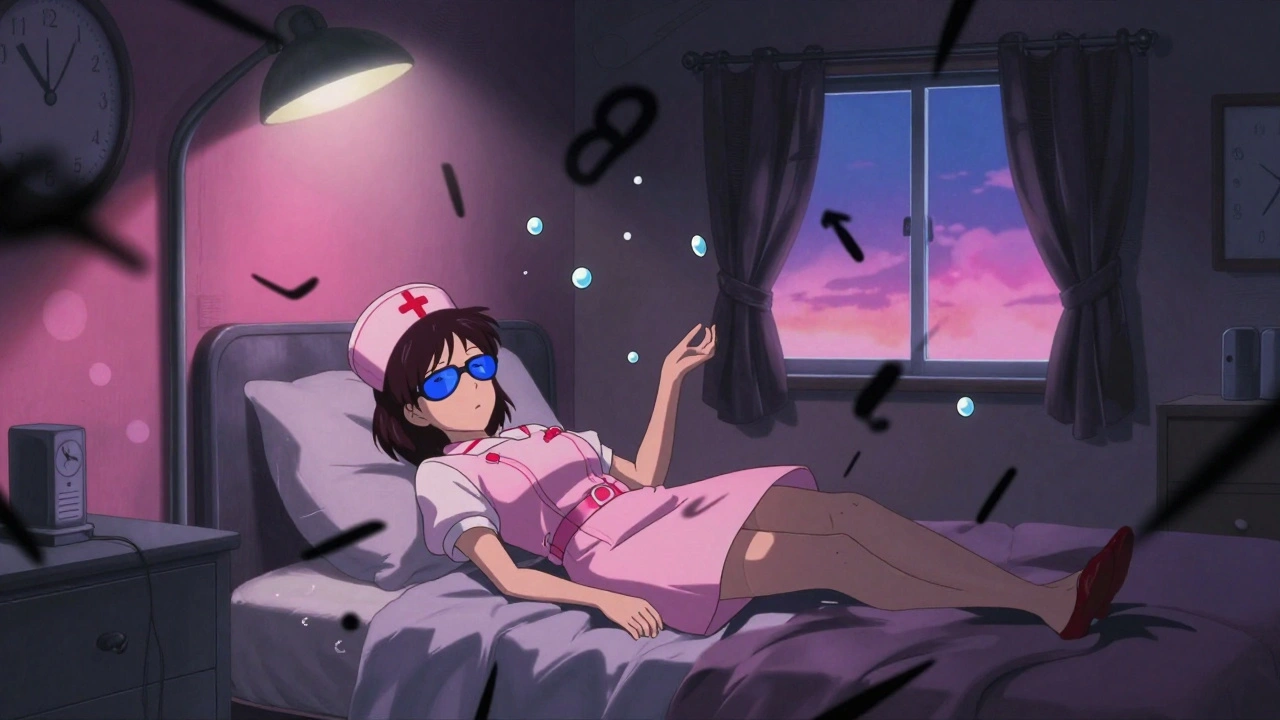
Working nights isn’t just tough-it’s physically unnatural. If you’ve ever lain awake at 8 a.m. after a 12-hour shift, exhausted but wide-eyed, you’re not just tired. You might have shift work sleep disorder (SWSD). It’s not laziness. It’s not poor discipline. It’s your body fighting a biological war against the clock.
More than 15 million Americans work nights, evenings, or rotating shifts. Of those, nearly one in three suffers from moderate to severe sleepiness during work hours. That’s not normal. That’s a medical condition recognized by the American Academy of Sleep Medicine since 2005. And it’s getting worse. With 24/7 economies expanding, more people are stuck on schedules that clash with their biology.
Why Your Body Won’t Let You Sleep After the Night Shift
Your brain runs on a 24-hour rhythm called the circadian clock. It’s controlled by a tiny group of cells in your hypothalamus-the suprachiasmatic nucleus. This clock tells your body when to be awake, when to sleep, when to release cortisol, and when to make melatonin. Melatonin is your sleep hormone. It rises in the dark, peaks around 2 a.m., and drops as morning light hits your eyes.
When you work nights, your body still thinks it’s nighttime at 6 a.m. So it keeps pumping out melatonin while you’re trying to sleep. Meanwhile, cortisol-the hormone that keeps you alert-is low when you need it most: during your shift. This mismatch is called circadian misalignment. Studies show melatonin levels stay high during night shifts, even under bright lights. In fact, artificial light at night can suppress melatonin by up to 85% compared to true darkness.
Result? You’re sleepy on the job. And when you finally get home, your body is still in night mode. You can’t fall asleep. Or you wake up after 3 hours. You lose 1 to 4 hours of sleep per night. Over time, that adds up to hundreds of lost hours a year.
What SWSD Really Feels Like
It’s not just being tired. SWSD shows up in ways you might not connect to sleep:
- Struggling to stay awake during your shift-even after coffee
- Waking up too early during the day, no matter how hard you try to sleep
- Feeling foggy, forgetful, or emotionally drained
- Headaches, stomach issues, or weakened immunity
- Making mistakes at work, or nearly crashing your car on the way home
- Relationship strain because you’re never available or always irritable
A 2022 Healthline survey of 500 shift workers found 78% experienced dangerous sleepiness during work. 63% said their relationships suffered. 41% admitted to errors directly linked to fatigue.
One nurse on Reddit described working ER night shifts for 18 months: “I had blackout curtains, white noise, earplugs, and still slept less than 4 hours. I started missing meds on rounds. My husband said I didn’t recognize him anymore.”
This isn’t just about feeling bad. It’s about safety. The National Safety Council estimates fatigue-related workplace accidents cost $13 billion annually in the U.S. One case in a Midwest factory led to a $2.3 million equipment failure-because a worker dozed off during a critical check.
Who Gets SWSD-and Why
Not everyone who works nights develops SWSD. About 10-30% of shift workers do. Why some and not others? It comes down to biology.
First, chronotype matters. People who are naturally “night owls” adapt 37% better than “morning larks.” If you’ve always been a late sleeper, your body has a better shot at adjusting. But if you’re the type who wakes up at 6 a.m. even on weekends, nights are going to wreck you.
Age plays a role too. Only 15% of workers aged 18-29 develop SWSD. By age 50-64, that jumps to 34%. Your circadian system slows down as you age. It gets harder to reset.
Women are 28% more likely to develop SWSD than men, according to a 2021 study in the Journal of Sleep Research. Hormonal shifts, caregiving roles, and differences in melatonin sensitivity may contribute.
And here’s the kicker: even after years on nights, only 2-5% of shift workers ever fully adapt. Dr. Charles Czeisler’s research at Brigham and Women’s Hospital showed that most people never sync their internal clock to a night schedule. Your body is still trying to sleep during the day.
How to Fix It: Proven Strategies That Actually Work
There’s no magic pill. But there are proven, science-backed ways to reclaim your sleep.
1. Light Therapy: Trick Your Brain Into Thinking It’s Daytime
Light is the strongest signal to your circadian clock. Use it strategically.
- During your night shift: Use a 10,000-lux light box for 30-60 minutes every 2 hours. Don’t stare at it-just have it on your desk while you work.
- After your shift: Wear blue-blocking sunglasses on your way home. Even streetlights and car headlights can interfere with melatonin.
- At home: Use blackout curtains, cover LED lights, and install dim red bulbs in the bedroom. Red light doesn’t suppress melatonin.
One 2022 Mayo Clinic study found that nurses using light therapy improved alertness by 42% and increased daytime sleep by 45 minutes on average.
2. Melatonin: The Right Dose at the Right Time
Take 0.5 to 5 mg of melatonin 30 minutes before your daytime sleep. Don’t take it before your shift-that’ll make you sleepy on the job. Take it when you’re ready to sleep.
Studies show melatonin helps shift workers fall asleep 20-30 minutes faster and sleep 20-40 minutes longer. It’s not a sedative. It’s a timing signal. Your body needs it to say, “It’s night now.”
3. Caffeine: Use It Like a Tool, Not a Crutch
Caffeine works-but only if timed right.
- Take it early in your shift: One cup (100-200 mg) at the start, another at the halfway point.
- Stop at least 2 hours before your planned sleep.
- Never rely on it late at night-it’ll ruin your next sleep window.
A 2021 study in the American Journal of Critical Care found nurses who used timed caffeine improved alertness by 68% and reduced near-miss errors by 31%.
4. Strategic Napping
Before your shift: A 20-30 minute nap can boost alertness for hours.
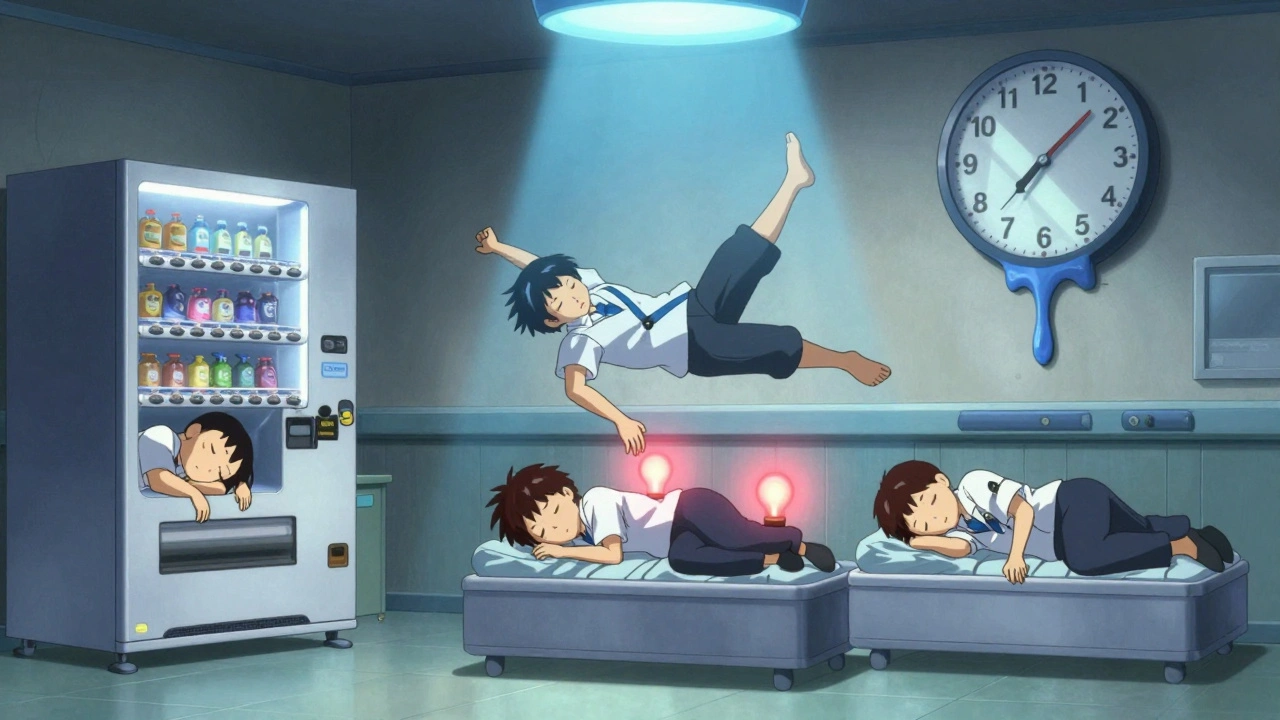
During your shift: A 10-20 minute nap during a break can cut fatigue by half. Many hospitals now allow “nap pods” for night staff. If yours doesn’t, find a quiet corner. Even lying down with your eyes closed helps.
5. Sleep Schedule Consistency
This is the hardest part. On your days off, don’t reset to a day schedule. Keep your sleep window as close as possible to your shift schedule. If you work 11 p.m. to 7 a.m., try to sleep 8 a.m. to 4 p.m. even on weekends.
Only 22% of shift workers have access to quiet, dark sleeping environments at home. If you live with others, communicate. Use signs. Set boundaries. Your sleep is non-negotiable.
What Doesn’t Work
Alcohol won’t help. It might knock you out, but it fragments sleep and reduces deep sleep. You’ll wake up more tired.
Sleeping pills? They’re not designed for circadian disorders. They mask symptoms but don’t fix the rhythm. Long-term use can lead to dependence.
“Just sleep more on your days off.” No. You can’t catch up. One night of 10 hours won’t undo 4 nights of 4 hours. Your body doesn’t store sleep like a bank account.
When to See a Doctor
If you’ve been struggling for more than a month, talk to a sleep specialist. SWSD is diagnosable. You’ll need to keep a sleep log for at least 7 days, or wear an actigraphy device (a wrist monitor that tracks movement and light exposure).
Doctors may recommend:
- Behavioral therapy for shift workers
- Prescription wake-promoting drugs like modafinil or armodafinil (approved for SWSD since 2004 and 2015)
- Oral sodium oxybate (FDA-approved in May 2023 for excessive sleepiness in SWSD)
These aren’t quick fixes. They’re tools to support lifestyle changes-not replace them.
The Bigger Picture: Employers Need to Step Up
Too often, the burden falls on the worker. But workplaces have a responsibility.
NIOSH recommends:
- Limiting consecutive night shifts to 3-4
- Allowing at least 11 hours between shifts
- Providing access to dark, quiet rest areas
- Training managers to recognize fatigue signs
Yet only 22% of shift workers report having access to proper sleep facilities. That’s unacceptable.
Companies that invest in SWSD management save money. The National Safety Council found $5.20 saved for every $1 spent on fatigue prevention-through fewer accidents, less absenteeism, and lower turnover.
Healthcare systems are catching on. In 2018, only 12% of major hospitals screened for SWSD. By 2023, that jumped to 47%.
It’s Not a Personal Failure
Working nights is one of the most physically demanding jobs in modern life. If you’re struggling to sleep, it’s not because you’re weak. It’s because your biology is being ignored.
Dr. Till Roenneberg’s research says it plainly: “Human physiology is fundamentally incompatible with long-term night shift work.” Only 1-2% of people ever fully adapt. The rest? They’re fighting a losing battle.
But you don’t have to lose. With the right tools-light, melatonin, caffeine, naps, and schedule consistency-you can reclaim your health, your safety, and your life.
Start small. Pick one strategy. Try it for two weeks. Track your sleep. Notice how you feel. You might not fix everything overnight. But you can start feeling like yourself again.
What’s Next for SWSD
Research is moving fast. The NIH spent $18.7 million in 2023 on circadian rhythm studies, with a third focused on shift work. Trials are now testing personalized treatments based on your genes-like variations in the PER3 and CLOCK genes that affect how your body handles sleep.
By 2025, 68% of major healthcare systems plan to use wearable devices to track employees’ circadian rhythms. Imagine a wristband that tells you: “Your melatonin is peaking. Don’t drive home yet.”
But until then, the tools you have now are enough. You don’t need fancy tech. You need consistency. And you need to stop blaming yourself.
Your body isn’t broken. It’s just out of sync. And with the right approach, you can bring it back.
Maria Elisha
December 8, 2025 AT 07:54Ronald Ezamaru
December 8, 2025 AT 08:17Noah Raines
December 8, 2025 AT 09:13Ajit Kumar Singh
December 10, 2025 AT 04:43Shubham Mathur
December 12, 2025 AT 01:46Katherine Rodgers
December 12, 2025 AT 21:43Lauren Dare
December 14, 2025 AT 18:51Also, sodium oxybate? That's a narcolepsy drug. So now we're medicalizing exploitation.
Gilbert Lacasandile
December 16, 2025 AT 04:22Lola Bchoudi
December 16, 2025 AT 05:56Morgan Tait
December 16, 2025 AT 18:24Darcie Streeter-Oxland
December 16, 2025 AT 22:07Steve Sullivan
December 18, 2025 AT 18:22Stacy Tolbert
December 20, 2025 AT 00:09