
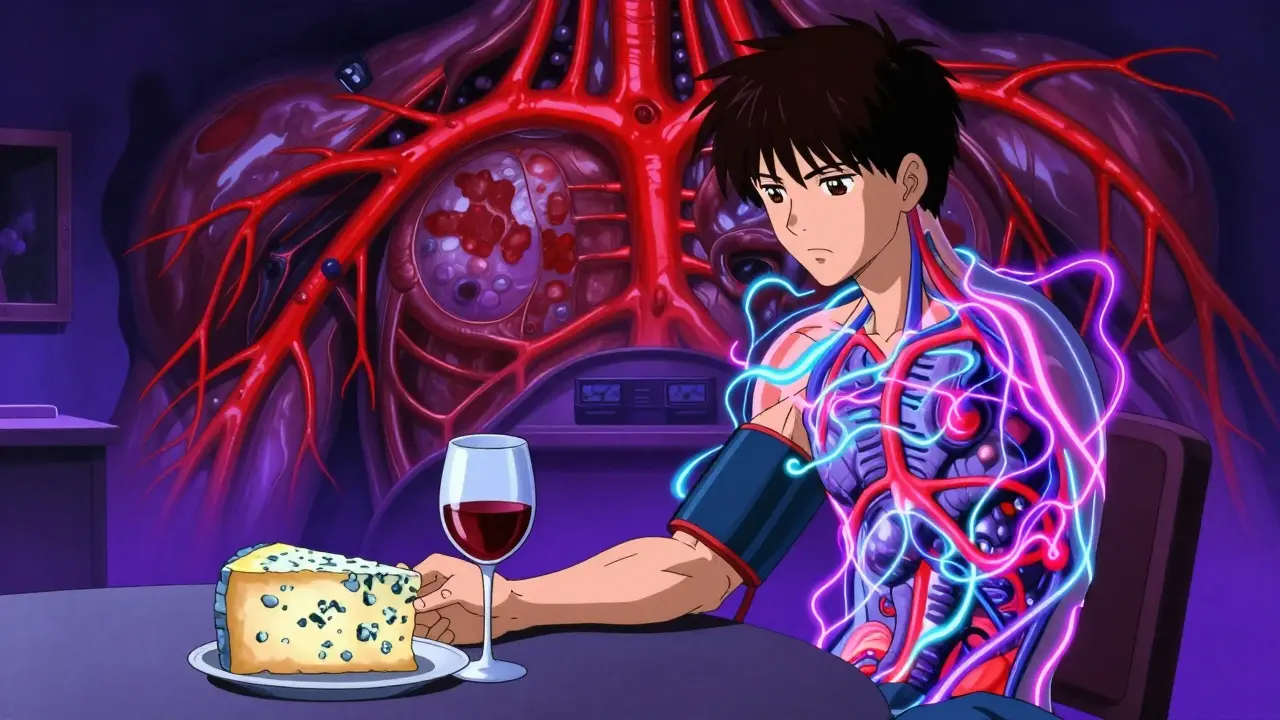
Imagine biting into a delicious piece of aged cheddar or pouring a glass of Chianti wine, only to have your blood pressure skyrocket within minutes. For most people, this is just a heartburn risk. For those taking MAO inhibitors, a class of older but highly effective antidepressants that block the enzyme monoamine oxidase, it can be a life-threatening emergency known as a hypertensive crisis. This reaction isn't just theoretical; it’s a real physiological danger caused by the interaction between these medications and specific foods containing high levels of tyramine, a naturally occurring compound.
You might wonder why you are reading about drugs from the 1950s in 2026. While newer antidepressants like SSRIs dominate the market, MAOIs remain a critical lifeline for patients with treatment-resistant depression. According to data from IQVIA in 2023, they still account for 2-3% of prescriptions in the United States. The key to using them safely lies not in avoiding them entirely, but in understanding exactly what triggers the dangerous 'cheese effect' and how to manage your diet without sacrificing your quality of life.
Why Tyramine and MAOIs Clash
To understand the risk, you need to look at how your body normally handles food. Under normal circumstances, an enzyme called monoamine oxidase A (MAO-A) works in your gut and liver to break down tyramine before it enters your bloodstream. When you take an irreversible MAOI, you effectively shut down this cleanup crew. Without MAO-A, tyramine accumulates and acts like a thief, displacing norepinephrine-a powerful neurotransmitter-from storage sites in your nerves.
This sudden release of norepinephrine causes your blood vessels to constrict rapidly, leading to a spike in blood pressure. Research published in the Journal of Clinical Psychopharmacology in 2018 showed that ingesting as little as 5-10 mg of tyramine can trigger a significant pressor response in patients on non-selective MAOIs. Blood pressure can jump by 30-50 mmHg systolic within just 15 to 30 minutes. The threshold for a full-blown hypertensive crisis is generally considered to be 10-25 mg of tyramine, though individual sensitivity varies wildly. It’s not about the food itself being toxic; it’s about the chemical environment created by the medication.
The Danger Zone: High-Tyramine Foods
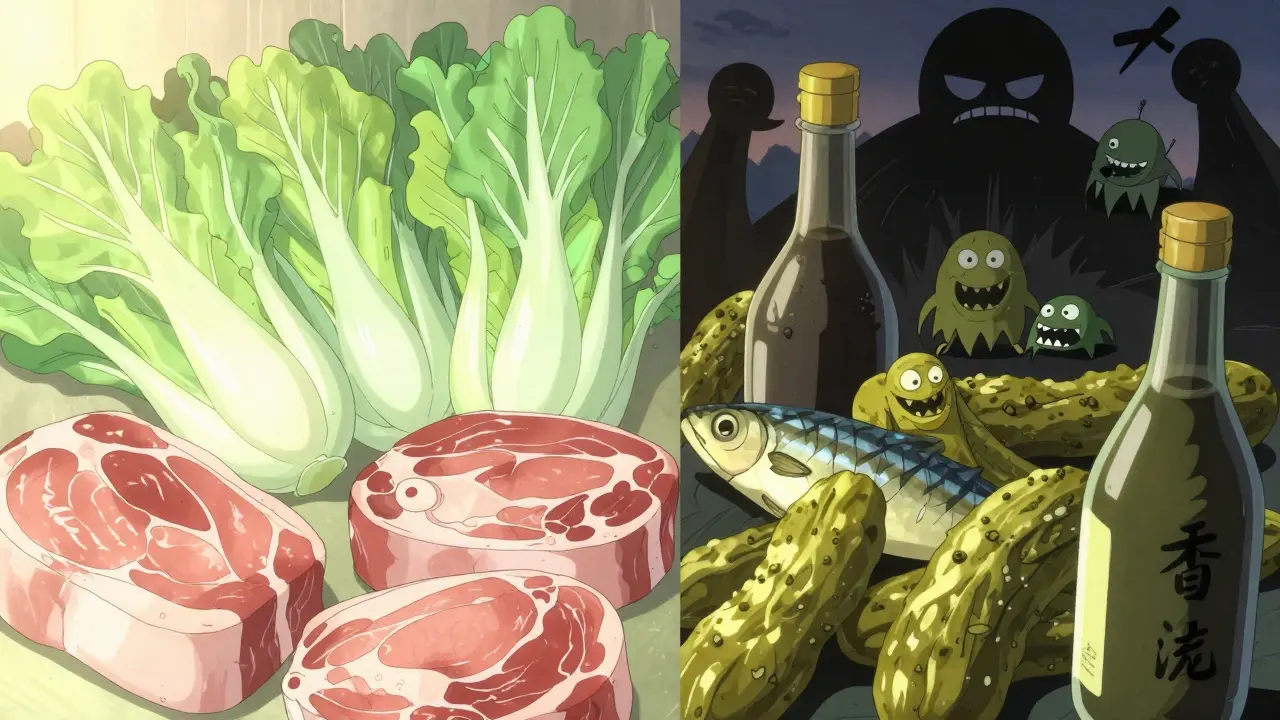
Not all foods are equal when it comes to tyramine content. The danger lies primarily in foods that are aged, fermented, spoiled, or cured. Fresh foods typically contain minimal tyramine-usually less than 5 mg per 100 grams. However, as food ages or ferments, tyramine levels can increase by 300-500%, according to a 2021 report by the European Food Safety Authority.
| Food Item | Estimated Tyramine Content | Risk Level |
|---|---|---|
| Pickled Herring | 110-230 mg / 100g | Extremely High |
| Fermented Soy Sauce | 20-70 mg / 100ml | High |
| Aged Blue Cheese | 9-41 mg / 100g (can exceed 400 mg) | High |
| Chianti Wine | 4-15 mg / 100ml | Moderate to High |
| Fresh Meat/Vegetables | < 5 mg / 100g | Low/Safe |
Blue cheeses are particularly notorious, with USDA Food Composition Database measurements showing wide variances. Even some aged cheddars can hit dangerous levels. If you are on a traditional MAOI, the general rule is strict avoidance of anything that smells strong, looks aged, or has been sitting out too long. Spoiled meat is also a major culprit; if your leftovers smell 'off,' they likely have elevated tyramine levels due to bacterial breakdown of proteins.
Not All MAOIs Are Created Equal
If you feel overwhelmed by these restrictions, there is good news: not all MAOIs require the same level of dietary vigilance. The severity of restrictions depends heavily on the specific type of inhibitor you are prescribed.
Irreversible Non-Selective MAOIs: Drugs like phenelzine (Nardil), tranylcypromine (Parnate), and isocarboxazid (Marplan) bind permanently to the MAO enzyme. Because the enzyme cannot function until new ones are grown (which takes weeks), these drugs require strict tyramine restriction to less than 15 mg per day, according to Mayo Clinic guidelines from 2023. This is the highest-risk category.
Reversible Inhibitors of MAO-A (RIMAs): Medications like moclobemide work differently. They compete with tyramine for the enzyme site rather than destroying the enzyme. This means that if you eat tyramine-rich food, the tyramine can displace the drug and be metabolized normally. Clinical trials reported in the Journal of Clinical Psychiatry (2017) showed no hypertensive crises even at tyramine doses up to 100 mg. Unfortunately, moclobemide is not FDA-approved in the US, limiting access for American patients.
Transdermal Selegiline (Emsam Patch): Approved by the FDA in 2006, this patch delivers medication through the skin, bypassing the gut initially. At the lowest dose (6 mg/24 hours), it maintains selective MAO-B inhibition in the gut, effectively eliminating the need for dietary restrictions. Higher doses (9 mg and 12 mg) do require modified restrictions. A 2020 systematic review in CNS Drugs noted that 87% of patients on traditional oral MAOIs found dietary restrictions burdensome, compared to only 22% on low-dose transdermal selegiline.
Recognizing the Signs of a Crisis
Despite careful planning, accidents happen. A Reddit survey conducted by the r/antidepressants community in 2023 found that 74% of MAOI users accidentally consumed high-tyramine foods at least once. Knowing what to look for can save your life.
The hallmark symptom of an MAOI-induced hypertensive crisis is a severe, occipital headache (located at the back of the head). The Mayo Clinic reports this occurs in 92% of cases. Other symptoms include palpitations, nausea, sweating, and neck stiffness. Your systolic blood pressure may exceed 180 mmHg. If you experience these symptoms after eating suspect foods, do not wait. Seek immediate medical attention. While fatalities are rare-with fewer than 5 documented annually in the US since 2010-the risk of stroke or organ damage is real.
Practical Strategies for Safe Living
Living on an MAOI doesn’t mean giving up social life or enjoying meals. It requires strategy. The Massachusetts General Hospital Center for Women's Mental Health developed an educational protocol that reduced dietary violation rates from 32% to 8% at six months. Here is how you can apply their principles:
- Stick to Fresh: Fresh meats, poultry, fish, and vegetables are safe. Cook them yourself to ensure they haven't been sitting out.
- Portion Control: If you must eat a restricted food, keep portions tiny. A safe portion of aged cheese is often cited as less than 1 ounce, but many experts recommend zero tolerance for high-risk items like blue cheese.
- Read Labels: Look for words like 'aged,' 'fermented,' 'cured,' 'pickled,' or 'smoked.' These are red flags.
- Monitor Your Pressure: The American Psychiatric Nurses Association recommends home blood pressure monitoring. Automatic loggers can alert you to dangerous trends before they become crises.
- Communicate: Tell restaurant servers about your restriction. Most chefs are happy to prepare fresh, simple dishes if asked.
The Future of MAOI Treatment
The landscape is changing. In March 2024, the FDA granted breakthrough designation to TYR-001, a tyramine-metabolizing enzyme supplement developed by Sage Therapeutics. Phase II trials showed it could allow unrestricted diets while maintaining efficacy, with no hypertensive crises at tyramine doses up to 50 mg. If Phase III trials succeed, this could revolutionize MAOI use, potentially increasing prescription rates to 5-7% by 2035.
Until then, MAOIs remain a niche but vital tool. With proper education and caution, you can harness their power to treat resistant depression without falling victim to the cheese reaction. Stay informed, stay fresh, and monitor your health closely.
Can I drink alcohol while taking MAO inhibitors?
Most alcoholic beverages contain tyramine, especially red wines like Chianti and beer. Generally, you should avoid all alcohol or strictly limit intake to very small amounts of low-tyramine spirits like vodka or gin, mixed with fresh juices. Always consult your doctor, as individual sensitivity varies.
How long does it take for MAO inhibitors to stop working after discontinuation?
Because irreversible MAOIs bind permanently to the enzyme, it takes time for your body to produce new enzymes. Typically, you must wait 2-3 weeks after stopping an irreversible MAOI before starting another antidepressant to avoid dangerous interactions like serotonin syndrome.
Is soy sauce safe on an MAOI diet?
Traditional fermented soy sauce is high in tyramine (20-70 mg/100ml) and should be avoided. However, some brands offer 'low-tyramine' or 'fresh' soy sauces that are not fermented. Check labels carefully or use alternatives like coconut aminos, which are generally lower in tyramine.
What should I do if I accidentally eat high-tyramine food?
Monitor your symptoms closely for the next few hours. Watch for severe headaches, palpitations, or nausea. If your blood pressure rises significantly or you feel unwell, seek emergency medical care immediately. Do not wait for symptoms to worsen.
Are bananas safe to eat on MAOIs?
Yes, ripe bananas are generally safe. Unripe or overripe bananas may have slightly higher tyramine levels, but they rarely reach dangerous thresholds unless consumed in massive quantities. Fresh fruits are typically low-risk.