
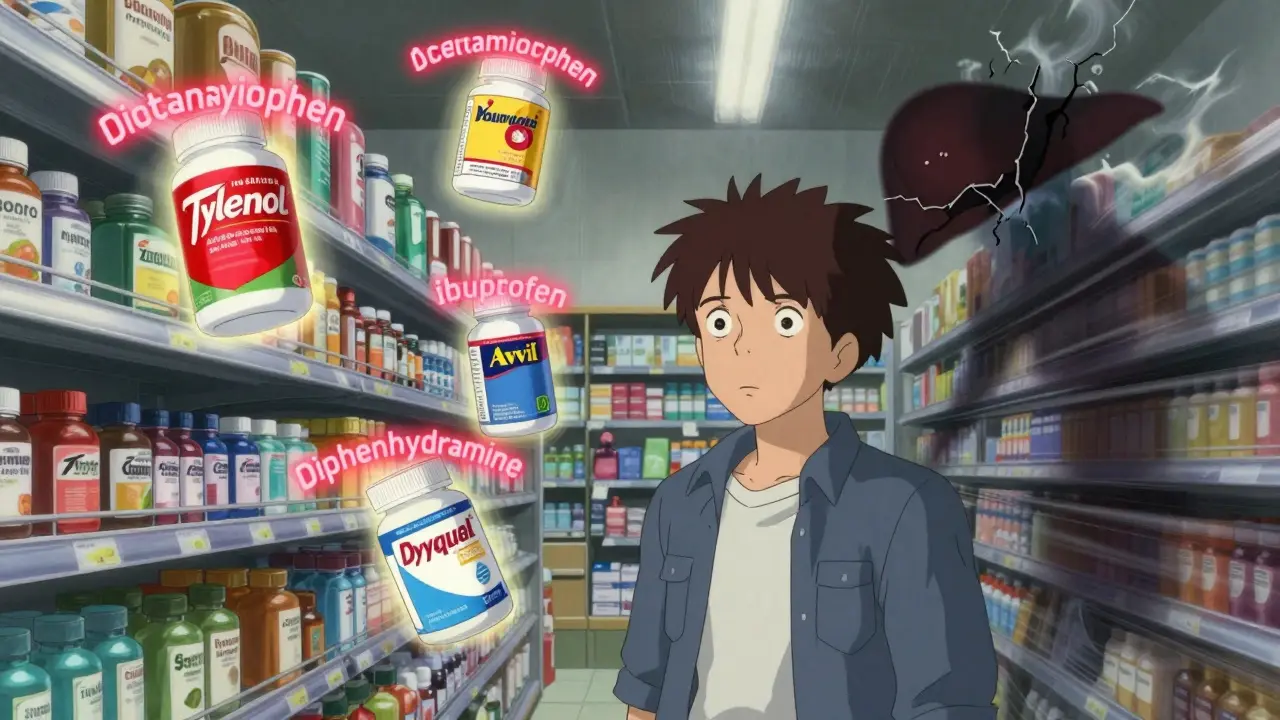
Every time you grab a bottle of pain reliever, cold medicine, or allergy pill from the shelf, you’re making a decision based on a label you might not fully understand. You see "Tylenol," "Advil," "Zyrtec," and assume they’re all different. But here’s the truth: acetaminophen is in Tylenol, Excedrin, TheraFlu, and dozens of other brands. If you take two of them without checking, you could be risking liver damage - and you wouldn’t even know it until it’s too late.
What Exactly Is an Active Ingredient?
The active ingredient is the part of the medicine that actually does the work. It’s the chemical that reduces fever, blocks allergies, or eases pain. Everything else - the color, the shape, the flavor, the packaging - is just there to make it easier to take or sell. The U.S. Food and Drug Administration (FDA) requires every over-the-counter (OTC) drug to list its active ingredient clearly on the Drug Facts label, right at the top.It’s not enough to say "pain reliever." The label must say exactly what’s in it: acetaminophen 325 mg, ibuprofen 200 mg, or diphenhydramine HCl 25 mg. That number matters. Too little, and it won’t help. Too much, and it can hurt you.
Why the Drug Facts Label Isn’t Just Boring Text
Before 1999, OTC labels were a mess. Some listed ingredients in tiny print. Others used confusing terms like "active component" or "medicinal ingredient." A 1995 FDA study found that 78% of shoppers couldn’t tell which part of the label was the active ingredient. So the FDA created the Drug Facts label - a simple, standardized format that’s been used ever since.It has seven sections, and the first one is always Active Ingredients. Below it, you’ll find:
- Purpose: What it’s meant to do (e.g., "pain reliever," "antihistamine")
- Uses: What symptoms it treats (e.g., "headache," "runny nose")
- Warnings: When not to use it, possible side effects, and interactions
- Directions: How much to take and how often
- Other Information: Storage tips, expiration date
- Inactive Ingredients: Things like dyes, sugars, or preservatives - important if you have allergies
This isn’t filler. It’s your safety guide. And if you skip reading it, you’re gambling with your health.
Top 5 Active Ingredients You Need to Know
You don’t need to memorize all 800+ active ingredients on the market. But these five show up in 74% of all OTC products sold in the U.S. Knowing them can save you from overdose, allergic reactions, or dangerous drug combos.- Acetaminophen - Found in Tylenol, Excedrin, TheraFlu, NyQuil, and many cold meds. Used for pain and fever. Maximum daily dose: 4,000 mg for adults. Too much = liver failure. Many people overdose because they take it in multiple products without realizing.
- Ibuprofen - Found in Advil, Motrin, Nuprin. Used for pain, fever, inflammation. OTC limit: 200 mg per tablet. Prescription versions go up to 800 mg. Don’t mix with aspirin or other NSAIDs.
- Diphenhydramine - Found in Benadryl, NyQuil, Tylenol Cold & Flu. An antihistamine that causes drowsiness. Used for allergies or sleep. Adult dose: 25-50 mg. Can cause confusion in older adults.
- Dextromethorphan - Found in Robitussin, Delsym, many cough syrups. Suppresses cough. OTC limit: 30 mg per dose. Misused recreationally - abuse has led to serious health risks.
- Loperamide - Found in Imodium. Slows diarrhea. OTC limit: 2 mg per dose. Often overlooked as an opioid. Overuse can cause fatal heart rhythm problems - over 160 deaths reported between 2012 and 2022.
Here’s a simple rule: If you’re taking more than one OTC product, check for overlap. If two pills both contain acetaminophen, you’re doubling your dose. That’s how ER visits happen.
Why Brand Names Are Traps
You think "Aleve" is different from "Advil"? It’s not. Aleve contains naproxen sodium. Advil contains ibuprofen. Different drugs. Different risks. But here’s the kicker: 28% of shoppers don’t know that Aleve contains naproxen. Only 72% correctly identified that Tylenol contains acetaminophen.Pharmacies know this. That’s why they put "DayQuil" and "NyQuil" side by side - they both contain the same amount of acetaminophen (325 mg per 15 mL). One is for daytime, one for nighttime. But if you take both, you’re hitting the max daily limit of acetaminophen in just two doses.
Dr. Karen Mahoney from the FDA says 70% of OTC medication errors happen because people don’t check the active ingredient. They see "cold medicine" and assume it’s safe to take with their painkiller. It’s not.
How to Read a Label Like a Pro
You don’t need a pharmacy degree. Just follow this four-step routine every time you buy an OTC drug:- Find the Active Ingredients section. It’s always the first thing on the Drug Facts label. No exceptions.
- Write down the name and amount. Example: "acetaminophen 325 mg." Don’t trust your memory.
- Compare with anything else you’re taking. Check your prescription meds, vitamins, and other OTC products. Acetaminophen hides in everything.
- Ask yourself: "Do I really need this?" Many cold and flu products combine five ingredients. You probably only need one.
Nationwide Children’s Hospital recommends spending at least 45 seconds on the label. Their study showed this simple habit reduces medication errors by 68% in parents.
What’s Changing in 2025
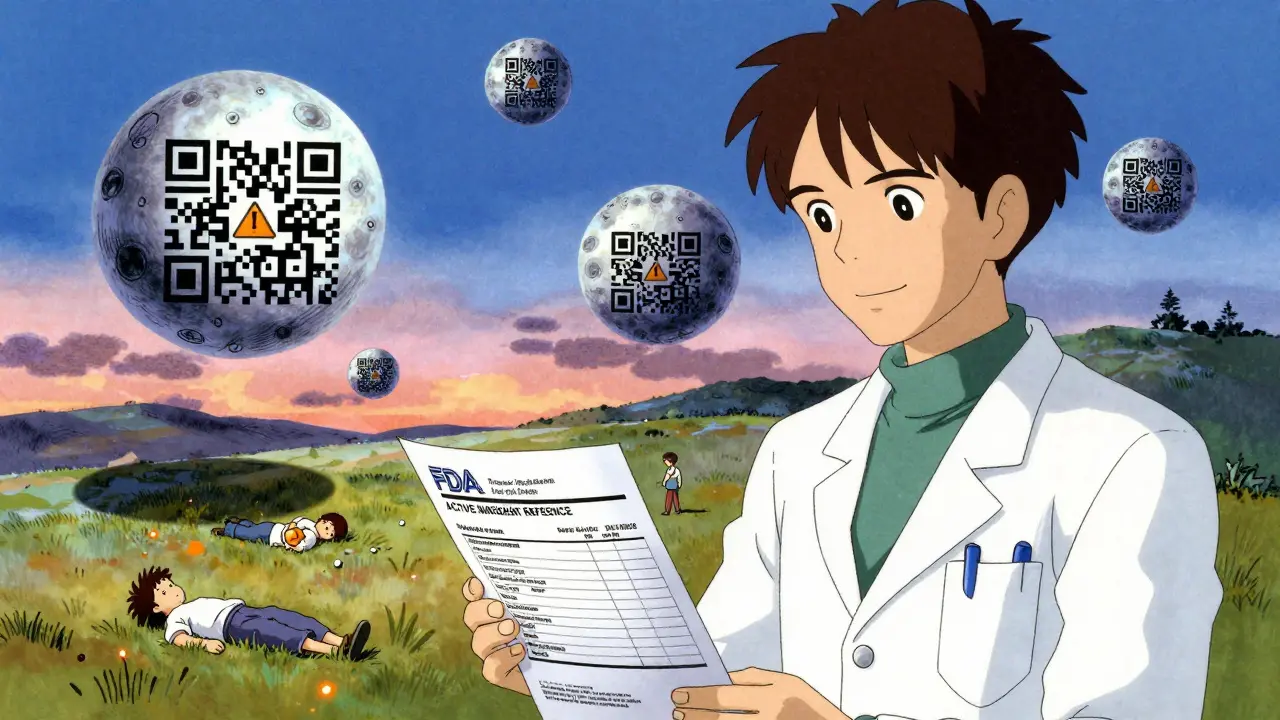
The rules are evolving. Thanks to the CARES Act of 2020, the FDA is now required to finalize all OTC drug monographs - the official rules for which ingredients are allowed and at what doses - by December 2023. That means labels are getting even stricter.Starting in 2026, all OTC drugs sold in the U.S. must include a QR code that links to a digital Drug Facts label. This isn’t just for tech lovers. It’s for people with low vision, limited English, or those who can’t read small print. The digital version will show full ingredient lists, including inactive ingredients that can trigger allergies - like red dye #40 or lactose.
And the FDA is cracking down on dangerous products. In 2022, they proposed new limits on aluminum and magnesium in antacids. In 2023, they started requiring a "Liver Warning" box on acetaminophen labels - even though OTC doses are capped at 500 mg per tablet, many people still take too many.
What You Can Do Today
You don’t need to wait for new rules. Start now:- Keep a list of all OTC and prescription meds you take. Include the active ingredient and dose.
- Use the FDA’s free printable Active Ingredient Reference Chart - it lists 35 common ingredients and their max daily doses. Download it from the FDA website.
- When in doubt, ask a pharmacist. They’re trained to spot dangerous combos. Most don’t charge for this.
- Don’t assume "natural" or "herbal" means safe. Some herbal products contain hidden active ingredients that interact with your meds.
The OTC market is huge - $127.6 billion in sales in 2022. But behind every pill is a person trying to feel better. Don’t let confusion make you sicker. Read the label. Know your active ingredients. Your body will thank you.
Can I take two different OTC painkillers at the same time?
Only if they have different active ingredients. Never mix two products with the same active ingredient - like taking Advil (ibuprofen) and Motrin (also ibuprofen). You’ll overdose. Even mixing acetaminophen and ibuprofen is safe only if you follow the dosing limits for each. But if you’re unsure, stick to one. Most pain can be managed with one drug.
Why do some OTC drugs have lower doses than prescription ones?
OTC drugs are meant for short-term, mild symptoms. Prescription versions are stronger because they’re used for chronic or severe conditions under a doctor’s supervision. For example, OTC ibuprofen is capped at 200 mg per tablet. Prescription strength can be 400-800 mg. Higher doses carry more risk - stomach bleeding, kidney damage - so they require a prescription to ensure proper use.
Are generic OTC brands just as good as name brands?
Yes - if they have the same active ingredient and dose. Generic ibuprofen 200 mg works the same as Advil 200 mg. The only differences are in inactive ingredients like dyes or fillers. If you’re not allergic to anything on the label, generics are a smart, cheaper choice. Always check the Drug Facts label to confirm the active ingredient matches.
What should I do if I think I took too much acetaminophen?
Call Poison Control at 1-800-222-1222 immediately - don’t wait for symptoms. Acetaminophen overdose doesn’t cause pain right away. By the time you feel sick, liver damage may already be happening. Even if you’re not sure, it’s better to be safe. The antidote, N-acetylcysteine, works best if given within 8 hours.
Do children’s OTC meds have different active ingredients than adult ones?
Sometimes, but not always. Children’s Motrin and Children’s Tylenol contain the same active ingredients as adult versions - ibuprofen and acetaminophen - but in lower doses per milliliter. However, some children’s products, like Children’s Zyrtec, use cetirizine, which isn’t typically sold as an adult OTC product in the same form. Always check the label. Never give adult medicine to a child unless a doctor says it’s safe.
If you’re managing multiple medications, keep a written list of active ingredients in your wallet or phone. It’s the simplest way to avoid a mistake that could land you in the hospital.
jeremy carroll
December 15, 2025 AT 02:12Natalie Koeber
December 15, 2025 AT 05:08Rulich Pretorius
December 17, 2025 AT 01:33Dwayne hiers
December 18, 2025 AT 10:04Jonny Moran
December 19, 2025 AT 05:37Alexis Wright
December 20, 2025 AT 18:34Rich Robertson
December 22, 2025 AT 17:35Wade Mercer
December 23, 2025 AT 06:33Daniel Thompson
December 24, 2025 AT 03:23Daniel Wevik
December 24, 2025 AT 14:54Sinéad Griffin
December 26, 2025 AT 06:56Thomas Anderson
December 26, 2025 AT 10:26