
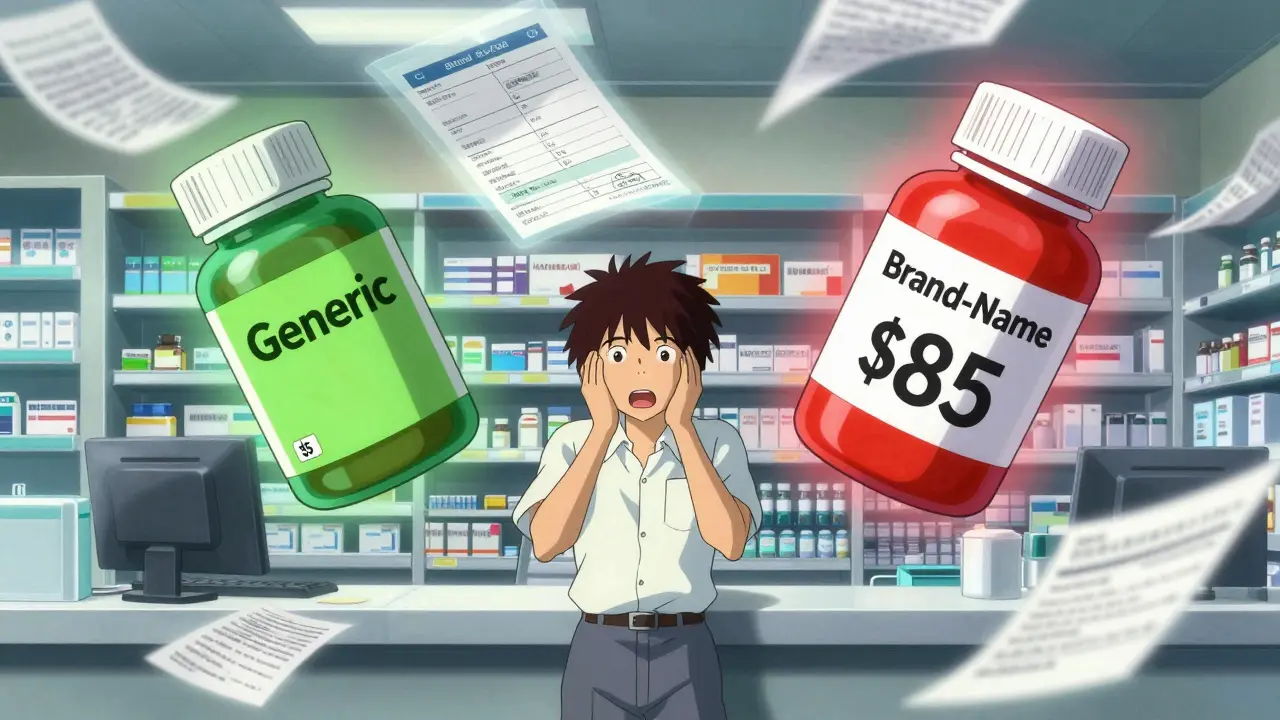
When you pick up a prescription, you might not realize how much your insurance plan has already decided for you. For most people, the choice between a generic and a brand-name drug isn’t really a choice at all-it’s dictated by your plan’s formulary, your copay, and a stack of rules you didn’t even know existed. But here’s the thing: generics and brand-name drugs aren’t treated the same by insurers, even though they’re supposed to work the same way.
Why Insurance Pushes Generics Harder
Generic drugs cost less because they don’t need to repeat expensive clinical trials. The FDA requires them to have the same active ingredient, strength, and effect as the brand-name version. But insurance companies don’t just accept that-they build entire financial incentives around it. Most plans put generics on Tier 1, the lowest-cost tier. That means a 30-day supply of a generic blood pressure pill might cost you $5 to $15. The brand-name version? Often $40 to $100, or even higher if you’re paying a percentage of the total price. This isn’t random. It’s policy. In 2022, 90% of all prescriptions filled in the U.S. were generics. That’s not because patients prefer them-it’s because insurers made it cheaper to choose them. Blue Cross Blue Shield, Aetna, Humana-they all use the same trick: if you pick the brand when a generic is available, you pay the generic copay plus the full price difference. So if the brand costs $85 and the generic is $4, you’re stuck with $81 out of pocket. That’s not a small bump. It’s a wall.How Formularies Control What You Get
Insurance companies use formularies-lists of approved drugs-to steer you toward cheaper options. These lists are split into tiers. Tier 1: generics. Tier 2: preferred brands. Tier 3: non-preferred brands. Tier 4: specialty drugs. The higher the tier, the more you pay. But it’s not just about price. Many plans require you to try the generic first. This is called step therapy. For conditions like depression, rheumatoid arthritis, or epilepsy, you might need to fail two or three generic versions before your insurer will approve the brand. That process can take weeks. One patient in Michigan waited six weeks after switching from a generic antidepressant to a brand because her insurer required three failed trials before approving the original drug. She ended up hospitalized. Pharmacy benefit managers (PBMs), the middlemen between insurers and pharmacies, enforce these rules. They set the rules for prior authorization, which is required for 22.7% of brand-name drugs but only 2.1% of generics. If your doctor doesn’t jump through the right hoops, the pharmacy won’t fill it.Medicare, Medicaid, and Commercial Plans-Big Differences
Not all insurance is the same. Medicare Part D plans, which cover seniors, are especially strict. By law, pharmacists must substitute generics unless the doctor writes “dispense as written.” In 2022, 91% of Medicare prescriptions were generics. That’s great for cost savings-but it’s not always smooth for patients. Medicaid, which covers low-income individuals, pays the lowest price possible for drugs thanks to federal “best price” rules. Generics cost Medicaid 87% less than brand-name versions. That’s why Medicaid patients rarely see brand-name drugs unless there’s a medical exception. Commercial plans (from employers) are more flexible but more confusing. A 2022 IQVIA survey found that the average copay for a generic was $11.85. For a brand-name drug? $62.34. That’s more than five times the cost. And if you don’t know your plan’s rules, you could be shocked at the pharmacy counter.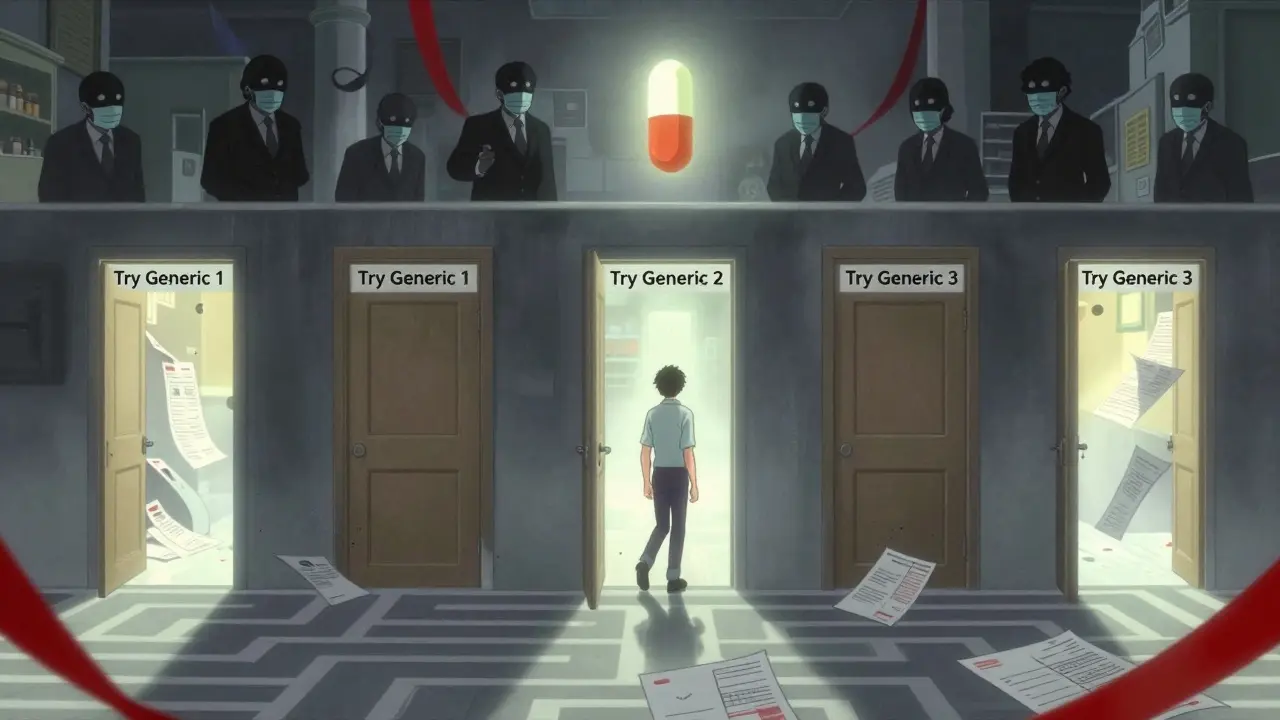
When Generics Just Don’t Work-The Medical Exception
Here’s where things get messy. For some drugs, even though the active ingredient is identical, patients report different side effects or reduced effectiveness. That’s especially true for drugs with a narrow therapeutic index-like warfarin, levothyroxine, or phenytoin. A tiny change in absorption can throw off your whole treatment. Twenty-seven states have special rules for these drugs. In California, if a generic causes an adverse reaction, your insurer must cover the brand. In Texas, you can only get the brand if no generic equivalent exists. In most other states, your doctor has to file paperwork proving medical necessity. That paperwork often needs a specific code-like YN1-and sometimes requires proof that you tried and failed at least two generics. A 2022 JAMA Neurology study found that switching from brand to generic antiepileptic drugs led to a 12.3% increase in seizure rates. That’s not a small risk. And while the FDA says generics are bioequivalent, doctors on the front lines report patients reacting differently-68% of them, according to one 2022 study. These aren’t myths. They’re real, documented cases.What Patients Actually Experience
Reddit threads, Drugs.com forums, and patient surveys tell a different story than the official reports. On r/medication, a March 2023 post with over 1,200 upvotes described a patient who paid $85 for brand-name Crestor after insurance denied coverage for a medically necessary exception. On Drugs.com, a thread titled “Generic Switch Caused Problems” has over 2,800 comments from people who say their generic Wellbutrin XL or Concerta didn’t work the same way. A Kaiser Family Foundation survey found that 34% of commercially insured patients didn’t understand when they’d be charged for a brand-name drug. Nineteen percent skipped filling prescriptions because they feared the cost. That’s not just confusion-it’s a barrier to care. And here’s the kicker: brand-name manufacturers often offer copay cards that reduce your out-of-pocket to $0 or $10. But if you’re on Medicare or Medicaid, you can’t use them. Federal law bans it. So if you’re a senior on Part D, you’re stuck with the full cost unless you qualify for extra help.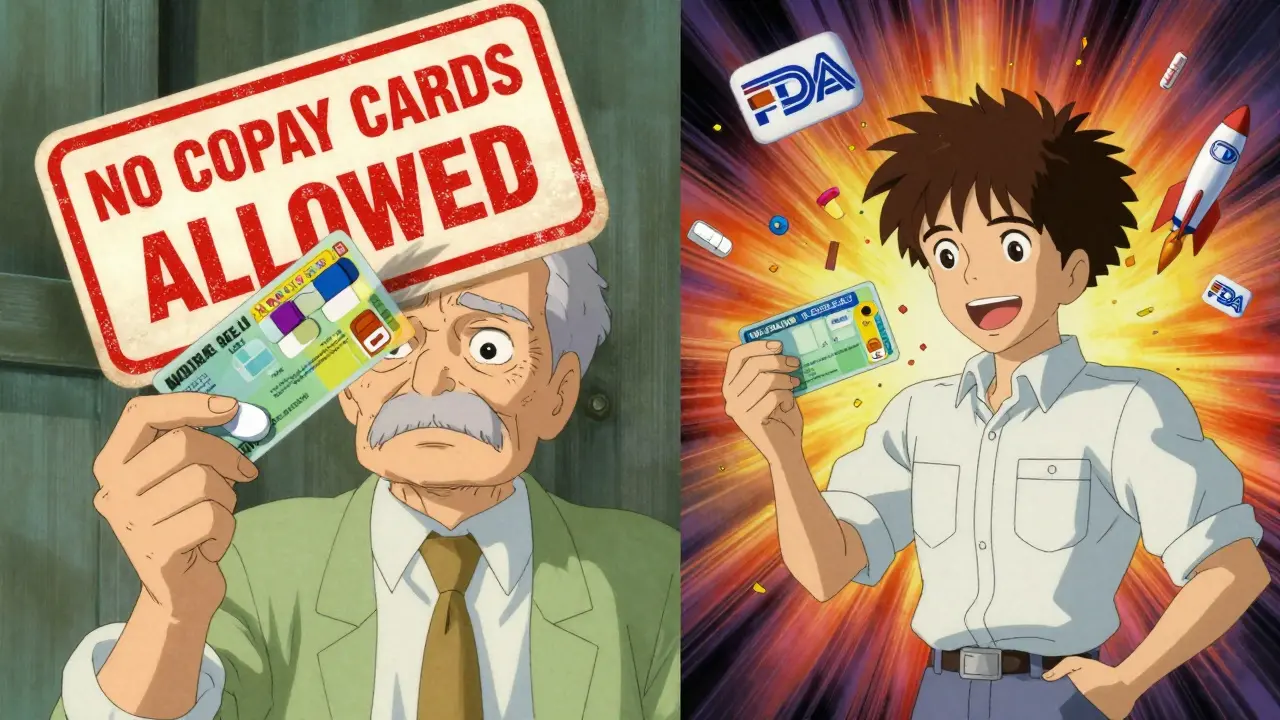
The Bigger Picture: Cost vs. Innovation
The savings are real. Generics saved the U.S. healthcare system $2.2 trillion over the past decade. The Congressional Budget Office estimates expanding generic coverage could save $15.2 billion a year. But there’s a trade-off. Some experts warn that overly aggressive substitution policies might hurt innovation. If drug companies can’t recoup R&D costs, they’ll have less incentive to develop new treatments. Meanwhile, the market is changing. More “authorized generics”-brand-name drugs made by the original company but sold as generics-are hitting the market. These often get better coverage than third-party generics because insurers trust them more. And with 53% of new FDA approvals in 2022 being specialty drugs (like biologics and injectables), the future isn’t just about pills anymore. It’s about biosimilars, complex formulations, and new coverage models.What You Need to Do
You don’t need to be a policy expert to navigate this. Here’s what actually works:- Check your plan’s formulary before your doctor writes the prescription. Most insurers have online tools.
- Ask your pharmacist: “Is there a generic? What will I pay for each?”
- If a generic doesn’t work for you, ask your doctor to write “dispense as written” or request a medical exception.
- If you’re on Medicare, use the Plan Finder tool to compare generic coverage across plans.
- Keep a log of side effects or changes after switching to a generic. That documentation helps when you appeal.
Are generic drugs really the same as brand-name drugs?
Yes, by FDA standards. Generics must have the same active ingredient, strength, dosage form, and route of administration as the brand-name drug. They must also meet the same strict standards for safety, purity, and effectiveness. The FDA requires them to perform the same way in the body. But while the active ingredient is identical, the inactive ingredients-like fillers and dyes-can differ. For most people, that doesn’t matter. For a small percentage, especially with drugs like thyroid medication or seizure drugs, those differences can cause side effects or reduced effectiveness.
Why does my insurance make me try generics first?
It’s called step therapy, and it’s a cost-control tool. Insurers know generics are cheaper and usually just as effective. By requiring you to try the generic first, they reduce overall spending. If the generic doesn’t work or causes side effects, you can appeal for the brand-name drug. But you’ll need documentation from your doctor proving it didn’t work for you. This process can take weeks, so plan ahead.
Can I get my brand-name drug covered if a generic exists?
Yes, but it’s not easy. You need a medical exception. Your doctor must write a letter or use a specific code (like YN1) to explain why the generic won’t work for you. Common reasons include allergic reactions, side effects, or therapeutic failure. Some states, like California, have laws that require insurers to cover the brand if a generic causes problems. In other states, you might need to prove you tried two or three generics first. It’s not guaranteed, but it’s possible.
Why do I pay more for a brand-name drug even if it’s the same as the generic?
Because insurance plans are designed to save money. They set lower copays for generics to encourage you to choose them. If you pick the brand, you pay the generic copay plus the difference in price between the brand and the generic. For example, if the generic costs $5 and the brand costs $85, you pay $5 + $80 = $85. It’s not that the drug is more expensive-it’s that your plan is charging you the full difference to make the cheaper option more attractive.
Do Medicare and Medicaid cover generics differently?
Yes. Medicare Part D plans require pharmacists to substitute generics unless the doctor says not to. About 91% of Medicare prescriptions are generics. Medicaid pays the lowest possible price for drugs thanks to federal rules, so generics cost Medicaid 87% less than brands. But here’s the catch: Medicare beneficiaries can’t use brand-name copay cards, while commercially insured patients can. That means seniors often pay more out of pocket even when generics aren’t working for them.
What are authorized generics, and why do they matter?
Authorized generics are brand-name drugs made by the original manufacturer but sold under a generic label. They’re identical to the brand in every way, including inactive ingredients. Because they’re made by the same company, insurers often give them better coverage than third-party generics. In 2023, 46% of all generic prescriptions were authorized generics. If your plan covers them more generously, it’s worth asking your pharmacist if an authorized generic is available.
Can I appeal if my insurance denies coverage for a brand-name drug?
Yes. Every insurance plan has an appeals process. Start by asking your pharmacist for the denial reason. Then ask your doctor to submit a letter of medical necessity. Include details like side effects, failed generic trials, or lab results showing the drug isn’t working. You can also file a formal appeal with your insurer. The average time to resolve a prior authorization appeal is 3.2 business days, but complex cases can take longer. Keep copies of everything.
Kathy McDaniel
January 28, 2026 AT 04:19just got my generic lisinopril and my blood pressure is totally fine, but i swear the pills look different now and i keep second-guessing if i took the right one lol. maybe it's all in my head, but i wish they'd make generics look more like the brand.
Desaundrea Morton-Pusey
January 29, 2026 AT 01:20insurance companies are just profit machines pretending to care about your health. they don't give a damn if you have seizures or panic attacks as long as the numbers look good on their quarterly report.
Kirstin Santiago
January 30, 2026 AT 12:23if you're on a tight budget, generics are lifesavers. but if you're one of those people who reacts weirdly to fillers or dyes, the system fails you. doctors need better tools to document these cases and insurers need to stop treating patients like accounting problems.
Harry Henderson
January 31, 2026 AT 17:06stop whining. if you can't afford the brand, you shouldn't be taking it. generics are safe, FDA-approved, and cheaper. if your body can't handle it, maybe your body needs to adapt. we're not in a luxury healthcare spa here.
suhail ahmed
January 31, 2026 AT 22:15in india, generics are the norm and we don't have this drama. if the pill works, it works. if it don't, you switch. no paperwork, no step therapy, no 6-week waiting games. the system here is broken because it's over-engineered by middlemen who don't even know what a pill looks like.
astrid cook
February 1, 2026 AT 20:48you think this is bad? wait till you find out PBMs are secretly getting kickbacks from generic manufacturers. that's why they push certain ones. it's not about cost, it's about who paid the bribe.
Andrew Clausen
February 1, 2026 AT 22:05the FDA's bioequivalence standard is 80-125% AUC. that's a 45% variance. if your drug has a narrow therapeutic index, that's not equivalent, it's a gamble. calling them "the same" is misleading marketing, not science.
Anjula Jyala
February 2, 2026 AT 08:39step therapy is a regulatory loophole exploited by PBMs to shift liability. the FDA doesn't mandate it, insurers do. and when you get hospitalized because of a delayed switch, it's not their problem. it's your fault for not reading the fine print
Paul Taylor
February 3, 2026 AT 13:53i've been on the same brand-name seizure med for 12 years. switched to generic once because my insurance forced it. had a seizure in the shower. didn't go back. ever. my neurologist says i'm one of the 1 in 6 who react differently. they don't test for that. they test for active ingredients. but my brain doesn't care about active ingredients. it cares about the whole damn pill. and the system doesn't care about me. i'm just a statistic they saved $70 on.
now i pay out of pocket. $180 a month. i'd rather pay than die. and i'm not even mad. i'm just tired. tired of being treated like a cost center. tired of having to be my own advocate. tired of the paperwork. tired of the guilt when i can't afford the brand anymore.
if you're lucky, your body tolerates generics. if you're not, you're on your own. and that's not healthcare. that's gambling with your life and betting on the house always winning.
they say generics save $2 trillion. fine. but how much trauma did that save cost? how many ER visits? how many lost jobs? how many suicides because someone couldn't get the right pill? nobody tracks that. because it's not a line item on a balance sheet.
so yeah. generics are great. for most people. for the rest of us? we're just collateral damage in a system designed to cut corners.
Murphy Game
February 4, 2026 AT 20:32you know who profits the most from generics? the same people who own the brand-name companies. they just make the generic version themselves and sell it cheaper. authorized generics. that's why they push them so hard. it's not about saving you money. it's about doubling their profit.
John O'Brien
February 4, 2026 AT 21:34my pharmacist just told me the generic for my ADHD med is made by the same company as the brand. i didn't even know that was a thing. now i ask every time: "is this an authorized generic?" if yes, i take it. if no, i ask my doc to write "dispense as written." it's not hard. just know your options.
Kegan Powell
February 6, 2026 AT 18:09we're all just trying to survive a broken system. some of us get lucky and generics work. others get crushed by bureaucracy. the real tragedy isn't the cost difference. it's that we've normalized having to fight just to stay healthy. you shouldn't need a lawyer, a doctor's letter, and a spreadsheet to get a pill that keeps you alive. but here we are.
keep documenting. keep advocating. keep asking for the brand. your life matters more than a spreadsheet.
April Williams
February 7, 2026 AT 02:33if you can't afford your meds, don't take them. it's that simple. you chose to live in a country with expensive healthcare. now deal with it. stop blaming insurance. blame yourself for not planning better.