

Linezolid Tyramine Calculator
Linezolid inhibits MAO enzymes, which normally break down tyramine. When tyramine builds up (over 100 mg per sitting), it can cause dangerous blood pressure spikes. This tool helps you track your daily intake.
Select Your Foods
Your Tyramine Intake
Max safe intake: 100 mg per sitting
Important Safety Note
Tyramine buildup can cause life-threatening hypertensive crises within 1-2 hours. If you experience:
- Severe headache
- Chest pain
- Rapid heartbeat
- Blurred vision
When you're on linezolid, your body isn't just fighting a tough bacterial infection-it's also struggling to handle something you might eat for breakfast. That’s because linezolid, an antibiotic used for serious infections like MRSA and VRE, quietly blocks a key enzyme in your body that normally breaks down tyramine. And when tyramine builds up? Blood pressure can spike dangerously fast-sometimes to life-threatening levels.
Why Linezolid Is Different from Other Antibiotics
Linezolid isn’t like penicillin or amoxicillin. It was designed to kill bacteria that other drugs can’t touch, especially those resistant to vancomycin or methicillin. But while it’s great at stopping bacterial protein synthesis, it also accidentally blocks monoamine oxidase (MAO), the same enzyme targeted by older antidepressants like phenelzine. This isn’t a minor side effect. At standard doses (600 mg twice daily), linezolid inhibits about 40-50% of MAO activity, according to a 2006 study in the British Journal of Clinical Pharmacology. That’s enough to make your body react to tyramine like a classic MAO inhibitor-even though it’s not meant to be one.
Unlike those older drugs, linezolid’s effect is reversible. If you stop taking it, your body can restore MAO function within 24 to 48 hours. But while you’re on it? Tyramine from food can pile up and trigger a sudden, severe rise in blood pressure. That’s not a myth. It’s been documented in real patients-some ending up in the ICU.
What Is Tyramine, and Why Does It Matter?
Tyramine is a naturally occurring compound formed when proteins break down during aging, fermentation, or spoilage. Your body usually handles it fine because MAO-A in your gut and liver breaks it down before it hits your bloodstream. But when linezolid shuts down that enzyme? Tyramine slips through, triggers a massive release of norepinephrine, and your blood pressure goes haywire.
The threshold for danger? Around 100 mg of tyramine in one sitting. That’s not a lot. One ounce of aged cheddar cheese contains about 150 mg. A 12-ounce tap beer? Up to 200 mg. A slice of salami? Over 100 mg. Even leftovers sitting in the fridge too long can accumulate dangerous levels.
Foods to Avoid Completely While on Linezolid
Here’s what you need to cut out while taking linezolid-and for two weeks after you finish:
- Aged cheeses: Blue cheese, cheddar, parmesan, gouda, brie, camembert. These can contain 900-1,500 mg of tyramine per 100 grams. Even small amounts can trigger a crisis.
- Fermented or cured meats: Salami, pepperoni, pastrami, dry-aged beef, and other air-dried meats. These aren’t just high in salt-they’re packed with tyramine.
- Tap beer and draft beer: Especially unpasteurized or craft brews. Bottled beer is usually safer (under 5 mg per serving), but always check. Some imported lagers can hit 100 mg per bottle.
- Red wine and fortified wines: Red wine can have 5-100 mg per 100 ml. Sherry, port, and Madeira are especially risky.
- Fermented soy products: Soy sauce, miso, tempeh, and fermented tofu. A single tablespoon of soy sauce can contain 120 mg.
- Overripe fruits: Bananas, avocados, and figs that are very soft or bruised can have higher tyramine levels.
- Leftovers stored more than 24 hours: Especially meats and stews. Tyramine builds up over time, even in the fridge.
Some foods are generally safe: fresh meat and poultry, most fresh fruits and vegetables, pasteurized dairy (milk, yogurt, cottage cheese), and fresh bread. But if you’re unsure, skip it.
Real Cases, Real Consequences
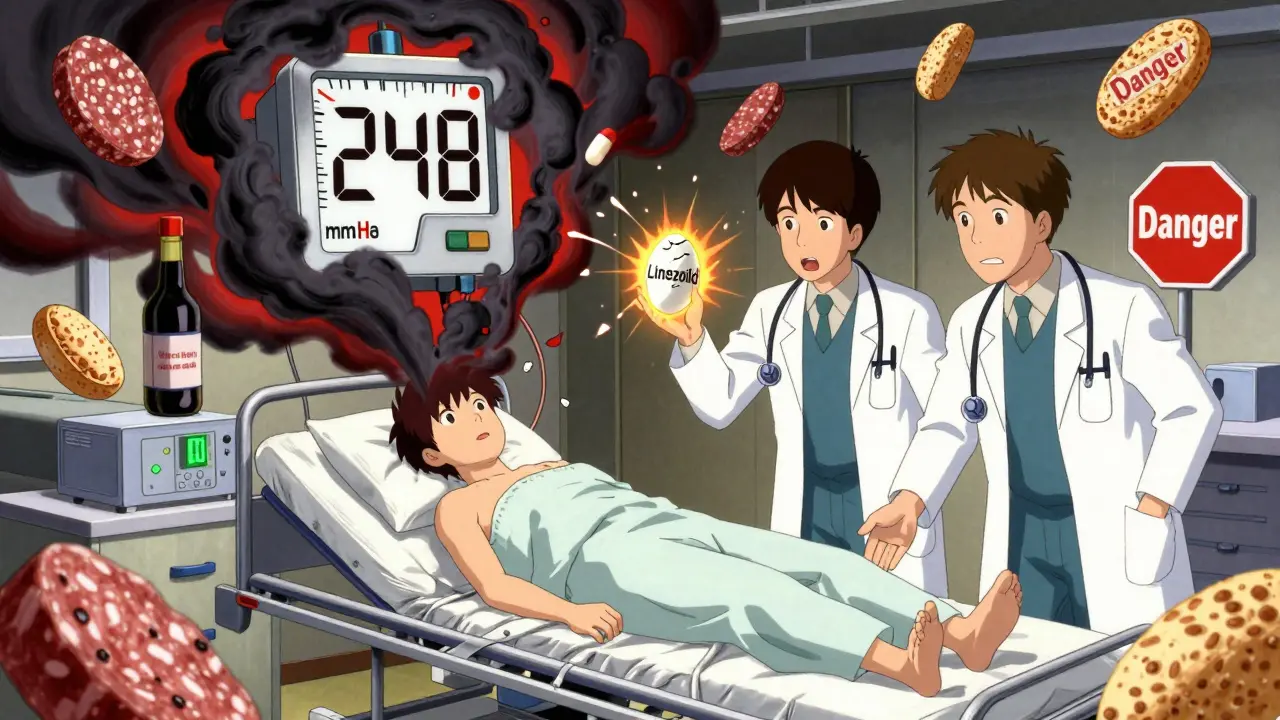
In 2021, researchers reviewed 17 cases of linezolid-induced hypertensive crises. The average systolic blood pressure at admission? 212 mmHg. One patient hit 248 mmHg. Sixty-five percent needed ICU care. Another case, reported in PMC10695612, involved a man who ate aged cheddar while on linezolid. His BP shot to 185/120 despite treatment. It took 26 days after stopping the drug for his pressure to return to normal.
Pharmacists on Reddit share similar stories. One wrote: "Just had a patient with 230/130 BP after eating aged cheddar on linezolid-ICU for 3 days." These aren’t rare. The FDA recorded over 1,200 hypertensive events linked to linezolid between 2018 and 2023.
And here’s the scary part: many patients don’t know what they’re risking. A 2022 study found only 43.7% of people prescribed linezolid received written dietary instructions. That’s not negligence-it’s systemic failure.
Who’s at Highest Risk?
Not everyone reacts the same. Factors like body mass index (BMI), age, and existing high blood pressure matter. The same 2006 study showed BMI had a statistically significant effect on tyramine sensitivity. People with untreated hypertension are especially vulnerable. So are those on other drugs that raise blood pressure-like pseudoephedrine (in cold medicines), dextromethorphan (in cough syrups), or even some herbal supplements like St. John’s wort.
Patients on long-term linezolid (think 14+ days for bone infections) are at greater risk simply because tyramine has more time to accumulate. And if you’re eating poorly because you’re sick? That’s when the risk spikes.
What About Other Medications?
Linezolid doesn’t just clash with food. It can also trigger serotonin syndrome when mixed with SSRIs, SNRIs, or even tramadol. It can dangerously raise blood pressure if taken with decongestants like pseudoephedrine. Even dopamine infusions-used in ICU settings-can interact badly. That’s why doctors now check all your meds before starting linezolid. If you’re on antidepressants, ask: "Can this be safely switched or paused?"

How to Stay Safe: Practical Tips
Here’s what actually works:
- Start diet restrictions 24 hours before your first dose. Don’t wait until you’re already on it.
- Keep a list of safe foods. Fresh chicken, rice, eggs, apples, carrots, and pasteurized milk are all safe. Print it out and stick it on your fridge.
- Use visual guides. A 2023 UCSF protocol recommends showing patients pictures of high-tyramine foods. A photo of blue cheese with "150 mg tyramine" sticks better than a 10-page handout.
- Check expiration dates. If food looks or smells off, toss it. Tyramine grows in spoiled food-even if it’s refrigerated.
- Ask your pharmacist. They’re trained to catch these interactions. If they don’t mention diet, ask: "What foods should I avoid with this?"
- Monitor your blood pressure. If you’re hypertensive, check it twice daily. A sudden spike over 160/100? Call your doctor immediately.
The Bigger Picture: Why This Matters Now
Linezolid use is rising. With antibiotic resistance growing, it’s one of the last lines of defense against deadly infections. Global sales hit $1.27 billion in 2023. But its risks are still undermanaged. Only 58.7% of internal medicine residents could correctly identify all high-tyramine foods in a 2023 survey. Community hospitals have half the compliance rate of academic centers.
The FDA updated linezolid’s label in 2019 to stress dietary risks. The European Medicines Agency now requires patient guides. And in 2024, the Infectious Diseases Society of America (IDSA) made it official: baseline BP checks and daily monitoring are now recommended for patients with hypertension.
The future? New antibiotics like contezolid (currently in Phase III trials) promise similar power without MAO inhibition. But until then, linezolid remains essential. And if you’re taking it? Your diet isn’t just about nutrition-it’s about survival.
What to Do If You’ve Already Eaten Something Risky
If you accidentally eat aged cheese, salami, or draft beer while on linezolid:
- Don’t panic-but don’t ignore it.
- Check your blood pressure if you can.
- Watch for symptoms: severe headache, chest pain, rapid heartbeat, blurred vision, nausea, or sweating.
- If your systolic BP is over 180 or you have any of those symptoms, go to the ER.
- Call your doctor even if you feel fine. A delayed reaction can happen 6-12 hours later.
There’s no antidote. Treatment is supportive: IV labetalol or nitroprusside to bring down pressure, and stopping linezolid immediately. The sooner you act, the better your outcome.
Can I drink alcohol while taking linezolid?
Avoid all alcohol while on linezolid. Red wine and draft beer contain tyramine and can trigger hypertensive reactions. Even small amounts of alcohol can worsen side effects like dizziness or low blood pressure. Stick to water, juice, or decaffeinated tea.
How long do I need to avoid tyramine after stopping linezolid?
Continue avoiding high-tyramine foods for at least 14 days after your last dose. Although linezolid leaves your system in about 5 days, it takes longer for your body’s MAO enzymes to fully recover. Some experts recommend up to 2 weeks to be safe, especially if you had any symptoms or are on other medications.
Is canned cheese safe on linezolid?
Yes, canned cheese (like American cheese or cheese spreads) is generally safe because it’s pasteurized and not aged. Stick to fresh, unaged dairy. Avoid anything labeled "aged," "sharp," or "blue-veined." When in doubt, check the ingredient list-no mold cultures or long fermentation times.
Can I take linezolid if I’m on an SSRI?
Taking linezolid with an SSRI (like sertraline or fluoxetine) can cause serotonin syndrome-a potentially fatal condition. These drugs should not be used together. If you need both, your doctor may switch your antidepressant to something safer (like bupropion) or delay linezolid treatment. Never combine them without explicit medical guidance.
Are there any foods that are safe but often mistaken as risky?
Yes. Fresh fruits and vegetables, plain yogurt, milk, eggs, fresh chicken and fish, pasta, rice, and bread are all safe. Many people think all fermented foods are dangerous, but plain yogurt and kefir (if fresh and unpasteurized) contain minimal tyramine. The real danger is aged, cured, spoiled, or fermented foods that have sat for days or weeks.