
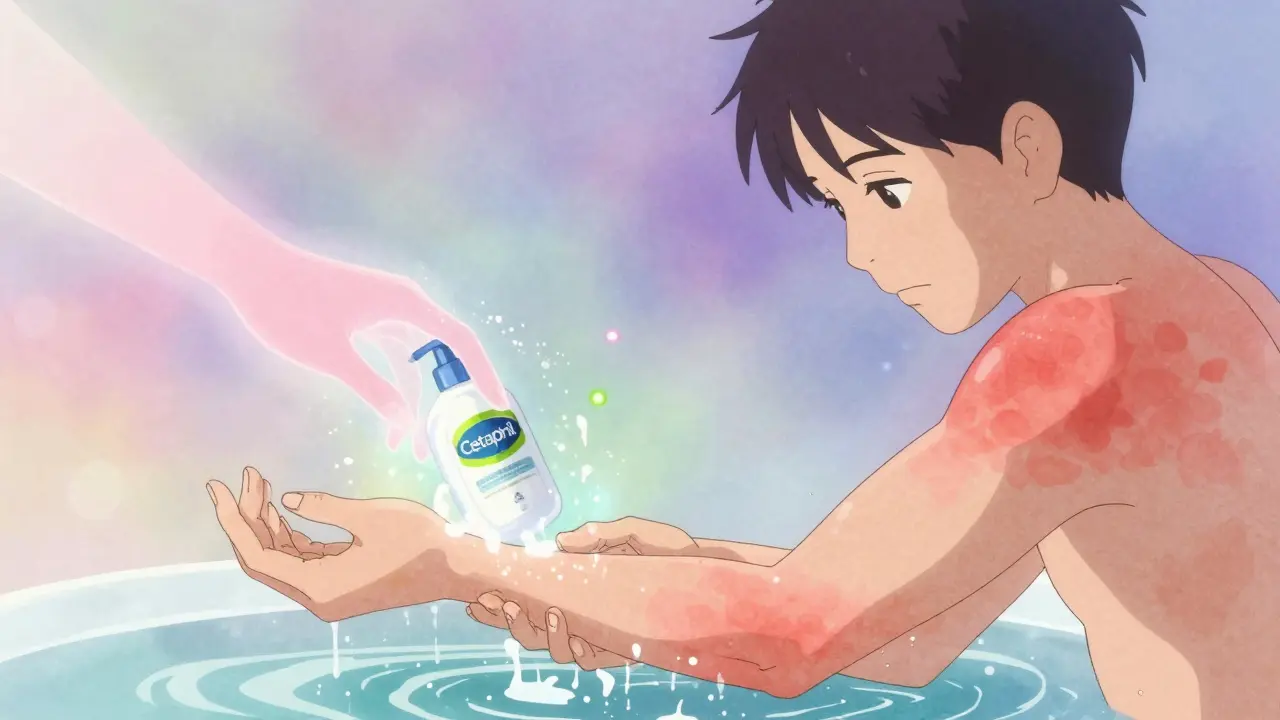
When you’re undergoing radiation therapy for cancer, the goal is clear: destroy cancer cells. But what no one always tells you is how much your body will pay in the process. Two of the most common, most disruptive side effects aren’t hidden deep inside your organs-they’re on your skin and in your bones. Radiation side effects like red, peeling skin and crushing fatigue don’t just show up out of nowhere. They creep in, get worse over time, and if you’re not prepared, they can make daily life feel impossible.
What Happens to Your Skin During Radiation
Your skin is the first line of defense-and the first to take a hit. Radiation doesn’t discriminate; it hits everything in its path, including the top layers of your skin. Around day 7 to 10 of treatment, you might notice your skin turning red, like a sunburn that won’t fade. That’s erythema. By week 3 or 4, it gets worse. Dry, flaky patches appear. Your skin feels tight. It might itch. For some, especially those getting radiation to the head, neck, or chest, it breaks open-blistering, oozing, raw. That’s moist desquamation. About 1 in 4 people experience this level of damage.It’s not random. The damage follows a pattern based on how much radiation your skin absorbs. At 15-20 grays (Gy), you’ll likely see dry peeling. At 25-30 Gy, moist sores become common. Head and neck radiation? That’s the worst. Up to 45% of patients there get severe skin reactions. Breast radiation? Around 20%. Prostate? Much milder-only 5-10%.
And it doesn’t just go away when treatment ends. Some changes stick around. Hair loss on the scalp? If you got more than 70 Gy there, it’s permanent. Red, spider-like veins? Those are telangiectasias, and they show up in 30-50% of patients five years later. Skin can thin out, scar, or harden-fibrosis. That’s slow, and it takes months to even start showing up.
How to Care for Your Skin During Radiation
You can’t stop radiation from hitting your skin-but you can stop it from getting worse. The key? Start early. Don’t wait for your skin to crack. Treat it like a wound before it becomes one.Wash gently. Use lukewarm water-not hot. Hot showers feel good, but they strip your skin’s natural oils. Use a mild, fragrance-free cleanser like Cetaphil or Vanicream. No loofahs, no scrubbing. Pat dry, don’t rub. Within three minutes of washing, apply a moisturizer. Look for ones with ceramides, hyaluronic acid, or dimethicone. Avoid anything with alcohol, perfume, or lanolin. Products like Biafine and RadiaPlex Rx have real clinical backing. In one survey, 42% of patients said these made a noticeable difference.
For mild redness, a simple barrier cream like Cavilon No Sting Barrier Film helps. It’s not a miracle cure, but it creates a shield. If your skin breaks open, your care team might recommend hydrogel dressings. They keep the area moist, reduce pain, and speed healing by up to 32% compared to plain gauze. Don’t use steroid creams unless your doctor tells you to-they’re not recommended for prevention.
Protect your skin from the sun. Even months after treatment, your skin is more sensitive. Wear hats, long sleeves, and sunscreen with zinc oxide. Avoid tight clothes, wool, or anything that rubs. No shaving over treated areas. If you must, use an electric razor.
Why Fatigue Hits Harder Than You Think
Fatigue isn’t just being tired. It’s the kind of exhaustion that makes you feel like you’re dragging concrete through your veins. You sleep 10 hours and still can’t get up. You sit down to watch TV and fall asleep mid-sentence. You cancel plans because even showering feels like a marathon.Seven out of 10 radiation patients experience this. It starts around week 2 or 3, gets worse through week 5 or 6, and doesn’t magically disappear after treatment ends. The worse your treatment area, the worse the fatigue. Pelvic radiation? Highest. Brain radiation? Nearly half of patients need medical help to manage it. The average fatigue score for pelvic radiation patients is 65.2 on the PROMIS scale-way above normal.
And here’s the thing most people don’t expect: it gets worse over time. You think it’ll stay the same. It doesn’t. Radiation builds up. Your body uses energy to repair damaged cells. That’s why you’re so drained. It’s not laziness. It’s biology.
How to Fight Radiation Fatigue
Rest isn’t the answer. Movement is.Multiple studies show that moderate exercise cuts fatigue by 25-30%. That doesn’t mean running marathons. It means walking 30 minutes a day, five days a week. Or doing light resistance training twice a week. One woman with breast cancer kept her energy levels near normal by walking daily and lifting light weights. Her fatigue score was 22 points lower than others who didn’t move.
Sleep matters, but not the way you think. Sleeping 12 hours doesn’t help if you’re sleeping at the wrong times. Stick to a schedule. Go to bed and wake up within 30 minutes of the same time every day-even weekends. Nap? Limit it to 20-30 minutes. Longer naps mess with your night sleep and make you feel groggier.
Some patients get help from medications like modafinil. One patient saw their fatigue score drop from 72 to 58 in two weeks. But that’s not for everyone. Talk to your oncologist. Don’t self-prescribe.
Track your fatigue. Many cancer centers now use digital tools like the PROMIS Fatigue Short Form. It’s an 8-question survey you take online. It tells your team how bad it is-and if your treatment plan needs adjusting.
Recovery: What Comes After Radiation
When your last treatment is done, you expect to feel better. But recovery doesn’t start on day one after radiation. It starts slowly.Skin usually heals within 2-4 weeks. Redness fades. Peeling stops. But if you had moist sores, it can take 6-8 weeks. Scar tissue and fibrosis? That’s a long game. It can take 6-12 months to see improvement. Physical therapy helps. Massage, stretching, ultrasound therapy-these can soften hardened tissue.
Hair regrowth? It’s unpredictable. Half of people with scalp radiation see hair come back in 2-3 months. But 15-20% of those who got over 50 Gy will lose it permanently. That’s not failure. That’s the cost.
Fatigue? That’s the slowest to fade. Many patients say it takes 3-6 months to feel like themselves again. Some take a year. The key? Keep moving. Don’t quit exercise. Don’t isolate yourself. Stay connected. Join a support group. Talk to others who’ve been through it.
What’s New in Managing Side Effects
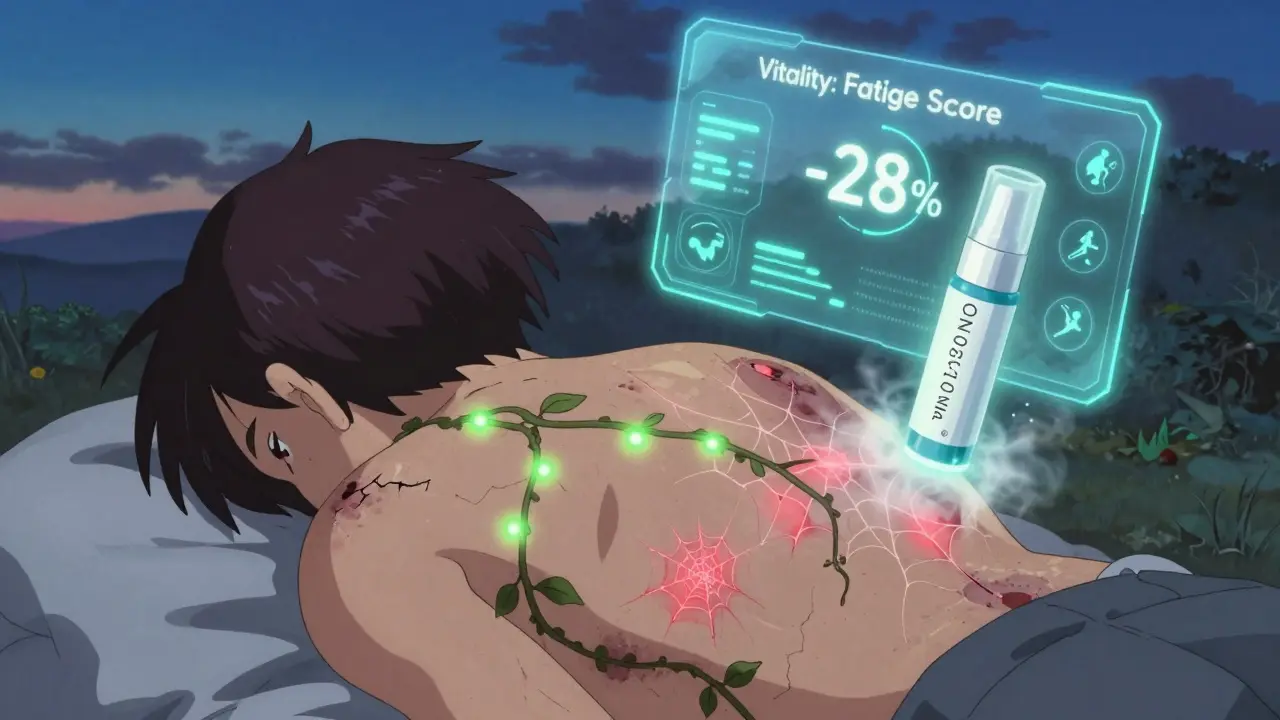
Science is catching up. In 2023, researchers identified 12 genetic markers that predict who’s more likely to get severe skin reactions. That means in the future, your care plan could be customized before you even start treatment. High-risk patient? You get stronger skin protection from day one.There’s also a new app called Vitality, cleared by the FDA in 2022. It’s a digital therapy that guides you through fatigue management with daily exercises and mindfulness techniques. In trials, it cut fatigue scores by 28%.
And a new topical cream, ON 01910.Na, is in late-stage trials. Early results show it cuts moderate-to-severe skin reactions by 40%. It’s not available yet-but it’s coming.
What’s already here? Better radiation tech. IMRT and proton therapy focus the beam more precisely. They reduce skin damage by 25-40% compared to older methods. But they’re expensive and not everywhere. Only 42 proton centers exist in the U.S. Still, if you’re eligible, ask your team.
What No One Tells You
You’ll feel guilty. You’ll think you’re being weak because you can’t do the things you used to. You’ll feel alone-even if you’re surrounded by people. That’s normal. Radiation doesn’t just attack cancer. It attacks your sense of self.But you’re not failing. You’re healing. Every time you wash your skin gently. Every time you take a walk even when you’re exhausted. Every time you say no to a plan because your body needs rest-you’re winning.
Ask for help. Tell your nurse when your skin burns. Tell your doctor when you can’t get out of bed. There are tools. There are people. You don’t have to do this alone.
How long do radiation skin side effects last?
Acute skin reactions like redness and peeling usually clear up within 2 to 4 weeks after radiation ends. But if you had blistering or open sores, healing can take 6 to 8 weeks. Late effects-like scarring, thinning skin, or visible blood vessels-can appear months or even years later and may not fully go away. Ongoing skin care and physical therapy can help manage these long-term changes.
Can I use lotion on my skin during radiation?
Yes, but not all lotions are safe. Use only fragrance-free, alcohol-free moisturizers with ingredients like ceramides, hyaluronic acid, or dimethicone. Brands like Cetaphil, Vanicream, Biafine, and RadiaPlex Rx are recommended. Avoid petroleum-based products unless your care team approves them. Apply within three minutes after bathing to lock in moisture.
Why am I so tired even after sleeping all day?
Radiation fatigue isn’t caused by lack of sleep-it’s caused by your body working overtime to repair damaged cells. This drains your energy reserves. Even 10 hours of sleep won’t fully restore you. The fatigue builds over time and peaks around weeks 5-6 of treatment. Light daily exercise, consistent sleep schedules, and limiting naps to 20-30 minutes can help reduce its severity.
Will my hair grow back after scalp radiation?
About half of patients see hair regrowth within 2 to 3 months after treatment ends. But if you received more than 50 Gy to your scalp, there’s a 15-20% chance the hair loss will be permanent. Hair that grows back may be thinner, curlier, or a different color. Don’t rush into wigs or extensions until your skin has fully healed.
Are there any new treatments to prevent radiation skin damage?
Yes. A topical agent called ON 01910.Na is in phase III trials and has shown a 40% reduction in moderate-to-severe skin reactions. Also, newer radiation techniques like IMRT and proton therapy reduce skin exposure by 25-40%. Digital tools like the Vitality app and real-time fatigue tracking systems are now used in many cancer centers to catch problems early and personalize care.
What to Do Next
If you’re starting radiation, ask your care team for a skin care plan before your first session. Request a referral to an oncology nurse or dermatology specialist. If you’re already in treatment and struggling, speak up. Don’t wait until your next appointment. Fatigue and skin damage are treatable-but only if your team knows about them.Keep a simple journal: note when your skin changes, how tired you feel, what helped. Bring it to your appointments. You’re not just a patient. You’re the expert on your own body. Use that knowledge. You’ve got this.
Cecelia Alta
January 11, 2026 AT 15:57Okay but let’s be real-this post reads like a pharmaceutical ad disguised as a survival guide. They sell you this whole ‘you’ve got this’ pep talk while charging you $80 for a jar of Biafine that’s basically fancy vaseline. And don’t get me started on the ‘walk 30 minutes a day’ advice. Try walking when your skin feels like it’s been rubbed raw with sandpaper and your bones are made of lead. It’s not motivation you need-it’s a time machine to before diagnosis.
Also, why is everyone acting like proton therapy is some magical unicorn? Only 42 centers in the US? That’s not access, that’s a luxury lottery. I live in rural Ohio. My radiation machine is older than my dad’s truck.
And the app? Vitality? Sounds like something a startup named after a yoga retreat. I’m not downloading an app to tell me to breathe when I can barely lift my arm to hold my phone.
They say ‘ask for help’ like it’s that easy. Try asking when you’re too tired to speak and your insurance won’t cover the moisturizer your oncologist recommends.
This whole thing feels like a wellness influencer’s dream. Real people? We’re just trying not to cry in the shower because the water stings.
And yes-I still used the Cetaphil. Because what else am I supposed to do? But don’t act like it’s a cure. It’s just the least painful option left.
Lawrence Jung
January 12, 2026 AT 22:12Interesting how they frame fatigue as something you can outwalk with a pedometer. The body isn’t a machine you tune up with exercise. It’s a battlefield. Radiation doesn’t care if you stretch or nap or track your PROMIS scores. It just burns. And the skin? It’s not a skincare product failure-it’s a biological surrender. No cream fixes what your cells are losing. You’re not failing if you don’t walk. You’re surviving.
And that ‘you’re not alone’ line? Cute. You’re alone. Everyone else is either dead, cured, or pretending they never felt this way. The truth is no one gets it until they’re in the burn.
Alice Elanora Shepherd
January 13, 2026 AT 16:40I appreciate the thoroughness of this post-it’s clear, evidence-based, and compassionate. Many patients don’t receive this level of detail from their care teams, so thank you for compiling it.
For anyone reading this: if you’re experiencing skin breakdown, please consult your oncology nurse before trying any new product-even if it’s ‘natural.’ Some essential oils and aloe vera gels can worsen radiation dermatitis. Stick to the clinically tested options: ceramides, hyaluronic acid, and non-irritating barriers like Cavilon.
Also, fatigue is not laziness. It’s a physiological response to chronic cellular stress. Even gentle movement helps, but only if it’s paced. Don’t push through exhaustion-rest is part of the treatment. And yes, the fatigue can last longer than you expect. Be patient with yourself.
For those feeling guilty for canceling plans: your body is doing the most important work it’s ever done. Resting isn’t quitting. It’s healing.
And if you’re considering the new ON 01910.Na cream-keep an eye out for clinical trial opportunities. It’s promising, and participation may benefit future patients too.
You’re not alone. I’ve walked this path with dozens of patients. You’re stronger than you think. And you deserve every bit of comfort you can find.
steve ker
January 14, 2026 AT 16:48Too much fluff. Just say radiation burns you and makes you tired. No need for 1000 words and brand names. Also why are you pushing a $80 cream? Sounds like a scam. I used Vaseline and lived. Simple works. Also walking? I’m tired. I don’t care about your studies. Just let me sleep.
And who even is this author? Sounds like a marketing guy from a pharma company. Real people don’t talk like this.
Also the app? Nah. I have a phone. I don’t need a robot telling me to breathe. I need a doctor who listens.
End of story.
George Bridges
January 16, 2026 AT 01:48I’ve been through this twice. Once for breast cancer, then again for lymphoma. I can say with certainty: the skin stuff is worse than people prepare you for. And the fatigue? It’s not depression. It’s not laziness. It’s your body rebuilding itself in slow motion.
I used the Biafine. It didn’t fix everything, but it stopped the worst of the peeling. And I walked every day-even if it was just to the mailbox and back. Some days, that was all I could do. And that was enough.
What no one tells you is that recovery isn’t linear. Some days you feel okay. Others, you can’t get out of bed. That’s normal. Don’t compare yourself to others. Your journey is yours alone.
And yes, the hair doesn’t always come back. I lost mine. I wear scarves now. They’re colorful. I like them.
You’re not broken. You’re becoming something else. And that’s okay.
Faith Wright
January 16, 2026 AT 13:54Oh wow. So we’re supposed to be inspired by a 30-minute walk while our skin is peeling off like a bad sunburn? That’s cute. Like, ‘just stay positive’ while your body turns against you. I love how this reads like a Pinterest board for cancer patients who still have their nails done and their coffee order ready.
And let’s not forget the part where they say ‘you’re not alone’-but then list 12 genetic markers and a $200 app that only people with good insurance can access. Yeah. Real inclusive.
I’m not mad. I’m just… tired. Of being told how to survive when no one actually asked what I need.
Also-why is everyone so obsessed with ‘tracking’ everything? Can’t I just be a human being for once?
Rebekah Cobbson
January 18, 2026 AT 03:10First off-thank you for writing this. It’s the kind of thing I wish I’d had when I started treatment.
I want to add something real: the skin care routine? It’s not optional. I ignored it for the first week. By day 10, I had open sores. It took 6 weeks to heal. I didn’t want to be that person who ‘didn’t follow advice.’ But I was. And it hurt more than the radiation.
Also-fatigue. I thought I could push through. I tried. I failed. Then I started doing 10 minutes of yoga in bed. Just breathing. That helped more than I expected. Not because it’s ‘healing energy’-but because it gave me back a tiny bit of control.
And yes, the hair thing? I’m still not okay with it. But I bought a silk scarf. It feels nice. And that’s enough for now.
You’re not weak for needing help. You’re human.
And if you’re reading this and you’re still in treatment? I see you. And I’m proud of you.
Audu ikhlas
January 19, 2026 AT 13:22Why do Americans always make everything so complicated? In Nigeria we just use coconut oil and pray. Skin heals. Fatigue goes away when you rest. No apps. No fancy creams. No science talk. Just God and patience. You people need to stop buying products and start trusting the body. This post is like a Walmart ad for cancer. Sad.
Also why are you telling people to walk? In my village we sit and wait for healing. No one runs around like a dog. You are sick. Sit down.
And that app? What next? A TikTok challenge for radiation recovery? Please.
Sonal Guha
January 21, 2026 AT 07:21Let’s fact check this. 42% of patients say Biafine helped? Source? Where’s the study? Was it double-blind? Controlled? Or just a survey of people who bought it from a website?
And ‘cut fatigue by 28%’ with an app? That’s a correlation, not causation. People who use apps are probably more health-literate. They’re also more likely to walk, sleep better, eat well. Of course they feel better.
Also, proton therapy reduces damage by 25-40%? Compared to what? 1990s cobalt machines? That’s like saying electric cars are better than horse carts. No duh.
This isn’t science. It’s marketing dressed in medical jargon. And it’s exploiting people who are desperate.
Don’t trust the hype. Trust your oncologist. Not a blog.
TiM Vince
January 22, 2026 AT 00:50I’m from Japan. We don’t talk about this stuff much. But I’ve seen it. My aunt went through radiation. She didn’t use any of the creams they mention. Just water. And quiet. No apps. No tracking. Just her husband holding her hand at night.
It’s not about the product. It’s about who’s holding you when you cry.
Maybe the real ‘new treatment’ isn’t in a lab. Maybe it’s in the silence between two people who don’t need to say anything.
I’m not saying the science is wrong. I’m just saying… sometimes the quietest things heal the deepest wounds.
Thank you for writing this. I’ll share it with my niece. She’s starting treatment next month.
She’s lucky to have you.
gary ysturiz
January 22, 2026 AT 08:39You got this. I know it feels like the world is falling apart. But every time you wash your skin gently, every time you take that slow walk, every time you say ‘no’ to something because you need rest-you’re winning.
It’s not about being perfect. It’s about showing up. Even if it’s just for five minutes.
And if your skin hurts? Use the cream. If you’re tired? Rest. No guilt. No pressure.
You’re not broken. You’re becoming. And that’s beautiful.
I’m cheering for you. Every single day.
Jessica Bnouzalim
January 22, 2026 AT 21:25OH MY GOD YES. I’ve been waiting for someone to say this. I used the RadiaPlex Rx. It didn’t make my skin perfect-but it stopped the bleeding. And I cried when I realized I could finally put on a shirt without screaming. That’s not a miracle. That’s just… relief.
And the fatigue? I thought I was lazy. Turns out I was just… dying inside. Literally. My cells were dying and rebuilding. No wonder I felt like a zombie.
I started walking with my dog. Just 10 minutes. Then 15. Now I do 30. I don’t do it because it’s ‘good for me.’ I do it because it’s the only thing that makes me feel like me again.
And yes-I still nap. But only 20 minutes. And I set a timer. Because if I sleep too long, I feel worse.
To anyone reading this: you’re not failing. You’re fighting. And I see you.
Also-I bought a silk pillowcase. It doesn’t hurt my scalp. Small wins, people.
You’re not alone. I’m right here with you.
laura manning
January 24, 2026 AT 05:07While the intent of this article is commendable, the methodological rigor of the cited statistics is questionable. The assertion that '42% of patients reported noticeable improvement with Biafine' lacks citation of peer-reviewed, longitudinal, or placebo-controlled studies. Furthermore, the PROMIS scale data presented is referenced without methodological context, rendering it susceptible to selection bias. Additionally, the promotion of proprietary topical agents (e.g., RadiaPlex Rx, ON 01910.Na) without disclosure of potential conflicts of interest raises ethical concerns regarding medical advocacy. The recommendation for daily exercise, while generally beneficial, may be contraindicated for patients with severe cytopenias or compromised immune status. A more balanced, evidence-based, and critically evaluated presentation is required before such guidance can be considered clinically reliable. This appears to be more aligned with consumer marketing than oncological best practice.
Cecelia Alta
January 25, 2026 AT 16:22Wait-so you’re telling me you actually used the app? And it helped? That’s… wild. I thought it was just another scam. But if you’re saying it made a difference? Maybe I should try it. Not because it’s ‘science’-but because I’m tired of feeling like a ghost in my own body.
Also-your dog walks? That’s genius. Mine doesn’t care if I’m tired. She just wants to go. And somehow… that’s the best kind of motivation.
I’m gonna try it tomorrow. Just 10 minutes. With her. Maybe that’s enough.
Thanks for saying that. I needed to hear it.
Rebekah Cobbson
January 26, 2026 AT 00:29You’re welcome. And if you do it tomorrow-take a picture of her. Not for social media. Just for you. So you remember: even on the worst days, something still loves you enough to drag you outside.
That’s not just a walk. That’s a miracle.