
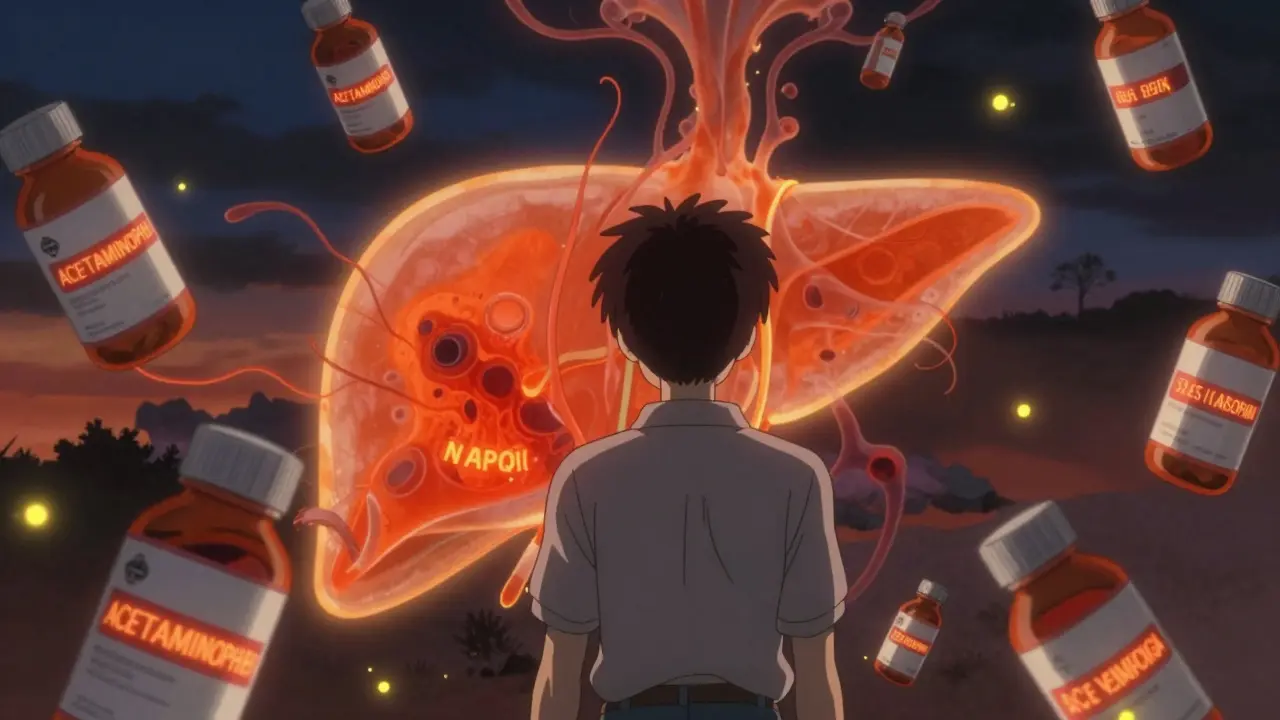
Every year, thousands of people end up in the hospital with severe liver damage-not from alcohol, not from viruses, but from a common painkiller they didn’t even realize was in multiple medicines. Acetaminophen is in more than 600 over-the-counter and prescription products. It’s in your headache pills, your cold medicine, your prescription painkillers like Vicodin or Percocet. And if you’re taking more than one, you could be hitting a dangerous dose without knowing it.
Why Acetaminophen Is Silent but Deadly
Acetaminophen is safe when used as directed. But your liver can only handle so much at once. The maximum safe daily dose for most adults is 4,000 milligrams. That sounds like a lot-until you realize that a single Vicodin tablet might contain 325 mg, and a bottle of cold medicine might have 650 mg per dose. If you take one of each, plus an extra Tylenol for a fever, you’re already over 1,300 mg. Do that three times a day for a week, and you’re at 9,100 mg. That’s more than double the safe limit.
The problem isn’t just the number of pills. It’s that most people don’t know acetaminophen is hiding in their meds. A 2021 Consumer Reports survey found only 28% of people knew the maximum daily dose. Nearly 70% of Reddit users who shared stories about accidental overdoses admitted they didn’t realize they were doubling up.
When you take too much, your liver turns acetaminophen into a toxic byproduct called NAPQI. Normally, your body neutralizes it with glutathione. But when you overload the system, glutathione runs out. Then NAPQI starts attacking liver cells. This isn’t a slow process. Liver enzymes can spike within 24 hours. By day three, you could be facing acute liver failure.
How Combination Products Make It Worse
Prescription painkillers like hydrocodone/acetaminophen or oxycodone/acetaminophen were once common. In 2010, over 147 million prescriptions were written for these combinations. By 2022, that number dropped to 84 million-not just because of opioid restrictions, but because doctors and regulators finally realized how dangerous the acetaminophen part was.
In 2011, the FDA stepped in. They required all prescription combination products to contain no more than 325 mg of acetaminophen per tablet or capsule. That rule took full effect by 2014. The goal? To make it harder to accidentally overdose. And it worked-at least a little. Unintentional overdoses dropped by 29% after the labeling changes, according to the Institute for Safe Medication Practices.
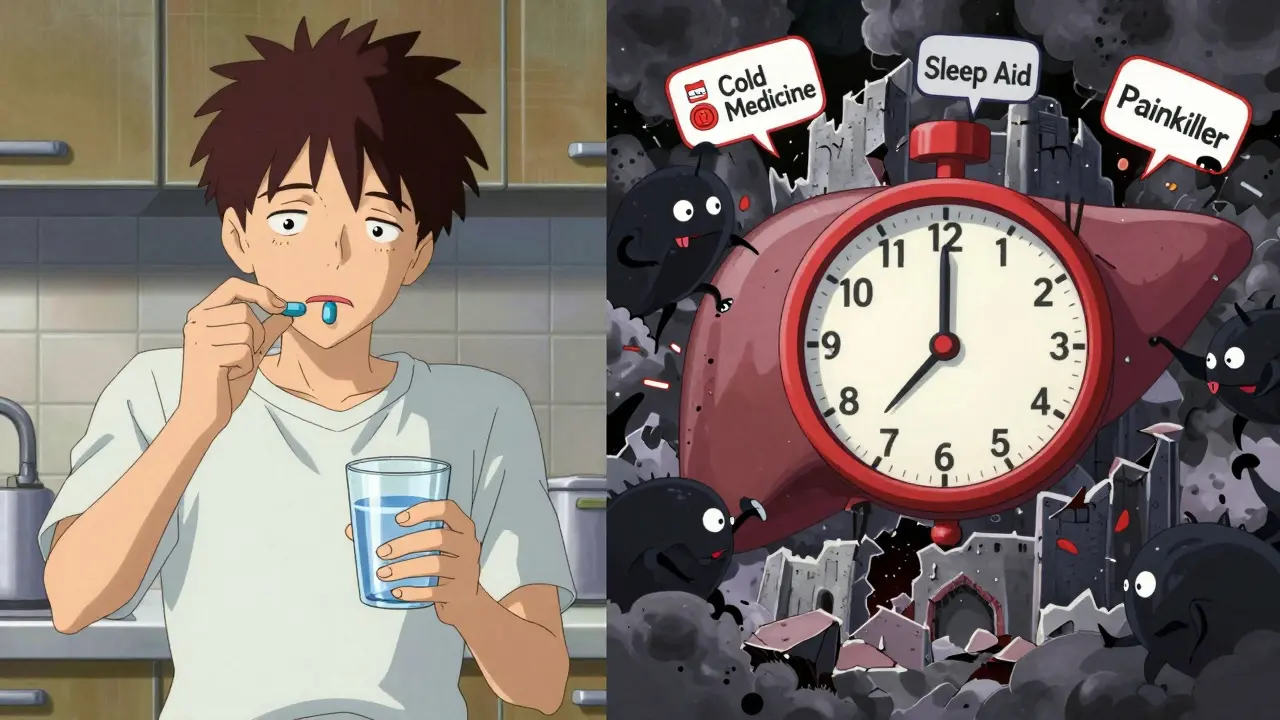
But here’s the catch: people still take multiple products. They take their prescription painkiller. They take a separate cold medicine for congestion. They take a sleep aid because they’re in pain and can’t rest. Each one has acetaminophen. None of them say “acetaminophen” in bold on the front. Most labels bury it in small print under “active ingredients.”
Who’s at Highest Risk?
Not everyone reacts the same way. Some people can take 3,500 mg a day with no issue. Others get liver damage at 2,500 mg. Why? It comes down to biology.
If you drink alcohol regularly-even just a few drinks a week-your liver is already stressed. Alcohol uses up glutathione, the same antioxidant your liver needs to detoxify acetaminophen. Studies show people who drink alcohol have a 2.5 times higher risk of liver injury from acetaminophen.
Malnutrition, fasting, or chronic illness can also lower glutathione levels. People with HIV, hepatitis, or who are undergoing chemotherapy are more vulnerable. Even being underweight or elderly can make you more sensitive.
And here’s something no one talks about: language barriers. A 2020 study found Spanish-speaking patients were 2.3 times more likely to accidentally overdose. Why? Medication labels weren’t clear. Pharmacists didn’t have time to explain. And many people assumed “pain relief” meant “safe to combine.”
What You Can Do Right Now
Preventing liver injury isn’t about waiting for a miracle drug. It’s about simple, daily habits.
- Always check the label. Look for “acetaminophen,” “APAP,” or “paracetamol” on every bottle-prescription or OTC. If you see it, write it down.
- Add up your daily dose. Don’t guess. Write down every pill you take. If you take two Tylenol (650 mg), one cold tablet (650 mg), and one Vicodin (325 mg), you’re at 1,625 mg. Do that three times a day? That’s 4,875 mg. You’re over the limit.
- Never take more than one acetaminophen product at a time. Even if they’re for different symptoms. If you’re taking something for pain, don’t also take something for cough or sleep unless you’re 100% sure it doesn’t contain acetaminophen.
- Set a daily cap of 3,000 mg. Especially if you drink alcohol, are over 65, or have liver disease. That’s the safer limit recommended by the American Association for the Study of Liver Diseases.
- Use a pill tracker. There are free apps now that scan barcodes and tell you exactly how much acetaminophen you’ve taken today. One beta-tested app, developed by the Acetaminophen Hepatotoxicity Prevention Consortium, has 89% accuracy across 150 products.
What Doctors and Pharmacists Should Do
Healthcare providers are the first line of defense. But too many still assume patients know what’s in their meds.
Studies show that when a doctor or pharmacist spends just five minutes explaining acetaminophen risks, unintentional overdose drops by over 50%. The key is specificity: “This painkiller has acetaminophen. You can’t take Tylenol or cold medicine with it.” Not “be careful with this.” Not “ask if you’re unsure.”
Electronic health records now have acetaminophen dose trackers built in. Over 87% of Epic systems flag when a patient is prescribed a combination product while already on another acetaminophen-containing drug. But doctors have to turn the alerts on-and many still don’t.
Pharmacists are even more critical. A 2021 study showed pharmacist-led counseling reduced overdoses by 41%. That means when you pick up a prescription, ask: “Does this have acetaminophen? What else can I take with it?” Don’t wait for them to ask you.
What’s New in Treatment
If you’ve taken too much, time is everything. The antidote is N-acetylcysteine (NAC). It works by restoring glutathione and protecting liver cells. But it’s only fully effective if given within 8 hours of overdose. After that, it still helps-but less so.
There’s a new option: fomepizole. Approved by the FDA in 2021, it blocks the enzyme that turns acetaminophen into NAPQI. In trials, it cut severe liver injury by 32% when used alongside NAC, especially if someone didn’t get help until 12 hours after taking too much.
There’s also a new oral NAC tablet that lasts 12 hours instead of 4. That’s huge. The old NAC protocol required 72 hours of IV or oral doses-and 60% of patients didn’t finish it because it tasted awful and made them sick. This new version could change that.
And researchers are looking at natural compounds like emodin (from rhubarb) and sulforaphane (from broccoli) that activate the body’s own antioxidant defenses. These aren’t treatments yet-but they could one day be added to high-risk medications as a safety buffer.
What Doesn’t Work
Some experts argue that adding protective agents like sulforaphane to painkillers is a bad idea. Why? Because it gives people a false sense of security. If you think your pill has a built-in safety net, you might take more. That’s why Dr. Neil Kaplowitz warns: “Protective additives undermine education.”
And relying on “natural” remedies like milk thistle or vitamin E? No evidence they help in overdose. Don’t waste time. If you suspect you’ve taken too much, go to the ER. Don’t wait for symptoms. Liver damage doesn’t hurt until it’s too late.
Real Stories, Real Consequences
On Drugs.com, one user wrote: “I took my prescribed painkiller for two weeks. Didn’t realize I was also taking Advil Cold & Sinus. My ALT levels were 1,200. I was hospitalized. I still have scar tissue.”
Another said: “My mom took her arthritis pill and a nighttime cold tablet. She didn’t know both had acetaminophen. She was fine one day, in a coma the next.”
But there are wins too. One Amazon review for Vicodin said: “The new box has ‘ACETAMINOPHEN’ in big red letters. I checked my other meds and realized I was taking three products with it. I stopped. I saved my liver.”
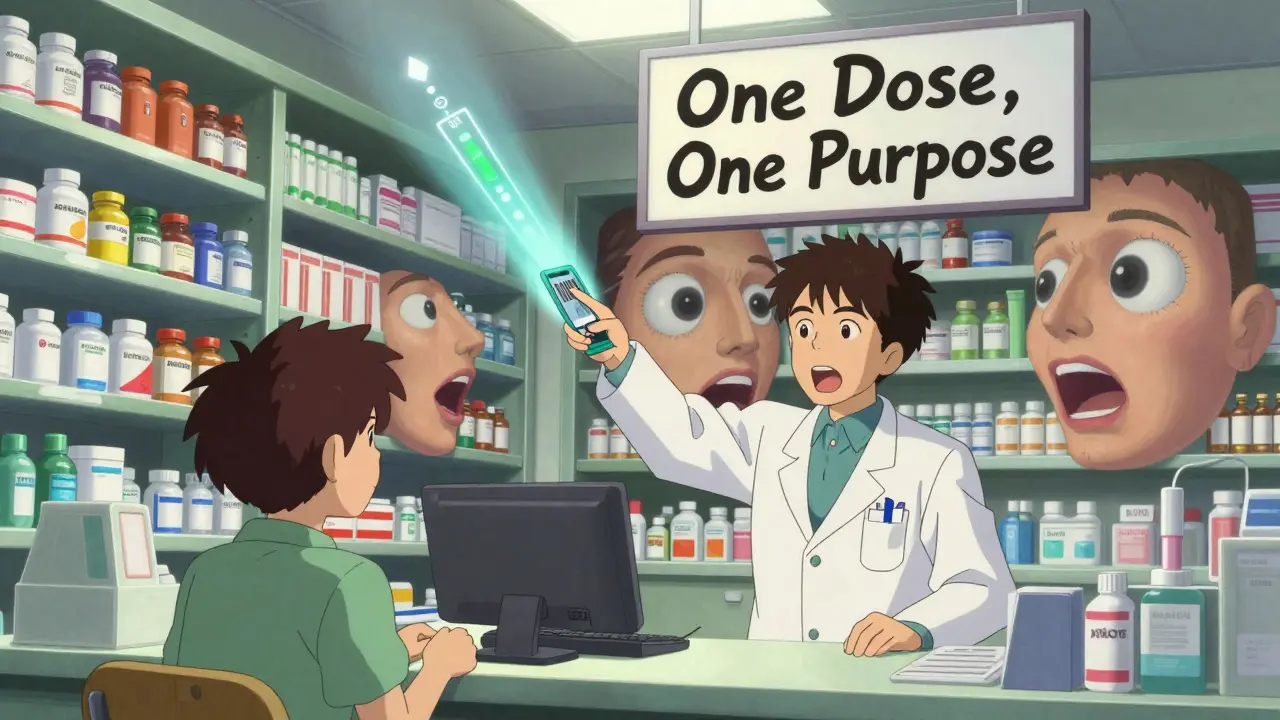
Final Rule: One Dose, One Purpose
Here’s the bottom line: if you’re taking a combination product for pain, don’t take anything else for pain, fever, or cold unless you’ve checked the label. Write it down. Add it up. Set a reminder. Ask your pharmacist.
Acetaminophen isn’t evil. It’s useful. But it’s not harmless. And when it’s hidden in three different bottles, it becomes a silent threat.
You don’t need to avoid it. You just need to know what you’re taking.
Can I take acetaminophen if I drink alcohol?
It’s risky. Even moderate drinking lowers your liver’s ability to process acetaminophen safely. If you drink regularly, limit yourself to no more than 2,000-3,000 mg per day. If you’re unsure, skip acetaminophen entirely and use ibuprofen instead-unless you have kidney or stomach issues.
Is Tylenol safer than other acetaminophen products?
No. Tylenol is just a brand name. All acetaminophen works the same way, whether it’s store-brand, prescription, or in a cold medicine. The risk isn’t the brand-it’s the total amount you take in a day.
What are the signs of acetaminophen liver damage?
Early signs are subtle: nausea, vomiting, loss of appetite, tiredness. By the time you feel pain in your upper right abdomen, it’s often too late. Liver damage doesn’t always hurt. That’s why blood tests are the only reliable way to know. If you’ve taken too much, get tested-even if you feel fine.
Can children overdose on acetaminophen combination products?
Children rarely get prescribed combination products like Vicodin. But they can overdose on OTC products meant for adults. Always use child-specific dosing. Never give a child medicine labeled for adults. Check the label for “acetaminophen” even in children’s cold syrups.
Should I stop taking my prescription painkiller?
Don’t stop without talking to your doctor. But do ask: “Does this contain acetaminophen?” and “Is there a version without it?” Many painkillers now come in opioid-only forms. Ask for those instead. Your liver will thank you.
How do I know if I’ve taken too much?
If you’ve taken more than 4,000 mg in 24 hours-or more than 3,000 mg if you drink alcohol or have liver issues-you’ve exceeded the safe limit. Don’t wait for symptoms. Call Poison Control (1-800-222-1222) or go to the ER. Bring all your medication bottles with you.
Are there any long-term effects of a single overdose?
If treated quickly, most people recover fully. But if liver damage is severe, it can lead to scarring (fibrosis) or even chronic liver disease. Some people need a transplant. Even if you feel fine afterward, get your liver checked six months later.
Can I use herbal supplements to protect my liver from acetaminophen?
No. Milk thistle, dandelion, and other supplements have not been proven to prevent or treat acetaminophen toxicity. In fact, some herbs can harm the liver on their own. Stick to proven medical treatments like NAC. Don’t gamble with your liver.
Joe Jeter
December 23, 2025 AT 19:50bharath vinay
December 25, 2025 AT 03:38claire davies
December 26, 2025 AT 19:18Rachel Cericola
December 27, 2025 AT 04:18Blow Job
December 27, 2025 AT 16:39EMMANUEL EMEKAOGBOR
December 28, 2025 AT 04:46Pankaj Chaudhary IPS
December 28, 2025 AT 06:36Katie Taylor
December 30, 2025 AT 05:41Payson Mattes
December 30, 2025 AT 22:22Isaac Bonillo Alcaina
December 31, 2025 AT 00:59Bhargav Patel
December 31, 2025 AT 14:21Steven Mayer
January 2, 2026 AT 01:36Bartholomew Henry Allen
January 2, 2026 AT 02:37