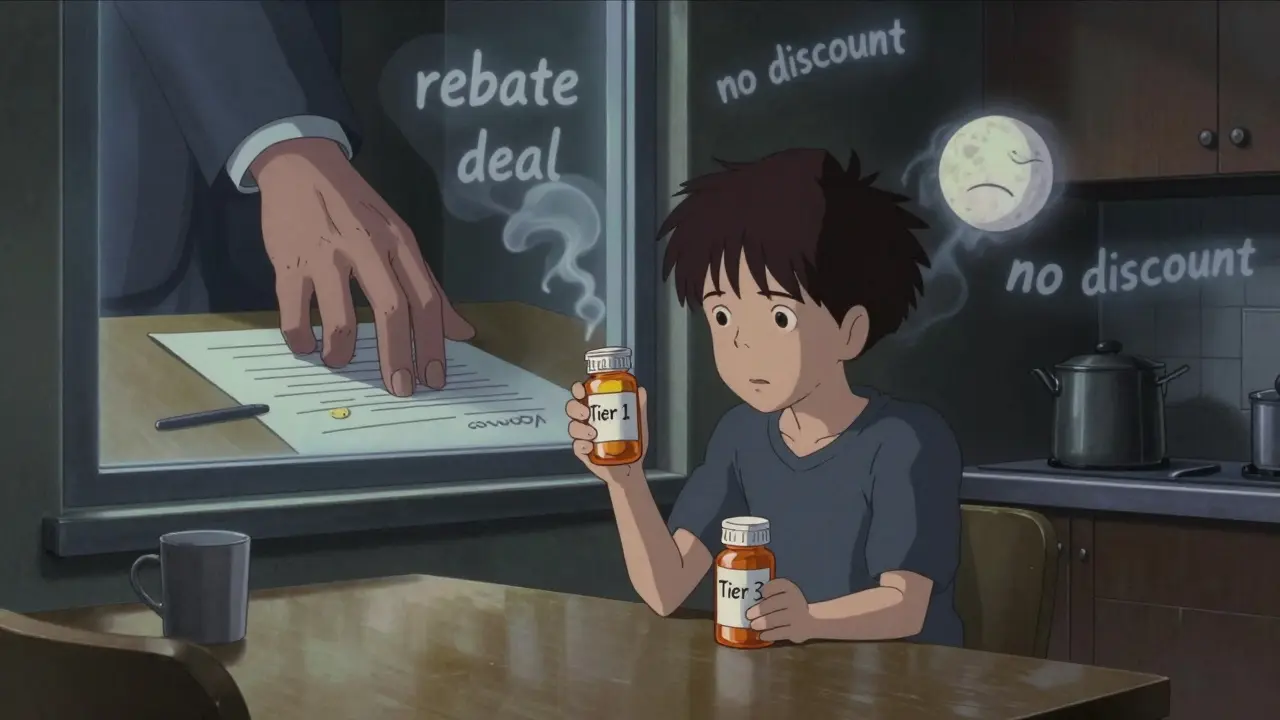
Ever picked up your generic prescription and been shocked by the price? You thought generics were supposed to be cheap - but suddenly, your $5 medication jumped to $45. You’re not alone. Thousands of people face this every year, and the reason isn’t what you’d expect. It’s not about quality. It’s not about effectiveness. It’s about negotiations between your insurer and drug makers - and your generic drug might be stuck in a higher tier because of it.
How Tiered Copays Work
Most health plans today use something called a tiered formulary. Think of it like a pricing ladder for your medications. Each rung on the ladder is a tier, and each tier has a different cost to you - the patient.- Tier 1: Preferred generics. Usually $0-$15 for a 30-day supply.
- Tier 2: Preferred brand-name drugs. Around $25-$50.
- Tier 3: Non-preferred brands. $60-$100.
- Tier 4: Preferred specialty drugs. You pay 20-25% of the total cost.
- Tier 5: Non-preferred specialty drugs. You pay 30-40%.
Why Your Generic Isn’t in Tier 1
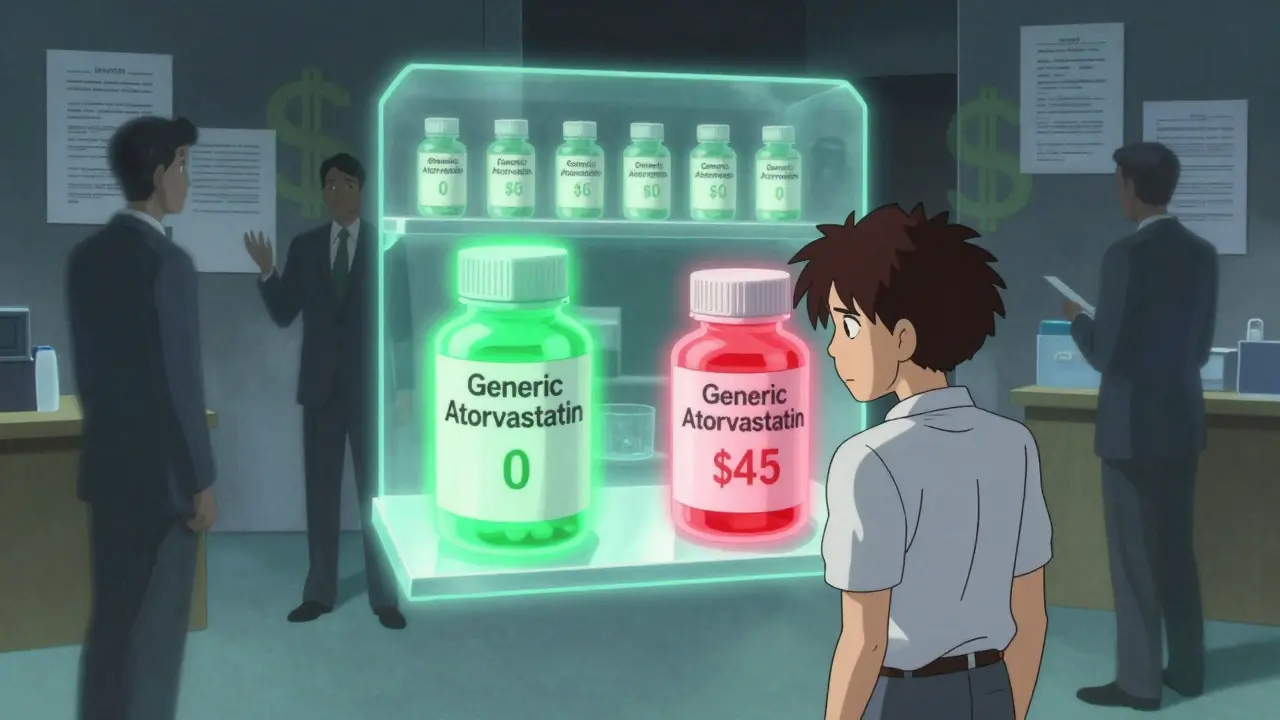
You might be taking levothyroxine, metformin, or lisinopril - all common, well-established generics. Your doctor says they’re all the same. So why does one version cost $5 and another cost $45? The answer: It’s not about the drug. It’s about the contract. Pharmacy Benefit Managers (PBMs) - companies like Express Scripts, CVS Caremark, and OptumRx - negotiate deals with drug manufacturers. They ask for rebates, discounts, and kickbacks in exchange for putting a drug in Tier 1. If a manufacturer doesn’t offer a big enough discount, the PBM puts that generic in Tier 2 or even Tier 3. This happens even when the pills are chemically identical. Two bottles of generic atorvastatin (a cholesterol drug) can have the same active ingredient, same dosage, same manufacturer - but one is in Tier 1 ($0), and the other is in Tier 2 ($10) because the second one didn’t cut a good enough deal. According to BOC Pharmacy Group, 12-18% of generic drugs are placed in Tier 4 or 5 - not because they’re complex, but because they cost more than $600 per month to produce. That’s right: some generics are treated like specialty drugs just because they’re expensive to make.When Generics Cost More Than Brands
It sounds backwards, but it happens. A 2023 survey by the Patient Advocate Foundation found that 41% of insured people ran into a situation where a generic drug had a higher copay than expected. In some cases, a generic version of a drug costs more than the brand-name version. Why? Because the brand-name drug might still have a strong rebate deal. The generic? No deal. So the insurer puts the brand in Tier 2 and the generic in Tier 3. Patients don’t realize this until they get their bill. One Reddit user, 'PharmaPatient87', wrote: "My levothyroxine generic went from $5 to $45 overnight. My doctor says they’re all the same. My insurer won’t explain why." This isn’t rare. It’s standard.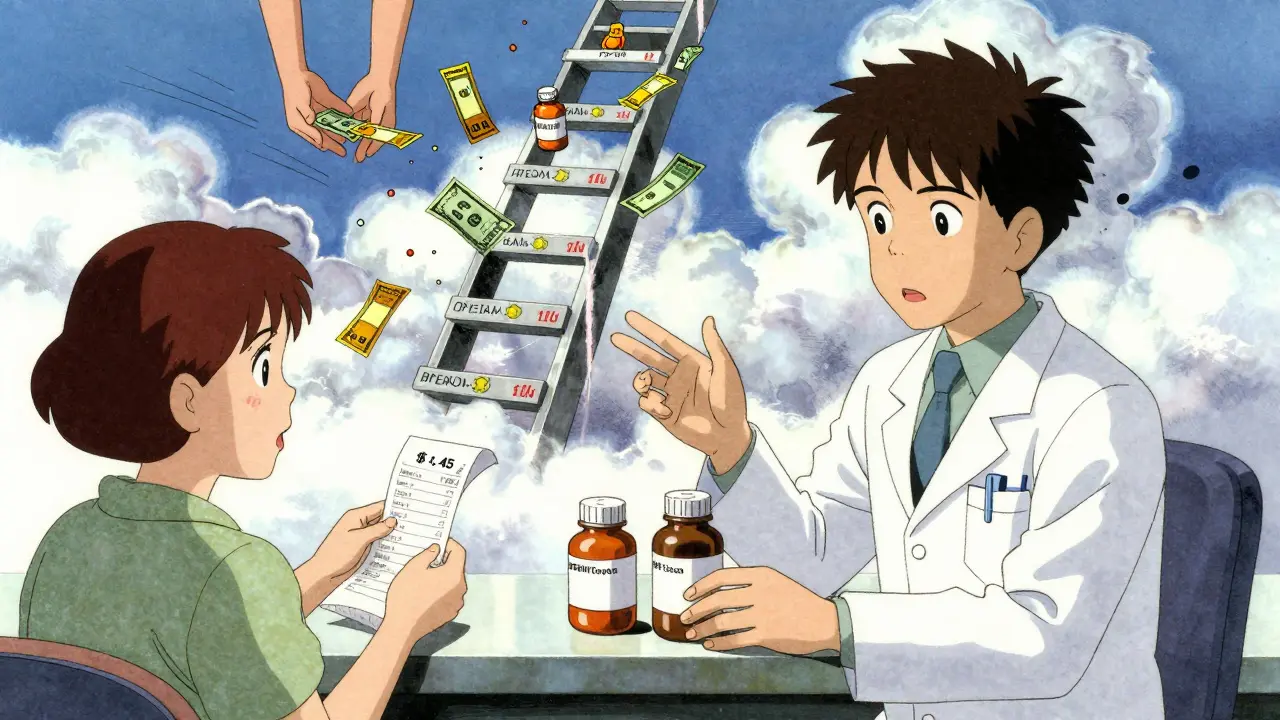
What Happens When Your Drug Gets Moved
Formularies change - often. In 2023, 17% of commercial insurance plans updated their drug tiers between January and June. A drug you’ve been taking for years might suddenly jump tiers. You don’t get a heads-up. Your pharmacy won’t tell you. You just show up, and the price is different. This isn’t just inconvenient - it can hurt your health. A 2005 study found that when diabetes meds moved from Tier 2 to Tier 3, adherence dropped by 7.3%. People stopped taking them because they couldn’t afford the new cost. And here’s another twist: pharmacists are often allowed to switch your drug to a "preferred" generic without asking you. This is called a therapeutic interchange. Sounds helpful, right? Except if the "preferred" version isn’t right for you - maybe it causes side effects, or you’ve been stable on the other one - you’re stuck.What You Can Do
You don’t have to accept this. Here’s what actually works:- Check your formulary. Every plan updates it once a year (usually October). Look up your drug on your insurer’s website. Find out which tier it’s on.
- Ask your pharmacist. They know which versions are preferred. Ask: "Is there a cheaper generic available?" They can often switch it for you.
- Use GoodRx or SmithRx. These tools show you real-time prices at nearby pharmacies - sometimes lower than your copay.
- Request a tier exception. If your drug was moved to a higher tier, ask your doctor to file a form for an exception. You’ll need to explain why the cheaper option doesn’t work for you. Success rate? Around 63%.
- Use manufacturer coupons. Many drug makers offer patient assistance programs. In 2023, these programs covered 22% of specialty drug costs for eligible patients.