
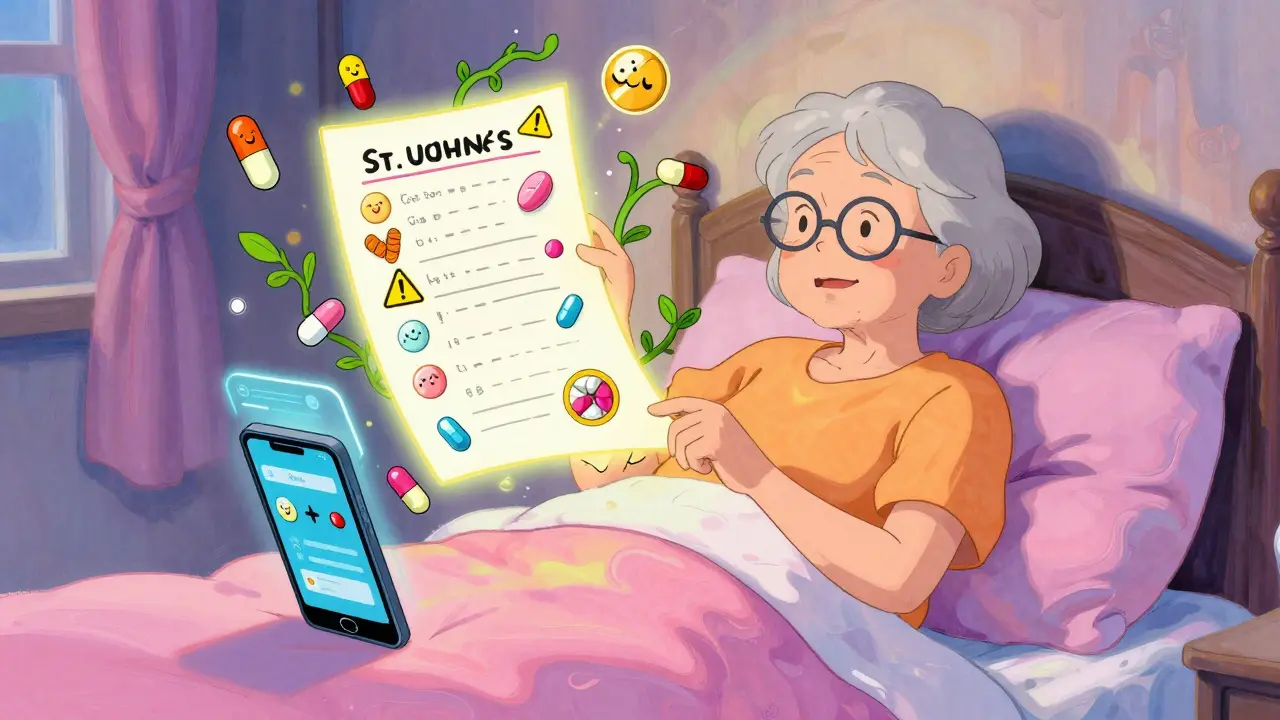
Every year, over 100,000 people in the U.S. die from adverse drug reactions-many of which could have been avoided with a simple, updated medication list. If you or someone you care for takes five or more medications, you’re not alone. Nearly 4 in 10 adults over 65 are managing multiple prescriptions, supplements, and over-the-counter drugs. But here’s the problem: most doctors never see the full picture. They might know about your blood pressure pill, but not the turmeric capsule you take for joint pain, or the antacid you pop after dinner. That gap? It’s where dangerous interactions happen.
What a Complete Medication List Actually Includes
A medication list isn’t just a note on your phone or a scribble on a napkin. It needs to be detailed, accurate, and current. The most effective lists include every single thing you take, not just prescriptions.- Prescription drugs: Brand name and generic name, dose (e.g., “Lisinopril 10 mg”), how often (e.g., “once daily”), and why you take it (e.g., “for high blood pressure”).
- Over-the-counter (OTC) meds: Tylenol, ibuprofen, sleep aids, cold pills-even if you only take them once in a while.
- Supplements and vitamins: Vitamin D3 2000 IU, fish oil, magnesium, CoQ10. Don’t assume they’re “safe” just because they’re sold in a health store.
- Herbal products: St. John’s Wort, ginkgo biloba, echinacea. These can interfere with blood thinners, antidepressants, and even chemotherapy.
- Allergies and reactions: Not just “penicillin allergy”-specify what happened. “Hives,” “swollen throat,” or “severe diarrhea” helps providers avoid dangerous substitutions.
- Timing and instructions: “Take on empty stomach,” “with food,” “avoid grapefruit,” “take at bedtime.” These matter more than you think.
- Start date and prescriber: Who prescribed it? When did you begin? This helps spot duplicates or outdated prescriptions.
One woman in Brighton shared how she caught a life-threatening interaction after her cardiologist saw her full list. She was taking warfarin for a blood clot and had started St. John’s Wort for low mood. Neither her GP nor her psychiatrist knew about it. The pharmacist, who reviewed her printed list during a refill, flagged it immediately. Warfarin and St. John’s Wort together can cause dangerous bleeding. She stopped the supplement before anything happened.
Why Paper Lists Fail (and What Works Better)
Many people still keep their medication list in their wallet-a paper card, maybe even a folded piece of paper from an old appointment. But here’s the truth: paper lists are outdated by the time you walk into the clinic.A 2022 study found only 62% of paper lists were accurate during emergency visits. Why? People forget to update them. They lose them. They write “aspirin” instead of “baby aspirin 81 mg.”
Digital lists are better-but not perfect. Smartphone health apps like Apple Health or Google Health show 78% accuracy. But 23% of adults over 65 don’t use smartphones. That’s a gap. And even if you use an app, it doesn’t automatically include your supplements or OTC meds unless you manually add them.
The best system? A hybrid approach.
- Use one pharmacy for everything. Most pharmacies now scan every new prescription against your full list and flag potential interactions. Their system catches 92% of major drug clashes.
- Take a photo of every pill bottle. Snap a picture of the label for each medication, supplement, and OTC product. Store them in a folder on your phone. When you see a new provider, say: “Here’s what I’m taking-I took pictures of the bottles.”
- Print a clean, updated list every month. Use a simple template from the FDA’s “My Medicine Record” form. Update it within 24 hours of any change-new prescription, stopped pill, added supplement.
Patients who do this reduce their risk of dangerous interactions by nearly half. That’s not a guess. That’s what the Agency for Healthcare Research and Quality found after tracking thousands of patients.
Who You Need to Share It With (And When)
You don’t wait to be asked. You hand it over before the doctor even sits down.Studies show 63% of providers don’t routinely ask for a full list. That’s not negligence-it’s overload. They’re rushing between patients. Your list gives them the missing puzzle piece.
Share your list with:
- Your primary care doctor (every visit)
- Every specialist-even if they’re not prescribing anything
- Emergency room staff (always bring it with you)
- Pharmacists when picking up new meds
- Home care nurses or caregivers
- Anyone helping you manage your medications
And don’t forget: when you’re admitted to the hospital, your list should be the first thing you hand to the nurse. Medication errors are the #1 cause of preventable harm during hospital stays. A clear list can stop a mistake before it starts.

The Hidden Danger: Supplements and OTC Meds
Here’s the scary part: 30% of serious drug interactions involve something you bought without a prescription.People think: “It’s natural, so it’s safe.” But that’s not true.
- St. John’s Wort can make birth control, antidepressants, and heart meds stop working.
- Ginkgo biloba increases bleeding risk with aspirin or warfarin.
- Calcium supplements can block absorption of thyroid medicine if taken at the same time.
- Antacids with aluminum or magnesium can reduce the effectiveness of antibiotics like ciprofloxacin.
A 2022 FDA report found that nearly half of all reported adverse drug events linked to supplements were never documented in the patient’s medical record. Why? Because patients didn’t mention them.
So when you sit down with your doctor, say: “I’m also taking these supplements and OTC meds.” Don’t wait for them to ask. Don’t assume they’ll remember. Say it out loud.
What to Ask Your Provider
Your provider doesn’t know everything about your meds. But they can check for interactions-if you give them the full list.Don’t leave the appointment without asking these three questions:
- “Could any of these medications interact with each other?” This opens the door for them to run a check.
- “Are there any foods, drinks, or supplements I should avoid while taking these?” Grapefruit, alcohol, and even dairy can interfere with common drugs.
- “Is there one provider who should be coordinating all of this?” If you see three or more specialists, you need a medication coordinator-usually your primary care doctor or pharmacist.
One patient in her 70s started seeing a neurologist, a rheumatologist, and a cardiologist. Each prescribed new meds. She didn’t tell them about the others. She ended up with dangerously low blood pressure from overlapping sedatives. After her pharmacist reviewed her full list, they removed two unnecessary drugs. Her energy improved. Her dizziness vanished.
When Things Go Wrong-And How to Fix It
Even with the best list, mistakes happen. You forget to update it. A new provider doesn’t check it. A pharmacy misreads a label.If you feel unusual symptoms-dizziness, nausea, confusion, unusual bruising, rapid heartbeat-ask yourself: Did I change anything in my meds? Even a new supplement can be the trigger.
Here’s what to do:
- Stop the new medication or supplement immediately.
- Call your pharmacist. They’re trained to spot interactions and can often advise within minutes.
- Call your doctor. Don’t wait for your next appointment.
- Update your list. Write down what happened and what you did.
Pharmacists are your secret weapon. In 2023, over 200 patient reviews on Yelp in the UK specifically credited pharmacists with catching dangerous interactions. They’re the ones who see your full list every time you pick up a prescription.
Final Tip: Make It a Habit
Medication safety isn’t a one-time task. It’s a routine.Set a monthly reminder on your phone: “Review meds.”
Every time you get a new prescription, add it to your list before you leave the pharmacy.
Every time you stop a medication, cross it off.
Every time you buy a new supplement, snap a photo and add it.
Keep your printed list in your wallet. Keep your digital list synced to your phone. Keep your bottle photos organized.
It takes 10 minutes a month. But those 10 minutes could save your life-or someone else’s.
What if I take 10 or more medications? Is there a better way to manage them?
If you’re taking five or more medications, you’re in the high-risk group for drug interactions. The best strategy is to work with a pharmacist-led medication therapy management (MTM) program. Many Medicare Part D plans offer this for free if you take eight or more meds for chronic conditions. The pharmacist reviews all your meds, checks for duplicates, finds interactions, and simplifies your schedule. Some even deliver pre-sorted pill boxes. Ask your pharmacy or insurer if MTM is available to you.
Can I use my phone’s health app instead of a printed list?
Yes, but not alone. Phone apps are great for tracking and reminders, but many don’t let you easily share a clean, printable version. Plus, in an emergency, paramedics can’t access your phone if you’re unconscious. Always carry a printed copy too. Use your phone to update your list daily, and print a new version monthly. That’s the safest combo.
What if my doctor ignores my medication list?
Don’t assume they’re ignoring it-they might just be overwhelmed. Bring your list to the front desk when you check in. Ask the nurse to give it to the doctor before the appointment. If they still don’t review it, say: “I’ve had a bad reaction before because my meds weren’t reviewed. I need to make sure this is safe.” Most providers will respond to clear, calm concern. If they still don’t take it seriously, consider switching to a provider who prioritizes medication safety.
Do I need to update my list if I stop a medication?
Absolutely. Many adverse events happen because old meds are still on the list, leading to unnecessary prescriptions. If you stop a drug-even for a week-cross it off immediately. Write “discontinued” and the date. If you restart it later, add it back with the new start date. Outdated lists are one of the top causes of medication errors.
Are there free tools I can use to build my list?
Yes. The FDA offers a free, printable “My Medicine Record” form on their website. You can also download templates from the American Academy of Family Physicians or the Institute for Safe Medication Practices. Many pharmacies also give out simple one-page forms. Don’t overcomplicate it. Just make sure it includes all the key details: name, dose, frequency, reason, and allergies.
Jigar shah
December 16, 2025 AT 13:06I've been keeping a digital medication list on my phone for two years now, and it's saved me twice already. Once, my pharmacist flagged a conflict between my statin and a new turmeric supplement I started for inflammation. I thought it was 'natural' so it was safe-turns out, not at all. Now I update it every Sunday night, and I print a copy every month. It takes five minutes, but it’s the most important thing I do for my health.
Kent Peterson
December 17, 2025 AT 10:44Oh, here we go again-the 'medication list' fairy tale. You think your little paper card or phone app is going to stop Big Pharma from overprescribing? The system is broken. Doctors don’t have time. Pharmacies are profit-driven. And you’re supposed to trust a 70-year-old grandma with a phone that doesn’t even have 5G? This whole post is a distraction. Stop blaming patients. Fix the system.
Josh Potter
December 18, 2025 AT 15:13YOOO I just started taking magnesium and fish oil and I was like ‘nah I’m good’-until I read this. BRO. I snapped pics of every bottle last night. Even my kids’ cough syrup. I put ‘em in a folder called ‘DON’T LET ME DIE’ 😅 Now I’m printing one for my wallet. Thanks for the wake-up call. This is life-saving stuff, not fluff.
Jody Patrick
December 19, 2025 AT 19:06Just one sentence: Always tell your pharmacist everything-even the gummy vitamins.
Radhika M
December 20, 2025 AT 15:43My mother took 12 different things. She didn’t know half of them were for the same thing. I sat with her one Sunday and wrote it all down-name, dose, why, who prescribed. We took it to her doctor. They found three duplicates and one dangerous combo with her blood pressure med. She’s been fine since. Don’t wait for a crisis. Start today.
Philippa Skiadopoulou
December 21, 2025 AT 17:00While the sentiment of this article is commendable, the emphasis on photographic documentation is impractical for elderly populations with limited digital literacy. A standardized, printed form, maintained by a primary caregiver and updated quarterly, remains the most reliable method. Digital tools should supplement, not supplant, tangible records in clinical settings.
Pawan Chaudhary
December 22, 2025 AT 12:50Man, I was skeptical until my dad almost had a stroke because his new blood thinner clashed with his ginkgo. Now I help him update his list every week. We even have a little sticker on the fridge: ‘Meds Check Friday!’ It’s become part of our routine. You don’t need to be a doctor-just care enough to ask. Seriously, do it. It’s easy.
Linda Caldwell
December 24, 2025 AT 01:48I used to think supplements were harmless. Then my mom ended up in the ER after mixing St. John’s Wort with her antidepressant. She didn’t even realize it was a problem. Now I make sure every single person I know-friends, coworkers, even my neighbor-has a printed list. I keep extra copies in my car. You never know when someone might need it. It’s not a chore-it’s an act of love.
Sam Clark
December 25, 2025 AT 18:54Thank you for articulating a critical public health imperative with such clarity. The data presented aligns with peer-reviewed findings from the Institute of Medicine regarding preventable adverse drug events. I would further recommend integrating medication reconciliation protocols into all primary care workflows, and advocating for interoperability between electronic health records and pharmacy dispensing systems. Patient empowerment is essential, but systemic change is non-negotiable.