

Statin Rechallenge Safety Checker
Is Rechallenge Safe for You?
This tool helps determine if you're a good candidate for statin rechallenge based on your medical history and symptoms. Results are based on clinical guidelines from the American College of Cardiology.
Statin muscle pain isn’t always the statin’s fault
Many people stop taking statins because of muscle pain, weakness, or cramps. But here’s the surprising truth: in clinical trials, statin-induced muscle symptoms happen just as often in people taking a sugar pill as in those taking the real drug. That’s not a typo. A major analysis of 12 trials with over 100,000 patients found no real difference in muscle complaints between statin users and placebo groups. So why do so many people blame the statin? It’s often the nocebo effect - when you expect something to hurt, your brain makes you feel it.
That doesn’t mean muscle pain from statins isn’t real. Some people do develop true statin-induced myopathy. But the severe form - rhabdomyolysis - is extremely rare, affecting fewer than 1 in 1,000 users. Most cases are mild, and many can be safely managed with a smart rechallenge plan. The goal isn’t to force everyone back on statins. It’s to help those who truly need them get back on track without unnecessary risk.
When to try rechallenging - and when to avoid it
Not everyone who stops a statin should try to restart it. The key is knowing the difference between temporary muscle discomfort and a true immune reaction.
If you had mild muscle aches that went away after stopping the statin, and your creatine kinase (CK) levels were normal or only slightly elevated, rechallenge is usually safe and recommended. The American College of Cardiology advises waiting 2 to 4 weeks after symptoms disappear before trying again. That’s enough time for your muscles to recover and for any lingering inflammation to settle.
But if you had rhabdomyolysis - where CK levels rose more than 40 times above normal - you should never restart a statin. That’s a medical emergency, and the risk of recurrence is too high. Even more important: if you test positive for anti-HMGCR antibodies, you have immune-mediated necrotizing myopathy. This isn’t just a side effect. It’s an autoimmune disease triggered by statins. In these cases, you need immunosuppressants, not another statin.
The MEDS approach: How to safely restart a statin
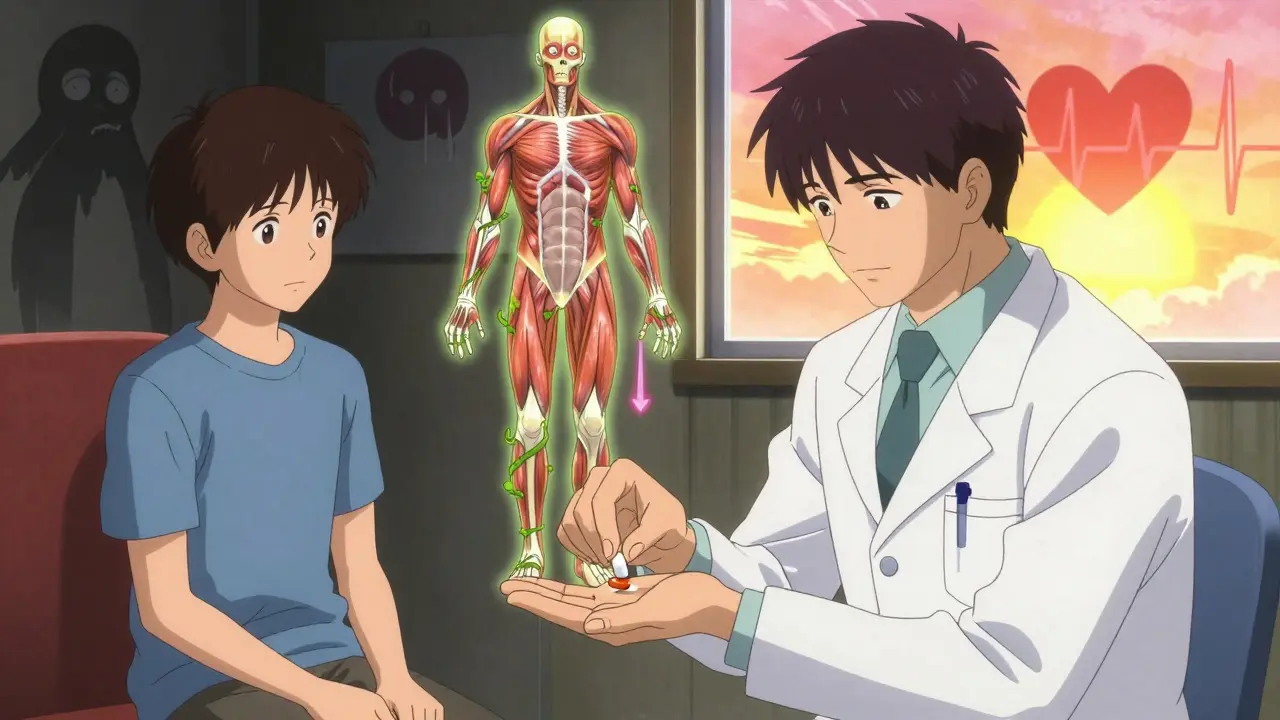
Doctors who manage high-risk patients use a simple, evidence-backed plan called MEDS:
- Minimize time off statins - The longer you’re off, the higher your risk of heart attack or stroke. Don’t wait months. Aim to restart within 4 weeks if symptoms have cleared.
- Educate - Understand what’s happening. Many people think muscle pain means the drug is working. It doesn’t. And many think any pain means they’re intolerant. That’s not true either. Knowledge reduces fear.
- Diet and nutraceuticals - Coenzyme Q10, vitamin D, and omega-3s may help reduce muscle symptoms in some people. They’re not magic, but they can lower the dose you need. Also, avoid grapefruit juice if you’re on simvastatin or atorvastatin - it can spike drug levels and increase muscle risk.
- Systematic monitoring - Check your CK levels and muscle strength 2 to 4 weeks after restarting. Track symptoms daily. If pain returns, don’t push through it.
This approach works. Studies show 60% to 80% of people who thought they were statin-intolerant can successfully restart with the right plan.
Which statin to try next - and how to dose it
Not all statins are created equal when it comes to muscle risk. Some are much gentler on muscles than others.
Pravastatin and fluvastatin have the lowest risk of muscle side effects. They’re metabolized differently and don’t build up in muscle tissue like simvastatin or atorvastatin. If you had trouble with simvastatin, switching to pravastatin 20mg is often the first step. Many patients report no issues after the switch.
Other strategies:
- Lower the dose - Try half the original dose. A 40mg atorvastatin might become 10mg. The cardiovascular benefit doesn’t drop as much as you’d think.
- Go every-other-day - Instead of daily, take the statin every 48 hours. This keeps LDL low while giving muscles a break. Studies show this works for 30% of patients who failed daily dosing.
- Use a low-intensity statin - Rosuvastatin 5mg or pravastatin 10mg are considered low-intensity. They still cut LDL by 30% or more - enough for many people.
One patient in Brighton, 68, had muscle pain on simvastatin 40mg. After switching to pravastatin 20mg every other day, her symptoms vanished. She’s been on it for 3 years with no problems and a 40% drop in LDL.
What if nothing works? Alternatives to statins
Some people truly can’t tolerate any statin - even at the lowest dose or every-other-day schedule. That’s okay. You still have options.
Ezetimibe is the most common alternative. It lowers LDL by 15% to 20% and has a clean safety profile. It’s cheap, generic, and often covered by insurance. But it doesn’t have the same proven heart protection as statins.
PCSK9 inhibitors - evolocumab and alirocumab - are injectables that lower LDL by 50% to 60%. They’ve been shown to reduce heart attacks and strokes in high-risk patients. The downside? Cost. At around $5,850 a month, they’re expensive. But many patients qualify for manufacturer assistance programs that bring the cost down to $0 or $10 a month.
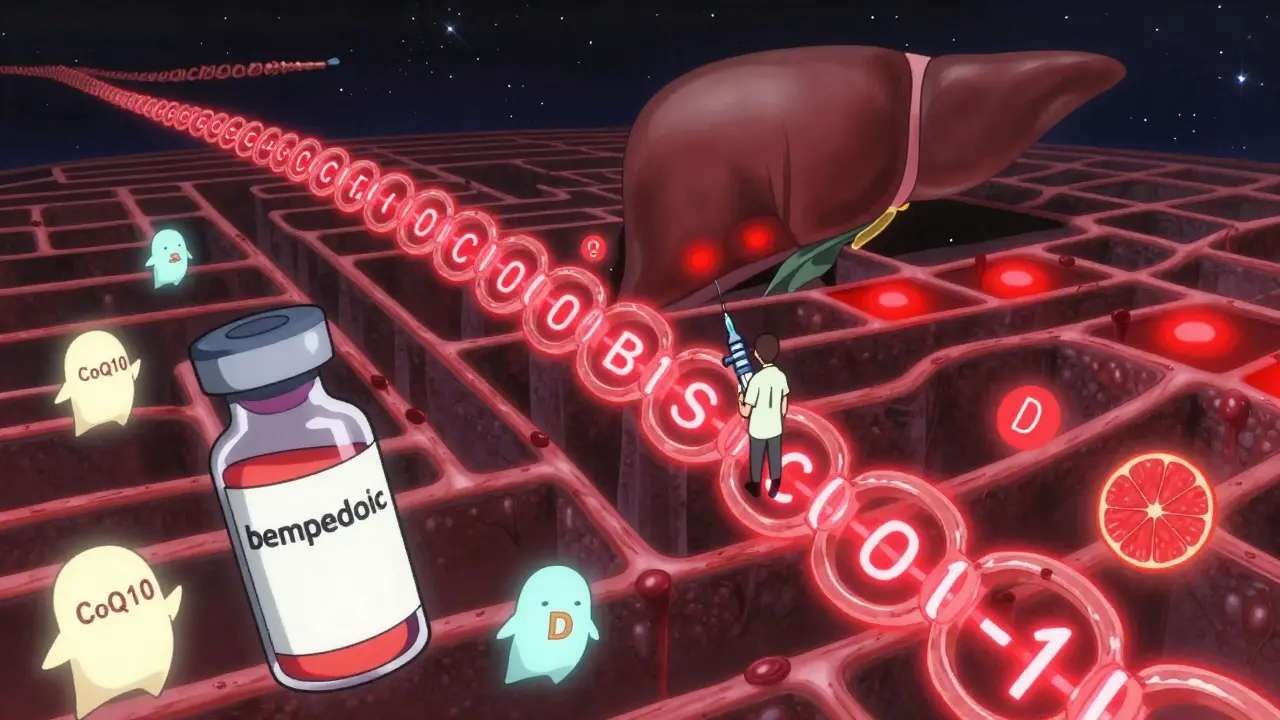
For patients who need a big LDL drop but can’t afford biologics, bempedoic acid is a newer oral option. It works in the liver like statins but doesn’t enter muscle cells, so muscle pain is rare. It lowers LDL by 20% to 25% and reduces cardiovascular events in trials.
Why most doctors don’t offer rechallenge - and what to do
A 2021 survey found 73% of patients who stopped statins due to muscle pain were never offered a rechallenge plan. Why? Many doctors aren’t trained in the tools that make rechallenge safe. The Statin-Associated Muscle Symptom Clinical Index (SAMS-CI) is a validated questionnaire that predicts whether your symptoms are likely due to statins. It’s 91% accurate at ruling out true intolerance.
If your doctor hasn’t heard of SAMS-CI, ask for it. Or ask to see a lipid specialist. These clinics use formal protocols and see dozens of these cases every month. They know which statins to pick, how to dose them, and when to switch to alternatives.
Don’t accept "you’re statin-intolerant" as a dead end. That label is often wrong. And staying off statins when you need them is far riskier than trying a safe rechallenge.
What to watch for during rechallenge
When you restart a statin, pay attention to these signs:
- Unexplained muscle soreness that doesn’t go away after a few days
- Weakness in your thighs or shoulders - trouble standing up from a chair or lifting your arms
- Dark urine - a sign of muscle breakdown
- Fever or fatigue along with muscle pain
If any of these happen, stop the statin and call your doctor. Get a CK test. Don’t wait. But if you just feel a little sore after walking or gardening - that’s normal. It’s not the statin.
Keep a symptom journal. Write down what you feel, when, and how bad. Share it with your doctor. This helps separate real side effects from normal aches.
Genetic testing: The next frontier
Some people are genetically more likely to have muscle problems with statins. The SLCO1B1 gene controls how your liver clears simvastatin. If you have the *5/*5 variant, your body holds onto the drug longer, increasing muscle risk by over 200%.
Genetic testing for this variant isn’t routine - yet. But if you’ve tried multiple statins and had muscle pain every time, ask your doctor about it. The 2023 European guidelines now recommend it for recurrent cases. It’s not expensive, and it can save you years of trial and error.
Final thought: Don’t give up on statins
Statins save lives. For people with heart disease, diabetes, or high cholesterol, they reduce heart attacks by 25% to 30%. That’s more than any other drug out there.
Statin myopathy is real - but it’s often overdiagnosed. And when it’s real, it’s usually manageable. With the right strategy, most people can get back on a statin safely. You don’t have to choose between muscle pain and a heart attack. There’s a middle path - and it’s backed by science, not fear.
Can I restart a statin after muscle pain went away?
Yes, if your symptoms fully resolved and your creatine kinase (CK) levels returned to normal. Wait 2 to 4 weeks after stopping, then restart with a lower dose or a different statin like pravastatin or fluvastatin. Monitor symptoms and CK levels closely after restarting.
What’s the safest statin to try after muscle pain?
Pravastatin and fluvastatin have the lowest risk of muscle side effects. They’re less likely to build up in muscle tissue than simvastatin or atorvastatin. Start with a low dose - like pravastatin 20mg - and consider every-other-day dosing if needed.
Is muscle pain from statins always a sign of damage?
No. In clinical trials, muscle pain occurs just as often in people taking a placebo as in those taking statins. Many cases are due to the nocebo effect - when you expect pain, you feel it. True statin-induced muscle injury is rare and usually involves elevated CK levels. Mild soreness without lab changes is likely not from the statin.
What if I still get muscle pain after switching statins?
Try intermittent dosing - every other day instead of daily. If that doesn’t work, consider non-statin options like ezetimibe or PCSK9 inhibitors. Bempedoic acid is another oral option with low muscle risk. Genetic testing for SLCO1B1 variants may help explain why you’re sensitive.
Should I take CoQ10 or vitamin D with statins?
There’s no strong proof they prevent muscle pain, but they’re safe and may help some people. Low vitamin D is linked to muscle weakness, and CoQ10 levels drop on statins. Taking them won’t hurt - and might ease symptoms. Don’t rely on them alone, but use them as part of a broader strategy.
How do I know if I have immune-mediated necrotizing myopathy?
If you had severe muscle weakness, very high CK levels (over 40x normal), and symptoms didn’t improve after stopping the statin, ask your doctor for an anti-HMGCR antibody test. If it’s positive, you have an autoimmune condition. You’ll need immunosuppressants, not another statin.
Beth Cooper
January 30, 2026 AT 20:57Melissa Cogswell
January 31, 2026 AT 17:35Donna Fleetwood
February 2, 2026 AT 16:13Diana Dougan
February 3, 2026 AT 22:07Bobbi Van Riet
February 5, 2026 AT 00:05Lily Steele
February 6, 2026 AT 15:37Carolyn Whitehead
February 8, 2026 AT 06:27Jodi Olson
February 9, 2026 AT 00:26Amy Insalaco
February 10, 2026 AT 18:26Kathleen Riley
February 11, 2026 AT 17:52Sazzy De
February 13, 2026 AT 08:07Shubham Dixit
February 14, 2026 AT 13:05Rohit Kumar
February 15, 2026 AT 04:51