

Stopping your medication because of side effects is one of the most common mistakes people make - and it’s often unnecessary. You might feel nauseous after taking your blood pressure pill, get dizzy when you stand up, or have trouble sleeping because of your antidepressant. It’s tempting to just quit. But before you do, here’s the truth: most side effects aren’t reasons to stop - they’re signals to adjust. The key isn’t enduring discomfort. It’s learning how to talk about it in a way that helps your doctor help you - without ditching the treatment that’s keeping you healthy.
Why You Shouldn’t Just Quit
About half of all people stop taking their prescribed medications within the first year. Side effects are the #1 reason. But here’s what most people don’t realize: 68% of common side effects fade on their own within 7 to 14 days as your body adjusts. That dizziness? It might go away after a week. The dry mouth from your diabetes medicine? It often improves after a few weeks. Quitting too soon doesn’t just mean your condition comes back - it can make things worse. High blood pressure, depression, or epilepsy don’t pause because you stopped the pill. They keep growing. And when you restart later, you might have to go through the side effects all over again.How to Talk About Side Effects - The Right Way
You don’t need to be a doctor to have this conversation. You just need to be clear, specific, and prepared. Here’s how:- Track it. Keep a simple log: when the side effect happened, how bad it was (1 to 10), what you were doing at the time, and whether it got better or worse. Use a notebook, phone notes, or a free app. People who track side effects are 23% less likely to quit their meds, according to a 2021 study.
- Use the SWIM framework. When you talk to your doctor or pharmacist, structure your points like this:
- Severity: "It’s a 7/10 - I can’t work when it hits."
- When: "It starts 45 minutes after I take the pill, around 9 a.m."
- Intensity: "It happens every day, and it’s getting worse."
- Management: "I’ve tried drinking more water and eating a small snack before taking it - it helped a little."
- Ask the right questions. Don’t just say, "This is awful." Say:
- "What percentage of people experience this?"
- "Is this side effect temporary?"
- "Can we try taking it at night instead?"
- "Is there a lower dose I can start with?"
- "Could adding another medication help with this?"
Real Examples That Worked
A woman in Brighton was struggling with nausea from her blood pressure medication. She thought about quitting - until she talked to her pharmacist. They suggested taking the pill with a small piece of toast. Within days, her nausea dropped from 6 times a day to 1 or 2. She stayed on the medication. Her blood pressure improved. She didn’t need a new drug. Another man took his antidepressant in the morning and couldn’t sleep. He asked his doctor if he could switch to nighttime. The answer? Yes. His mood stayed stable. His sleep improved. He didn’t have to try three other pills. These aren’t rare cases. A 2022 survey of over 4,000 patients found that those who asked about changing the time of day they took their medication were 4.2 times more likely to stick with it than those who didn’t.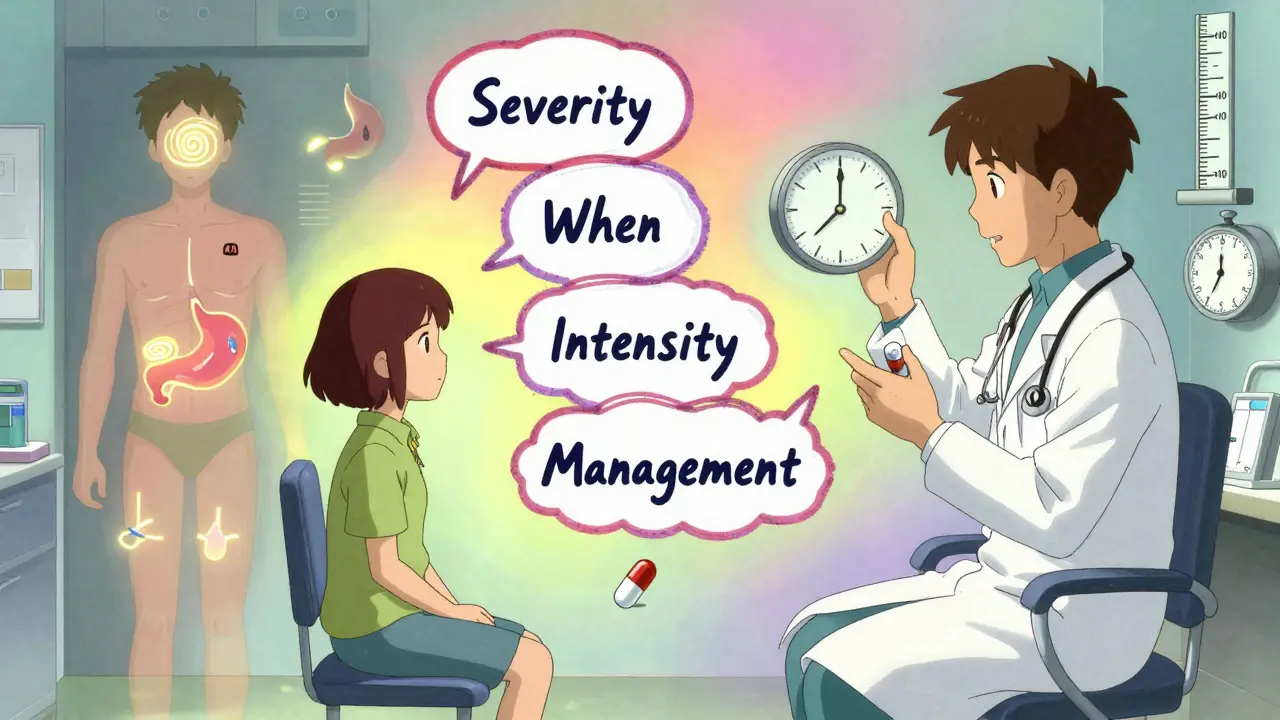
What Your Doctor Can Do - And What They Can’t
Your doctor isn’t here to make you suffer. They can:- Adjust the dose (lower it, or increase it slowly)
- Change the timing (take it with food, at night, split into two doses)
- Add a second medication to counteract the side effect (like an anti-nausea pill for chemo or blood pressure meds)
- Switch to a different drug in the same class (many blood pressure pills have different side effect profiles)
- Give you a short trial period to see if side effects improve
Myths That Keep People Off Their Meds
There are three big lies people believe:- "Side effects mean the drug isn’t right for me." Not true. Many side effects are temporary, and your body adapts. A 2021 study even found that telling patients, "This side effect means the drug is working," reduced anxiety by 37% and lowered quitting rates by 29%.
- "My doctor won’t care." Wrong. Doctors hear this every day. They’ve seen it all. If you’re worried they’ll think you’re exaggerating, remember: tracking your symptoms proves you’re serious - not dramatic.
- "I’ll just stop and restart later." Dangerous. Some medications, like antibiotics or heart drugs, can cause serious harm if stopped suddenly. Even if you feel fine, stopping without advice can lead to rebound effects - your symptoms coming back harder than before.
What to Bring to Your Appointment
Before you go, prepare this simple list:- Your complete medication list - names, doses, times you take them
- Your side effect log - even a few days of notes helps
- One or two specific questions you want answered
- Any changes you’ve tried already (like taking it with food or at bedtime)

When It’s Time to Stop (And When It’s Not)
Not every side effect is manageable. Some are serious - and you should stop immediately and get help:- Swelling of the face, tongue, or throat
- Severe rash or blistering skin
- Unexplained bruising or bleeding
- Thoughts of self-harm or suicide
- Severe chest pain or irregular heartbeat
Technology Can Help - But Only If You Use It
There are now FDA-approved apps that help you track side effects, remind you to take pills, and even send summaries to your doctor. A 2023 study found patients using these tools had 18% higher adherence than those who didn’t. But apps won’t fix anything if you don’t use them. The key isn’t the app - it’s the habit. Write it down. Talk about it. Follow up.Final Thought: You’re Not Broken - Your Treatment Can Be Tweaked
Medication isn’t a one-size-fits-all solution. It’s a tool. And tools need adjusting. The fact that you’re experiencing side effects doesn’t mean you’re failing. It means you’re human. And your healthcare team is there to help you find the version of this treatment that works for you - not the version that works for someone else. Don’t quit because it’s hard. Ask how to make it easier. That’s how people stay healthy long-term - not by avoiding discomfort, but by learning how to manage it.What if my side effects don’t go away after two weeks?
If side effects last longer than 14 days and are still affecting your daily life, it’s time to revisit your treatment plan. This doesn’t mean the medication is wrong - it means it needs adjustment. Your doctor may lower your dose, switch you to a similar drug with fewer side effects, or add a second medication to manage the symptom. Keep tracking your symptoms and bring your log to your next appointment.
Can I take my medication at a different time of day?
Yes, often you can. Many side effects - like dizziness, nausea, or insomnia - can be reduced simply by changing when you take your pill. For example, if a medication makes you sleepy, taking it at night instead of in the morning can help. If it upsets your stomach, taking it with food might make a big difference. Always check with your pharmacist or doctor first - some pills must be taken at specific times for effectiveness.
Should I stop my medication if I feel worse at first?
Not necessarily. Many medications, especially antidepressants and blood pressure drugs, cause temporary side effects as your body adjusts. Feeling worse for the first few days or weeks is common - but it doesn’t mean the drug isn’t working. Most people feel better after 7 to 14 days. If you’re unsure, talk to your provider before stopping. They may ask you to stick with it a little longer.
Is it safe to skip a dose if I’m having bad side effects?
No, unless your doctor says so. Skipping doses can cause your condition to worsen, lead to rebound symptoms, or reduce the drug’s effectiveness. For example, skipping antibiotics can lead to resistant infections. Skipping heart or seizure meds can be dangerous. Instead of skipping, call your doctor. They can help you manage the side effect without risking your health.
How do I know if a side effect is serious enough to stop?
Call your doctor or go to urgent care if you have: swelling of the face or throat, trouble breathing, severe rash, unexplained bruising or bleeding, chest pain, irregular heartbeat, or thoughts of harming yourself. These are red flags. For milder symptoms - like fatigue, dry mouth, mild nausea, or dizziness - keep taking your medication and talk to your provider. Most of these are manageable and temporary.
Cory L
February 24, 2026 AT 20:44lela izzani
February 26, 2026 AT 12:55Joanna Reyes
February 27, 2026 AT 05:28Stephen Archbold
February 28, 2026 AT 04:56Dinesh Dawn
March 1, 2026 AT 10:41Nerina Devi
March 1, 2026 AT 19:14Joseph Cantu
March 1, 2026 AT 19:54Vanessa Drummond
March 1, 2026 AT 21:47David McKie
March 3, 2026 AT 10:15Jacob Carthy
March 3, 2026 AT 18:23Southern Indiana Paleontology Institute
March 5, 2026 AT 05:17Anil bhardwaj
March 6, 2026 AT 07:03Lisandra Lautert
March 7, 2026 AT 07:33