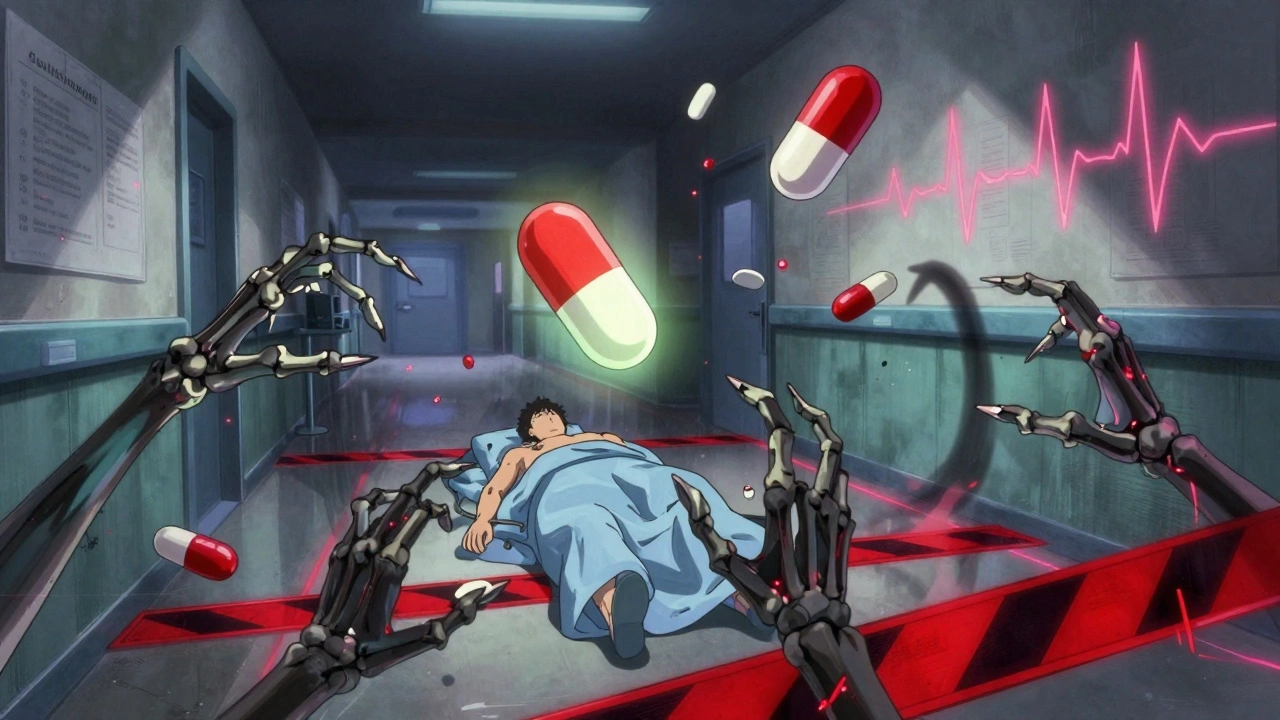
Colchicine Toxicity: Symptoms, Risks, and What to Do If You Overdose
When colchicine, a powerful medication used to treat gout and familial Mediterranean fever is taken in too high a dose—or mixed with the wrong other drugs—it can cause colchicine toxicity, a dangerous condition that attacks your cells and shuts down vital organ function. This isn’t rare. It happens more often than you think, especially in older adults or people with kidney problems. Colchicine has a very narrow safety window: the difference between a helpful dose and a deadly one is small. Many don’t realize they’re at risk until it’s too late.
Drug interactions, especially with statins, antibiotics like clarithromycin, or even grapefruit juice are the #1 cause of accidental colchicine toxicity. These substances slow down how your body clears colchicine, letting it build up to toxic levels. Symptoms start with nausea, vomiting, and diarrhea—often mistaken for a stomach bug. But within hours, things get worse: muscle weakness, numbness, irregular heartbeat, and low blood cell counts. In severe cases, it leads to multi-organ failure. There’s no antidote. Treatment is supportive: IV fluids, breathing support, and sometimes blood transfusions. The key is catching it early.
People on long-term colchicine for gout or autoimmune conditions are especially vulnerable. If you’re taking it daily, your doctor should check your kidney function every few months. Never adjust your dose without talking to them. And if you’re prescribed a new medication—even an over-the-counter one—ask if it interacts with colchicine. Many pharmacists now flag this combo automatically, but not all do. You have to be your own advocate.
This collection of articles dives into the real-world risks around colchicine and similar high-risk drugs. You’ll find clear explanations of how toxicity develops, what drugs make it worse, and how to spot the early red flags before it’s an emergency. We also cover what to do if you accidentally take too much, how to store colchicine safely at home, and why some patients end up in the ER because they didn’t know the signs. These aren’t theoretical scenarios—they’re real cases, backed by clinical data and patient reports. If you or someone you care about is taking colchicine, this isn’t just information. It’s a safety net.