
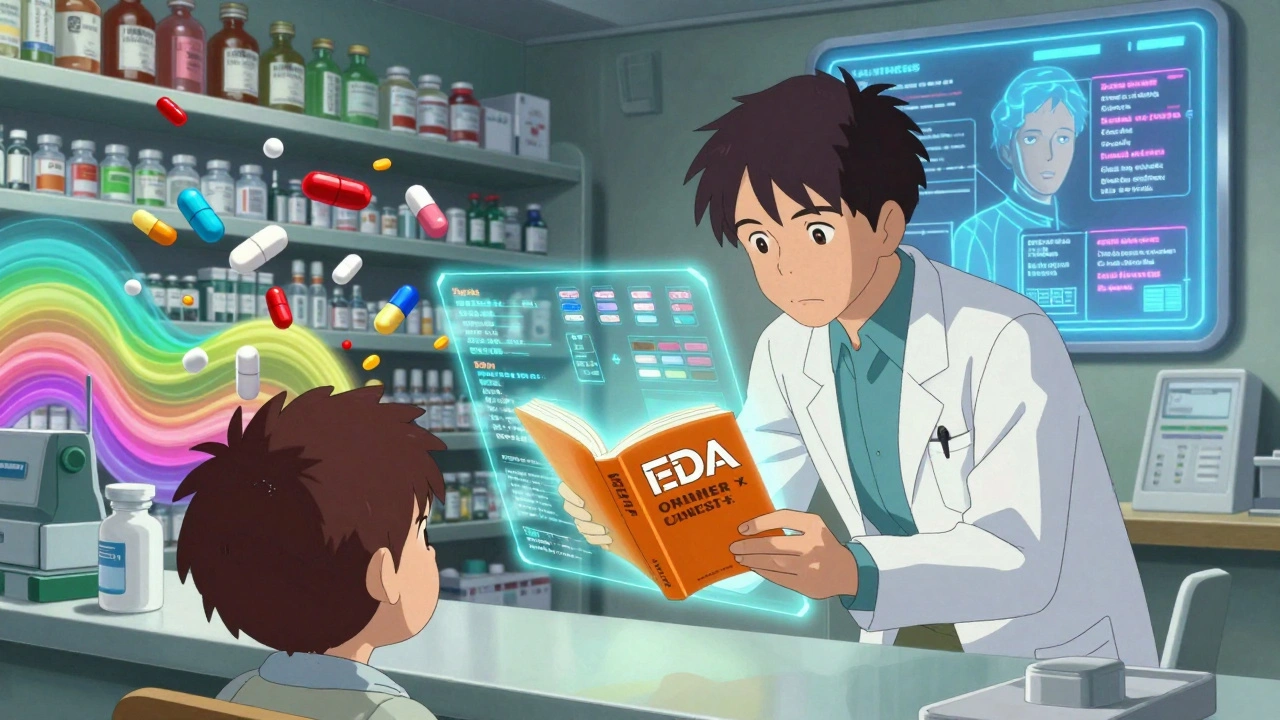
When you pick up a prescription, you probably think the pharmacist just fills the bottle. But for many patients, especially those on multiple medications, the pharmacist is doing something much bigger: medication therapy management (MTM). And when it comes to generic drugs, their role isn’t just about saving money-it’s about making sure those savings don’t come at the cost of your health.
What Exactly Is Medication Therapy Management?
MTM isn’t a new buzzword. It’s a formal, structured service recognized by the American Pharmacists Association since 2008. Think of it as a full health check-up for your meds. A pharmacist sits down with you-usually for 20 to 40 minutes-and reviews every pill, patch, inhaler, and injection you’re taking. Not just what your doctor prescribed, but also what you bought over the counter, took from a friend, or stopped because it was too expensive. This isn’t about counting pills. It’s about asking: Is this drug still needed? Is it working? Are you taking it right? And is there a cheaper version that does the same thing? The goal? Fewer side effects, better control of conditions like diabetes or high blood pressure, and less money spent on meds you don’t need-or worse, ones you’re not even taking.Why Pharmacists Are the Experts on Generic Drugs
You’ve probably heard the question: “Is the generic really the same?” The answer is yes-most of the time. The FDA requires generic drugs to have the same active ingredient, strength, dosage form, and route of administration as the brand-name version. They must also be bioequivalent, meaning they work the same way in your body. But here’s where most people get confused: not all generics are created equal. For drugs with a narrow therapeutic index-like warfarin, levothyroxine, or lithium-even tiny differences in how the body absorbs the drug can cause big problems. A pharmacist trained in MTM checks the FDA’s Orange Book to confirm the generic has an “A” rating, meaning it’s therapeutically equivalent. If it’s a “B,” they flag it and talk to your doctor before switching. And then there’s the cost. Generic drugs can save patients 80 to 85% compared to brand names. But cost alone doesn’t drive the decision. A pharmacist doesn’t just swap a brand for a generic because it’s cheaper. They ask: Is this the right time? Is the patient stable? Will switching cause anxiety or confusion? One patient on Reddit shared how her $400-a-month brand-name inhaler was switched to a $15 generic. She cried-not because it didn’t work, but because she thought she’d lose control of her asthma. The pharmacist spent 20 minutes explaining the science, showing her the FDA data, and even called her doctor to confirm the switch. She’s now saving $4,500 a year and breathing fine.How MTM Cuts Costs Without Cutting Care
A 2022 study of 1,247 MTM participants found that 68% of patients saved money-on average, $214 a month-just by switching to appropriate generics. But here’s the key: those savings didn’t happen by accident. Pharmacists didn’t just pick the cheapest option. They looked at your entire regimen. Maybe you’re on three different blood pressure meds, two of which have equally effective generics. Maybe one of them is being prescribed twice because two different doctors didn’t know about the other. Maybe you’re still paying for a brand-name statin when a generic has been proven just as safe for your age and liver function. In one HealthPartners case, pharmacists identified three medications that had cheaper generic equivalents. The patient saved $287 a month. No change in symptoms. No new side effects. Just smarter prescribing. These aren’t hypotheticals. A 2022 systematic review of 47 studies showed MTM services led to an average cost reduction of $1,247 per patient per year. And 37% of that savings came directly from optimized generic drug use.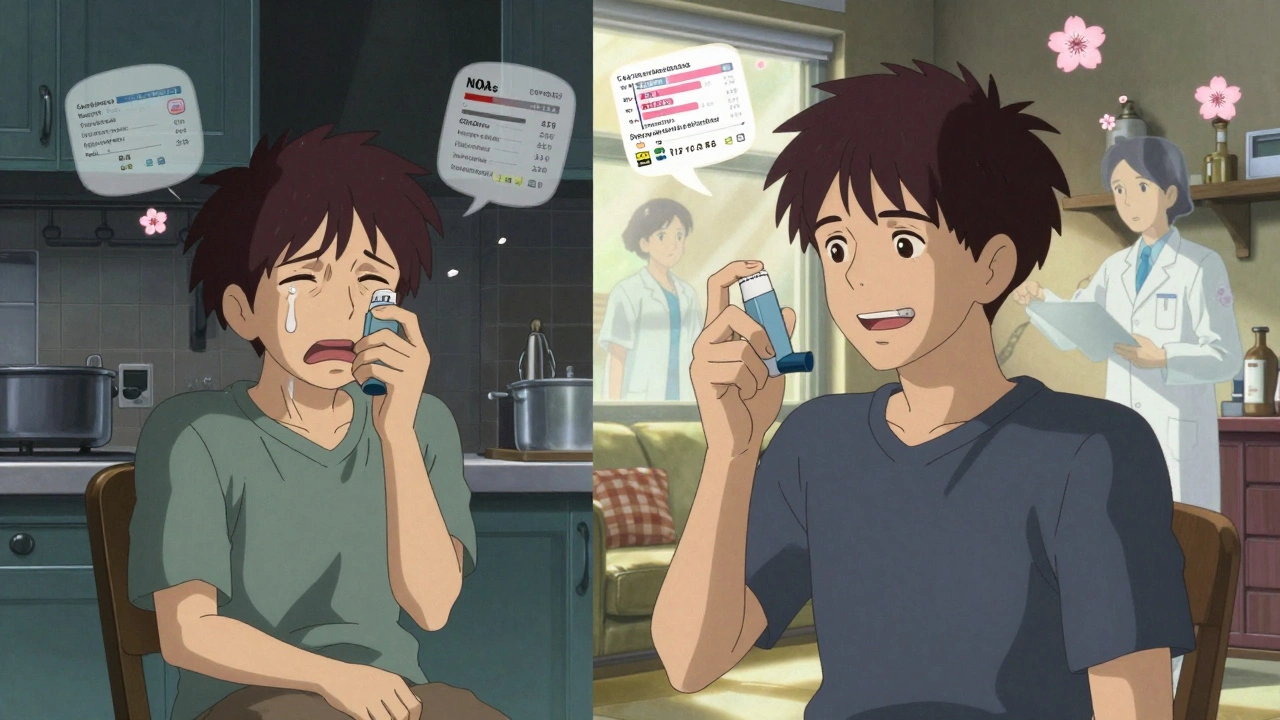
MTM vs. The Old Way of Filling Prescriptions
Traditionally, pharmacists spent about 1.7 minutes per patient-just long enough to hand over the bottle and say, “Take one daily.” MTM changes that. A comprehensive medication review takes 20 to 40 minutes. Pharmacists don’t just look at your list-they ask: When was the last time you took your insulin? Did you skip your pills last week because you couldn’t afford them? Have you been feeling dizzy since you started the new blood pressure med? They use tools like the Medication Appropriateness Index (MAI), which scores each drug on 10 criteria: Is it indicated? Is the dose right? Is it causing interactions? Is it cost-effective? The results? Pharmacists identify an average of 4.2 medication-related problems per patient. That’s four chances to prevent a hospital visit. Studies show MTM reduces medication errors by 61% and cuts 30-day hospital readmissions by 23%. For patients with chronic diseases, that’s life-changing.Why So Few People Use MTM
If MTM works so well, why aren’t more people using it? Only 15 to 25% of eligible Medicare beneficiaries actually participate in MTM services. Why? First, most patients don’t know it’s free. Medicare Part D is required to offer it, but pharmacies don’t always advertise it. You have to ask. Second, reimbursement is a mess. Medicare pays $50 to $150 per session. Commercial insurers? Often $25 to $75. For a pharmacist spending 40 minutes on a patient, plus 10 minutes documenting it, that’s barely minimum wage. Some pharmacies just don’t offer it. One Medicare beneficiary on the CMS forum wrote: “I qualified, but my pharmacy said they don’t do MTM because it’s not worth their time.” Third, there’s a stigma around generics. Some patients believe brand names are stronger, safer, or more effective-even when the science says otherwise. Pharmacists have to spend time educating, not just dispensing.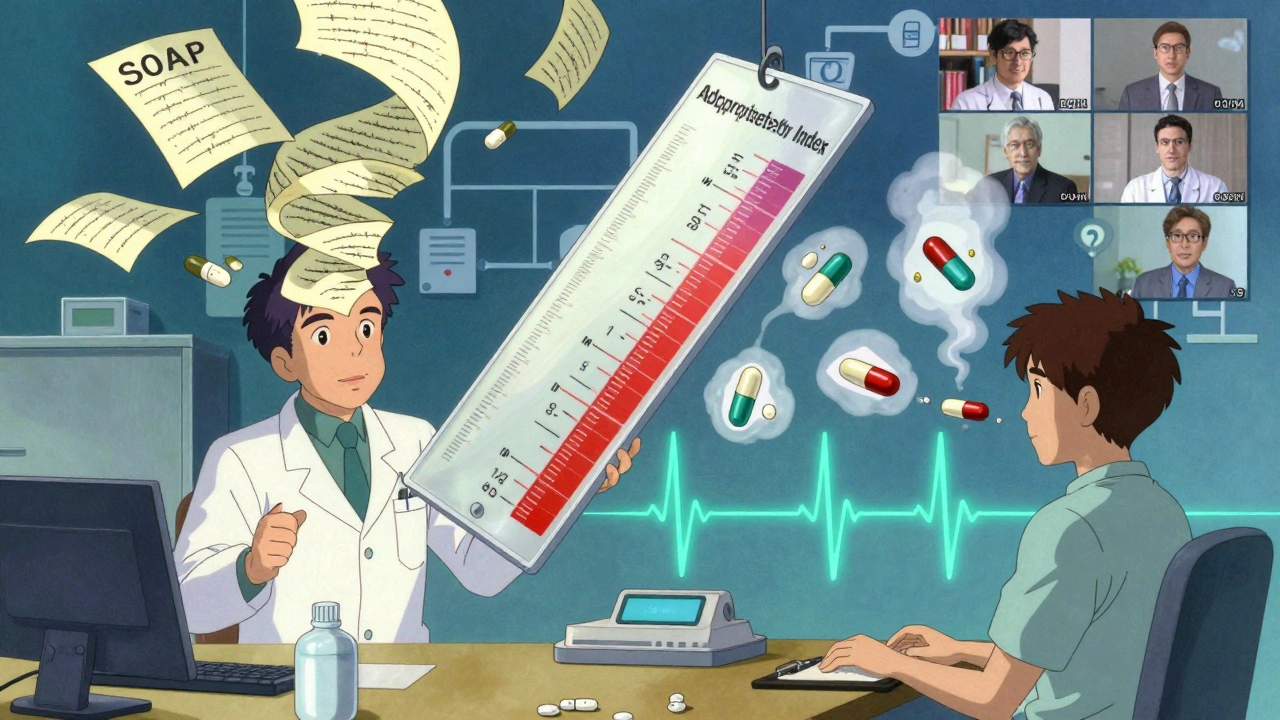
What Pharmacists Need to Do MTM Right
MTM isn’t something you learn overnight. Pharmacists need specialized training-40 to 60 hours of focused education. Many earn certifications like BCPS (Board Certified Pharmacotherapy Specialist) or BCACP (Board Certified Ambulatory Care Pharmacist). They need to be fluent in:- Therapeutic equivalence (FDA Orange Book ratings)
- Pharmacoeconomics (how to balance cost and clinical outcomes)
- Communication (how to explain generics without sounding dismissive)
- Documentation (SOAP notes: Subjective, Objective, Assessment, Plan)
Rebecca M.
December 2, 2025 AT 05:16So let me get this straight - pharmacists are now therapists, financial advisors, and FDA compliance officers all in one? And we’re supposed to be *grateful* they’re not just handing us pills anymore? 🙄
Roger Leiton
December 2, 2025 AT 19:21This is actually amazing 😊 I had no idea MTM was even a thing! My grandma’s pharmacist sat with her for 30 mins last month and found she was taking two different blood pressure meds that did the same thing. She’s saving $180/month now. Pharmacists are the real MVPs 🙌
Steve World Shopping
December 3, 2025 AT 03:16While the theoretical framework of MTM is commendable from a pharmacoeconomic standpoint, the operational feasibility remains fraught with systemic inefficiencies. The therapeutic equivalence paradigm, as codified in the FDA Orange Book, is predicated on bioequivalence metrics that fail to account for inter-individual pharmacokinetic variance - particularly in polymorphic CYP450 substrates. Consequently, the blanket substitution of ‘A-rated’ generics without pharmacogenomic stratification constitutes a latent iatrogenic risk vector.
Moreover, the reimbursement structure is a classic example of misaligned incentives: $50 for 40 minutes of cognitive labor, while the pharmacy’s overhead remains fixed. This economic disincentive engenders a de facto rationing of MTM services, thereby exacerbating health disparities among marginalized populations who rely on these interventions most.
Until MTM is reimbursed under CPT code 99495 with parity to physician-based care, and integrated into EHRs with real-time interoperability, it remains a well-intentioned but structurally compromised intervention.
Laura Baur
December 3, 2025 AT 20:16Let’s be honest - this whole MTM movement is just another corporate shell game dressed up as patient care. You think pharmacists are ‘optimizing’ your meds? No. They’re optimizing *profit margins* for the big pharma conglomerates who own the generics. The FDA’s ‘A’ rating? A joke. There are over 1,200 generic manufacturers in India alone, and the FDA inspects less than 1% of them annually. You think your $15 levothyroxine comes from the same lab as the brand? Please. The ‘bioequivalence’ studies are often conducted on young, healthy volunteers - not 72-year-olds with renal impairment.
And don’t get me started on the ‘cost savings.’ Who’s really saving? Not you. Not the patient. The insurance companies and PBMs are laughing all the way to the bank. Meanwhile, you’re the one waking up at 3 a.m. with heart palpitations because your new generic ‘equivalent’ has 5% more fillers and a different coating that alters dissolution. They don’t test that. They don’t care. They just need to hit their quarterly targets.
MTM is a Trojan horse. It sounds noble. It smells like compassion. But inside? It’s just another way to cut corners while making you feel good about it.
Jack Dao
December 4, 2025 AT 00:02Wow. Just wow. You people act like pharmacists are saints. Newsflash: they’re employees. They’re not doing this out of love. They’re doing it because their corporate overlords told them to. And if you think they’re ‘saving’ you money, you’re delusional. They’re just swapping your brand-name statin for a generic made in a factory where the quality control is done by a guy who fell asleep at his desk. And then they pat themselves on the back for ‘optimizing therapy.’ Pathetic.
Steve Enck
December 5, 2025 AT 03:31It is imperative to recognize that the ostensible benefits of Medication Therapy Management are predicated upon a series of unverified assumptions regarding patient compliance, cognitive fidelity, and pharmacological homogeneity across demographic strata. The empirical data cited, while statistically significant, exhibit a marked selection bias: participants in MTM programs are disproportionately those with higher health literacy, greater access to care, and stronger social support networks. Consequently, the generalizability of these findings to the broader population - particularly those experiencing socioeconomic deprivation - remains methodologically suspect. Furthermore, the notion that a 40-minute consultation can meaningfully alter long-term adherence patterns ignores the profound psychosocial determinants of medication behavior, including stigma, mistrust of medical institutions, and the normalization of polypharmacy in aging populations. One must therefore question whether MTM functions as a therapeutic intervention or merely as a performative gesture of clinical engagement.
Jay Everett
December 5, 2025 AT 12:51Y’all are overthinking this. 🤓 Pharmacists aren’t superheroes - they’re just the ones who actually know what’s in your pills. I had a pharmacist catch that I was doubling up on ibuprofen because two docs didn’t talk. I was about to wreck my kidneys. She didn’t charge me a dime. She didn’t make me feel dumb. She just said, ‘Hey, you’re taking this twice - wanna fix that?’ And I did. That’s it. No jargon. No drama. Just someone who cares enough to look. 🙏
मनोज कुमार
December 7, 2025 AT 04:32Joel Deang
December 8, 2025 AT 20:11so i just asked my pharmacist about mtm and she said ‘oh yeah we do that!’ and then handed me a coupon for a $5 discount on my next toothpaste 😅
idk man. i think they’re trying. but if they’re gonna be my meds therapist, maybe they should know my name first? 🤔
Shannara Jenkins
December 10, 2025 AT 13:52I love how this post highlights the quiet heroes in healthcare. My mom has diabetes and high blood pressure - she used to forget half her meds. The pharmacist at her local CVS started calling her every month just to check in. No appointment. Just a friendly ‘Hey, how’s your sugar been?’ Turns out she was skipping her pills because they made her dizzy. They switched her to a different generic and now she’s stable. No drama. No lectures. Just someone who noticed she was struggling. That’s the real MTM.
Elizabeth Grace
December 10, 2025 AT 21:33My pharmacist switched me to a generic for my antidepressant and I felt like I was going to die for two weeks. I cried. I called my doctor. I thought I was losing my mind. Turns out the generic had a different filler and my body just… shut down. Now I’m back on brand and I’m fine. So yeah, generics aren’t always the same. And no, I don’t trust the FDA’s ‘A’ rating anymore. Not after that.
dave nevogt
December 12, 2025 AT 06:16There’s something quietly profound about the role of the pharmacist in modern healthcare - not as a dispenser, but as a silent guardian of coherence in an increasingly fragmented system. We live in a world where a single patient might have five prescribers, three pharmacies, and a dozen apps tracking their vitals - yet no one is holding the whole picture together. The pharmacist, with their training in pharmacodynamics, drug interactions, and patient psychology, is the only clinician who routinely sees the entire constellation of a person’s medication use. And yet, they’re paid like a cashier. Their expertise is treated as a commodity, not a science. This isn’t just about generics. It’s about whether we value the human capacity to hold complexity - and whether we’re willing to pay for it.
Arun kumar
December 13, 2025 AT 10:57Zed theMartian
December 13, 2025 AT 12:15Oh, so now pharmacists are the new gatekeepers of truth? The FDA? The Orange Book? Please. You know what’s really ‘optimized’ here? The profit margins of CVS, Walgreens, and the PBM middlemen who own them. They don’t care if your thyroid meds make you jittery. They care that you’re on the cheapest generic - even if it’s made in a warehouse with no air conditioning. MTM is just branding for ‘We’re cutting your care to increase our stock price.’
And if you think this is about ‘saving money’ - then why are brand-name drugs still on the market? Because the system *needs* you to believe the generic is dangerous. So you’ll keep paying $400 for an inhaler. That’s the real scam.