
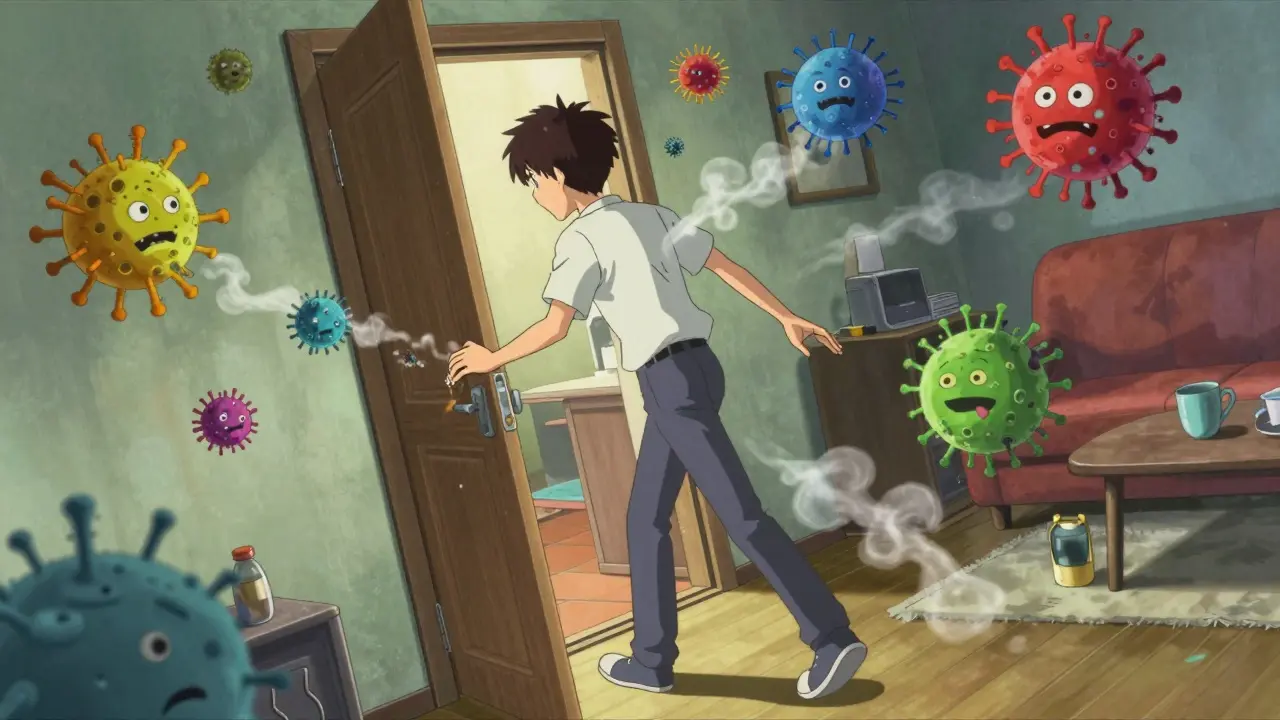
Think about the last time you walked through your front door. Did you wash your hands immediately? Most of us don't. We drop our keys, kick off our shoes, and head straight for the kitchen or the couch. But in those few seconds, we might be carrying invisible threats from the bus stop, the grocery store, or the office right into our living rooms.
Hand hygiene isn't just a hospital rule anymore. It is the single most effective way to stop infections from spreading within your household. The science behind it is older than you think-it started with Dr. Ignaz Semmelweis in 1847, who proved that washing hands with chlorine could cut maternal death rates from 18% down to 1%. Today, that same principle applies to stopping everything from the flu to norovirus in your own home.
This guide cuts through the myths and gives you the exact, evidence-based steps to keep your family safe. No fluff, just what works.
The Core Problem: How Germs Spread at Home
To stop an infection, you first need to understand how it gets inside. Most common household illnesses spread through two main routes: contact transmission and fecal-oral transmission.
Contact transmission happens when you touch a contaminated surface-like a doorknob or a smartphone-and then touch your face, eyes, nose, or mouth. Fecal-oral transmission occurs when microscopic particles from feces (from using the toilet, changing diapers, or handling pet waste) end up on your hands and then into your food or body.
The stakes are real. According to a CDC report, the secondary attack rate for SARS-CoV-2 in households was 10.1%, meaning if one person brings it home, roughly one in ten others will likely catch it. For norovirus, that number jumps to 16-28%. Proper hand hygiene can reduce respiratory illnesses by 16-21% and gastrointestinal illnesses by 31%. That is not a small margin; it is the difference between a mild cold and a week-long stomach bug that knocks out the whole house.
Soap and Water vs. Hand Sanitizer: What Actually Works?
You have probably heard that alcohol-based sanitizers are convenient, but they are not a magic bullet. Knowing when to use which method is critical for effective infection prevention.
| Feature | Soap and Water | Alcohol-Based Sanitizer |
|---|---|---|
| Best Used When | Hands are visibly dirty, after bathroom use, before eating | On-the-go, no sink available, hands are clean/dry |
| Efficacy Against Norovirus | High (physically removes virus) | Low/Ineffective (norovirus has no envelope) |
| Efficacy Against Flu/SARS-CoV-2 | High | Very High (99.99% reduction in 15s) |
| Required Alcohol Content | N/A | 60-95% ethanol or isopropanol |
| Skin Impact | Can dry skin if overused without moisturizer | Can cause irritation with frequent use |
Here is the hard truth: sanitizers fail completely when your hands are visibly soiled. If there is dirt, grease, or food residue on your hands, the alcohol cannot reach the microbes. A CDC study showed effectiveness drops to just 12% in these conditions. Furthermore, antibacterial soaps containing triclosan offer no extra benefit over plain soap. In fact, the FDA banned 19 antibacterial ingredients in consumer soaps in 2016 because they lacked evidence of superiority and contributed to antimicrobial resistance. Stick to plain soap.
The 6-Step Technique: Doing It Right
Most people wash their hands wrong. An NHS audit found that only 49% of UK households cover all surfaces of their hands. We miss the fingertips (missed in 68% of attempts), the thumbs (57%), and the spaces between fingers (43%). These are the exact spots where germs hide.
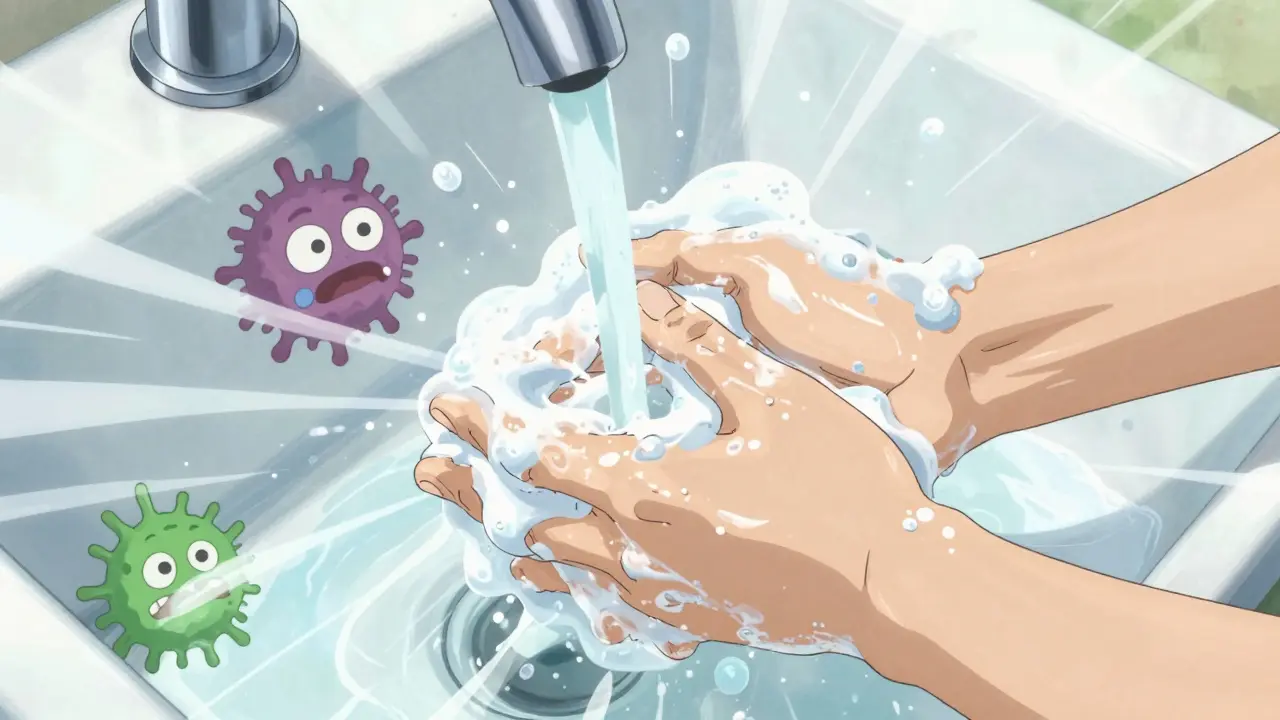
To effectively remove pathogens, follow the World Health Organization’s six-step technique. You need to spend 20-30 seconds total, with 15-20 seconds dedicated to active rubbing.
- Wet: Use clean, running water. Temperature doesn’t matter as much as you think-a Yale study found cold water (60°F/15°C) removes pathogens just as well as hot water while saving energy. However, warm water (100-108°F) helps dissolve oils faster.
- Lather: Apply 3-5 mL of soap (about a nickel-sized amount). Cover the palms, backs of hands, and between fingers.
- Rub Palms: Rub your palms together vigorously.
- Interlace Fingers: Slide fingers between each other. This is crucial for removing debris trapped in the webbing.
- Thumbs and Tips: Rotate and rub each thumb. Then, scrub your fingertips against the opposite palm. This step alone catches the majority of missed bacteria.
- Rinse and Dry: Rinse thoroughly under running water. Dry with a single-use paper towel. Why paper towels? A Mayo Clinic study showed they reduce bacterial counts by 76% compared to air dryers, which can actually blow bacteria around.
If you are using sanitizer, apply enough to cover all surfaces (about 2.4-3 mL, or a quarter-sized dollop). Rub until completely dry. Do not wipe it off. Drying takes about 20 seconds and is part of the killing process.
Timing Is Everything: When to Wash
You don’t need to wash your hands every five minutes. Instead, focus on high-risk transition points. The CDC’s 'Handwashing: A Family Guide' highlights four critical moments:
- Upon entering the home: This stops community-acquired infections from crossing the threshold. Think of your entryway as a decontamination zone.
- Before preparing or eating food: This cuts the risk of foodborne illness by 78%, according to USDA data.
- After using the bathroom: This reduces fecal-oral transmission by 47%. Even if you used wipes, you still need to wash.
- After handling pets or their waste: This prevents zoonotic infections, which account for 3.2 million cases annually in the US alone.
A major pitfall here is "faucet recontamination." After you wash your hands, you often turn the faucet off with your now-clean hands, picking up the germs that were on the handle before you started. To fix this, use a paper towel to turn off the tap and open the door. It sounds minor, but 89% of households negate their hygiene efforts this way.
Making It Stick: Habits for Kids and Adults
We know what to do, but doing it consistently is hard. Children, in particular, struggle. A 2021 study in *Pediatrics* found that kids average only 8.2 seconds of washing time. They get bored, distracted, or rush.
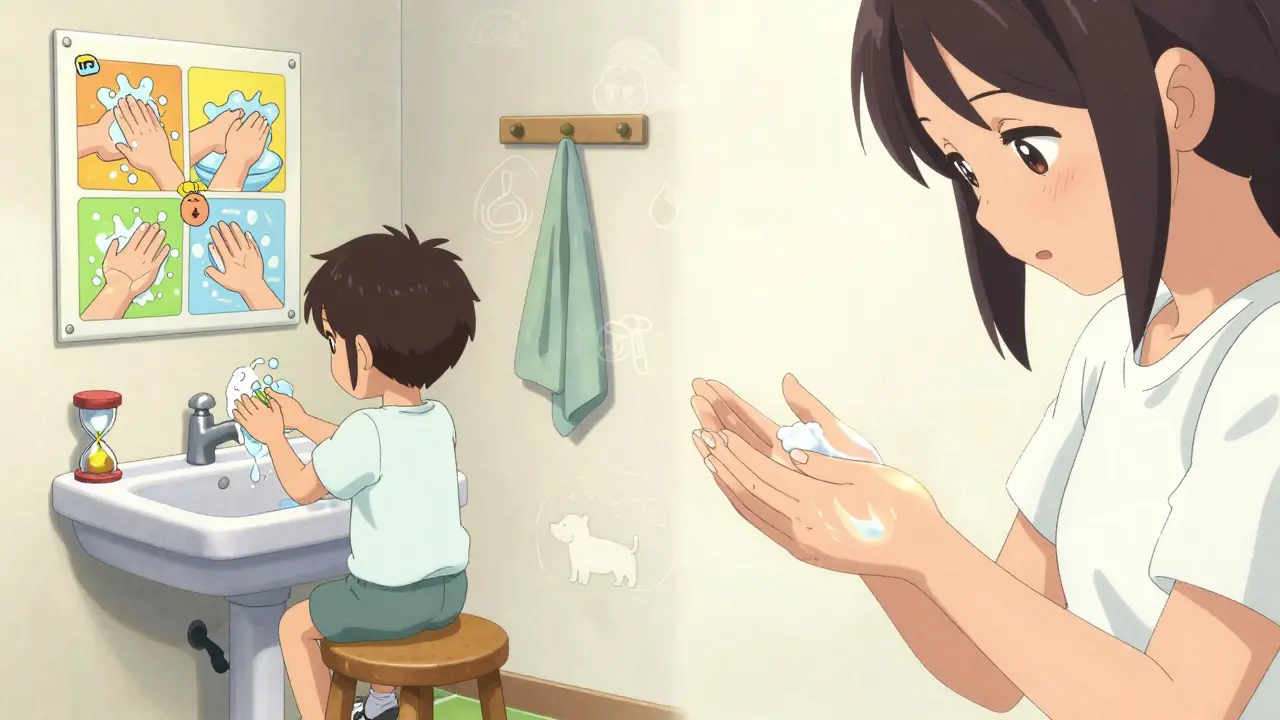
How do you bridge this gap? Visual aids work wonders. The WHO’s 'Clean Care is Safer Care' program showed that posters with the 6-step diagram increased compliance in elementary students from 28% to 63%. Put a sticker chart or a simple diagram near the sink.
For adults, "habit stacking" is a powerful tool. Link handwashing to an existing routine. For example, "I always wash my hands after I hang up my coat." Or use technology. Apps like 'Clean Hands Timer' or simple sand timers can help ensure you hit the 20-second mark. One Amazon reviewer noted that using a timer reduced her family’s annual cold count from six to two.
Don’t ignore skin health. Frequent washing leads to dermatitis, especially if you wash more than 20 times a day. A 2020 study in *Dermatology Practical & Conceptual* found that applying moisturizer immediately after drying reduces dermatitis by 62%. Keep a good hand cream by the sink. If your hands crack, you’ll avoid washing them, which defeats the purpose.
Common Myths Debunked
There is a lot of misinformation floating around. Let’s clear it up.
Myth: Hotter water kills more germs.
Fact: Water temperature does not significantly impact germ removal unless it is scalding. The mechanical action of rubbing and the chemical action of soap are what matter. Cold water is just as effective and safer for your skin.
Myth: Antibacterial soap is better.
Fact: As mentioned, the FDA banned many antibacterial agents because they weren’t proven to be better than plain soap and may contribute to superbugs. Plain soap is sufficient.
Myth: Sanitizer replaces washing.
Fact: Sanitizer is a backup. If your hands are dirty, greasy, or covered in soil, sanitizer won’t work. You must wash with soap and water first.
How long should I wash my hands to be effective?
You should wash your hands for a total of 20-30 seconds. This includes wetting, lathering, and rinsing. The active rubbing phase should last at least 15-20 seconds to ensure mechanical removal of pathogens from all hand surfaces.
Is hand sanitizer as good as soap and water?
Not always. Hand sanitizer is excellent against enveloped viruses like influenza and SARS-CoV-2, but it is ineffective against norovirus and C. difficile spores. It also fails completely if your hands are visibly dirty or greasy. Soap and water is the gold standard for physical removal of all types of contaminants.
Does water temperature matter when washing hands?
No, water temperature does not significantly affect the removal of germs. Studies show that cold water (around 60°F/15°C) is just as effective as hot water. Warm water may feel better and help dissolve oils slightly faster, but it is not required for hygiene efficacy.
Why shouldn't I use antibacterial soap at home?
The FDA banned many antibacterial ingredients in consumer soaps because they offered no additional health benefit over plain soap. Furthermore, long-term use of chemicals like triclosan can contribute to antimicrobial resistance, making bacteria harder to kill with antibiotics later on.
How can I get my children to wash their hands properly?
Children often wash for less than 10 seconds. Use visual aids like posters showing the 6-step technique near the sink. Make it fun by singing a short song or using a sand timer. Consistency and positive reinforcement, such as sticker charts, can help build the habit over time.