
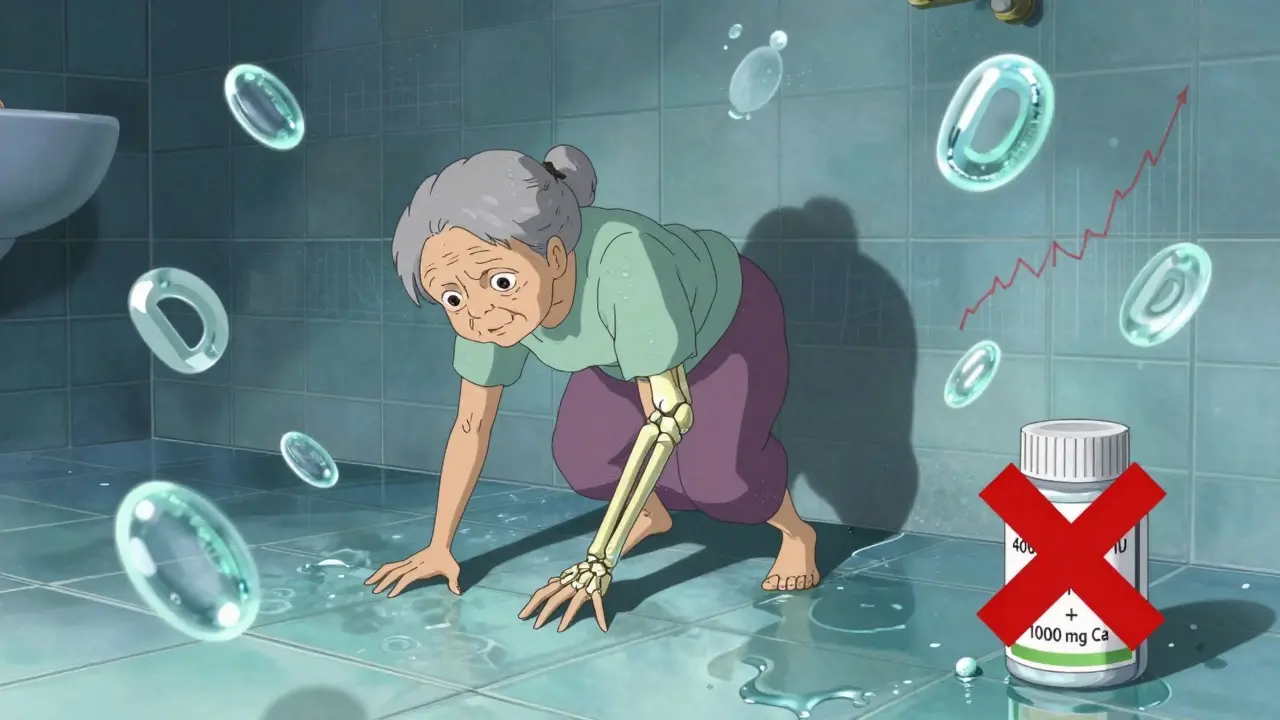
Every year in the UK, over 500,000 people suffer a fracture because their bones became too weak. Most of these aren’t from falls off ladders or sports injuries. They’re from simple trips - stepping off a curb, slipping on a wet bathroom floor, even just coughing too hard. These are called fragility fractures, and they’re a silent epidemic among older adults. The good news? Many of them are preventable. The bad news? Most people are doing it wrong.
What Actually Works for Fracture Prevention
You’ve probably seen ads for calcium pills or vitamin D supplements promising stronger bones. But here’s the truth: taking low doses of these alone does nothing. The US Preventive Services Task Force reviewed over 80 studies and concluded that giving healthy older adults 400 IU of vitamin D and 1,000 mg of calcium daily doesn’t reduce fracture risk one bit. That’s not opinion - that’s data from tens of thousands of people. The real answer? It’s not about supplements. It’s about combining the right amounts with the right people. If you’re over 65, live in a care home, or have a history of falling, then 800 IU of vitamin D3 plus 1,200 mg of calcium carbonate daily can cut your hip fracture risk by nearly a fifth. That’s not magic. That’s science. The landmark 1992 Chapuy trial in French nursing homes showed a 43% drop in hip fractures when residents with severe vitamin D deficiency (under 12 ng/mL) got this combo. But if you’re healthy, active, and get sunlight and dairy regularly? You probably don’t need extra pills at all.Why Vitamin D Alone Fails
Vitamin D doesn’t build bone. It helps your body absorb calcium. If you’re already getting enough calcium from food - cheese, yogurt, fortified cereals, leafy greens - then extra vitamin D won’t help. A 2019 meta-analysis of 34,000 people found that vitamin D alone didn’t lower fracture risk at all. In fact, some studies suggest it might slightly increase hip fracture risk when taken without calcium. The key is deficiency. If your blood level of 25-hydroxyvitamin D is below 20 ng/mL, then yes, supplementation helps. But if it’s above 30 ng/mL, more vitamin D won’t give you better bones. It just ends up in your urine. And too much? That’s dangerous. The FDA warns that doses above 4,000 IU per day may raise heart attack risk in some people, especially when paired with high calcium intake.Calcium: More Isn’t Better
Calcium is essential - your bones are 99% of it. But your body doesn’t store it well. You need about 1,000-1,200 mg per day. That’s roughly three glasses of milk, a serving of yogurt, and some kale or tofu. Most people get half that from diet alone. But here’s the catch: taking calcium pills doesn’t always help. The Women’s Health Initiative, which tracked over 36,000 postmenopausal women, found no reduction in fractures with 1,000 mg calcium + 400 IU vitamin D. Worse - those taking calcium had a 17% higher chance of kidney stones. And if you’re on certain heart medications, extra calcium can interfere with your rhythm. The trick? Take calcium with food. Split the dose. Don’t take more than 500 mg at once - your body can’t absorb more. And never take it without vitamin D. They’re a team.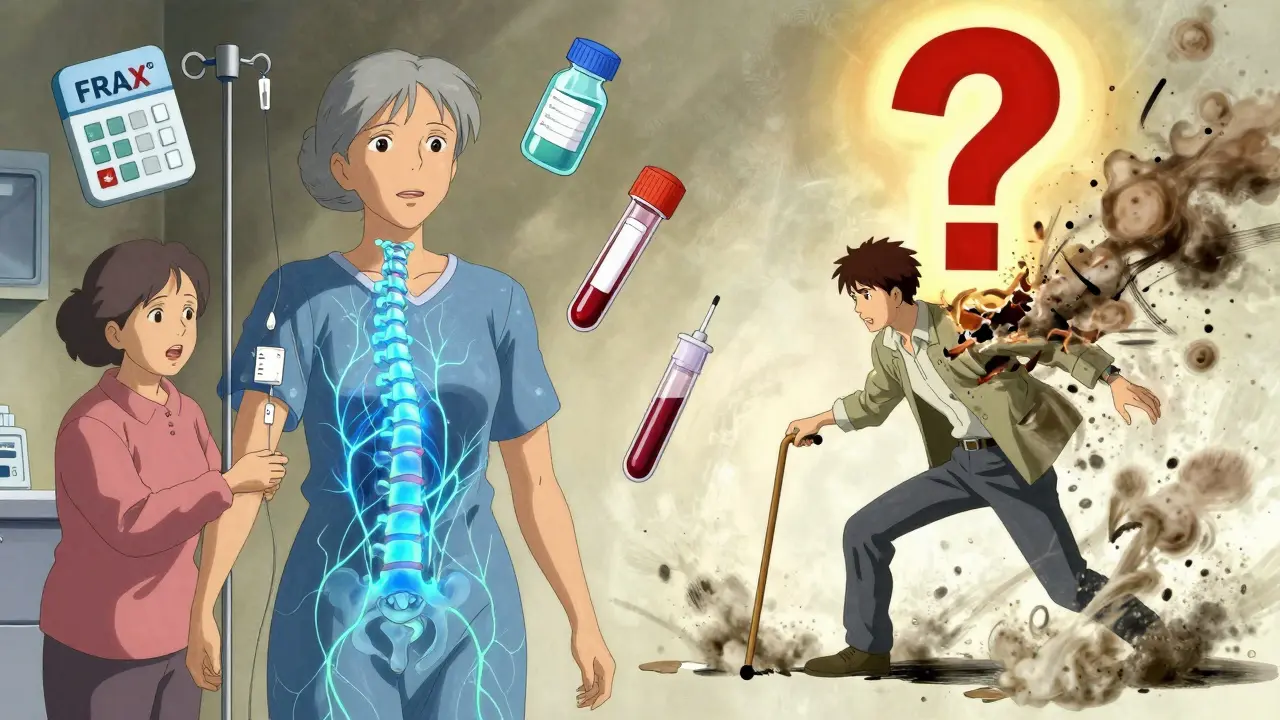
Bone-Building Medications: The Real Game-Changers
If you’ve already broken a bone after age 50, or your FRAX® score says you have a 20% or higher risk of a major fracture in the next 10 years, then supplements aren’t enough. You need medication. There are three main types:- Bisphosphonates (like alendronate and zoledronic acid): These slow bone loss. Alendronate cuts vertebral fractures by 44% and hip fractures by 25-30%. Zoledronic acid, given as a yearly IV, reduces hip fractures by 41% over 18 months.
- Denosumab (Prolia): A twice-yearly injection that blocks bone breakdown. It’s more potent than bisphosphonates but requires perfect adherence - miss a dose, and your bone density can drop fast.
- Anabolics (teriparatide, abaloparatide, romosozumab): These actually build new bone. Teriparatide increases spine bone density by 10-15% in a year. Romosozumab cuts vertebral fractures by 73% in 12 months - better than any other drug.
Who Should Get Tested - And How
You don’t need to guess. The FRAX® tool, used by doctors across the UK and US, calculates your 10-year fracture risk based on age, sex, weight, past fractures, smoking, steroid use, and family history. If you’re a woman over 65, or a man over 70, get tested. If you’re younger but had a fracture after age 50, or take prednisone long-term, get tested. Blood tests matter too. A simple 25-hydroxyvitamin D test costs under £20 on the NHS. If your level is below 20 ng/mL, you’re deficient. If it’s below 12 ng/mL, you’re at high risk. Correction isn’t just a pill - it’s often 50,000 IU of vitamin D2 once a week for 8-12 weeks, followed by maintenance.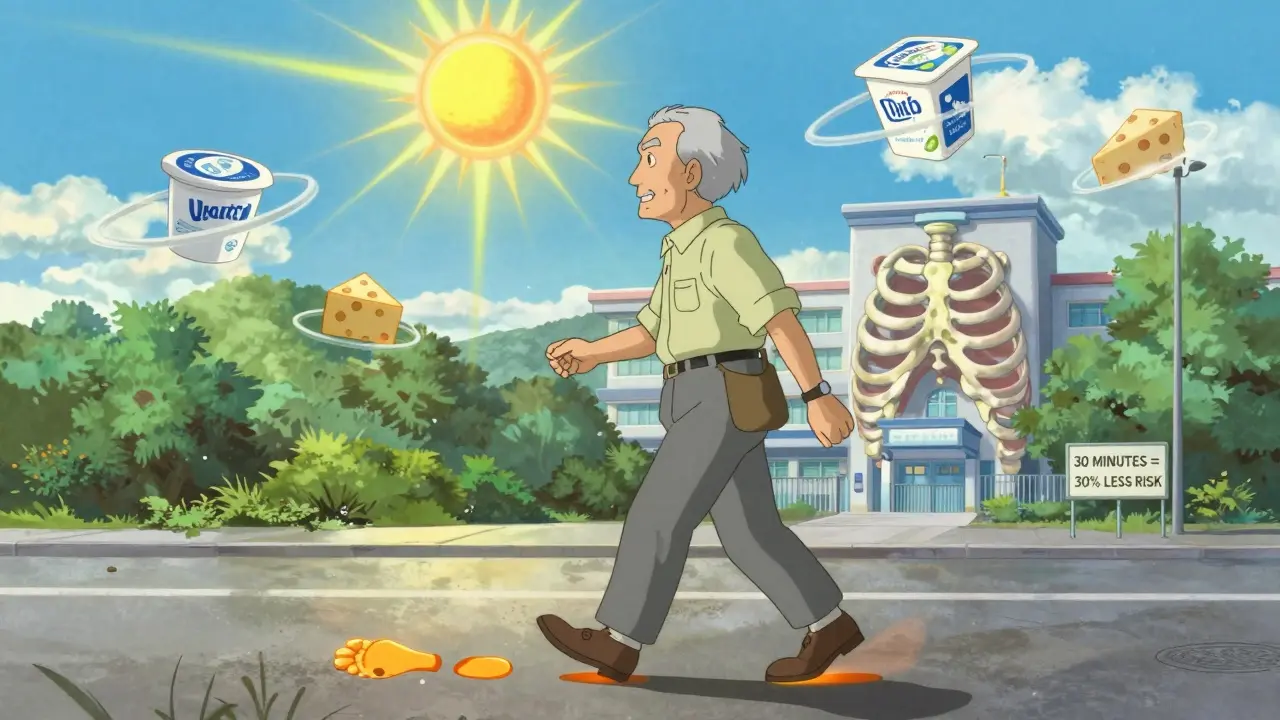
What Patients Really Say
I’ve talked to dozens of patients in Brighton who’ve been prescribed these treatments. Some say: “I took calcium for years and still broke my wrist.” Others: “I refused the injection because I heard it causes jaw problems.” The truth? Side effects are rare. Osteonecrosis of the jaw affects 1 in 10,000 people on bisphosphonates. Atypical femur fractures? 1 in 1,000 after five years. But fear spreads faster than facts. One woman in Hove stopped her bisphosphonate after three months because of stomach upset. She fractured her hip six months later. Another man in Lewes refused vitamin D because he thought it was “just a placebo.” His doctor tested him - his level was 11 ng/mL. He started 2,000 IU daily. Two years later, he’s still walking.What to Do Right Now
If you’re over 50 and haven’t had a fracture:- Check your diet. Are you getting 1,000-1,200 mg of calcium daily? If not, add yogurt, cheese, or fortified plant milk.
- Get sunlight. 15-20 minutes a day on arms and face - no sunscreen needed.
- Ask your GP for a FRAX® assessment. It’s free on the NHS.
- If you’ve had a fracture, ask about bone density testing (DXA scan).
- If you’re on long-term steroids, have RA, or are postmenopausal with low weight, don’t wait - get evaluated.
- Don’t stop without talking to your doctor. Stopping bisphosphonates or denosumab suddenly can cause rapid bone loss.
- Get a dental checkup before starting bisphosphonates or denosumab.
- Take calcium with meals. Split doses. Avoid taking it with iron or thyroid meds.
- Keep moving. Walking 30 minutes a day cuts fracture risk more than any pill.
The Bottom Line
Fracture prevention isn’t about popping pills. It’s about knowing your risk, testing your levels, and acting based on evidence - not fear or marketing. Supplements help only if you’re deficient. Medications work - but only if you take them. And movement? That’s the cheapest, most powerful bone builder of all. You don’t need to be perfect. You just need to be informed.Do calcium and vitamin D supplements prevent fractures in everyone?
No. They only help people who are deficient in vitamin D (below 20 ng/mL) or have low calcium intake (under 700 mg/day). For healthy, active adults, especially those over 50 without prior fractures, low-dose supplements (400 IU vitamin D + 1,000 mg calcium) show no benefit. High-dose combinations (800 IU vitamin D3 + 1,200 mg calcium) reduce hip fracture risk by 16% in high-risk groups like nursing home residents, but not in community-dwelling people with normal levels.
Is vitamin D alone enough to prevent fractures?
No. Multiple large studies, including a 2019 meta-analysis of over 34,000 people, show that vitamin D alone does not reduce fracture risk. In fact, some analyses suggest it may slightly increase hip fracture risk when taken without calcium. The reason? Vitamin D helps your body absorb calcium - but if you’re not getting enough calcium from food or supplements, extra vitamin D has nothing to work with.
What are the best medications for preventing fractures?
For people with osteoporosis or a prior fragility fracture, bisphosphonates (like alendronate or zoledronic acid) are first-line. They reduce vertebral fractures by 40-70% and hip fractures by 20-50%. Denosumab is stronger and given as an injection every six months. For severe cases, anabolic drugs like teriparatide or romosozumab build new bone faster - cutting vertebral fractures by up to 73% in a year. The choice depends on your risk level, medical history, and ability to adhere to treatment.
Are there risks with bone-building medications?
Yes, but they’re rare. Bisphosphonates carry a 0.001-0.01% risk of osteonecrosis of the jaw and a 0.1% risk of atypical femur fractures after 5+ years. Denosumab can cause rapid bone loss if stopped abruptly. Anabolic drugs like teriparatide are limited to 2 years due to potential bone cancer risk in animal studies (though not seen in humans). Dental exams are required before starting these drugs. The benefits far outweigh the risks for those with high fracture risk, but they’re not for everyone.
Should I get my vitamin D level tested?
Yes - if you’re over 50, have had a fracture, live in a care home, or take steroids. A simple blood test for 25-hydroxyvitamin D costs under £20 on the NHS. If your level is below 20 ng/mL, you’re deficient and need treatment. If it’s above 30 ng/mL, you likely don’t need extra supplements. Testing prevents both under-treatment and dangerous over-supplementation.
How can I tell if I’m at risk for fractures?
Use the FRAX® tool. It’s free and used by UK doctors. It calculates your 10-year risk of major osteoporotic fracture using age, sex, weight, height, prior fractures, family history, smoking, alcohol use, and steroid use. In the UK, treatment is recommended if your risk is 15% or higher. If you’ve had a fracture after age 50, your risk is already high - don’t wait for a score. Get evaluated.
Can I get enough calcium from food?
Yes, if you eat well. Three servings of dairy (milk, yogurt, cheese) provide 1,000-1,200 mg. Non-dairy sources include fortified plant milks, tofu made with calcium sulfate, sardines with bones, kale, and almonds. Most people get only half that. If you’re vegan, vegetarian, or lactose intolerant, track your intake. If you’re under 700 mg/day, you may need a supplement - but always pair it with vitamin D.
What if I can’t swallow pills?
There are alternatives. Alendronate can be taken as a weekly tablet or a monthly oral solution. Zoledronic acid is given as a yearly IV infusion - no swallowing needed. Denosumab is a twice-yearly injection. For calcium and vitamin D, chewable or liquid forms are available. Talk to your GP or pharmacist. You don’t have to take a pill to protect your bones.
Is walking enough to strengthen bones?
Yes - and it’s critical. Weight-bearing exercise like walking, stair climbing, or dancing puts stress on bones, which triggers them to rebuild stronger. Studies show just 30 minutes of daily walking reduces fracture risk by 20-30%. It’s more effective than supplements for most people. Combine it with strength training twice a week for best results. Movement isn’t optional - it’s medicine.
Can I stop taking bone medication if I feel fine?
No - not without medical guidance. Bisphosphonates stay in your bones for years, so stopping isn’t urgent, but denosumab leaves your system quickly. If you miss a dose, your bone density can drop 10-15% in 6 months, raising fracture risk sharply. Even if you feel fine, your bones may be weakening silently. Always talk to your doctor before stopping. Many patients stop because of side effects - but switching to a different medication often helps.
peter vencken
March 24, 2026 AT 10:06Also, walking 30 mins a day? I can do that. My dog needs the exercise anyway.
Linda Foster
March 25, 2026 AT 10:40Kevin Siewe
March 25, 2026 AT 15:22Chris Farley
March 26, 2026 AT 14:14Darlene Gomez
March 27, 2026 AT 13:17Katie Putbrese
March 29, 2026 AT 09:44Jacob Hessler
March 30, 2026 AT 05:26Amber Gray
March 31, 2026 AT 12:45Danielle Arnold
March 31, 2026 AT 19:53J. Murphy
April 2, 2026 AT 13:26florence matthews
April 2, 2026 AT 21:20Kenneth Jones
April 4, 2026 AT 05:02Kevin Y.
April 4, 2026 AT 06:32Raphael Schwartz
April 5, 2026 AT 01:48