
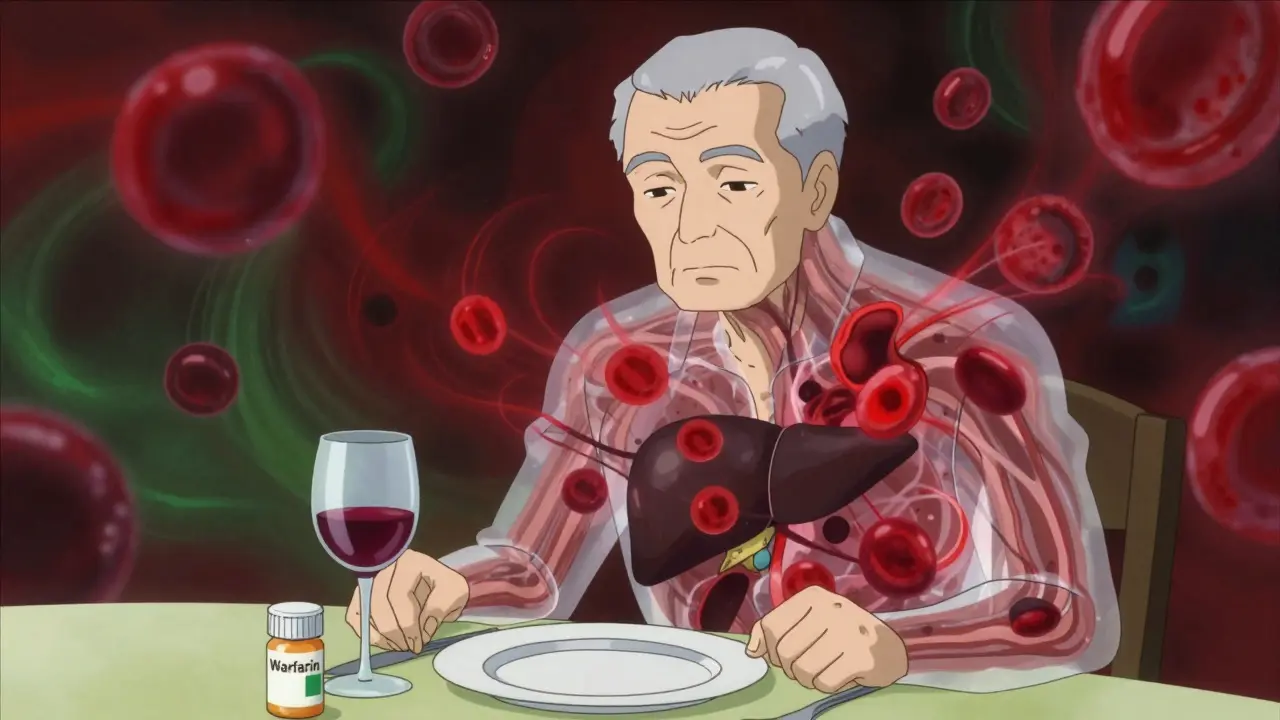
More than one in three adults over 65 in the U.S. take a prescription drug that can turn dangerous with just one drink. It’s not just about getting drunk-it’s about how alcohol changes what your body does to your medicine. And most people have no idea.
You might think, "I only have a glass of wine with dinner." But when that wine meets your blood pressure pill, your sleep aid, or your painkiller, it’s not harmless. It’s a hidden risk that’s quietly causing falls, overdoses, and liver failure. And it’s happening more often than you’d guess.
How Alcohol Changes Your Medication
Alcohol doesn’t just make you sleepy or dizzy. It messes with your body’s ability to process drugs. There are two main ways this happens: how your liver handles the medicine (pharmacokinetic), and how the medicine works in your brain and body (pharmacodynamic).
Your liver uses enzymes-mainly the CYP2E1 group-to break down both alcohol and many medications. When you drink regularly, your liver starts making more of these enzymes. That means drugs like propranolol (a beta-blocker) get broken down too fast. Studies show this can cut its effectiveness by up to half. Your blood pressure doesn’t drop like it should. You might think the medicine isn’t working. It’s not the pill-it’s the beer.
On the flip side, if you drink heavily in one sitting, your liver gets overwhelmed. It can’t process the drug at all. That’s when warfarin (a blood thinner) builds up in your blood. One 2018 study found alcohol can spike warfarin levels by 35%. That’s a recipe for internal bleeding. No warning. No symptoms until it’s too late.
The Deadliest Combinations
Some drugs don’t just interact with alcohol-they team up with it to kill you.
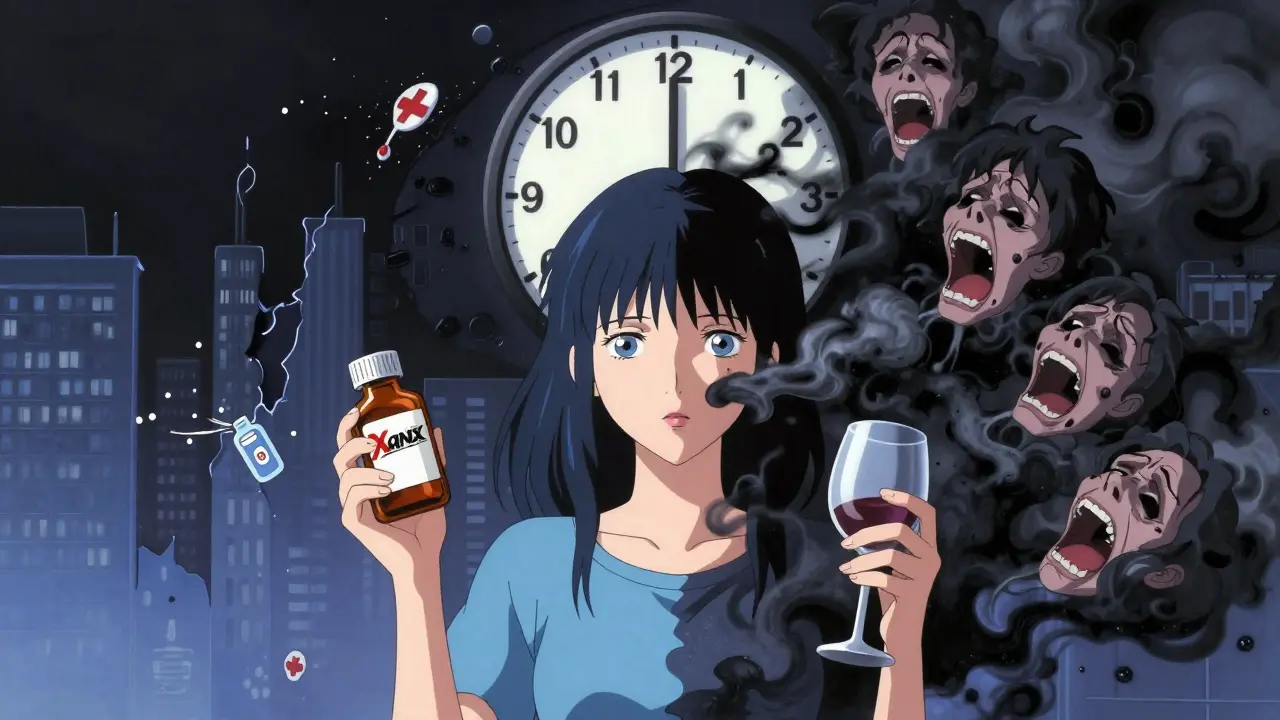
Take benzodiazepines like diazepam (Valium) or alprazolam (Xanax). These are prescribed for anxiety, insomnia, or muscle spasms. They slow down your nervous system. Alcohol does the same thing. Together? The sedation isn’t doubled. It’s quadrupled. The National Institute on Alcohol Abuse and Alcoholism found the combined effect increases drowsiness and loss of coordination by 400%. That’s why so many older adults fall-sometimes fatally-after having a drink with their anxiety meds.
Then there are opioids like oxycodone and hydrocodone. These are powerful painkillers. Even a single drink with them multiplies the risk of stopped breathing by six times. The CDC says alcohol-opioid combinations were behind 2,318 overdose deaths in 2022. And 26% of all prescription drug overdose deaths involve this mix. You don’t need to be drunk. One standard drink-just a 12-ounce beer or a 5-ounce glass of wine-can be enough to tip you into respiratory failure.
Even acetaminophen (Tylenol), which most people think is harmless, becomes dangerous. When alcohol and acetaminophen meet in the liver, they create a toxic chemical that attacks liver cells. Regular drinkers who take Tylenol for a headache have a 1 in 200 chance of sudden liver failure. The FDA issued a warning in 2020. Still, most people don’t know.
Who’s at Highest Risk?
It’s not just about how much you drink. It’s about who you are.
People over 65 are 3.2 times more likely to have a severe interaction. Why? Their livers slow down. Their kidneys don’t filter as well. Their bodies hold less water, so alcohol hits harder. The American Geriatrics Society says 78% of falls in nursing homes linked to sedatives happened when the person had alcohol within six hours.
Women face 20% higher interaction severity than men. Even if they weigh the same. That’s because women have less body water. Alcohol doesn’t dilute as easily. A glass of wine affects a woman’s blood levels more than a man’s.
If you have liver disease, your risk with acetaminophen and alcohol jumps fivefold. Even light drinking becomes a threat.
And it’s not just the elderly. Younger people on SSRIs like sertraline (Zoloft) or fluoxetine (Prozac) can feel extreme drowsiness, dizziness, or poor coordination after even one drink. One study found 35% of patients over 65 reported doubled fall risk. That’s not just inconvenient-it’s life-threatening.
What About Other Medications?
Not all drugs are equally dangerous. Some are low-risk. Others? Stay far away.
High-risk: opioids, benzodiazepines, sleep aids, muscle relaxers, certain antidepressants, and any medication with a black box warning.
Medium-risk: blood pressure drugs like calcium channel blockers and some beta-blockers. Alcohol can drop your blood pressure too far. You might pass out. Or crash your car.
Lower-risk: antibiotics like amoxicillin. But even here, there are exceptions. isoniazid (for tuberculosis) can cause liver damage when mixed with alcohol in 15% of users.
And don’t forget NSAIDs like ibuprofen or naproxen. With heavy drinking (three or more drinks a day), the risk of stomach bleeding skyrockets by 300%. That’s not a myth. It’s from a study of 200,000 patients.
Why Don’t Doctors Tell You?
Here’s the scary part: most patients aren’t warned.
Healthgrades reviewed over 12,000 patient reviews. In 68% of cases where benzodiazepines were prescribed, the doctor never mentioned alcohol. Patients wrote: "Doctor never said I couldn’t drink on Xanax." "I had no idea until I almost passed out."
Even worse, only 38% of benzodiazepine prescriptions include a clear alcohol warning on the label. The FDA found this in a 2022 audit. Pharmacies are better. Many pharmacists now ask: "Do you drink?" But not all.
A 2023 study in JAMA Internal Medicine showed 43% of primary care doctors couldn’t name all the high-risk drug classes. They don’t know what to warn about. So they say nothing.
What Should You Do?
Don’t guess. Don’t assume. Check.
Step 1: Read your prescription label. Look for "Do not drink alcohol" or "Avoid alcohol." It’s required on high-risk meds-but not always there.
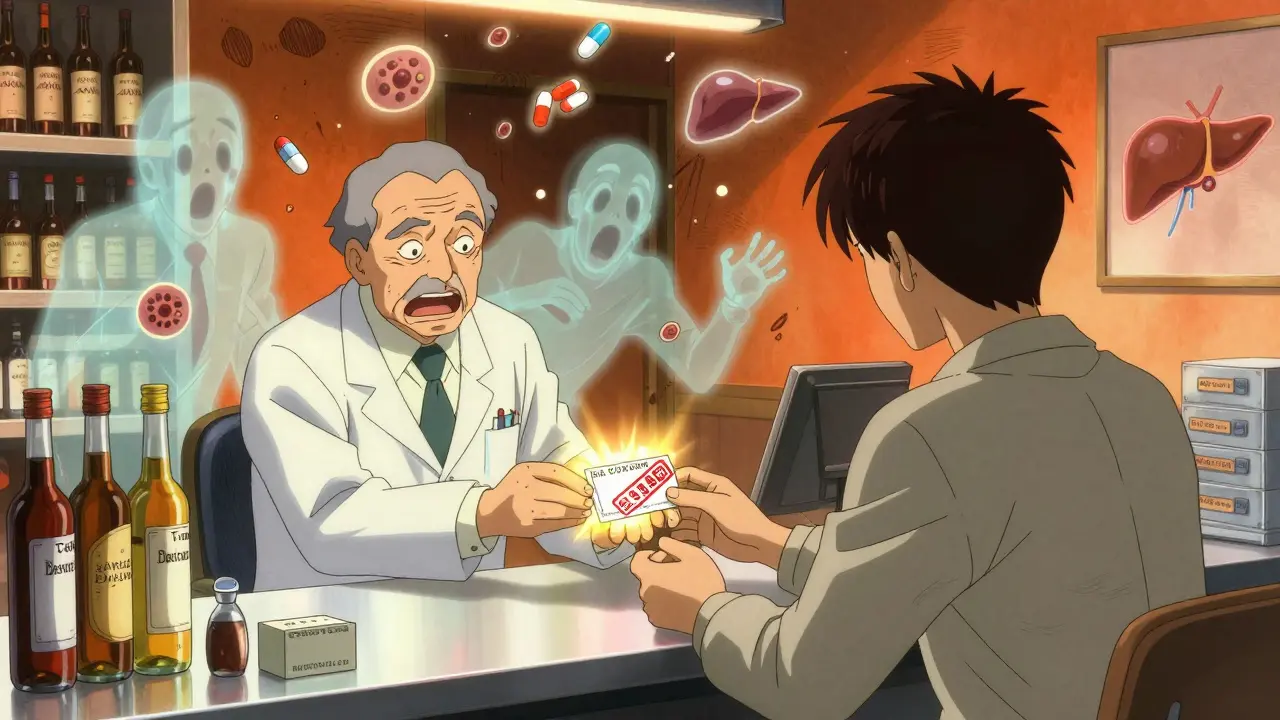
Step 2: Talk to your pharmacist. Pharmacists are trained to spot these interactions. Use the four-question screening tool: "Do you drink? How often? What do you drink? Have you ever felt dizzy or passed out after taking your medicine?" Studies show this catches 92% of risky cases.
Step 3: Use a free tool. The NIAAA has a free app called "Alcohol Medication Check." It lets you scan your prescription barcode or type in the name. It tells you the risk level: red (dangerous), yellow (caution), green (low risk). GoodRx found that visual color coding improves understanding by 47% over written warnings.
Step 4: Be honest. Even if you think "it’s just one drink," tell your doctor or pharmacist. They can’t help if they don’t know.
What’s Changing?
The system is waking up. In 2022, the U.S. passed the Alcohol-Drug Interaction Labeling Act. It now requires explicit "ALCOHOL WARNING" labels on high-risk prescriptions. That affects 147 million prescriptions a year.
Hospitals are using real-time alerts. 73% of U.S. hospitals now have clinical systems that flag alcohol-drug conflicts the moment a prescription is written. That’s cut adverse events by 28%.
The CDC’s 2023-2025 plan aims to cut overdose deaths from these interactions by 50%. Forty-two states now require doctors to take continuing education on substance-medication risks to renew their licenses.
And AI is coming. Epic Systems rolled out an algorithm in 2024 that analyzes over 200 patient factors-age, liver function, drinking habits, other meds-to predict your personal risk. It’s 89% accurate.
But technology won’t fix this alone. Only 28% of high-risk patients stop drinking completely, even after being warned. The real problem isn’t the science. It’s the silence. The assumption. The "it’s just one drink" mindset.
One person wrote on Google Reviews: "My Walgreens pharmacist refused to fill my lorazepam prescription when I admitted I drank regularly. Probably saved my life." That’s the kind of intervention that matters.
You don’t need to be an expert. You just need to ask. And listen.
Can I have one drink with my prescription medication?
It depends on the medication. For opioids, benzodiazepines, sleep aids, or certain painkillers, even one drink can be life-threatening. For others, like some antibiotics, it may be low risk-but not zero. The safest rule is: if you’re unsure, don’t drink. Always check with your pharmacist. Many medications have no warning label, even when they’re dangerous with alcohol.
Why do some people have bad reactions while others don’t?
Everyone’s body handles alcohol and drugs differently. Age, liver health, weight, gender, and genetics all play a role. Older adults process alcohol slower. Women have less body water, so alcohol concentrates more. People with liver disease can’t break down toxins well. That’s why two people taking the same pill and drinking the same amount can have completely different outcomes.
Do over-the-counter meds interact with alcohol too?
Yes. Painkillers like ibuprofen and naproxen can cause stomach bleeding when mixed with alcohol. Cold and flu meds often contain antihistamines or dextromethorphan, which can cause extreme drowsiness. Even sleep aids like melatonin can make you overly sleepy. Always read the label. If it says "may cause drowsiness," alcohol will make it worse.
What should I do if I already took alcohol with my medication?
If you feel unusually drowsy, dizzy, confused, or have trouble breathing, seek medical help immediately. Don’t wait. Call 911 or go to the ER. If you’re unsure but feel off, call your pharmacist. They can help you decide if it’s an emergency. Most reactions happen within 1-2 hours, but some (like liver damage from acetaminophen) can take days to show up.
Are there apps or tools to check interactions?
Yes. The NIAAA’s "Alcohol Medication Check" app is free and lets you scan barcodes or search by drug name. GoodRx and WebMD also have interaction checkers. But don’t rely on them alone. Talk to your pharmacist. Apps don’t know your full health history. A human can ask follow-up questions and catch things a machine might miss.
Ernie Simsek
February 11, 2026 AT 18:22Bro. I had a cousin who took Xanax and a glass of wine. Thought he was fine. Woke up in the ER with his wife screaming he stopped breathing. 😵💫 One drink. That’s it. No warning. No second chance. My pharmacist had to pull me aside last week when I picked up my sleep meds. Said, "You drink? Then don’t. Not even a sip." I didn’t even realize how common this is. Scary as hell.
alex clo
February 13, 2026 AT 12:56While the article presents compelling data, I must emphasize that the clinical implications of alcohol-drug interactions are often underreported in real-world settings due to inconsistent patient disclosure. Pharmacokinetic studies are robust, yet behavioral adherence remains a critical gap. A structured counseling protocol, particularly in geriatric populations, should be standardized across primary care practices to mitigate risk.
Jim Johnson
February 15, 2026 AT 03:13Y’all need to stop underestimating this. I’m a nurse, and I’ve seen too many old folks fall because they had wine with their blood pressure med. One guy hit his head, broke his hip, and never walked again. It’s not "just one drink"-it’s one drink + aging liver + meds = disaster waiting to happen. Talk to your pharmacist. They’re the real heroes. And if they don’t ask you about drinking, ask THEM. "Hey, is this safe with wine?" No shame. Better safe than sorry.
Carla McKinney
February 16, 2026 AT 03:39The article is alarmist. Not every interaction is lethal. Many elderly patients consume light alcohol without incident. The real issue is poor medical communication-not the alcohol itself. And why is gender being emphasized? Biological differences exist, but overgeneralizing risks undermines evidence-based practice. Also, the NIAAA app is useless without context. Your liver doesn’t care about color-coded warnings-it cares about enzyme activity. Stop fearmongering.
Jonathan Noe
February 17, 2026 AT 19:37Let me break this down. You think one drink is harmless? Try this: 65-year-old man, 1 glass of red wine, hydrocodone, and a 20-year history of light drinking. His liver enzymes were already elevated. The alcohol didn’t just add to the drug-it blocked its metabolism. Blood levels spiked. He went into respiratory arrest. That’s not an outlier. That’s Tuesday at the ER. And guess what? His doctor never asked him about alcohol. The label said "use caution." That’s not enough. We need mandatory counseling. Not just a warning on the bottle.
Joanne Tan
February 18, 2026 AT 04:38OMG I JUST REALIZED I’VE BEEN HAVING A GLASS OF WINE WITH MY ZOLOFT FOR 3 YEARS 😱 I thought it was fine b/c I "only had one" but now I’m like… why do I feel like a zombie after dinner?? I’m calling my doc tomorrow. Also, my pharmacist gave me a weird look last week but I thought she was just being extra. Turns out she knew what was up. Y’all are my heroes. Thank you for saving my life without even knowing it 💕
Vamsi Krishna
February 19, 2026 AT 12:32Interesting. But have you considered that alcohol is a natural solvent and has been used medicinally for millennia? In Ayurveda, we use alcohol as a carrier for herbal tinctures to enhance bioavailability. Your Western model is reductionist. You see danger. I see evolution. Maybe the body isn’t failing-it’s adapting. Also, your data ignores cultural context. In Italy, elderly people drink wine daily with meals and live longer. Perhaps the problem isn’t alcohol-it’s your pharmaceutical monopoly and fear-based public health messaging. Just saying.
Suzette Smith
February 21, 2026 AT 00:18Actually, I’ve been drinking wine with my meds for years and I’m fine. My doctor said it’s fine. So your article is just fear-mongering. Not everyone’s a statistic.