

You know that feeling when your head feels like it’s wrapped in a tight band? It’s not the pounding, nauseating pain of a migraine. It’s a steady, dull pressure that just won’t quit. If this happens to you on 15 or more days a month for three months straight, you aren’t just dealing with "stress." You likely have chronic tension headaches, formally defined by the International Classification of Headache Disorders (ICHD-3) as a condition occurring on ≥15 days per month for ≥3 consecutive months.
This isn't rare. About 2% to 3% of adults worldwide live with this. But here is the catch: most people wait nearly three years before getting the right diagnosis. Why? Because old-school thinking blamed muscle knots, while modern science points to a rewired brain. Understanding this shift changes everything-from how you treat the pain to why certain remedies fail.
The Real Cause: It’s Not Just Tight Muscles
For decades, doctors told us that chronic tension headaches came from clenched jaws and stiff necks. Dr. Harold Wolff first described this in 1948. The logic was simple: stress makes muscles contract, and those contractions cause pain. So, we massaged our temples and relaxed our shoulders.
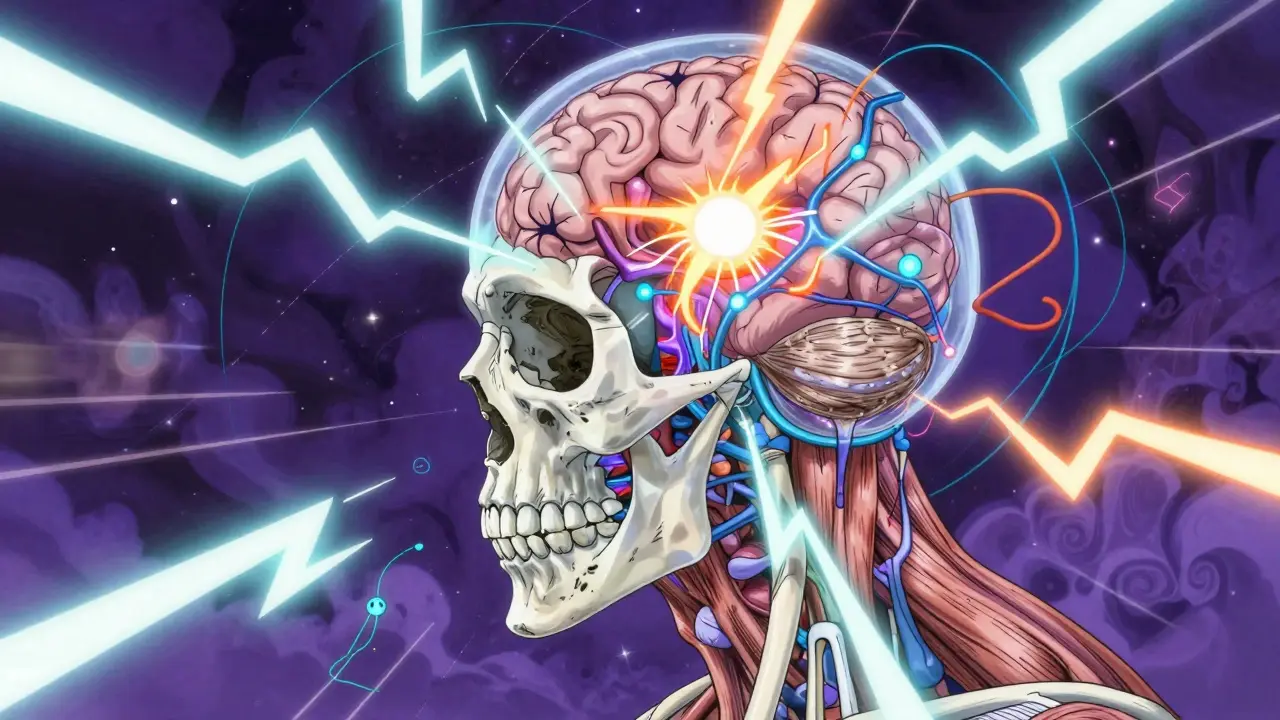
But research has flipped this script. Today, 78% of headache specialists agree that muscle tension is actually a side effect, not the root cause. The real culprit is central sensitization. This means your brain’s pain-processing centers-specifically the trigeminal nucleus caudalis and the thalamus-have become hypersensitive. They amplify normal signals into pain. Your muscles might feel tender because they’re reacting to the pain, not causing it. This explains why massage helps temporarily but doesn’t cure the problem. You’re treating the symptom, not the sensor.
Genetics play a huge role here. A 2022 twin study published in *Neurology* found that if you have a first-degree relative with chronic tension headaches, your risk jumps by 2.3 times. It’s not just bad luck; it’s biology.
Spotting the Difference: Chronic Tension vs. Migraine
Misdiagnosis is common. In fact, 38% of chronic daily headache cases are mislabeled. Knowing the difference matters because the treatments are completely different. Triptans, which work wonders for migraines, do nothing for tension headaches.
| Feature | Chronic Tension Headache | Migraine |
|---|---|---|
| Pain Type | Bilateral pressure/tightness (non-pulsating) | Unilateral throbbing/pulsating |
| Intensity | Mild to moderate (avg 5.2/10) | Moderate to severe |
| Nausea/Vomiting | Rare | Common |
| Light/Sound Sensitivity | Minimal (photophobia in <15%) | High (photophobia in >90%) |
| Activity Impact | Usually not worsened by movement | Worsened by physical activity |
If you have photophobia (light sensitivity) in less than 15% of your episodes, and phonophobia (sound sensitivity) in only about 28%, you’re looking at tension-type criteria. Migraine sufferers report these symptoms in over 85% of attacks. Keep a diary. Track not just the pain, but these accompanying signs. It helps your doctor rule out other causes quickly.
Triggers: What Actually Sets Off the Pain?
We often blame "stress," but that’s too vague. Stress is a category, not a trigger. To prevent headaches, you need to identify specific thresholds. Here are the evidence-based triggers that matter most:
- Sleep Disruption: Getting less than six hours of sleep increases your risk of a headache day by 4.2 times. Consistency matters more than duration. Varying your bedtime by more than 20 minutes can destabilize your circadian rhythm, lowering your pain threshold.
- Caffeine Fluctuations: If you drink more than 200mg of caffeine daily (about two cups of coffee) for two weeks, your body adapts. When you miss a dose, withdrawal begins. This causes blood vessels to dilate, triggering pain. The key isn’t quitting cold turkey-it’s keeping intake stable.
- Posture and Screen Time: Holding your head forward by just 4.5cm beyond your cervical spine increases tension in your suboccipital muscles by 2.8 times. Spending over seven hours a day on screens correlates with a 63% higher incidence of headaches. This isn’t just eye strain; it’s sustained muscular load.
- Dehydration: When serum osmolality rises above 295 mOsm/kg, your brain tissue shrinks slightly, pulling on pain-sensitive membranes. Drink water before you feel thirsty.
- Jaw Clenching: Electromyography (EMG) studies show that during a headache, masseter (jaw) muscle activity is 3.1 times higher. This is often subconscious, happening during focus or sleep.
Interestingly, weather changes have a weak correlation (r=0.18). While many swear by barometric pressure shifts, data suggests it’s not a primary driver for most. Focus on the controllable factors first.
Treatment Options: From Pills to Therapy
Treating chronic tension headaches requires a two-pronged approach: acute relief for when the pain hits, and preventive care to stop it from starting. Relying only on painkillers is a dangerous trap.
Acute Relief
Nonsteroidal anti-inflammatory drugs (NSAIDs) are the first line of defense. Ibuprofen (400mg) works for 68% of episodes, peaking at 1.8 hours. Aspirin (900mg) helps 52%. However, there is a hard limit: use these no more than 14 days a month. Exceeding this leads to medication-overuse headache, where the remedy becomes the cause. Opioids should be avoided entirely-they have zero efficacy for tension headaches and carry high addiction risks.
Preventive Medication
If you have headaches on 10 or more days a month, prevention is indicated. Amitriptyline remains the gold standard. Starting at 10mg nightly and titrating up to 25-50mg, it reduces headache frequency by 50-70% after six weeks. But it’s not perfect. About 28% of patients stop taking it due to side effects like dry mouth or weight gain (averaging 2.3kg).
An alternative is Mirtazapine. A 2022 randomized controlled trial showed it is non-inferior to amitriptyline but better tolerated, with a dropout rate of only 35% compared to 62%. It’s worth discussing with your doctor if amitriptyline doesn’t suit you.
Note: Botulinum toxin Type A (Botox) is effective for chronic migraines but has been shown to be ineffective for chronic tension headaches. Don’t waste money on it unless you have comorbid migraine.
Non-Pharmacological Interventions
Medication alone rarely solves the problem because it doesn’t address central sensitization. You need to retrain your nervous system.
- Cognitive Behavioral Therapy (CBT): A 12-week CBT program reduced headache days by 41% in a JAMA Neurology study. It helps change how you perceive pain and manage stress responses.
- Physical Therapy: Look for a therapist specializing in cervicogenic issues. Twelve sessions of craniocervical flexion exercises decreased headache frequency by 53%. Generic back massages won’t cut it; you need targeted neck stabilization.
- Mindfulness: Just 15 minutes of daily mindfulness practice lowered cortisol levels by 29% in eight weeks. Lower cortisol means less systemic inflammation and lower pain sensitivity.
- Acupuncture: The Cochrane Review (2023) found acupuncture provides modest benefit, reducing headache days by 3.2 per month compared to sham treatments. It’s a low-risk option worth trying if other methods stall.
Building a Prevention Protocol That Works
Knowledge is useless without action. Here is a practical checklist to implement today:
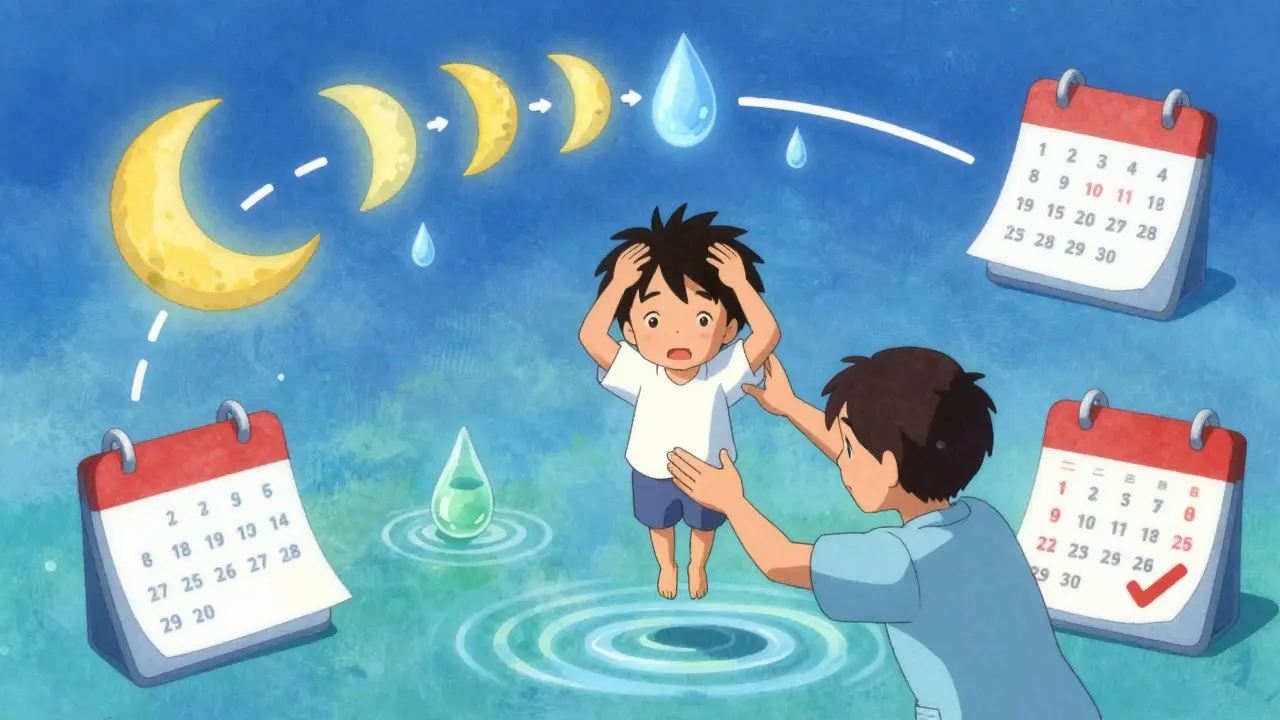
- Start a Headache Diary: Use an app like Migraine Buddy. Adherence drops significantly after three months, so set reminders. Record pain intensity, duration, potential triggers, and medications taken. This data is crucial for diagnosis.
- Apply the 20-20-20 Rule: Every 20 minutes, look at something 20 feet away for 20 seconds. This breaks the cycle of sustained screen-induced muscle tension.
- Stabilize Sleep: Go to bed and wake up within a 20-minute window every day, even on weekends. This regulates your circadian clock.
- Hydrate Proactively: Aim for 2-2.5 liters of water daily. Add electrolytes if you sweat heavily, as plain water may not correct osmolality fast enough.
- Limit NSAID Use: Set a calendar reminder for the start of each week. Count your painkiller days. If you hit 10, switch to preventive strategies immediately.
Community support also plays a role. Programs like the American Headache Society’s 'HeadWise' report that 82% of users see reduced disability scores after six months. You are not alone in this struggle.
What’s Next in Treatment?
The field is evolving. New drugs like Atogepant, a CGRP antagonist, received FDA Fast Track designation for chronic tension headaches in 2023. Early trials showed 5.1 fewer headache days per month versus placebo. While currently approved for migraines, its use for tension headaches is expanding.
Research is also looking at the gut-brain axis. Patients with chronic tension headaches have 40% lower levels of *Faecalibacterium prausnitzii*, a beneficial gut bacteria. Probiotics and dietary changes might soon become part of the toolkit. Additionally, occipital nerve stimulation shows promise, with a 62% responder rate in pilot studies.
By 2027, the ICHD-4 classification may reclassify chronic tension headaches as "primary headache with central sensitization." This linguistic shift will help doctors-and patients-understand that this is a neurological condition, not just a muscle issue.
How long does it take for amitriptyline to work for tension headaches?
Amitriptyline typically takes 4 to 6 weeks to show full preventive effects. Doctors usually start with a low dose (10mg) to minimize side effects and gradually increase it. Do not expect immediate relief; it builds up in your system over time.
Can chronic tension headaches turn into migraines?
While they are distinct conditions, some patients experience both. However, chronic tension headaches do not "turn into" migraines. They are separate diagnostic entities. If your pain starts throbbing and you develop nausea or light sensitivity, consult your doctor as your diagnosis may need updating.
Is ibuprofen safe to take every day for tension headaches?
No. Taking ibuprofen or other NSAIDs more than 14 days a month can lead to medication-overuse headache. This creates a vicious cycle where the medication causes more headaches. Limit acute medication use and focus on preventive treatments.
Does physical therapy really help with tension headaches?
Yes, specifically targeted physical therapy. Studies show that 12 sessions of craniocervical flexion exercises can reduce headache frequency by 53%. General massage may provide temporary relief, but strengthening the deep neck muscles addresses the postural components that contribute to pain.
What is the best exercise for tension headaches?
Craniocervical flexion exercises are highly recommended. These involve gently nodding your head while lying down to engage the deep neck flexors without straining the surface muscles. Aerobic exercise like walking or swimming also helps by releasing endorphins and reducing overall stress levels.
Can dehydration cause chronic tension headaches?
Yes. Dehydration increases serum osmolality, which can shrink brain tissue slightly and pull on pain-sensitive structures. Maintaining consistent hydration is a simple but effective preventive measure, especially if you work in air-conditioned environments or exercise regularly.
Are there any supplements that help with tension headaches?
While evidence is stronger for medications, some studies suggest magnesium and riboflavin (Vitamin B2) may help reduce frequency. Magnesium helps relax blood vessels and nerves. Always consult your doctor before starting supplements, as they can interact with other medications.
How does stress management reduce headache frequency?
Stress elevates cortisol, which contributes to central sensitization. Mindfulness practices, such as meditation or deep breathing, have been shown to lower cortisol by 29% in eight weeks. By reducing physiological stress markers, you raise your pain threshold and make your brain less reactive to pain signals.