
Milk Thistle Interaction Checker
Check Your Medication Interactions
Milk thistle's active compound, silymarin, can affect how your liver processes certain medications. Select your medication to see potential interactions.
When you take milk thistle for your liver, you might not think about your medications. But if you’re on anything metabolized by your liver-like blood thinners, statins, or seizure drugs-this common supplement could be quietly changing how your body handles them. It’s not just a harmless herb. Milk thistle interacts with your liver’s drug-processing system in ways that can be harmless, risky, or even dangerous-depending on the dose, the drug, and your genetics.
How Milk Thistle Affects Your Liver’s Drug Machinery
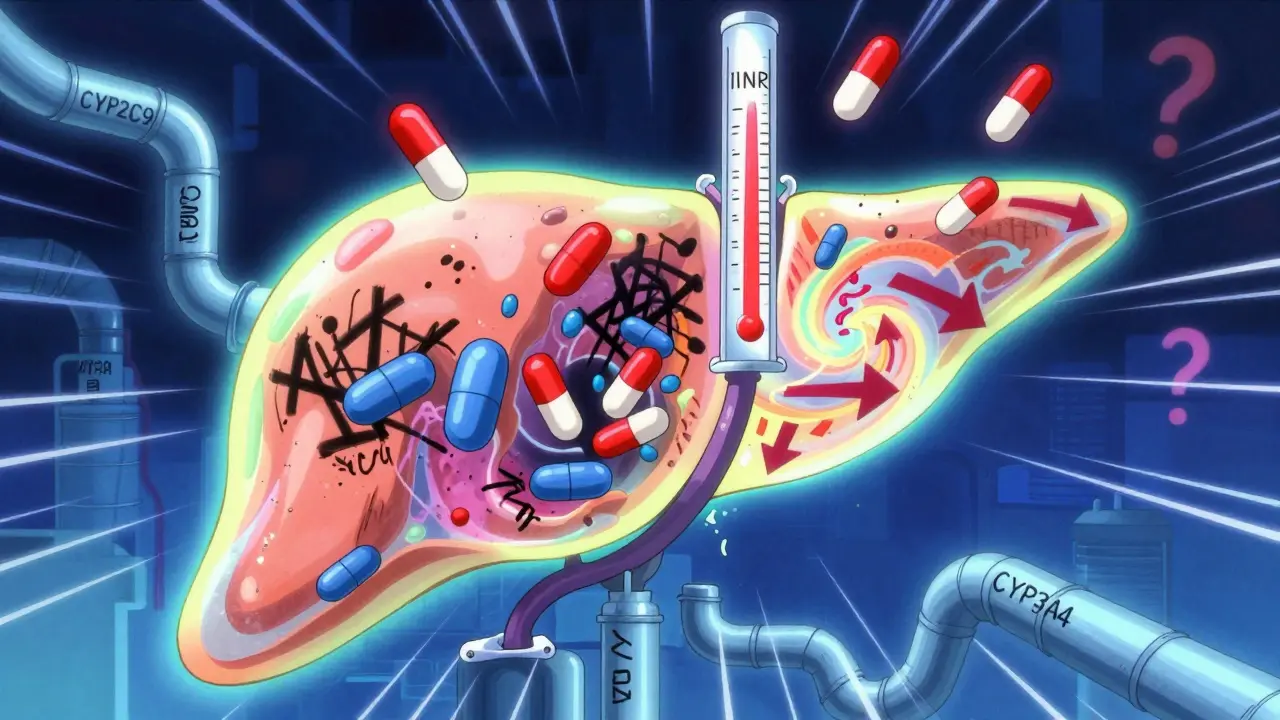
Your liver doesn’t just filter toxins. It’s a chemical factory. One of its main tools is a group of enzymes called cytochrome P450, or CYP enzymes. These enzymes break down about 75% of all prescription drugs. Milk thistle’s active ingredient, silymarin, can interfere with these enzymes-but not always the same way.
Some studies show silymarin inhibits CYP2C9, the enzyme that processes warfarin, phenytoin, and some NSAIDs. That means your body breaks down these drugs slower. Blood levels rise. For warfarin, that could mean a spike in INR and a higher risk of bleeding. Other research finds no effect at all. And then there’s the twist: with long-term use, silymarin might actually induce the same enzyme, making your body process drugs faster. This flip-flop effect is why timing matters. A week in, you might be fine. Two months later, your medication could stop working.
For CYP3A4-the enzyme that handles statins, some antidepressants, and immunosuppressants-the data is even messier. One 2019 trial gave healthy volunteers 420 mg of silymarin daily for two weeks. Midazolam, a drug metabolized by CYP3A4, showed only a 7.2% increase in blood levels. That’s below the 20% threshold doctors consider clinically meaningful. But in another study, people with liver disease saw higher concentrations. Why? Because their livers were already struggling. The same dose can behave differently in different people.
Real-World Stories: When Milk Thistle Changed the Game
Behind the clinical trials are real people. On Reddit, a user wrote: “I started milk thistle for fatty liver. Two weeks later, my INR jumped from 2.1 to 4.8. My doctor had to cut my warfarin by 30%.” That’s not rare. In a review of 87 Reddit threads from early 2024, 43 users reported changes in INR after starting milk thistle. Nearly a third needed dosage adjustments.
But not everyone has problems. On Amazon, only 2.1% of 1,247 reviews mentioned drug interactions. Most users reported better energy, less bloating, or improved liver enzyme tests. One man with hepatitis C took 420 mg of milk thistle daily alongside his antiviral meds for 12 weeks. His viral load dropped to undetectable. His liver enzymes stayed normal. No issues.
Why the difference? Genetics. Some people have a CYP2C9 gene variant that makes them slow metabolizers. For them, even small enzyme inhibition can push drug levels into dangerous territory. Others have fast-metabolizing genes. Their bodies clear drugs quickly, so milk thistle barely makes a dent. Add in product quality-only 32% of supplements meet their labeled silymarin content-and you’ve got a wild card.
How It Compares to Other Liver Supplements
Milk thistle isn’t the only herbal option for liver support. N-acetylcysteine (NAC) boosts glutathione, a key antioxidant, and doesn’t touch CYP enzymes. Artichoke extract consistently inhibits CYP2C9 by 15-20%. But milk thistle is unique because it can do both-inhibit and induce-depending on how long you take it.
Compared to pharmaceutical options like ursodeoxycholic acid, milk thistle has a much better safety record. Across 3,846 patients in clinical trials, only 1.2% reported side effects-mostly mild stomach upset. Pharmaceutical hepatoprotectants had an 8.7% adverse event rate. But here’s the catch: NAC and ursodeoxycholic acid have predictable, well-studied interactions. Milk thistle doesn’t. That’s why doctors hesitate.

Who Should Be Extra Careful?
If you’re taking any of these, think twice before adding milk thistle:
- Warfarin (Coumadin) - Even small changes in INR can lead to bleeding or clots.
- Phenytoin - Used for seizures. Too much can cause dizziness, nausea, or worse.
- Statins (like atorvastatin) - Increased levels raise the risk of muscle damage.
- Immunosuppressants (cyclosporine, tacrolimus) - Critical for transplant patients. A small rise can cause rejection.
- Some antidepressants (SSRIs like sertraline) - Can increase serotonin levels too much.
And if you’ve had a liver transplant, are on dialysis, or have advanced cirrhosis, your liver’s enzyme system is already compromised. Adding milk thistle might overload it-or make your meds ineffective.
What Doctors Actually Recommend
There’s no consensus. The European Medicines Agency says interactions are unlikely at standard doses. The U.S. NIH’s LiverTox database says milk thistle is “possibly interacting” with CYP2C9 substrates. Dr. David Bernstein at the University of Connecticut says: “Until we have standardized extracts and consistent data, be cautious.”
But Dr. Joseph Pizzorno, a leading integrative medicine expert, argues the risk is exaggerated. He points to only 12 documented case reports in 40 years-and none proved causation. That’s a lot of people taking it, with very few clear problems.
Still, professional guidelines are shifting. The American Association of Clinical Endocrinology recommends checking drug levels before and after starting milk thistle if you’re on a narrow-therapeutic-index drug. For warfarin, monitor INR weekly for the first month. For phenytoin, check levels at day 3, 7, and 14. And wait 48 hours after stopping milk thistle before testing baseline levels.

What You Can Do Right Now
If you’re already taking milk thistle and prescription meds:
- Check your labels. Make sure you’re using a standardized extract with 70-80% silymarin. Avoid “whole herb” products-they’re unpredictable.
- Track your meds. If you’re on warfarin, keep a log of your INR readings. Note when you started or changed your milk thistle dose.
- Talk to your pharmacist. They see drug interactions every day. Bring your supplement bottle to the counter.
- Don’t assume it’s safe. Just because it’s “natural” doesn’t mean it’s harmless. The FDA doesn’t test supplements for interactions.
- Give it time. If you’re planning to start milk thistle, wait at least two weeks before making any medication changes. Let your body adjust.
If you’re considering milk thistle for fatty liver or detox:
- Start low-140 mg daily.
- Use it for 3-6 months, then reassess.
- Get liver enzyme tests before and after.
- If you’re on any meds, don’t start without talking to your doctor.
The Bottom Line
Milk thistle isn’t dangerous for most people. But it’s not harmless either. It’s a tool-and like any tool, it needs to be used wisely. If you’re healthy and not on meds, it’s probably fine. If you’re managing a chronic condition or taking multiple drugs, it’s a potential wildcard.
The science is still catching up. New formulations-like silybin bound to phosphatidylcholine-are being tested to reduce enzyme interactions while keeping liver benefits. In the meantime, your best defense is awareness. Know what you’re taking. Know what your meds do. And never assume a supplement won’t interfere with your treatment.
Can milk thistle raise my INR if I’m on warfarin?
Yes, it can. Multiple case reports and user accounts show milk thistle increasing INR levels, sometimes dramatically. This happens because silymarin may inhibit CYP2C9, the enzyme that breaks down warfarin. If you’re on warfarin, monitor your INR weekly for the first month after starting milk thistle. Never adjust your warfarin dose on your own-talk to your doctor.
Does milk thistle interact with statins?
Possibly. Statins like atorvastatin and simvastatin are broken down by CYP3A4. While most studies show no significant interaction, some individuals-especially those with liver disease or genetic variations-may experience higher statin levels. This increases the risk of muscle pain or damage. If you’re taking statins and start milk thistle, watch for unexplained muscle soreness or weakness. Get your CPK levels checked if symptoms appear.
Is milk thistle safe with antidepressants?
It depends on the drug. SSRIs like sertraline and fluoxetine are metabolized by CYP2D6 and CYP3A4. Milk thistle may interfere with these enzymes, potentially raising drug levels. While clinical evidence is limited, there’s a theoretical risk of serotonin syndrome-especially if you’re on multiple antidepressants or high doses. If you’re taking SSRIs and want to try milk thistle, start with a low dose and monitor for agitation, sweating, rapid heartbeat, or confusion.
How long does it take for milk thistle to affect liver enzymes?
Inhibition effects can show up within 24-48 hours of starting milk thistle. But enzyme induction-where your liver starts breaking down drugs faster-takes longer, usually 7-10 days. That’s why some people feel fine at first, then have problems weeks later. Always give it at least two weeks before deciding if it’s working-or causing issues.
Should I stop milk thistle before surgery?
Yes. Because of its potential to affect blood clotting and liver metabolism, most anesthesiologists recommend stopping milk thistle at least 7-10 days before surgery. This reduces the risk of unexpected bleeding or altered drug responses during anesthesia. Always tell your surgical team about every supplement you take-even if you think it’s harmless.
Are all milk thistle supplements the same?
No. Only 32% of supplements on the market meet their labeled silymarin content. Many contain fillers, low concentrations, or even contaminants. Look for products labeled “standardized to 70-80% silymarin.” Avoid “whole herb” or “raw extract” versions-they’re inconsistent. Third-party testing (USP, NSF, or ConsumerLab) is a good sign of quality.
Can milk thistle help with NAFLD without interacting with my meds?
Yes, but only if you’re careful. Studies show milk thistle improves liver enzymes and reduces fat buildup in NAFLD patients. If you’re not on medications metabolized by CYP2C9 or CYP3A4, the risk is low. Still, get your liver enzymes tested before and after 3-6 months of use. If you’re on any prescription meds, talk to your doctor first. The benefits are real-but so are the risks if you’re not monitored.
What Comes Next
The future of milk thistle may lie in precision dosing. Researchers are testing silybin-phosphatidylcholine complexes that boost absorption and reduce CYP interference. Clinical trials are underway to see if these new forms can deliver liver benefits without the interaction risks.
Until then, the safest approach is simple: know your meds. Know your supplement. And never take them together without checking with someone who understands both.
siva lingam
January 24, 2026 AT 10:42next they'll say aspirin causes 'subtle enzyme shifts' and we'll all be taking 'herbal ibuprofen' from the back of a truck
Phil Maxwell
January 25, 2026 AT 21:08Shelby Marcel
January 27, 2026 AT 00:08blackbelt security
January 28, 2026 AT 22:26ps: i'm not selling anything. just saying.
Tommy Sandri
January 29, 2026 AT 22:23Juan Reibelo
January 30, 2026 AT 07:18Karen Conlin
January 30, 2026 AT 08:01Josh McEvoy
January 31, 2026 AT 05:35