

Imagine you’ve just taken your daily dose of Warfarin is an oral anticoagulant medication that prevents blood clots by interfering with vitamin K-dependent clotting factors., only to find out that the spinach salad you ate for lunch or the antibiotic prescribed for a minor infection has thrown your blood’s clotting ability into chaos. For millions of people managing conditions like atrial fibrillation or deep vein thrombosis, this isn’t a hypothetical scare-it’s a daily reality. Warfarin is effective, affordable, and life-saving, but it comes with a catch: it interacts with nearly everything you put in your body.
The core challenge with warfarin is its narrow therapeutic index. This means the difference between a dose that protects you from clots and a dose that causes dangerous bleeding is very small. Unlike newer direct oral anticoagulants (DOACs) such as apixaban or rivaroxaban, which have fewer dietary restrictions, warfarin requires you to be vigilant about your diet, supplements, and other medications. Understanding these interactions isn’t just about following rules; it’s about maintaining stability in your International Normalized Ratio (INR), the test that measures how long it takes your blood to clot.
How Warfarin Works and Why Interactions Matter
To understand why certain foods and drugs affect warfarin, you need to know what it actually does. Warfarin works by inhibiting an enzyme called vitamin K epoxide reductase complex subunit 1 (VKORC1). This enzyme is responsible for recycling vitamin K in your body. Vitamin K is essential for producing clotting factors II, VII, IX, and X. By blocking this recycling process, warfarin reduces the amount of active vitamin K available, which in turn slows down the production of these clotting factors.
Because warfarin targets vitamin K metabolism, anything that changes your vitamin K levels or affects how your liver processes the drug can shift your INR. Your goal is usually to keep your INR between 2.0 and 3.0 for most conditions, though mechanical heart valves may require a higher range of 2.5 to 3.5. If your INR goes too high, your blood doesn’t clot well enough, increasing bleeding risk. If it drops too low, you’re at risk of forming dangerous clots. This delicate balance is why consistency is more important than restriction.
Vitamin K and Dietary Consistency
The biggest myth surrounding warfarin is that you must avoid green leafy vegetables entirely. This is incorrect. What matters is not avoiding vitamin K, but keeping your intake consistent. A sudden spike or drop in vitamin K can cause significant INR fluctuations within 3 to 5 days.
| Food Item | Vitamin K (mcg) | Impact on Warfarin |
|---|---|---|
| Kale | 1,062 mcg | High - Significant decrease in INR if intake increases suddenly |
| Spinach | 459 mcg | High - Monitor closely if consumption varies |
| Broccoli | 220 mcg | Moderate - Generally safe with consistent intake |
| Lettuce (Iceberg) | 7 mcg | Low - Minimal impact on INR |
| Green Tea | Varies (high in catechins) | Moderate - May reduce INR due to vitamin K content and enzyme effects |
If you eat one cup of kale every day, your body adjusts to that level of vitamin K. The problem arises when you decide to start a new diet rich in greens after years of eating little. That sudden increase can lower your INR rapidly, making your blood clot faster and negating warfarin’s protective effect. Conversely, skipping your usual vegetable servings can raise your INR, increasing bleeding risk. Aim to keep your daily vitamin K intake within 10-15% of your baseline. Most adults need about 60-80 mcg of vitamin K daily, but warfarin patients often consume more. The key is tracking your habits and informing your healthcare provider if you plan to change your diet significantly.
Prescription Drug Interactions
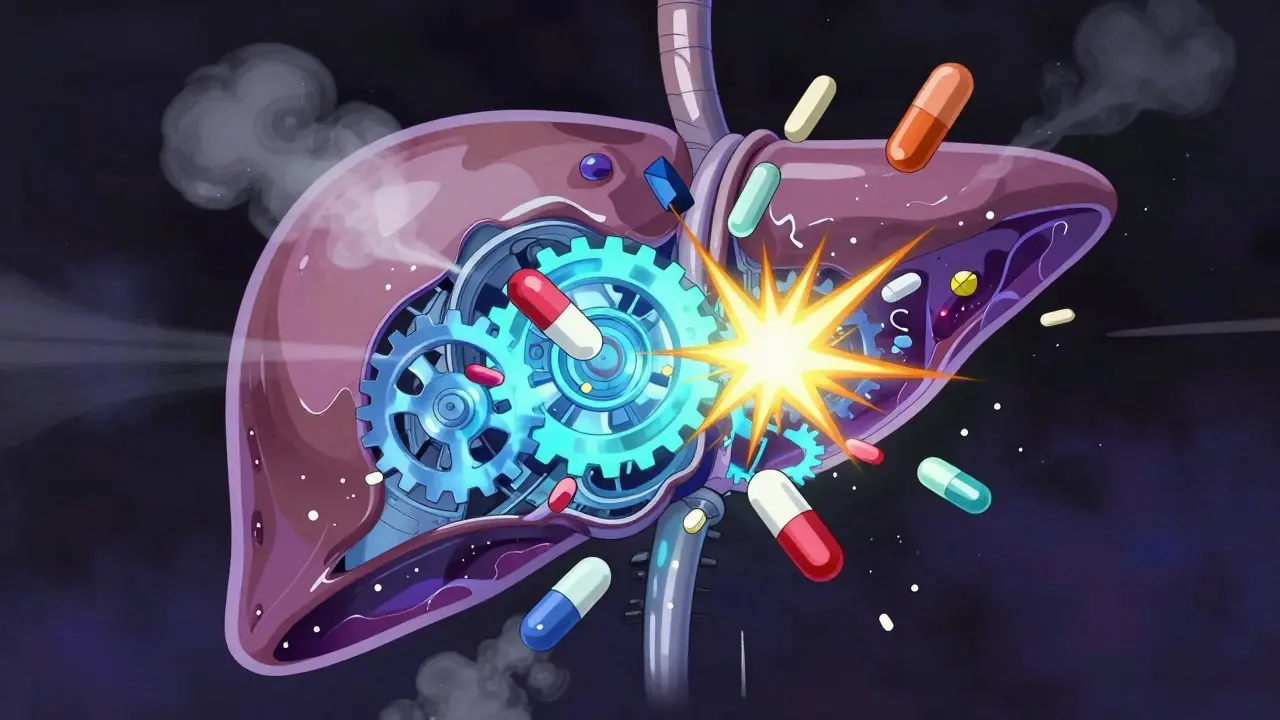
Warfarin is metabolized primarily by the cytochrome P450 system in the liver, specifically enzymes CYP2C9, CYP3A4, and CYP1A2. Many common medications interact with these same enzymes, leading to two types of problems: potentiation (increasing warfarin’s effect and raising INR) or inhibition (decreasing warfarin’s effect and lowering INR).
Antibiotics are among the most frequent culprits. Drugs like trimethoprim-sulfamethoxazole (Bactrim) and metronidazole can drastically increase INR by killing gut bacteria that produce vitamin K and by inhibiting warfarin metabolism. Patients have reported INR spikes from 2.4 to over 5.0 after taking Bactrim for a urinary tract infection. Other high-risk medications include:
- Azole antifungals (e.g., fluconazole): Can increase warfarin levels by 50-100% within 48 hours.
- Amiodarone: A heart rhythm medication that potentiates warfarin, often requiring a 30-50% dose reduction.
- NSAIDs (e.g., ibuprofen, naproxen): While they don’t always change INR, they damage the stomach lining and impair platelet function, significantly increasing bleeding risk even at normal INR levels.
- St. John’s Wort: An herbal supplement that induces liver enzymes, speeding up warfarin breakdown and lowering INR.
Always consult your doctor or pharmacist before starting any new prescription. They may order more frequent INR tests during the first week of treatment to ensure your levels remain stable.
Supplements and Herbal Remedies
Many people assume "natural" means safe, but with warfarin, natural can be dangerous. Herbal supplements often contain compounds that affect liver enzymes or vitamin K pathways without being listed clearly on labels.
Ginkgo biloba, garlic supplements, and ginseng can all increase bleeding risk by affecting platelet aggregation. Coenzyme Q10 (CoQ10) contains a chemical structure similar to vitamin K and may reduce warfarin’s effectiveness. Fish oil and omega-3 fatty acids, while beneficial for heart health, can also thin the blood slightly, adding to warfarin’s effect. Even cranberry juice has been linked to increased INR in some cases, likely due to interference with liver enzymes.
The safest approach is to maintain a list of all supplements you take and review it with your anticoagulation clinic. Do not stop or start any supplement without professional guidance, as sudden changes can destabilize your INR just as much as dietary shifts.

Alcohol and Lifestyle Factors
Alcohol affects warfarin in two ways. Acute heavy drinking can increase INR temporarily by inhibiting liver enzymes, while chronic heavy drinking can decrease INR by inducing those same enzymes. Moderate alcohol consumption-defined as no more than one drink per day for women and two for men-is generally considered safe if your INR is stable. However, binge drinking (three or more drinks in one sitting) increases bleeding risk by over three times.
Illness also plays a role. Fever, vomiting, or diarrhea can alter your absorption of warfarin and vitamin K. During periods of illness, your INR may fluctuate unpredictably. If you are sick for more than a day, contact your healthcare provider for advice on monitoring. Additionally, changes in physical activity can influence metabolism, so significant lifestyle changes should be communicated to your care team.
Monitoring and Managing Your INR
Regular INR testing is non-negotiable for warfarin users. When you first start the medication, you may need weekly tests. Once stable, testing typically occurs every four weeks. Home INR monitoring devices are available and can provide greater convenience, allowing you to track changes immediately after dietary or medication adjustments.
New developments in pharmacogenetic testing, such as the FDA-approved Warfarin GenAssist kit, analyze genes like CYP2C9 and VKORC1 to predict how your body will respond to warfarin. This can help determine the right starting dose, potentially reducing the time to reach a stable INR by several weeks. Artificial intelligence algorithms are also being developed to predict dose changes based on clinical data, offering hope for more personalized management in the future.
Despite the complexity, many patients find success with warfarin. According to a 2022 survey by the National Blood Clot Alliance, 73% of users reported satisfaction once their therapy stabilized, citing cost savings compared to newer alternatives. Warfarin remains essential for patients with mechanical heart valves, severe kidney disease, or antiphospholipid syndrome, where DOACs are not suitable options.
Can I eat green leafy vegetables while on warfarin?
Yes, you can and should eat green leafy vegetables. The key is consistency. Avoid drastic changes in your intake of vitamin K-rich foods like kale, spinach, and broccoli. Sudden increases can lower your INR, while sudden decreases can raise it. Keep your daily consumption steady and inform your doctor if you plan to change your diet significantly.
What happens if I miss a dose of warfarin?
If you miss a dose, take it as soon as you remember on the same day. Do not double up on the next day’s dose. Missing occasional doses may not cause immediate harm, but consistent missed doses can lead to unstable INR levels and increased clotting risk. Contact your healthcare provider if you frequently miss doses.
Are there any painkillers safe to take with warfarin?
Acetaminophen (Tylenol) is generally considered safer than NSAIDs like ibuprofen or aspirin because it does not irritate the stomach lining or affect platelets. However, high doses of acetaminophen can still increase INR over time. Always consult your doctor before taking any pain relief medication, especially if you need it regularly.
How quickly do food and drug interactions affect my INR?
Dietary changes can affect your INR within 3 to 5 days. Drug interactions, particularly with antibiotics or antifungals, can cause changes within 48 to 72 hours. This is why frequent monitoring is crucial when starting new medications or altering your diet significantly.
Is warfarin better than newer blood thinners like Eliquis or Xarelto?
It depends on your medical condition. Newer direct oral anticoagulants (DOACs) have fewer food and drug interactions and do not require regular INR monitoring. However, warfarin is still the preferred choice for patients with mechanical heart valves, severe kidney impairment, or antiphospholipid syndrome. Warfarin is also significantly cheaper, costing around $4-$10 per month compared to hundreds for DOACs.