
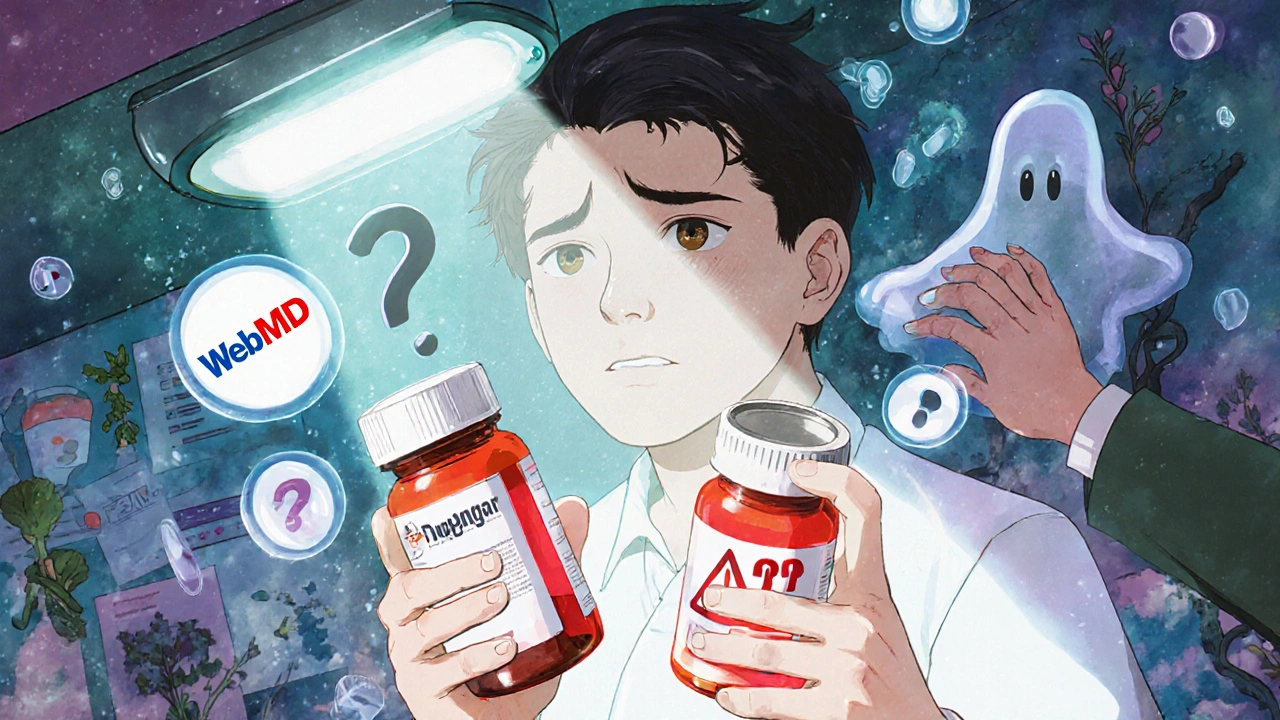
Every year, over 1.3 million people in the U.S. end up in the emergency room because of bad reactions to their medications. Nearly half of those cases involve drug interactions - when two or more drugs, supplements, or even foods mix in ways that make one less effective, cause new side effects, or turn a safe pill into a dangerous one. You might think checking your meds online is enough. But not all tools are created equal. And relying on the wrong one can be risky.
What You Can Actually Get from the FDA
The FDA doesn’t have a public drug interaction checker. That’s a common mistake. People assume the FDA runs tools like WebMD or DrugBank because they regulate drugs. But their job is oversight, not direct patient support. They track problems after drugs hit the market - through reports from doctors, pharmacists, and patients. If a new interaction pops up, like the one between fedratinib and thiamine that caused 12 documented cases of deficiency, the FDA issues a safety alert. But that alert comes months, sometimes over a year, after the problem starts.
So if you’re looking for a real-time checker from the FDA, you won’t find one. What you can find are recall notices, safety communications, and adverse event databases like MAUDE. These are useful for professionals, but they’re not built for quick answers when you’re holding two bottles of pills and wondering if it’s safe to take them together.
WebMD’s Checker: Simple, Fast, But Not Perfect
WebMD’s Drug Interaction Checker is one of the most popular free tools online. It’s easy to use - just type in your medications, and it spits out a list of possible interactions in under three seconds. No login. No registration. It checks drug-drug, drug-food, and even drug-condition interactions. For someone who isn’t a doctor, it’s a good starting point.
But here’s what it misses: herbal supplements like St. John’s Wort, which can seriously interfere with antidepressants or birth control. It also doesn’t explain the science behind the warning. Is the interaction due to how your liver processes the drugs? Does it affect your kidneys? WebMD won’t tell you. And in a 2021 University of Florida study, nearly 1 in 6 of its serotonin syndrome warnings didn’t match the original medical research.
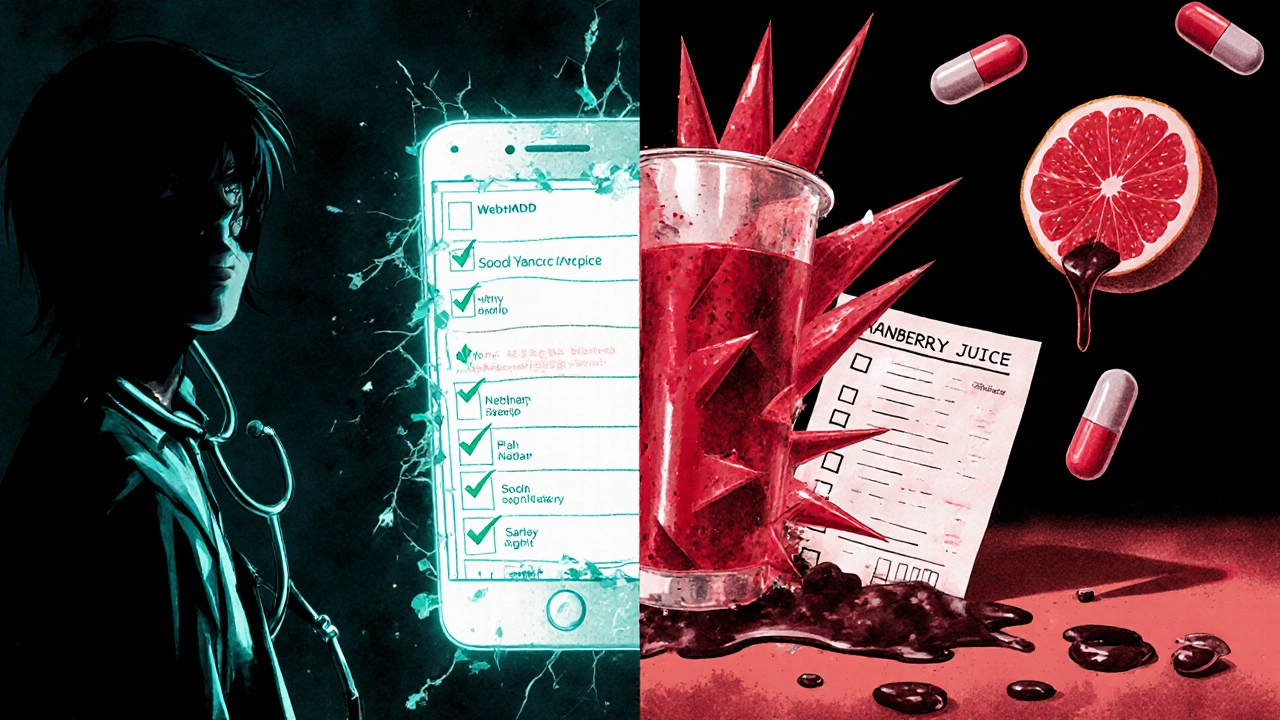
Real-world examples show the gaps. One Reddit user reported that WebMD said warfarin and cranberry juice were safe - but his INR level spiked to 6.2, putting him at serious risk of bleeding. That’s not a rare case. Over a third of WebMD users on Trustpilot say they’ve gotten false negatives. And 78% of negative reviews mention outdated info, especially with newer biologic drugs.
DrugBank: Deep, Accurate, But Not for Everyone
If WebMD is the quick Google search, DrugBank is the medical journal. Founded by researchers at the University of Alberta, DrugBank’s free version lets you check up to five drugs at once. But what it gives you in return is worth it: cytochrome P450 enzyme pathways, pharmacodynamic mechanisms, and citations from peer-reviewed studies. It classifies interactions as minor, moderate, or major - and it’s accurate. In that same 2021 study, DrugBank had only a 3% error rate.
But there’s a catch. The free version doesn’t cover pharmacogenomic interactions - those are the ones tied to your genes. About 30 to 50% of people have genetic variations that change how they react to drugs. DrugBank’s free tool won’t tell you if you’re one of them. And if you’re a clinician trying to integrate this into your electronic health record, you’ll need the enterprise API. That costs $1,200 a month and requires technical setup with HL7/FHIR standards. Most patients won’t touch it. But hospitals? 87% of U.S. hospitals use commercial-grade tools like DrugBank because they reduce adverse events by up to 27%.
What the Experts Say
Dr. Richard H. Dana, Chief Pharmacist at Johns Hopkins, puts it bluntly: “WebMD is excellent for patient education but dangerous if used for clinical decision-making without verification.” He’s seen patients skip doses or avoid needed meds because a checker flagged something that wasn’t actually risky.
Dr. Linda A. Lee from the FDA says digital tools are crucial - but only as a safety net. “They catch the obvious ones,” she says. “Like mixing warfarin with aspirin. But they can’t replace a pharmacist reviewing your full list.”
And then there’s Dr. Joshua Conrad, who reviews content for WebMD. He admits their tool misses 15% of interactions involving dietary supplements because those aren’t tightly regulated. That’s a big gap. People pop vitamins and herbal blends like it’s candy. But they can be just as dangerous as prescription drugs.
How to Use These Tools Without Getting Hurt
Here’s the truth: no checker is perfect. Even the best ones miss things. New drugs come out every month. Databases lag. Algorithms get outdated. And some interactions - like how kidney function affects drug clearance - can’t be captured by a simple form.
So how do you use them safely?
- Always check both drugs AND food. Forty percent of serious interactions involve something you eat or drink - grapefruit juice, alcohol, calcium-rich foods. Don’t skip this step.
- Don’t trust severity labels blindly. A “moderate” interaction caused 18% of preventable hospital stays in one study. That’s not minor.
- Verify high-risk combos with a pharmacist. If you’re on blood thinners, epilepsy meds, or heart drugs, don’t rely on an app. Walk into a pharmacy and ask.
- Update your list regularly. Add new prescriptions, supplements, and even OTC painkillers. Many interactions happen because people forget to update their list.
- Never use these tools for off-label uses. About 21% of prescriptions are off-label. Checkers aren’t built for that. The data isn’t there.
What’s Missing - And What’s Coming
Right now, the biggest blind spot is personalization. These tools don’t know your age, weight, kidney function, or genetics. A 72-year-old with reduced kidney function might react differently to a drug than a 30-year-old athlete. That’s not accounted for.
But things are changing. The FDA’s 2024 Digital Health Plan requires all certified checkers to show how they reach their conclusions - called “explainable AI.” That means by 2026, tools will have to show you the evidence trail: “This warning is based on Study X from the Journal of Clinical Pharmacology.”
AI is getting better too. Google’s Med-PaLM 2 predicted novel interactions with 89% accuracy in 2023 trials. And blockchain-based patient-controlled records are being tested - imagine a digital wallet where you store your full med list, allergies, and genetic info, and any checker you use pulls from that secure source.
But until then, treat these tools like a seatbelt - helpful, but not enough on its own. You still need to drive carefully.
Alternatives Worth Knowing
WebMD and DrugBank aren’t the only options.
- Medscape has deeper clinical detail but requires a free account.
- Drugs.com has a top-rated mobile app (4.7/5) and better formatting for on-the-go checks.
- Pillo specializes in food-drug interactions with a patented algorithm - useful if you’re on a strict diet or take supplements daily.
Each has strengths. But none replaces a conversation with your doctor or pharmacist.
Final Reality Check
Free drug interaction checkers are great for peace of mind. But they’re not medical advice. They’re a first filter - like checking your tire pressure before a road trip. It doesn’t mean your car is safe to drive. You still need a mechanic.
If you’re taking five or more medications - which 16% of Americans do - you’re at higher risk. Don’t wait for a bad reaction to happen. Talk to your pharmacist. Bring a printed list of everything you take, including vitamins and herbal teas. Ask: “Could any of these be hurting me more than helping?”
Technology helps. But human judgment still saves lives.
Does the FDA have a drug interaction checker?
No, the FDA does not operate a public-facing drug interaction checker. Instead, it monitors drug safety through post-market reporting systems like FAERS and issues safety alerts when new risks are identified. For real-time interaction checks, consumers use third-party tools like WebMD or DrugBank.
Is WebMD’s drug interaction checker reliable?
WebMD’s checker is user-friendly and catches many common interactions, but it’s not foolproof. It misses some herbal supplements, lacks detailed scientific explanations, and has been found to have false negatives in real cases. It’s best used for initial screening, not as a substitute for professional advice.
What’s the difference between WebMD and DrugBank?
WebMD is designed for patients - simple, fast, free, and ad-supported. DrugBank is built for professionals - it provides detailed mechanisms, citations, and severity classifications but limits free users to five drugs and requires technical setup for full access. DrugBank is more accurate, but WebMD is easier to use.
Can drug interaction checkers miss dangerous combinations?
Yes. Checkers often miss interactions involving new drugs, dietary supplements, or genetic factors. They also don’t account for individual health conditions like kidney disease or age-related changes in metabolism. Studies show up to 15-20% of serious interactions go undetected by free tools.
Should I trust a drug interaction checker if I’m on multiple medications?
Use it as a starting point, not the final word. If you take five or more medications, schedule a medication review with your pharmacist. They can spot hidden risks - like how your liver processes drugs or how supplements interfere with prescriptions - that no app can fully capture.
Are there any free alternatives to WebMD and DrugBank?
Yes. Drugs.com offers a highly rated mobile app with a clean interface. Medscape provides detailed clinical data but requires a free account. Pillo focuses specifically on food-drug interactions. But none replace a conversation with a healthcare provider, especially for complex regimens.
Why do some drug interactions take months to appear in checkers?
Drug interaction databases rely on published research and FDA reports, which can take 12-18 months to be collected, verified, and integrated. New drugs often enter the market before their full interaction profile is known. This delay creates a window where patients are at risk without warning.
Joy Aniekwe
November 29, 2025 AT 19:26Oh wow, the FDA doesn't have a checker? Shocking. I guess they're too busy approving drugs that cause people to turn into screaming zombies to build a simple tool. Meanwhile, WebMD tells me cranberry juice is safe with warfarin - right, because I'm sure that INR of 6.2 was just my imagination. Next they'll tell me my grandma's herbal tea isn't a silent assassin. Thanks for the reassurance, everyone. 😌
Latika Gupta
November 30, 2025 AT 18:41I used WebMD once. My mom takes lisinopril and she drinks green tea every morning. WebMD said 'no interaction.' She ended up in the hospital with dizziness. I checked again. Still said 'no interaction.' Now I just ask the pharmacist. Even if they're busy. Even if I feel silly. Better than ending up like that Reddit guy with the bleeding.
Sullivan Lauer
December 2, 2025 AT 00:49Let me tell you something - this whole situation is a perfect storm of systemic neglect and consumer complacency. We’ve got a healthcare system that treats medication like a vending machine - pop in your coins, get your pill, and hope for the best - while the tools we rely on are built by tech startups with ad revenue as their only KPI. WebMD? It’s like asking your cousin who watched one YouTube video about pharmacology to diagnose your tumor. DrugBank? It’s the equivalent of a medical textbook written in hieroglyphics and locked behind a paywall. And the FDA? They’re the old librarian who knows every book in the library but won’t help you find it unless you fill out Form 7B in triplicate. The truth? No algorithm can replace a human who’s seen 20,000 prescriptions and still remembers the one time a patient mixed St. John’s Wort with SSRIs and ended up in ICU. We need better tools - yes - but more importantly, we need to stop outsourcing our health to apps that make money when we panic-click.
Sohini Majumder
December 2, 2025 AT 14:05tushar makwana
December 3, 2025 AT 05:21My uncle in India takes five medicines, plus ashwagandha, plus turmeric tea. He never checks anything. He just says, 'God will protect.' But last year he got sick, and the pharmacist there sat with him for an hour, wrote down everything, and found two dangerous combos. No app did that. Just a person who cared. I think maybe the real tech isn’t the website - it’s the pharmacist who remembers your name.
Richard Thomas
December 4, 2025 AT 18:51It is imperative to recognize that the current paradigm of consumer-facing pharmacological decision-support tools is fundamentally misaligned with the epistemological standards of evidence-based medicine. The opacity of algorithmic outputs, the absence of dynamic pharmacokinetic modeling, and the systemic underrepresentation of pharmacogenomic data in publicly accessible databases render these platforms not merely inadequate, but potentially hazardous. The reliance upon WebMD as a triage mechanism constitutes a form of cognitive delegation that erodes patient autonomy by substituting heuristic simplification for clinical reasoning. One must therefore conclude that such tools serve primarily as palliative interfaces for medical illiteracy, rather than as instruments of therapeutic empowerment.
Steven Howell
December 6, 2025 AT 17:57There’s a reason hospitals use DrugBank and not WebMD. It’s not because they’re fancy - it’s because DrugBank’s data is sourced from peer-reviewed journals, clinical trials, and FDA adverse event reports. WebMD? It’s a content farm that uses SEO keywords to rank higher than actual science. I’ve seen ER docs roll their eyes at patients who came in quoting WebMD. Don’t get me wrong - it’s great for general awareness. But if you’re on blood thinners, anticonvulsants, or immunosuppressants? Walk into a pharmacy. Bring your bottles. Ask the pharmacist to sit with you. That’s not a luxury. That’s your safety net.
Robert Bashaw
December 7, 2025 AT 16:48Let me tell you - WebMD is the digital equivalent of your drunk uncle giving you car advice at a BBQ. ‘Oh yeah, that stuff’s fine!’ he says, while holding a beer and a bag of gummy bears. Meanwhile, your liver is screaming. DrugBank? That’s the PhD in a lab coat with a microscope, cross-referencing 17 studies while sipping black coffee. And the FDA? They’re the guy who finally shows up after the car explodes, saying, ‘Hmm. That was a bad combo.’ We need real-time, personalized, AI-powered tools - not these clunky, outdated, ad-ridden messes. I’m not saying we need to pay $1,200 a month - I’m saying we need to demand better. Because people are dying while someone’s ad revenue ticks up.
Brandy Johnson
December 9, 2025 AT 14:29It’s embarrassing that Americans rely on a website that runs ads for weight loss tea and ‘miracle’ supplements to make life-or-death decisions. In Germany, we have a national electronic health record system that auto-checks interactions against real-time prescribing data. In Japan, pharmacists are legally required to counsel patients on all meds. Here? We hand out pills like candy and expect Google to save us. This isn’t innovation - it’s negligence dressed up as convenience. And if you think WebMD is ‘user-friendly,’ you’ve never been to a real hospital.
Monica Lindsey
December 9, 2025 AT 17:45