

Imagine you are in the middle of a marathon. Your legs are burning, your lungs are screaming for air, and every step feels like wading through mud. Now, imagine someone hands you water, adjusts your pace, and treats your blisters so you can actually finish the race. That is exactly what supportive care is the prevention and management of adverse effects of cancer and its treatment to improve quality of life does for patients undergoing chemotherapy or radiation.
For too long, supportive care was seen as an afterthought-a way to comfort patients while the "real" work of killing cancer cells happened elsewhere. Today, that view is outdated. Supportive care is no longer just about comfort; it is a critical pillar of oncology that allows patients to stay on track with their curative treatments. When we manage side effects effectively, patients miss fewer appointments, maintain their strength, and often live longer.
This article breaks down the three most impactful pillars of modern supportive care: growth factors to protect your immune system, antiemetics to control nausea and vomiting, and pain relief strategies that go beyond simple pills. We will look at how these interventions work, when they are used, and what you can expect from them.
Growth Factors: Protecting Your Immune System
One of the most dangerous side effects of chemotherapy is neutropenia-a condition where your white blood cell count drops dangerously low. White blood cells, specifically neutrophils, are your body’s first line of defense against infection. When chemo kills cancer cells, it often takes healthy bone marrow cells with it. If your neutrophil count gets too low, even a minor cold can turn into a life-threatening fever known as febrile neutropenia.
This is where myeloid growth factors come in. These medications stimulate your bone marrow to produce more white blood cells. The most common type is Granulocyte Colony-Stimulating Factor (G-CSF). You might know them by brand names like Neupogen (filgrastim) or Neulasta (pegfilgrastim).
| Feature | Filgrastim (Short-acting) | Pegfilgrastim (Long-acting) |
|---|---|---|
| Dosing Frequency | Daily injections for up to 14 days | Single injection per chemo cycle |
| Timing | Start 24-72 hours after chemo | Administered 24-72 hours after chemo |
| Convenience | Lower (requires daily visits or self-injection) | Higher (one-time dose) |
| Common Side Effect | Bone pain (20-30% of patients) | Bone pain (similar incidence) |
The decision to use growth factors isn't automatic. Doctors calculate your risk based on the intensity of your chemotherapy regimen and your personal health history. If the risk of febrile neutropenia exceeds 20%, primary prophylaxis with a growth factor is strongly recommended. Studies show this reduces the incidence of febrile neutropenia by nearly half, dropping rates from around 17% to 9% in high-risk groups.
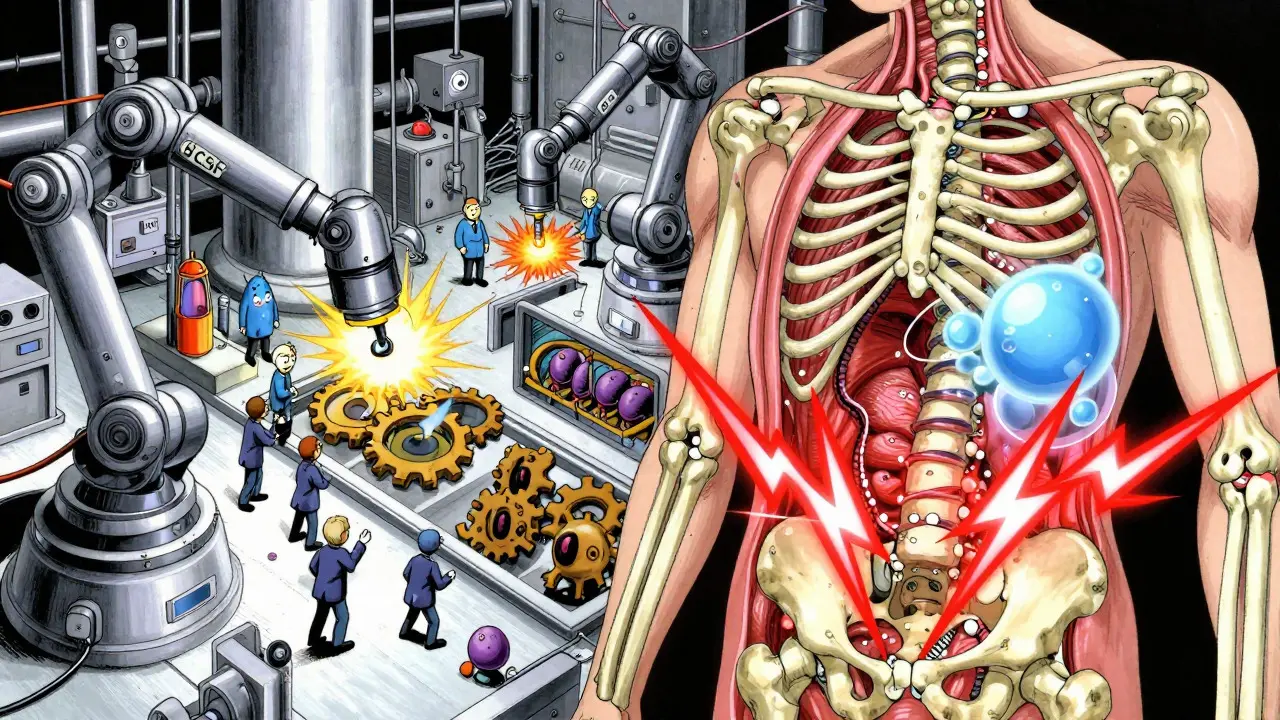
While effective, growth factors do have downsides. Bone pain is the most frequent complaint, affecting up to 30% of users. It usually feels like a deep ache in the hips, pelvis, or sternum. This happens because the bone marrow is working overtime to produce cells. Fortunately, over-the-counter pain relievers like acetaminophen can often manage this discomfort. Rarely, serious issues like splenic rupture can occur, which is why monitoring is essential.
Antiemetics: Taming Nausea and Vomiting
If there is one side effect that terrifies new cancer patients, it is chemotherapy-induced nausea and vomiting (CINV). In the past, many patients endured severe sickness because available drugs were ineffective. Today, thanks to advanced antiemetic protocols, complete control of acute nausea is achievable in 70-80% of cases.
Not all chemotherapy causes the same level of nausea. Oncologists categorize drugs into four emetogenic risk levels: high, moderate, low, and minimal. High-risk drugs, such as cisplatin, are notorious for causing intense vomiting. For these regimens, doctors don't rely on a single pill. They use a combination approach targeting different pathways in the brain that trigger vomiting.
A standard high-risk protocol typically includes three classes of drugs:
- 5-HT3 Receptor Antagonists: Drugs like palonosetron block serotonin receptors in the gut and brain. Palonosetron is preferred because it lasts longer than older versions like ondansetron.
- NK1 Receptor Antagonists: Agents like aprepitant or fosnetupitant block substance P, another chemical messenger involved in nausea. These are crucial for preventing delayed nausea that occurs 24-120 hours after chemo.
- Corticosteroids: Dexamethasone is added to boost the effectiveness of the other two drugs. It is usually given for a few days after chemotherapy.
Even with this powerful trio, breakthrough nausea can happen. This is nausea that slips through the cracks despite preventive medication. If this occurs, don't wait until your next appointment. Contact your care team immediately. They may add an olanzapine prescription or adjust your dexamethasone taper. Remember, good antiemetic care is proactive, not reactive. Taking meds before you feel sick is far more effective than chasing nausea once it starts.
Pain Management: More Than Just Opioids
Cancer pain is complex. It doesn't come in one flavor. Some pain is nociceptive, meaning it comes from tissue damage-like a tumor pressing on a nerve or bone metastasis causing structural stress. Other pain is neuropathic, caused by direct damage to nerves, often feeling like burning, shooting, or electric shocks. Treating these requires different tools.
The World Health Organization (WHO) analgesic ladder has been the gold standard for decades. It suggests starting with non-opioids (like ibuprofen or acetaminophen), moving to weak opioids if needed, and then strong opioids for severe pain. However, modern guidelines from the National Comprehensive Cancer Network (NCCN) emphasize a multimodal approach. This means using several types of medications together to target pain from different angles, allowing for lower doses of each drug and fewer side effects.
For neuropathic pain, opioids alone are often insufficient. Adjuvant medications like pregabalin or gabapentin are frequently prescribed. These anticonvulsants calm overactive nerves and can reduce pain by 30-50% in half of the patients who take them. For bone pain, bisphosphonates or denosumab may be added to strengthen bone structure and reduce fracture risk.
Opioids remain the cornerstone for moderate-to-severe cancer pain, but they come with significant challenges. Constipation affects nearly 90% of opioid users. Sedation, confusion, and respiratory depression are also risks. To mitigate these, patients should always start a bowel regimen (laxatives) the day they start opioids. Never wait for constipation to develop; it becomes much harder to treat once established.
In recent years, the conversation around cannabis in pain management has grown. While evidence is still evolving, some studies suggest medical cannabis may help with neuropathic pain, offering a 25-30% reduction in symptoms for some patients. It is often used as an adjunct to traditional therapies rather than a replacement.

Putting It All Together: A Practical Guide
Managing these three areas simultaneously can feel overwhelming. Here is how to navigate the logistics:
- Timing is Everything: Growth factors must be given 24 to 72 hours after chemotherapy. Giving them too soon (within 24 hours) is generally avoided due to theoretical concerns about stimulating remaining cancer cells. Antiemetics, on the other hand, are given before chemotherapy starts-usually 30 to 60 minutes prior.
- Track Your Symptoms: Keep a simple diary. Note when nausea peaks, what your pain levels are on a scale of 0-10, and any side effects from growth factors. This data helps your oncologist fine-tune your regimen for the next cycle.
- Communicate Early: Don't suffer in silence. If your current antiemetic plan isn't working, tell your nurse. If bone pain from Neulasta is disrupting your sleep, ask for pain relief options. Your team wants you comfortable so you can tolerate your full dose of chemotherapy.
- Watch for Red Flags: A temperature over 100.4°F (38°C) while on growth factors or chemo is a medical emergency. Call your doctor immediately. For pain, sudden changes in character or location could indicate disease progression and need evaluation.
Financial toxicity is also a real concern. Biosimilar growth factors have helped lower costs, but out-of-pocket expenses for antiemetics and pain meds can add up. Ask your social worker or financial counselor about patient assistance programs. Many manufacturers offer copay cards for eligible patients.
What Does the Future Hold?
The field of supportive care is rapidly evolving. Artificial intelligence is being tested to predict which patients are at highest risk for febrile neutropenia, allowing for more personalized use of growth factors. Newer antiemetics targeting multiple pathways are in clinical trials, aiming to solve the stubborn problem of delayed nausea. And research into non-opioid pain relievers, such as Nav1.7 inhibitors, offers hope for managing pain without the heavy side-effect burden of traditional narcotics.
As treatments become more aggressive, supportive care becomes more vital. It is not just about surviving cancer; it is about living well during and after treatment. By understanding these tools-growth factors, antiemetics, and pain management-you empower yourself to be an active participant in your care journey.
When should I start taking antiemetics for chemotherapy?
You should start antiemetics before your chemotherapy infusion begins. Typically, 5-HT3 antagonists are given 30 minutes prior, and NK1 antagonists are taken 60 minutes prior to the chemo dose. This proactive approach prevents the nausea reflex from starting in the first place.
Why do I get bone pain after getting Neulasta?
Bone pain is a common side effect of G-CSF growth factors like pegfilgrastim (Neulasta). It occurs because the medication stimulates your bone marrow to rapidly produce white blood cells. This expansion causes pressure and inflammation in the bone. The pain usually peaks within a few days and resolves on its own, but acetaminophen can help manage the discomfort.
Is it safe to take opioids for long-term cancer pain?
Yes, under medical supervision, opioids are safe and effective for managing moderate-to-severe cancer pain. The goal is to balance pain relief with quality of life. Side effects like constipation and sedation are managed with additional medications. Regular reviews with your oncologist ensure the dose remains appropriate and safe.
What is the difference between filgrastim and pegfilgrastim?
Filgrastim is a short-acting growth factor that requires daily injections for up to two weeks after chemotherapy. Pegfilgrastim is a long-acting version that provides sustained release, requiring only a single injection per chemotherapy cycle. Both are equally effective at reducing neutropenia, but pegfilgrastim offers greater convenience.
How can I prevent chemotherapy-induced nausea and vomiting (CINV)?
Prevention involves a multi-drug approach tailored to the emetogenic risk of your chemotherapy. This usually includes a 5-HT3 antagonist, an NK1 receptor antagonist, and dexamethasone. Take all prescribed medications exactly as directed, even if you feel fine. Staying hydrated and eating small, bland meals can also support medication efficacy.
Samuel Hershberger
August 13, 2026 AT 20:05This is an incredibly thorough breakdown, Chris! It is so important for patients to understand that side effects like nausea or low white blood cell counts are manageable and predictable. One thing I always tell my friends going through chemo is that communication with the care team is non-negotiable. If the antiemetics aren't working, you have to speak up immediately rather than waiting for the next appointment. The proactive approach mentioned here saves so much suffering. Also, the point about starting a bowel regimen before constipation sets in is gold advice that many people overlook until it becomes a crisis.
Mathew Stuckey
August 15, 2026 AT 16:42So true! 🙌 The part about financial toxicity really hit home too. 💸 It is crazy how out-of-pocket costs for these supportive meds can add up so quickly. Patients are already stressed enough without worrying about copays for Neulasta or antiemetics. Social workers are heroes in this space. Everyone should ask about assistance programs early on. ❤️
John Divers
August 15, 2026 AT 20:37The distinction between nociceptive and neuropathic pain is crucial for effective management. Many patients suffer unnecessarily because they expect opioids to fix nerve pain, which often fails to provide adequate relief. The multimodal approach using adjuvants like gabapentin is indeed the modern standard. It allows for lower opioid doses, thereby reducing the risk of sedation and respiratory depression. This nuanced understanding empowers patients to advocate for the right type of medication rather than just asking for stronger pills.
Ambria St louis
August 17, 2026 AT 05:41I completely agree with the emphasis on tracking symptoms! 📝 Keeping a diary of pain levels and nausea peaks provides objective data that helps oncologists fine-tune regimens. It transforms subjective complaints into actionable clinical information. Furthermore, the warning about febrile neutropenia being a medical emergency cannot be overstated. A temperature over 100.4°F requires immediate attention, not observation. Vigilance is key to survival during chemotherapy cycles. 🔥🚑
Dennis Leeftink
August 18, 2026 AT 17:35Most people ignore the bone pain part. They think it is normal chemo pain. It is not. It is the marrow expanding. You need to take acetaminophen before it gets bad. Simple stuff. Doctors know this. Patients just wait too long. Fix the pain early. Do not suffer. It is basic biology.
Traci Bobbitt
August 19, 2026 AT 08:38Let's be real though, the cannabis angle is where things are heading regardless of what the old guard says. Opioids have their place sure, but the side effect profile is brutal. Constipation and brain fog are no joke. Cannabis offers a middle ground for neuropathic pain that actually lets people function. The studies showing 25-30% reduction are conservative. Anecdotal evidence suggests it is way higher for many folks. Time will tell as regulations loosen.
Sansaray Jones
August 20, 2026 AT 10:05just read the whole thing. good info. timing matters a lot with these drugs. dont mess up the schedule.