
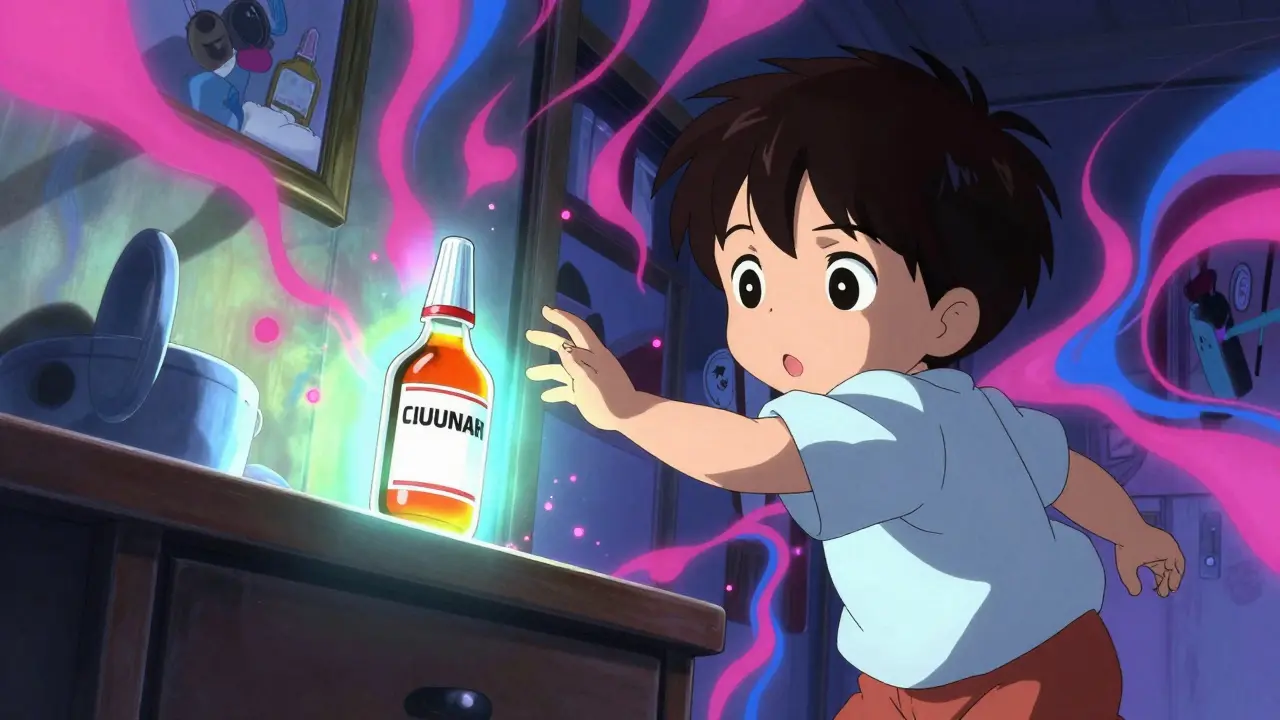
It happens in a heartbeat. One minute your toddler is playing with blocks, the next they’ve found that colorful bottle of cough syrup on the nightstand. Accidental pediatric medication overdose is a leading cause of emergency room visits for children under five years old. It’s not just about opioids; it’s about the everyday medicines we keep around-pain relievers, allergy meds, and cold remedies. The good news? Most of these tragedies are preventable. Understanding how to store, dose, and respond to accidental exposures can save your child’s life.
The Reality of Childhood Medication Exposures
We often think of our homes as safe havens, but for curious toddlers, they are treasure troves of potential hazards. According to data from the Centers for Disease Control and Prevention (CDC), emergency department visits for unsupervised medication exposures peaked at 76,000 in 2010. While numbers have fluctuated, children under five remain the highest-risk group. Why? Because at this age, exploration means touching, tasting, and swallowing. They don’t understand danger; they only see bright colors and interesting shapes.
The PROTECT Initiative is a public-private partnership launched by the CDC in 2008 to reduce pediatric medication overdoses. This coalition includes pharmaceutical manufacturers, packaging companies, and healthcare experts. Their goal is simple: stop kids from getting into meds and stop parents from making dosing errors. Despite their efforts, gaps remain. For instance, while child-resistant caps help, they aren’t foolproof. Studies show that 10% of children can open them by age 42 months. That’s why relying solely on packaging is risky.
Prevention Strategy 1: Smart Storage Practices
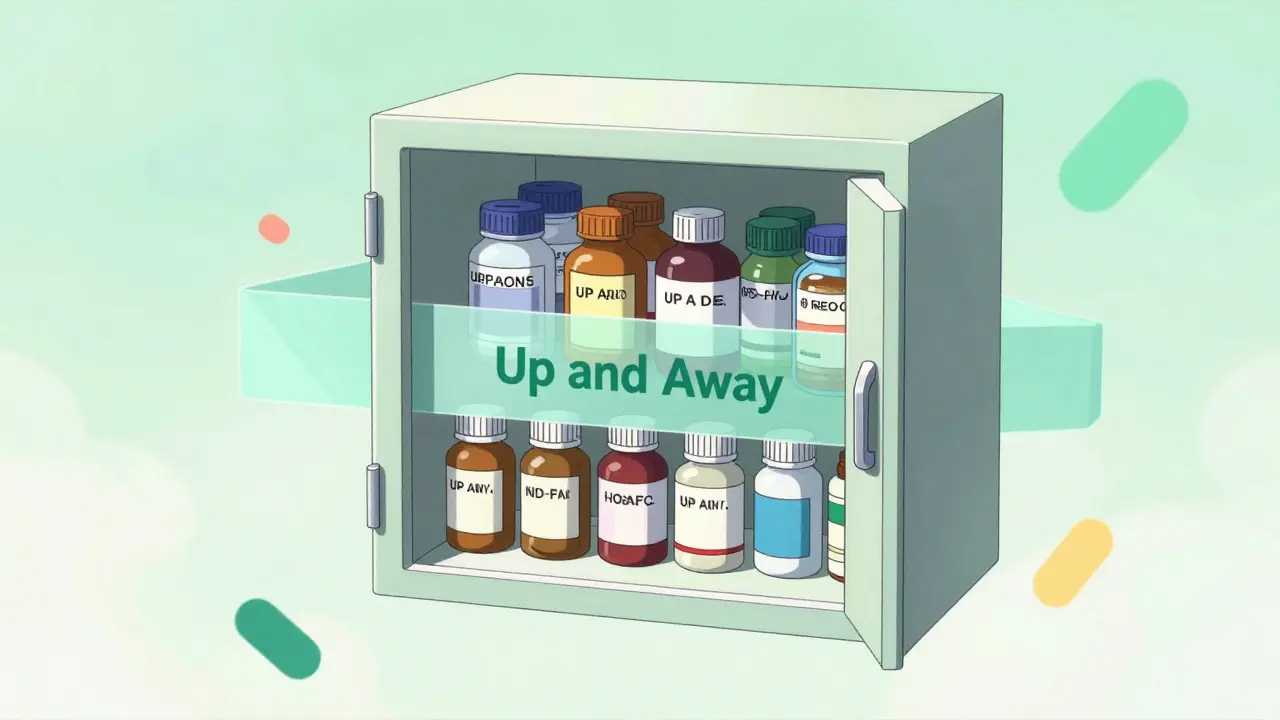
Where you put your medicine matters more than you might think. The PROTECT Initiative promotes the "Up and Away" campaign. This isn’t just a slogan; it’s a survival strategy. "Up" means storing medications at least four feet off the ground. "Away" means keeping them out of sight, ideally in locked cabinets. Leaving pills on a nightstand or counter because "I’ll take them in five minutes" is how accidents happen. A Reddit parent shared a scary story: their two-year-old accessed blood pressure meds left on a nightstand after a doctor’s visit. The lesson? Always return meds to secure storage immediately after use.
- Locked Cabinets: Use a lockbox or cabinet with a key combination. Only 32% of households currently do this consistently.
- Original Containers: Never transfer meds to unlabeled jars. Keep the original label with dosage instructions intact.
- Height Matters: Shelves should be high enough that even if a child climbs furniture, they can’t reach.
Prevention Strategy 2: Dosing Accuracy and Tools
If storage prevents access, accurate dosing prevents error when medicine is necessary. Liquid medications are tricky. In 2022, 78.3% of medication errors involved dosing mistakes with liquids. The biggest culprit? Kitchen spoons. A teaspoon in your drawer is not the same as a medical teaspoon. Confusion between infant and children’s concentrations of acetaminophen caused 42.6% of dosing errors in recent studies.
To combat this, the CARES Act mandated standardized milliliter (mL) labeling on all pediatric liquid medications. By 2022, 95% of manufacturers complied. But here’s the catch: you must use the dosing device that comes with the medicine. If you lose it, buy a new oral syringe or dosing cup from the pharmacy. Do not guess. Research shows 40% of parents make at least one dosing error when administering liquid meds. Check the label every time. Measure carefully. And never mix up concentrations.
| Dosing Method | Accuracy Level | Risk Factor |
|---|---|---|
| Kitchen Teaspoon | Low | High variance in volume; leads to over/under-dosing |
| Manufacturer Cup | Medium | Better than spoons, but meniscus reading errors occur |
| Oral Syringe (mL marked) | High | Most precise; recommended by AAP and CDC |
Prevention Strategy 3: Education and Disposal
Education is the third pillar of the PROTECT Initiative. Parents need to know that "child-resistant" does not mean "child-proof." It means harder to open, not impossible. Furthermore, unused medications are dangerous clutter. Old antibiotics, expired painkillers, and leftover prescription opioids should never stay in your home. The American Academy of Pediatrics (AAP) emphasizes safe disposal. Use take-back programs at pharmacies or law enforcement agencies. If those aren’t available, follow FDA disposal guidelines: mix meds with unpalatable substances like coffee grounds or cat litter, seal in a bag, and throw in the trash.
Dr. Mehul Raval, a pediatric surgery expert, notes that parents must understand safe disposal is critical to preventing tragedy. With the rise of opioid prescriptions, even small amounts left over can be lethal if ingested by a child. Co-prescribing naloxone is an opioid overdose reversal drug now recommended alongside opioid prescriptions for children. has become standard practice in many regions, ensuring families have a rescue tool on hand.
Response Plan: What to Do in an Emergency
Despite best efforts, accidents happen. If you suspect your child has ingested medication, stay calm but act fast. Time is tissue, especially with drugs like acetaminophen or diphenhydramine, which can cause liver damage or severe sedation.
- Call Poison Control: Dial 1-800-222-1222 in the US. They provide free, expert advice 24/7. Have the medication bottle ready.
- Assess Symptoms: Look for signs of overdose: extreme sleepiness, difficulty breathing, vomiting, seizures, or unusual behavior. For opioids, look for pinpoint pupils and slow breathing.
- Administer Naloxone if Applicable: If you have naloxone and suspect an opioid overdose, use it immediately. Intranasal forms are easy to administer. It buys time until EMS arrives.
- Go to the ER: If symptoms are severe or poison control advises it, go to the nearest emergency department. Bring the medication container.
Don’t induce vomiting unless instructed by a professional. It can cause aspiration or further injury. Remember, even if your child seems fine, some toxins take hours to manifest. Medical evaluation is crucial.
Future Directions and Community Role
The fight against pediatric overdose is evolving. The FDA plans to mandate flow restrictors on all liquid opioid formulations by 2025. These devices limit the amount of liquid that can be poured out at once, reducing the risk of large ingestions. Meanwhile, smart packaging technologies like AdhereIT’s adherence systems are emerging, though cost remains a barrier for low-income families.
Community involvement is key. Schools, daycare centers, and pediatricians play a role in reinforcing safety messages. The AAP’s 2024 guideline for opioid prescribing mandates counseling on overdose recognition during well-child visits. Yet, only 63% of pediatricians currently discuss safe storage consistently. We need better communication between providers and parents.
As caregivers, we hold the first line of defense. By adopting strict storage habits, using proper dosing tools, and knowing how to respond, we can protect our children. The PROTECT Initiative aims to reduce ED visits by 10% by 2030. Let’s help them get there.
What should I do if my child swallows a pill?
Immediately call Poison Control at 1-800-222-1222. Have the medication bottle handy to provide details about the drug and amount ingested. Follow their instructions precisely. Do not induce vomiting unless told to do so. If the child is unconscious, having trouble breathing, or seizing, call 911 immediately.
Are child-resistant caps enough to keep kids safe?
No. Child-resistant caps are designed to be difficult for young children to open, but they are not child-proof. Studies show that 10% of children can open them by age 42 months. Always store medications in locked cabinets or high, out-of-sight locations as part of a layered safety approach.
How do I dispose of unused medications safely?
The safest method is using a drug take-back program at local pharmacies or police stations. If unavailable, mix the medications with an unpalatable substance like coffee grounds or cat litter, place them in a sealed plastic bag, and discard in the household trash. Remove personal information from labels before disposing.
Why is using kitchen spoons for liquid medicine dangerous?
Kitchen spoons vary significantly in size and shape, leading to inaccurate dosing. A tablespoon from one set may hold more or less liquid than another. This inconsistency can result in under-dosing (ineffective treatment) or over-dosing (toxicity). Always use the calibrated dosing device provided with the medication or a pharmacy-grade oral syringe marked in milliliters (mL).
When should I use naloxone for a child?
Use naloxone if you suspect an opioid overdose, characterized by extreme drowsiness, slowed or stopped breathing, and pinpoint pupils. Administer it immediately according to the product instructions, typically via intranasal spray. Call 911 right after administration, as naloxone’s effects may wear off before the opioid does.
Naresh Chandra
May 28, 2026 AT 08:21I really appreciate this post!! It is so important for parents to know these things!!! My heart sinks when I hear about kids getting hurt by meds they shouldn't have touched!!! We need to be more careful!!! Storage is key!!!
Cyburg Adeoye
May 29, 2026 AT 03:35Let's embrace the PROTECT Initiative with open arms! The synergistic approach of public-private partnerships yields optimal risk mitigation outcomes. By leveraging standardized milliliter labeling, we can significantly reduce dosing variance. It is crucial that we foster an inclusive environment where caregivers feel empowered to utilize proper pharmacological administration tools. Together, we can create a safer ecosystem for our youngest demographic!
Joseph Teichman
May 31, 2026 AT 03:04good info here. just keep meds high up. dont use spoons. get a syringe from pharmacy. simple as that.
Ryan Jones
May 31, 2026 AT 20:30you think locked cabinets save you? big pharma wants your kid sick so they sell more antidotes. the caps are designed to fail eventually. its all a conspiracy to control the population through pediatric dependency. wake up sheeple.
Lisa Russo
June 2, 2026 AT 13:14actually most people are fine without locks. it is only a problem if you are stupid. i never lock my meds and my kids are fine. stop being paranoid. common sense works better than keys.
Gareth Tyler
June 3, 2026 AT 21:11interesting read. do you have stats on how many accidents happen in bathrooms vs bedrooms? curious about the location data.
Angela Niculescu
June 5, 2026 AT 02:32i disagree with the disposal method. coffee grounds are messy. why not just flush them? the epa says some drugs should be flushed. this article ignores that nuance completely. it is too black and white for my liking.
Victoria Mangiapane
June 5, 2026 AT 04:04boring. another scare tactic article. nobody reads this stuff. just buy a safe if you are worried. lazy parenting is the real issue not the bottle caps. whatever.
Nivetha Narayanan
June 5, 2026 AT 12:25hey guys! love this info! i always forget to check the expiration dates on old antibiotics. thanks for reminding us to toss them out properly! lets keep our lil ones safe! yay! :)
Frank Arlyss
June 6, 2026 AT 23:12so what kind of pills does your wife take? i bet she leaves them out. you should check her nightstand right now. i want to know if you are hiding anything from me or your family. tell me everything.
Tim Reynolds
June 8, 2026 AT 20:45The government mandates are a trap!! They want to track what you buy!! The FDA is compromised!! You must dispose of meds yourself to avoid surveillance!! Do not trust the take-back programs!!
Groman Neta
June 9, 2026 AT 10:14This article is poorly structured. It fails to address the socioeconomic disparities in access to child-resistant packaging. Furthermore, the reliance on parental vigilance is statistically naive. One would expect a higher level of critical analysis from a source citing the CDC. Disappointing.
Christopher Laver
June 10, 2026 AT 14:18meh. seen this before.
Russell Russell
June 12, 2026 AT 07:57We must reflect on the deeper meaning of safety. It is not just about locks; it is about mindfulness. When we store medicine, we are storing potential harm. Let us be intentional. Let us be aware. The journey to a safe home begins within the mind of the caregiver. Embrace the responsibility with joy and purpose.
Grace Gayle McMullen
June 12, 2026 AT 11:53as a nurse i see this all the time. ppl use kitchen spoons and wonder why the dose is wrong. please just buy the syringe. its like 2 bucks at any pharmacy. also flushing is okay for specific opioids but check the list first. dont just guess. casual tip but seriously stop using tea spoons.