
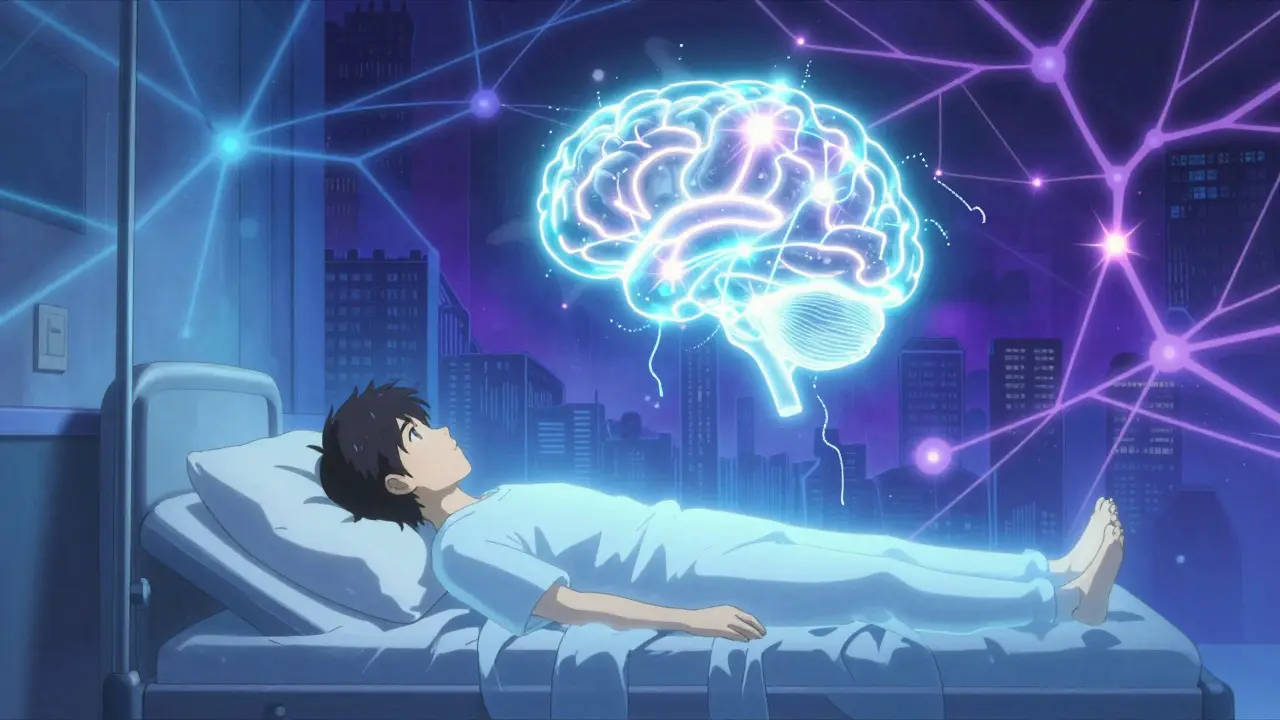
Imagine waking up in a hospital bed, unable to speak clearly or move your right arm. For millions of people, this is the stark reality after a stroke, which is a medical event where blood flow to part of the brain is interrupted, causing tissue damage. The immediate crisis passes, but the real work begins only then. Many survivors feel lost, wondering if they will ever walk again, cook a meal, or hold a conversation without frustration. The good news? The brain is remarkably resilient. It can rewire itself. This process, known as neuroplasticity, is the brain's ability to form new neural connections and reorganize functions after injury. Understanding how this works-and how to harness it through proper rehabilitation, which is a structured therapeutic program designed to restore function and independence after neurological injury.-is the key to reclaiming your life.
The Science of Healing: How Neuroplasticity Drives Recovery
You might think that once brain cells die, the damage is permanent. That’s not entirely true. While dead neurons don’t regenerate, the surviving ones can take over their jobs. Think of your brain like a city with roads. If one highway (neural pathway) is blocked by an accident (stroke), traffic stops. But if you build new side roads and train drivers to use them, traffic flows again. This is neuroplasticity in action.
Research published in the PMC Comprehensive Review (2023) shows that task-specific training creates measurable changes in motor and cognitive brain regions. Functional MRI studies reveal cortical reorganization within just 2-4 weeks of starting targeted therapy. The earlier you start moving and practicing, the faster these new pathways form. Dr. Zacharia Isaac from Brigham and Women’s Hospital notes that while natural healing occurs over months or years, active rehabilitation significantly accelerates this process and improves the completeness of recovery.
There are three distinct phases of recovery:
- Recovery/Natural Healing (Days to Weeks): Swelling reduces, and some spontaneous movement may return. This is the time for passive care and early mobilization.
- Retraining (Weeks to Months): You actively learn skills through repetition and therapist cues. This is where neuroplasticity shines brightest.
- Adaptation (Months to Years): You focus on coping with any permanent limitations and finding new ways to enjoy life.
Timing is everything. The Chartered Society of Physiotherapy found that high-intensity exercises started within 24 hours post-stroke improve functional outcomes by 35% compared to delayed intervention. Don’t wait for “perfect” health to begin; start as soon as you are medically stable.
The Multidisciplinary Team: Who Helps You Heal?
Stroke affects more than just your limbs. It impacts communication, swallowing, mood, and daily tasks. No single therapist can handle all this alone. That’s why the American Stroke Association guidelines emphasize a coordinated team approach. Studies show facilities with structured interdisciplinary meetings see 22% better functional outcomes.
| Professional | Primary Focus | Example Interventions |
|---|---|---|
| Physical Therapist (PT) | Mobility, balance, strength | Gait training, spasticity management, fall prevention |
| Occupational Therapist (OT) | Daily living activities (ADLs) | Cooking adaptations, dressing techniques, home safety |
| Speech-Language Pathologist (SLP) | Communication, swallowing | Aphasia therapy, dysphagia exercises, cognitive rehab |
| Physiatrist | Medical oversight of rehab | Pain management, medication adjustment, goal setting |
| Psychologist | Mental health adjustment | Treating post-stroke depression, coping strategies |
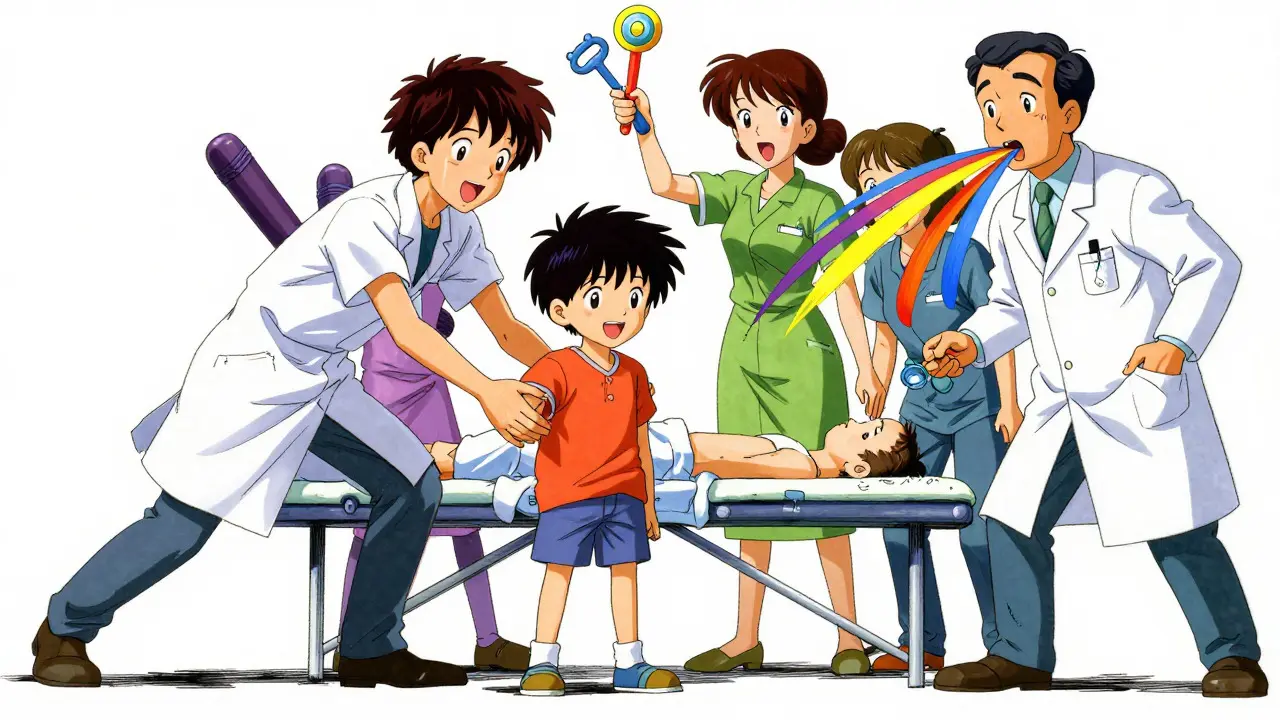
Your PT helps you walk again. Your OT teaches you how to button a shirt with one hand. Your SLP helps you find words or swallow safely. These professionals don’t work in silos. They share notes, adjust goals together, and ensure your treatment plan addresses every aspect of your well-being. Family members are also crucial-they increase rehabilitation adherence by 37% when involved actively.
Core Therapies: Physical, Occupational, and Speech
Each type of therapy uses specific evidence-based techniques. Let’s break down what happens in each session.
Physical Therapy: Regaining Movement
Spasticity (muscle stiffness) affects 65-78% of stroke survivors. Range-of-motion therapy prevents contractures, which occur in 30-50% of untreated cases. Motor-skill exercises aim to improve gait speed, with intensive therapy showing 40-60% improvement after 12 weeks. Constraint-induced therapy (CIT) is particularly powerful: the unaffected limb is restrained for 90% of waking hours, forcing the brain to use the affected side. Mayo Clinic studies show CIT yields 30% greater motor function improvement than conventional therapy.
Occupational Therapy: Reclaiming Independence
OT focuses on practical skills. Therapists use visual cues during transfers (e.g., pointing to wheelchair brakes) to build automaticity. They set small, realistic goals-like moving fingers 5 degrees more each week-to maintain motivation. Environmental modifications, such as installing bathroom grab bars or adapting kitchen tools, help you live safely at home.
Speech-Language Therapy: Finding Your Voice
Aphasia (language impairment) and dysphagia (swallowing difficulties) are common. SLPs use repetitive language drills and swallowing exercises. Cognitive rehabilitation helps with memory and attention deficits. Early intervention prevents aspiration pneumonia, a serious risk for those with swallowing issues.
Technology-Assisted Interventions: The Future Is Now
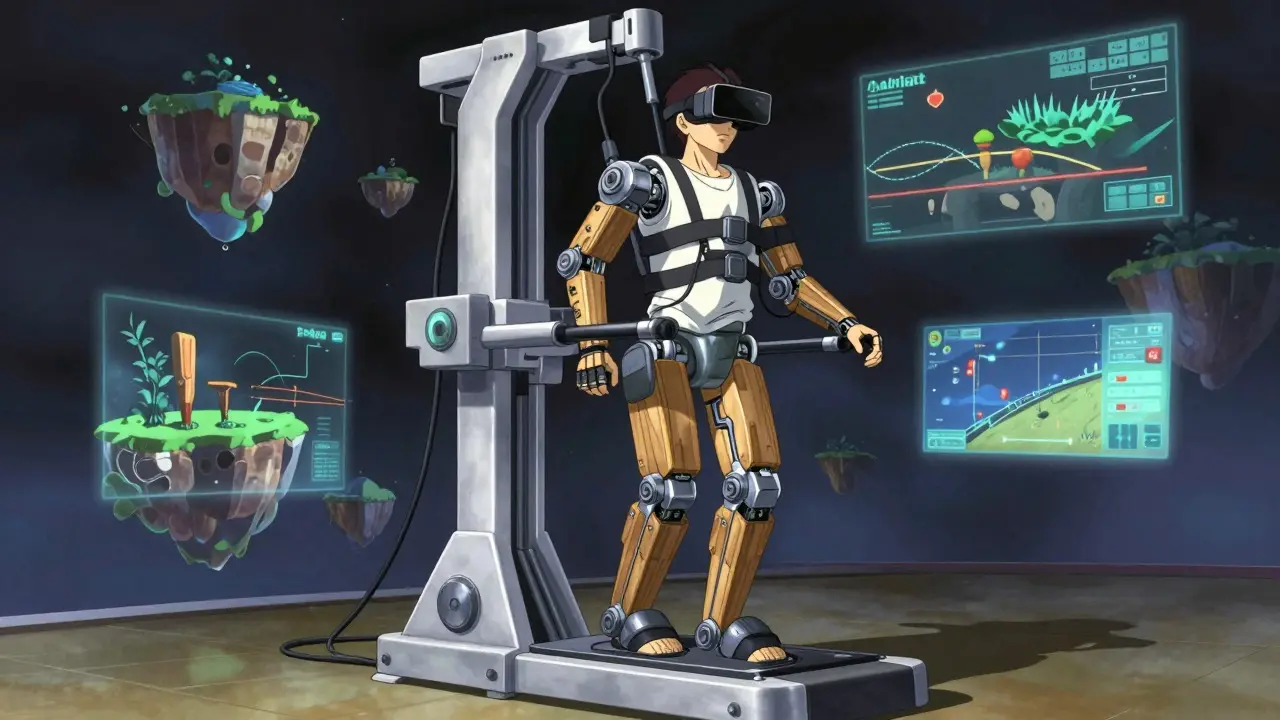
Traditional therapy is effective, but technology amplifies results. Robotic devices like Lokomat provide repetitive gait training, showing 50% greater walking speed improvement than conventional methods. Functional electrical stimulation (FES) applies targeted currents to weakened muscles, producing 25-45% strength gains in wrist and hand function. Virtual reality systems engage patients in simulated environments, improving upper extremity function by 28% compared to standard care. Wireless activity monitors encourage daily movement, increasing step counts by 32%. These tools make therapy more engaging and precise.
Intensity and Timing: How Much Is Enough?
More isn’t always better, but too little is definitely worse. The American Stroke Association recommends three hours of therapy five days per week for medically stable patients in inpatient facilities. Balance training is critical for the 60% of survivors who experience balance issues. However, fatigue is real. Patients must balance rest (30-40% of daily time), therapeutic exercise (40-50%), and social interaction (20-30%). Pushing too hard leads to burnout; resting too much stalls progress. Listen to your body and your therapists.
Success Factors: What Determines Your Outcome?
Rehabilitation success depends on nine factors identified by the Merck Manuals: general medical condition, range of motion, muscle strength, bowel/bladder function, pre-injury ability, social situation, learning ability, motivation, and coping skills. Motivation accounts for up to 40% of variance in outcomes. If you believe you can recover, you’re more likely to put in the effort. Surround yourself with support, celebrate small wins, and stay consistent.
Next Steps and Troubleshooting
If you’re just starting rehab, ask your team about early mobilization protocols. If you’re stuck in a plateau, discuss constraint-induced therapy or robotic assistance. If depression sets in-affecting 30-35% of survivors-seek psychological support immediately. Community-based programs and telerehabilitation offer ongoing support after discharge, with telerehab showing 85% equivalence to in-person care for many interventions.
How long does stroke rehabilitation last?
Rehabilitation typically lasts several months, with significant gains occurring in the first 3-6 months. However, recovery can continue for years, especially with consistent practice and adaptation strategies.
Can I do stroke rehabilitation at home?
Yes, home-based rehabilitation is effective, especially when guided by therapists via telerehabilitation. Community programs also offer support. Consistency and family involvement are key to success at home.
What is constraint-induced therapy?
Constraint-induced therapy involves restraining the unaffected limb to force use of the affected limb. It’s highly effective for upper extremity recovery, showing 30% greater improvement than conventional therapy.
Is robotic therapy better than traditional therapy?
Robotic therapy complements traditional methods by providing high-repetition, precise movements. Studies show it can improve walking speed by 50% more than conventional therapy alone, making it a valuable addition to comprehensive care.
How important is motivation in stroke recovery?
Motivation is critical, accounting for up to 40% of outcome variance. Setting small, achievable goals and celebrating progress helps maintain drive throughout the long recovery journey.