
Rifampin Birth Control Risk Calculator
Contraceptive Risk Assessment
Risk Assessment
When you're taking rifampin for tuberculosis or a stubborn staph infection, the last thing you should be worrying about is getting pregnant - but if you're on the pill, that’s exactly what could happen. Rifampin doesn’t just kill bacteria. It also shuts down your birth control. This isn’t a myth, a rumor, or a vague warning. It’s a well-documented, clinically proven interaction that has led to real, unintended pregnancies. And yet, many people - including some doctors - still don’t know how serious it is.
How Rifampin Breaks Birth Control
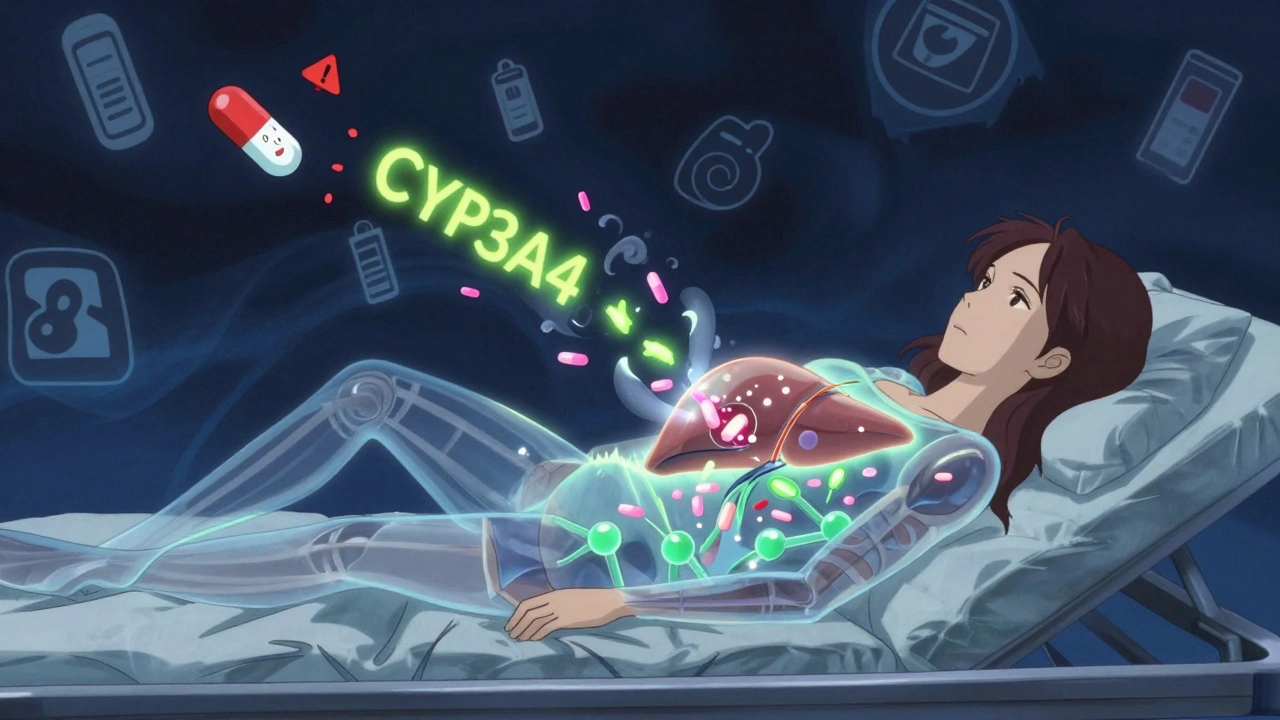
Rifampin doesn’t interfere with birth control because it makes the pill less effective in your stomach or gut. It doesn’t cause vomiting or diarrhea that might flush it out. Instead, it works deep inside your liver. Rifampin turns on a set of enzymes - specifically CYP3A4 - that are designed to break down toxins. But here’s the catch: your body uses those same enzymes to process the hormones in your pill - estrogen and progestin. Once rifampin kicks in, your liver starts chewing up those hormones like they’re garbage. Studies show it can slash the amount of estrogen in your bloodstream by up to 67%. Progestin levels drop by nearly half. That’s not a small tweak. That’s enough to stop your birth control from working. You might not even notice. No cramps, no spotting - just ovulation happening when you thought you were protected. This isn’t a rare fluke. The first cases of pregnancy in women on rifampin were reported in the early 1970s. Since then, dozens of studies have confirmed it. The American Academy of Family Physicians, the CDC, and the World Health Organization all agree: rifampin is the only antibiotic with solid, repeated evidence of causing contraceptive failure.Why Other Antibiotics Don’t Do This
You’ve probably heard stories - or even warnings - about amoxicillin, doxycycline, or azithromycin messing with birth control. That’s mostly noise. Between 1970 and 1999, the UK’s Committee on Safety of Medicines received 117 reports of contraceptive failure linked to penicillin or tetracycline antibiotics. But when researchers ran controlled studies, they found no real drop in hormone levels. No increase in ovulation. No rise in pregnancy rates. The same goes for erythromycin, clindamycin, and ciprofloxacin. None of them trigger the same enzyme response as rifampin. That’s why guidelines from the American College of Obstetricians and Gynecologists say clearly: non-rifamycin antibiotics do not reduce oral contraceptive effectiveness. So why do so many people still think all antibiotics are risky? Because the myth stuck. Doctors used to warn everyone. Patients got confused. Pharmacies printed blanket warnings on every antibiotic bottle. But science has moved on. Only rifampin - and its cousin rifabutin - are proven culprits.Rifabutin: The Lesser Known Risk
Rifabutin is a close relative of rifampin, often used for people with HIV who need to prevent MAC (Mycobacterium avium complex). It’s weaker. It doesn’t induce liver enzymes as strongly. Still, it’s not safe. Studies show rifabutin at 300mg daily can reduce contraceptive hormone levels by 20-30%. That’s less than rifampin, but enough to be dangerous. The CDC still lists combined hormonal birth control as a category 4 risk - meaning it’s not safe - when used with rifabutin. So if you’re on rifabutin, don’t assume you’re in the clear. You’re not. There’s no safe dose of rifabutin if you’re relying on the pill. No exceptions. No "maybe it’s okay if I’m careful." If you’re on rifabutin, you need backup contraception.
How Long Does the Risk Last?
Here’s where most people get it wrong. Rifampin’s half-life is only 3-4 hours. That means it’s out of your system in a day or two. But the enzyme induction? That sticks around. Your liver doesn’t just turn off the enzyme production the moment you stop taking the drug. It keeps making those enzymes for weeks. That’s why the CDC and other guidelines say: use backup contraception for the entire time you’re on rifampin, plus 28 days after you stop. That’s not a suggestion. It’s a requirement. If you stop rifampin on Day 30 and go off backup on Day 28, you’re still at risk. You could ovulate without knowing it. And if you’re trying to avoid pregnancy, that’s a gamble you can’t afford.What Backup Contraception Works?
You can’t just switch to a different pill. Other hormonal methods - patches, rings, implants - are also affected. The hormones in those systems are processed the same way. So what’s safe?- Copper IUD: This is the gold standard. It’s hormone-free, lasts up to 10 years, and works immediately. No interaction with rifampin. No guesswork.
- Condoms: Effective if used correctly every time. Not as reliable as an IUD, but better than nothing. Use them with spermicide for extra protection.
- Progestin-only implants (like Nexplanon): Early data from a 2023 study of 47 women showed no pregnancies during rifampin treatment. But the sample size was small. Experts still recommend using it with backup until more data comes in.
- Emergency contraception: If you had unprotected sex and aren’t sure about your backup, plan B or ella can help - but don’t rely on it as a regular solution.
What About Newer Birth Control Options?
Manufacturers now test every new hormonal contraceptive against rifampin before approval. The FDA and EMA require it. That’s why newer pills sometimes have slightly higher hormone doses - to try to outpace the enzyme boost. But even then, it’s not guaranteed. There’s no "rifampin-proof" birth control pill on the market yet. And even if there were, the risk would still be too high to rely on it alone. The safest path remains non-hormonal methods.
Why This Matters Beyond Pregnancy
This isn’t just about avoiding an unplanned baby. For women with tuberculosis - especially in places like sub-Saharan Africa or Southeast Asia - rifampin is life-saving. But if you’re not offered proper contraception advice, you’re being put in an impossible position: take the drug that saves your life, or protect your fertility. A 2022 study in the Journal of Women’s Health found that 63% of women prescribed rifampin received no clear guidance on birth control. That’s not a mistake. It’s a systemic failure. Many doctors still think all antibiotics are risky. Others assume the patient knows. Some don’t even ask if they’re on birth control. You have to speak up. If you’re prescribed rifampin, ask: "Will this affect my birth control? What do I need to use instead?" If they say "probably not," push back. Cite the CDC guidelines. Bring the research. Your life depends on it.What You Should Do Right Now
If you’re taking rifampin or about to start:- Stop relying on the pill, patch, or ring - immediately.
- Use a copper IUD or condoms for the full duration of treatment, plus 28 days after.
- Don’t assume your doctor knows this. Ask directly.
- If you’re on rifabutin, treat it the same way.
- If you’ve had unprotected sex while on rifampin, take emergency contraception as soon as possible.
The Bottom Line
Rifampin is one of the most powerful antibiotics we have. But it’s also one of the most dangerous for women on hormonal birth control. The science is clear. The risks are real. And the solution is simple: use a non-hormonal backup. Every time. For the full 28 days after the last dose. This isn’t about being paranoid. It’s about being informed. You deserve to know exactly what your medication is doing to your body - not just what it’s doing to your infection.Does rifampin affect all types of birth control?
No. Rifampin only affects hormonal birth control - pills, patches, rings, and implants. It does not affect non-hormonal methods like the copper IUD or condoms. Even progestin-only pills (mini-pills) are affected because they still rely on hormones that rifampin breaks down. Only hormone-free options are safe.
How long after stopping rifampin am I still at risk?
You’re at risk for up to 28 days after your last dose. Rifampin triggers enzyme production in your liver that continues long after the drug is gone. Stopping birth control too soon could lead to ovulation and pregnancy. Wait the full 28 days before relying on hormonal contraception again.
Can I switch to a higher-dose birth control pill instead of using backup?
No. Even pills with higher hormone doses are not proven to be safe with rifampin. Studies show hormone levels still drop significantly. The risk of pregnancy remains too high. Experts and guidelines strongly recommend non-hormonal backup - not a stronger pill.
Is rifabutin as dangerous as rifampin for birth control?
Rifabutin is less potent, but still risky. It reduces hormone levels by 20-30%, which is enough to cause ovulation and pregnancy. The CDC classifies it as a category 4 risk with hormonal birth control. Always use backup contraception with rifabutin - don’t assume it’s safe just because it’s weaker.
Why do some doctors say all antibiotics affect birth control?
It’s an old myth that started decades ago when early case reports linked antibiotics and pregnancy. Later studies showed only rifampin and rifabutin have real, proven interactions. But the warning stuck. Many doctors still give blanket advice out of caution - or because they haven’t updated their knowledge. Always ask for evidence, not assumptions.
Can I use emergency contraception if I had unprotected sex while on rifampin?
Yes. If you had unprotected sex while on rifampin or within 28 days of stopping, emergency contraception (like Plan B or ella) is a good option. It’s not a replacement for regular backup, but it can prevent pregnancy after a single incident. Take it as soon as possible - effectiveness drops after 72 hours.
Are there any new birth control methods that work with rifampin?
Research is ongoing. A 2023 study showed no pregnancies in 47 women using Nexplanon (etonogestrel implant) while on rifampin, but the group was too small to be conclusive. Until larger studies confirm safety, experts still recommend copper IUDs or condoms as the only reliable options.
Elizabeth Crutchfield
December 4, 2025 AT 20:39i just found out my doc prescribed me rifampin and i was on the pill… i didnt even think to ask. now im panicking. why doesnt anyone tell you this stuff??
Chad Handy
December 5, 2025 AT 18:24Let me break this down for you people who think this is just some internet myth. Rifampin is a potent cytochrome P450 3A4 inducer. That means it accelerates the hepatic metabolism of ethinyl estradiol and norethindrone. The result? Subtherapeutic serum concentrations. This isn't anecdotal. This is pharmacokinetic reality. You're not just "risking" pregnancy-you're statistically guaranteeing ovulation if you rely on hormonal contraception. The CDC guidelines exist for a reason. Ignoring them isn't bravery. It's ignorance wrapped in convenience.
Joe Lam
December 7, 2025 AT 13:25Wow. So the entire medical establishment is just incompetent? Let me guess-your next post will be about how vaccines cause autism and doctors are paid by Big Pharma. This is the kind of fearmongering that makes people distrust science. If you’re that scared of birth control failing, maybe you shouldn’t be on it at all. There’s a reason we have IUDs and condoms-they’re not just for people who can’t trust their own hormones.
Jenny Rogers
December 7, 2025 AT 22:24It is profoundly disconcerting that the dissemination of medical knowledge remains so egregiously fragmented. The persistence of the myth that all antibiotics interfere with hormonal contraception is not merely an oversight-it is a systemic failure of patient education. One must question the ethical imperative of physicians who, out of habit or negligence, fail to elucidate the precise pharmacological mechanisms at play. The burden of knowledge should not rest solely upon the patient. It is incumbent upon the medical community to provide unequivocal, evidence-based guidance-not vague warnings and outdated pamphlets.
michael booth
December 8, 2025 AT 09:57Thanks for writing this. I'm a nurse and I've seen too many patients get caught off guard by this. Seriously, if you're on rifampin, just get the copper IUD. It's one appointment and you're set for 10 years. No more wondering. No more panic. No more "oh crap, I missed my pill" moments. Just peace of mind. And yes, even if you're on rifabutin-same rules apply. Don't gamble with your body.
Pavan Kankala
December 8, 2025 AT 23:22Who really benefits from this? Pharma companies. They know people will panic and buy IUDs instead of pills. They make more money. They don't care if you're safe-they care about profit. The "28-day rule"? Total scare tactic. I bet if you looked at the real data, most pregnancies happened because people forgot to take the pill, not because of rifampin. This whole thing feels like a profit-driven distraction.
Martyn Stuart
December 10, 2025 AT 13:40Important clarification: Rifabutin at 150mg daily may have a lesser effect-but at 300mg, the induction is significant enough to warrant the same precautions as rifampin. The 2023 Nexplanon study (n=47) is promising, but underpowered. Until a multicenter RCT confirms safety, the gold standard remains non-hormonal contraception. Also: emergency contraception is not a substitute. It’s a backup for a backup. Please, for the love of all that’s medical-don’t confuse "sometimes works" with "safe."
Karl Barrett
December 11, 2025 AT 09:07Let’s contextualize this within the broader framework of pharmacodynamic displacement. The CYP3A4 enzyme induction cascade triggered by rifampin isn’t just about contraceptive failure-it’s a microcosm of how our bodies metabolize xenobiotics. The liver doesn’t discriminate between estrogen and environmental toxins. It sees both as substrates. What’s alarming isn’t the mechanism-it’s the societal blindness to it. We optimize for drug efficacy but ignore endocrine disruption. We treat infections aggressively but neglect reproductive autonomy. This isn’t just a drug interaction. It’s a failure of holistic care.
Jake Deeds
December 11, 2025 AT 22:59So let me get this straight-after all this trauma, all this fear, all this research… the solution is still just condoms and a metal rod shoved into my uterus? I’m supposed to trust a device that’s been around since the 1960s while my doctor casually prescribes me a drug that turns my body against itself? This isn’t medicine. This is a warzone with a stethoscope. And I’m supposed to be grateful someone finally told me the truth? I’m not grateful. I’m furious.