

You finally feel like yourself again. The heavy fog has lifted, your energy is returning, and the world looks a little brighter. It’s easy to think that because you’re feeling better now, the battle is over. But here is the hard truth about major depressive disorder (MDD): it is rarely a one-time event.
Without a solid plan to keep those gains, the risk of falling back into a depressive episode is high-between 50% and 80% within just two to five years. This isn't about failing; it's about biology and psychology working against you if left unchecked. Relapse prevention isn't just about staying on medication until you feel 'fine.' It requires a strategic, long-term approach combining medical maintenance and specific lifestyle shifts designed to protect your mental health for the long haul.
The Reality of Recurrence: Why Stopping Treatment Too Soon Fails
We often treat depression like a broken leg. You set it, it heals, and you walk away. But depression behaves more like high blood pressure or diabetes. It’s a chronic condition that needs ongoing management. Research published in JAMA Psychiatry by Fava et al. challenged the old idea that long-term drugs were the only way to stay well, but they confirmed one thing: doing nothing after remission is dangerous.
When patients stop treatment immediately after symptoms fade, they enter a vulnerable window. The brain hasn't fully rewired itself yet, and residual symptoms-like trouble sleeping or low motivation-can act as triggers for a full-blown relapse. A massive meta-analysis from the National Institutes of Health (NIH), covering 72 trials with over 14,000 subjects, showed that without maintenance therapy, recurrence rates skyrocket. Even with optimal treatment, about 40-50% of people still face a recurrence within two years. That statistic is sobering, but it also highlights why having a backup plan is non-negotiable.
Maintenance Pharmacotherapy: The Biological Shield
For many, medication is the foundation of relapse prevention. Antidepressants don’t just lift mood during an active episode; they stabilize the neurochemical environment to prevent new episodes from starting. The NIH data shows that antidepressants have a robust efficacy in preventing relapse, with response rates nearly doubling compared to placebos (RR=1.90-2.03).
If you are considering staying on medication, here is what the science says about duration:
- First Episode: Typically, maintenance therapy lasts 6-12 months after you feel better.
- Recurrent Depression (2+ Episodes): Guidelines suggest continuing medication for 2-5 years post-remission.
- Chronic/Severe History (3+ Episodes): Many experts recommend indefinite maintenance, potentially for life, similar to managing hypertension.
In landmark studies, such as the 3-year trial by Frank et al., patients taking imipramine hydrochloride at 200 mg/day showed the strongest protection against relapse. However, medication isn't perfect. Side effects affect 30-40% of users, leading to non-adherence. If you struggle with side effects, talk to your doctor about switching classes of antidepressants or adjusting dosages rather than quitting cold turkey. The goal is finding a regimen you can tolerate long-term.
| Approach | Best For | Key Benefit | Potential Drawback |
|---|---|---|---|
| Antidepressant Medication | Patients with severe residual symptoms or biological history | Strongest statistical reduction in relapse risk (NNT=3.8) | Side effects (weight gain, sexual dysfunction) affecting adherence |
| Cognitive Behavioral Therapy (CBT) | Those who prefer non-drug options or have mild-moderate history | Teaches skills to manage negative thought patterns | Requires active participation and time commitment |
| Mindfulness-Based Cognitive Therapy (MBCT) | Patients with 3+ prior episodes prone to rumination | Reduces relapse risk by ~23-31% when added to usual care | Needs consistent daily practice to be effective |
The Power of Psychological Maintenance: CBT and MBCT
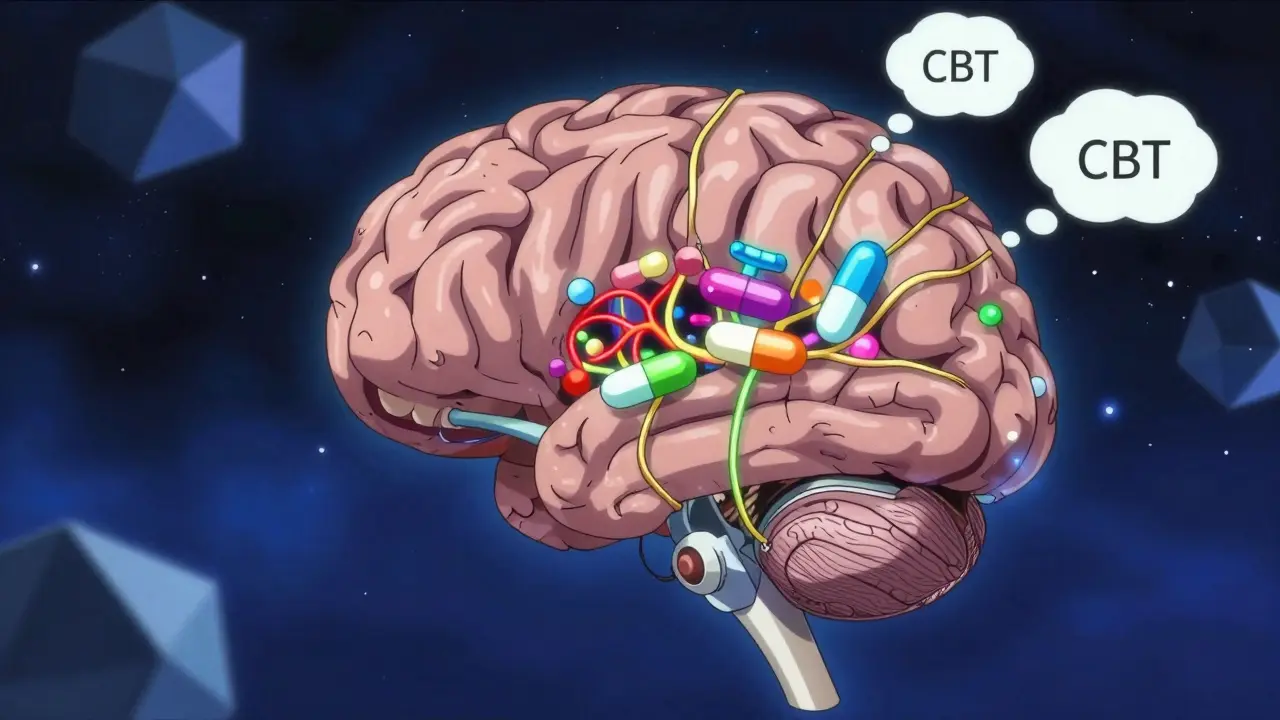
You don’t have to rely solely on pills. In fact, psychological interventions offer comparable benefits for many people, especially those worried about medication side effects. The 2023 Nature IPDMA study revealed that adding therapies like Cognitive Behavioral Therapy (CBT) or Mindfulness-Based Cognitive Therapy (MBCT) to standard care significantly cuts relapse risk.
Here is how these therapies work differently than acute treatment:
CBT focuses on identifying and changing distorted thought patterns. During a depressive episode, you might think, "I’m a failure." In maintenance CBT, you learn to catch that thought early, challenge its validity, and replace it with a balanced perspective before it spirals into sadness. Dr. Giovanni A. Fava noted that ameliorating residual symptoms through CBT stops them from turning into prodromes (early warning signs) of relapse.
MBCT combines cognitive therapy with mindfulness meditation. It teaches you to observe your thoughts and feelings without judging them or getting swept away by them. This is crucial for people who tend to ruminate-replaying past mistakes over and over. For patients with three or more previous episodes, MBCT is particularly powerful, reducing relapse risk by roughly 30% compared to control groups.
The catch? These aren't quick fixes. They require learning new skills. An 8-week group course followed by booster sessions is standard. You have to do the homework. But unlike medication, which works while you sleep, these skills stick with you even if you stop formal therapy later.

Lifestyle Factors: The Non-Negotiable Foundation
Medication and therapy handle the clinical side, but your daily habits dictate your baseline resilience. Think of lifestyle changes as the immune system for your brain. You can’t take a pill to fix a poor diet or lack of sleep, but neglecting these areas makes any other treatment less effective.
- Sleep Hygiene: Sleep disturbances are both a symptom and a trigger for depression. Aim for 7-9 hours of consistent sleep. Irregular circadian rhythms destabilize mood-regulating neurotransmitters like serotonin. If you wake up at 3 AM anxious, address it immediately-don't wait for it to become a week-long slump.
- Physical Activity: Exercise isn't just good for your body; it’s a potent antidepressant. Regular aerobic activity boosts Brain-Derived Neurotrophic Factor (BDNF), which helps repair neural connections damaged by stress. Aim for 150 minutes of moderate exercise per week. It doesn’t need to be a marathon; a brisk 30-minute walk five times a week counts.
- Social Connection: Isolation fuels depression. Maintain regular contact with supportive friends or family. Join support groups where others understand your journey. Social engagement releases oxytocin and reduces cortisol, the stress hormone.
- Substance Avoidance: Alcohol and recreational drugs may seem like coping mechanisms, but they are depressants. They disrupt sleep architecture and interfere with the effectiveness of antidepressants. Cutting back or eliminating alcohol is one of the most impactful steps you can take for relapse prevention.
Building Your Personalized Relapse Prevention Plan
There is no one-size-fits-all solution. Your plan should be built on shared decision-making with your healthcare provider, considering your history, preferences, and current symptoms. Here is a checklist to build your strategy:
- Identify Early Warning Signs: Write down the first subtle changes you notice before a major crash. Is it irritability? Loss of appetite? Withdrawing from hobbies? Knowing your unique triggers allows you to intervene early.
- Choose Your Primary Modality: Decide if you will continue medication, switch to psychotherapy, or use a combination. If you have had three or more episodes, consider keeping medication while adding MBCT for maximum protection.
- Schedule Booster Sessions: Don’t wait for a crisis to see your therapist. Schedule monthly or quarterly check-ins to review your progress and adjust strategies.
- Create a Crisis Protocol: Have a written plan for what to do if you start slipping. Who do you call? Do you increase medication dosage temporarily? Having this ready removes the paralysis of decision-making during a low point.
Remember, relapse prevention is not about living in fear of depression returning. It’s about building confidence in your ability to manage it. By combining evidence-based maintenance therapy with proactive lifestyle choices, you shift from being a victim of your biology to the manager of your mental health.
How long should I stay on antidepressants after I feel better?
The duration depends on your history. For a first episode, guidelines typically recommend 6-12 months of maintenance therapy after remission. If you have had two or more episodes, staying on medication for 2-5 years is common. For those with three or more episodes or chronic depression, indefinite maintenance may be recommended to prevent recurrence.
Is Mindfulness-Based Cognitive Therapy (MBCT) effective for everyone?
MBCT is highly effective, particularly for individuals with a history of recurrent depression (three or more episodes). Studies show it reduces relapse risk by approximately 23-31% when added to treatment as usual. It works best for people who engage in rumination (overthinking) and are willing to commit to daily mindfulness practice.
What are the most common early warning signs of a depressive relapse?
Early signs vary by person but often include sleep disturbances (insomnia or oversleeping), increased irritability, social withdrawal, loss of interest in previously enjoyed activities, and negative self-talk. Identifying your personal prodromal symptoms is key to intervening before a full episode develops.
Can lifestyle changes alone prevent depression relapse?
While lifestyle changes like exercise, sleep hygiene, and social connection are critical foundations, they are often insufficient on their own for preventing relapse in moderate-to-severe cases. They work best when combined with pharmacological or psychological maintenance therapies, especially for those with a history of multiple episodes.
Why do some people relapse even while taking medication?
Relapse can occur due to several factors: non-adherence (stopping meds too soon), inadequate dosage, significant life stressors, substance use, or untreated residual symptoms. Additionally, about 40-50% of patients may experience recurrence despite optimal treatment, highlighting the need for a multi-faceted approach including therapy and lifestyle adjustments.