
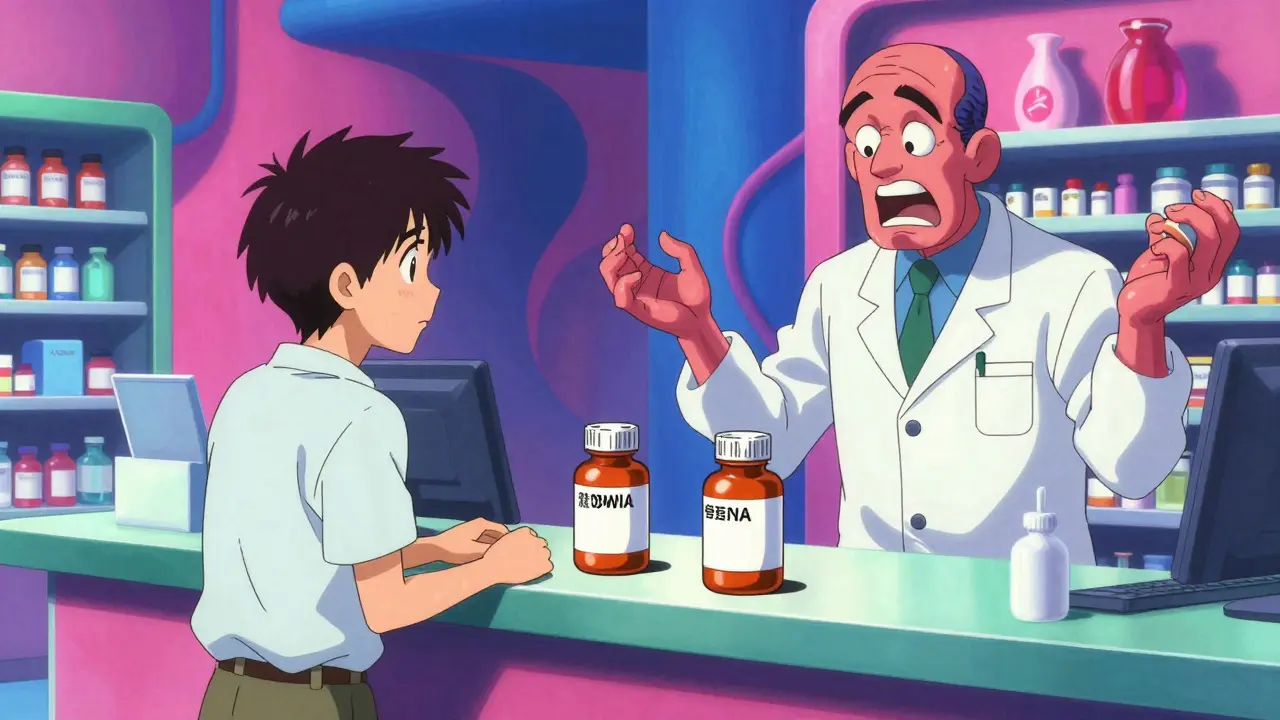
At the heart of this issue are two different legal approaches: mandatory substitution is a regulatory requirement where pharmacists are compelled to dispense a generic equivalent if it is available and appropriate, and permissive substitution is a law that simply allows pharmacists to substitute a generic at their own professional discretion, but does not force them to do so
.The Core Difference: Choice vs. Requirement
If you live in a permissive state, your pharmacist has the option to give you a generic. They might do it to save you money, or they might stick with the brand name if they feel it's better for your specific case. In mandatory states, the default is the generic. Unless your doctor explicitly writes "Brand Medically Necessary" or "Dispense as Written," the pharmacist is legally required to make the switch.
This isn't just a technicality; it's about the mandatory substitution laws' ability to drive down costs. When the law mandates the switch, the generic version becomes the standard. When it's just permissive, the brand-name drug often stays the default unless someone speaks up. This creates a huge gap in how many people actually use generics across different states.
| Feature | Mandatory Substitution | Permissive Substitution |
|---|---|---|
| Pharmacist Role | Required to substitute | Authorized to substitute |
| Default Outcome | Generic drug dispensed | Varies by pharmacist/patient |
| Prescriber Control | Must use specific "No Substitution" language | Standard prescription often suffices |
| Cost Impact | Higher generic utilization; lower costs | Lower generic utilization; higher costs |
Where the Rules Come From: The Orange Book
How does a pharmacist even know if a generic is a safe swap? They don't just guess. Most states rely on the FDA Orange Book, which is the official publication listing all approved drug products and their therapeutic equivalence
. If the Orange Book says two drugs are therapeutically equivalent, the pharmacist has the legal green light to substitute.While the FDA (Food and Drug Administration) handles the science of whether a drug is a match, the state legislatures handle the policy of how it's dispensed. This split is a leftover from the Hatch-Waxman Act of 1984, which set up the path for generic approvals but left the actual "at the counter" rules to the states. Because of this, you might find that some states use a "positive formulary" (a list of what *can* be swapped) while others use a "negative formulary" (a list of what *cannot* be swapped).
The Real-World Impact on Your Wallet
Does it actually matter if a state is mandatory or permissive? Absolutely. The numbers are startling. In one study looking at simvastatin (a common cholesterol medication), states with mandatory laws filled about 48.7% of prescriptions with generics. In permissive states? That number dropped to 30%. That is a massive gap in medication utilization.
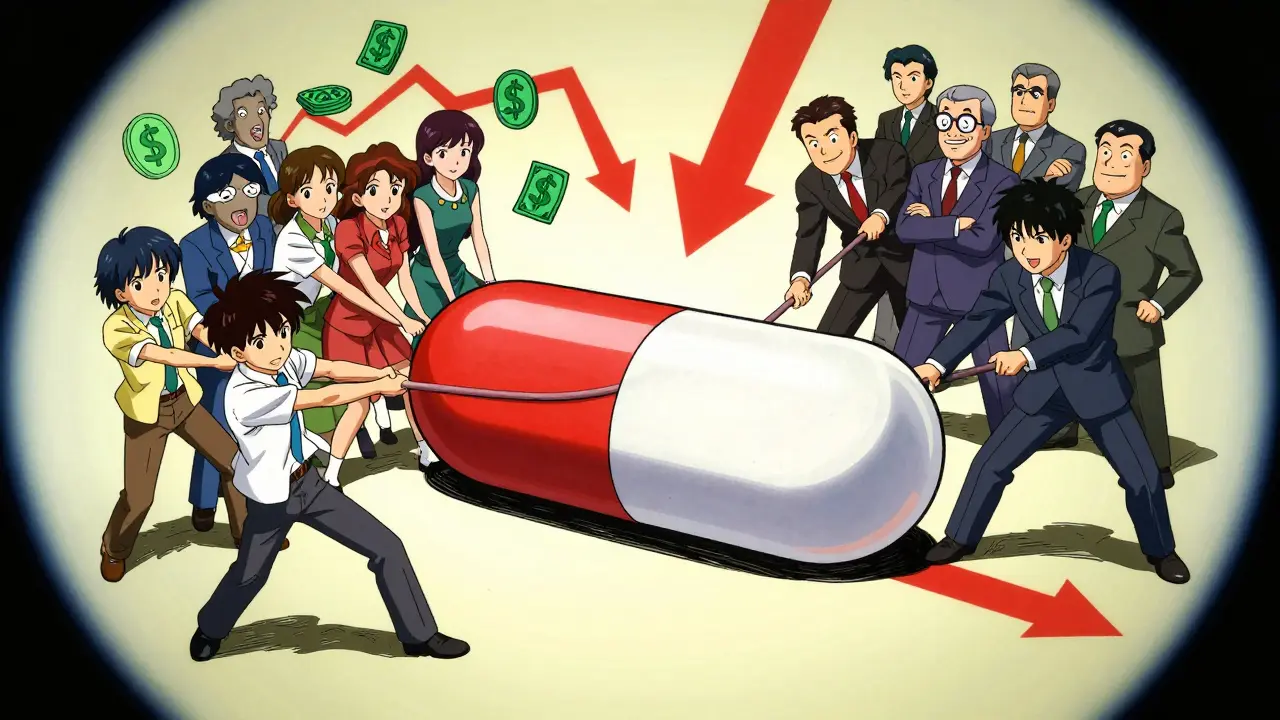
The cost difference is even more dramatic because generics typically cost 80% to 85% less than brand-name drugs. When the law pushes generics, the savings aren't just for the patient; they're for the entire system. For example, a small 1% increase in generic use can save Medicare Part D hundreds of millions of dollars annually. It's essentially a tug-of-war between state policy and pharmaceutical marketing.
The "Fine Print": Consent and Liability
Substitution isn't just about "yes or no." There are four layers to these laws that can create friction at the pharmacy counter:
- Duty to Substitute: As we've discussed, this is the mandatory vs. permissive divide.
- Notification: 31 states require pharmacists to tell the patient about the swap independently of the drug packaging.
- Consent: This is the biggest hurdle. Some states require the patient's explicit "okay" before a switch. In states where consent is required, generic utilization for certain drugs has plummeted to as low as 32%, compared to 98% in states where no consent is needed.
- Liability: This is the scary part for pharmacists. In 24 states, there is no explicit protection from liability if a patient has a bad reaction to a generic substitute. This makes some pharmacists hesitant to swap, even if the law permits it.
The New Frontier: Biologics and Biosimilars
Things get even messier when we move from simple pills (small-molecule drugs) to Biologics, which are complex medications made from living organisms, often used for cancer or autoimmune diseases
. Because these drugs are more expensive and complex, states are far more cautious.About 45 states have much stricter rules for Biosimilars (the generic-like versions of biologics). The most common restriction is mandatory physician notification. Essentially, a pharmacist can't just swap a biologic and hope for the best; they often have to clear it with the doctor first. This reflects a deeper concern about immunogenicity-how your body's immune system reacts to a slightly different protein structure.

Challenges for Doctors and Patients
For a doctor, writing a prescription in a mandatory state is a high-stakes game of wording. If they want you to have the brand name, they can't just write the brand name; they have to use specific phrases like "Dispense as Written." In some states, they might even be required to provide a medical justification for why the brand is necessary.
For the patient, the challenge is transparency. You might be paying more for a brand-name drug simply because you live in a permissive state or because your pharmacist is worried about liability. On the flip side, if you're in a mandatory state and have a sensitivity to a specific filler in a generic, you have to be proactive in telling your provider to mark the prescription as "Brand Medically Necessary."
What is the main difference between mandatory and permissive substitution?
Mandatory substitution requires the pharmacist to dispense a generic equivalent whenever available, unless the doctor specifies otherwise. Permissive substitution allows the pharmacist to choose whether to substitute a generic, but they are not legally forced to do so.
Does the FDA decide which drugs are substituted?
The FDA provides the data via the Orange Book, which identifies which generics are therapeutically equivalent to brand-name drugs. However, the decision on whether the substitution is mandatory or permissive is made by individual state laws.
Why are biosimilar substitution laws stricter than generic laws?
Biologics are far more complex than small-molecule drugs. Because they are made from living cells, there are higher concerns regarding how the body reacts to the drug (immunogenicity), leading most states to require doctor notification before a switch.
How can a doctor prevent a pharmacist from substituting a drug?
Doctors can use specific notations on the prescription, such as "Dispense as Written" (DAW) or "Brand Medically Necessary," to legally block the pharmacist from switching to a generic.
Do all states protect pharmacists from liability when substituting?
No. Approximately 24 states do not provide explicit liability protection to pharmacists who substitute a generic for a brand-name drug, which can make some pharmacists more cautious about making the switch.
Next Steps and Troubleshooting
If you're unsure whether your state follows a mandatory or permissive model, the best first step is to ask your pharmacist: "Is this the generic version, and is it required by state law?" If you prefer a brand-name drug for medical reasons but live in a mandatory state, talk to your doctor about using the "Dispense as Written" notation to avoid the automatic switch.
For healthcare providers, it's a good idea to check the specific substitution requirements of the state where your patients reside. If you're prescribing for narrow therapeutic index drugs, where a tiny change in dosage or formulation can be dangerous, be extremely explicit in your prescription instructions to avoid any accidental substitutions.
Sam Dyer
April 15, 2026 AT 08:59Typical government mess. 🙄 Why in the world do we have fifty different ways to fill a pill bottle in this great nation? Just make it one rule and let the free market shake out the rest! Absolute circus 🤡
S.A. Reid
April 16, 2026 AT 00:39One must ponder if these disparate state regulations are merely a facade. It is quite plausible that the pharmaceutical conglomerates orchestrate this legislative patchwork to ensure a steady stream of brand-name revenue in permissive jurisdictions. The notion that the FDA's Orange Book is a neutral arbiter is, frankly, quaint. I find it highly suspect that liability protections are so inconsistently applied, as it keeps the pharmacists in a state of perpetual fear and submission to corporate mandates. Truly, the systemic opacity here is breathtaking.
Kenzie Evans
April 16, 2026 AT 19:59This is basic stuff. Imagine needing a whole article to explain that generics are cheaper. Everyone knows this. Also, the part about biosimilars is way too simplified and honestly just lazy writing.
Mark Dueben
April 18, 2026 AT 05:23I think we should all try to be a bit more patient with those who find these laws confusing. It's a lot to take in.
Randy Ryder
April 20, 2026 AT 02:37The pharmacokinetic profile and bioequivalence standards in the Orange Book are critical for ensuring therapeutic efficacy. When we talk about narrow therapeutic index drugs, the margin for error regarding bioavailability is slim. It's vital to consider how the excipients in a generic formulation might affect the absorption rate compared to the reference listed drug. We need more focus on the pharmacopoeial standards to truly bridge the gap between mandatory and permissive frameworks.
David Snyder
April 21, 2026 AT 05:20It's actually great that there are ways to save so much money! Generic drugs are a wonderful innovation for accessibility. Just keep talking to your doctors and things will work out for everyone.
rupa das
April 21, 2026 AT 10:10mandatory laws are just overkill
Anurag Moitra
April 23, 2026 AT 00:35The structural disparity in healthcare accessibility is evident. It is prudent to recognize that systemic changes are necessary to ensure equitable pricing across all jurisdictions.
Brooke Mowat
April 24, 2026 AT 17:09This whole thing is just a wild ride of bureaucracy! 🌈 It's like a big dance between science and law. I love how we're trying to find the balance between saveing money and staying safe. Just keep vibing and stay informed, peeps!
Milo Tolley
April 26, 2026 AT 03:20The absolute chaos of this regulatory environment is UNREAL!!! 😱 The liability gaps are a total nightmare for the practitioners!!! We are talking about a complete failure of the systemic infrastructure!!!
Ikram Khan
April 28, 2026 AT 00:04Wow, I had no idea about the 80% cost difference! 😲 That's just wild! I wonder if other countries do this better? This is such a game changer for anyone on a budget! 🚀
Becca Suttmiller
April 28, 2026 AT 11:26I appreciate the breakdown of the laws. It's important to maintain a clear boundary between what the pharmacist can do and what the doctor intends for the patient's care.