
Esketamine Session Simulator
Use this tool to understand how your body reacts over the mandatory 2-hour post-dose period. Adjust your baseline blood pressure to see how it impacts the peak readings.
Blood Pressure Status
Dissociation & Sedation
Imagine waking up from a deep sleep, only to feel like you are floating outside your own body. For many patients with treatment-resistant depression is a condition where standard antidepressants fail to provide relief after at least two different trials, this sensation is not a dream but a side effect of Esketamine Nasal Spray is the first approved rapid-acting antidepressant that works by blocking NMDA receptors rather than increasing serotonin or dopamine. Also known as Spravato, it was developed by Janssen Pharmaceuticals and received FDA approval in March 2019. Unlike traditional pills you take at home, this medication requires you to sit in a clinic for two hours after each dose. Why? Because your brain and blood pressure undergo significant, temporary changes that need professional eyes on them.
This guide breaks down exactly what happens during those two hours, why the monitoring is so strict, and how healthcare providers keep you safe while the drug does its work. You will learn about the specific risks of dissociation and blood pressure spikes, the tools doctors use to track your status, and what you can expect from your first few sessions. Whether you are considering this treatment or supporting someone who is, understanding these mechanics helps reduce anxiety and prepares you for the process.
Key Takeaways
- Esketamine Nasal Spray causes transient dissociation and blood pressure elevation, peaking around 40 minutes post-dose.
- The FDA mandates a Risk Evaluation and Mitigation Strategy (REMS) requiring administration only in certified clinics with 2-hour post-dose monitoring.
- Dissociation affects over 50% of patients initially but often diminishes with repeated treatments; severe cases are rare and manageable.
- Blood pressure rises are typically asymptomatic but require screening for uncontrolled hypertension before starting therapy.
- Access disparities remain a challenge, with rural areas having significantly fewer certified centers than urban regions.
How Esketamine Works and Why It’s Different
Most antidepressants you have likely heard of, like SSRIs or SNRIs, work by tweaking levels of neurotransmitters like serotonin and norepinephrine. Esketamine is the S-enantiomer of ketamine, offering higher affinity for NMDA receptors compared to racemic ketamine takes a completely different route. It acts as an antagonist at the N-methyl-D-aspartate (NMDA) receptor. Think of the NMDA receptor as a gate that controls calcium flow into neurons. By blocking this gate, esketamine prevents excessive glutamate activity, which is thought to reset neural circuits that have become rigid due to chronic depression.
This mechanism leads to rapid neuroplasticity-the brain's ability to form new connections. This is why patients often report feeling better within 24 to 72 hours, much faster than the 4 to 6 weeks typical for oral antidepressants. However, because it blocks NMDA receptors, it also triggers the same physiological responses seen with general anesthetics like ketamine. This includes altered perception (dissociation) and cardiovascular stimulation (blood pressure rise). The drug reaches peak concentration in your blood between 20 and 40 minutes after spraying, which aligns perfectly with when these side effects are most intense.
Understanding Dissociation: What It Feels Like
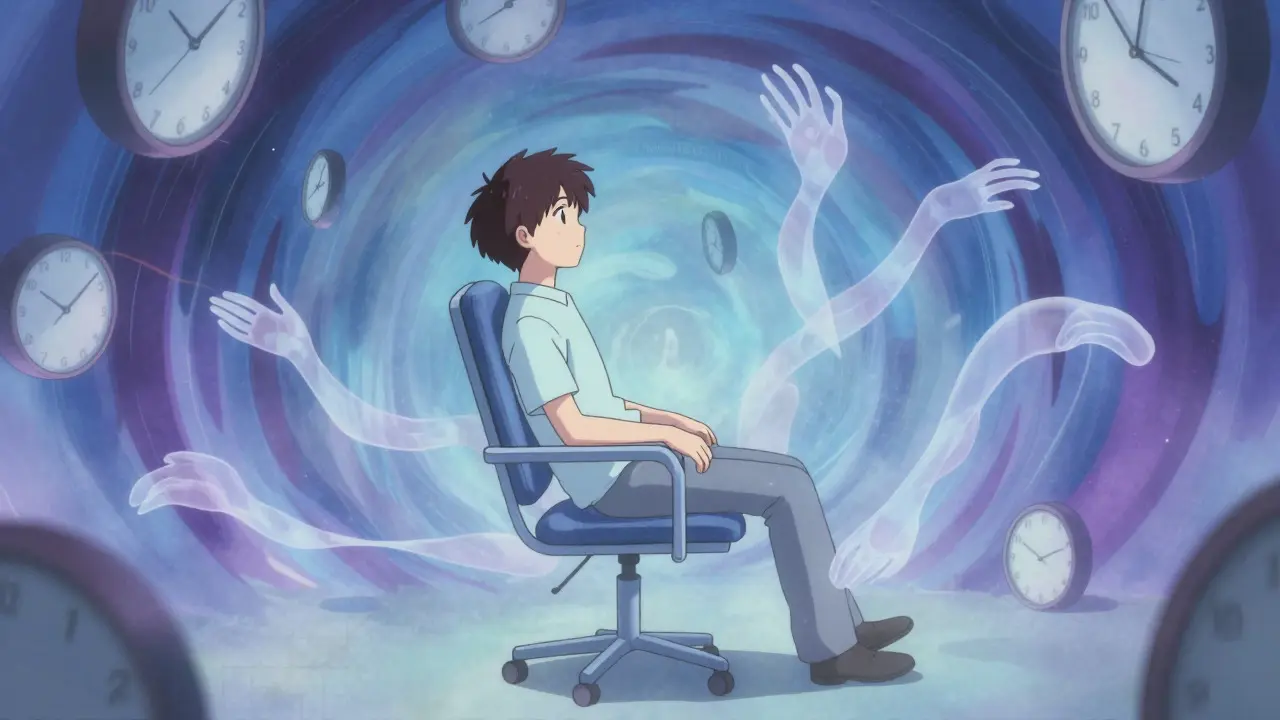
Dissociation is the most commonly reported side effect, occurring in roughly 56% of patients in clinical trials. It is not a sign that something is going wrong; it is a direct result of how the drug interacts with your brain. Symptoms include feeling detached from your body, perceiving time as slowing down or speeding up, or feeling like you are watching yourself from the outside. Some patients describe it as a "dream-like" state or a mild hallucination.
These feelings are dose-dependent. In studies, patients receiving the higher 84 mg dose reported more frequent dissociation (61.3%) compared to those on the 56 mg dose (53.6%). The good news? For most people, the intensity fades. Data from patient communities shows that while the first one or two sessions might feel intense, subsequent treatments often result in milder effects. By the fourth or fifth session, many patients report only slight dizziness or no noticeable dissociation at all. Healthcare providers assess this using standardized tools like the Clinician-Administered Dissociative States Scale (CADSS) to ensure the reaction stays within expected limits.
Blood Pressure Changes: The Cardiovascular Impact
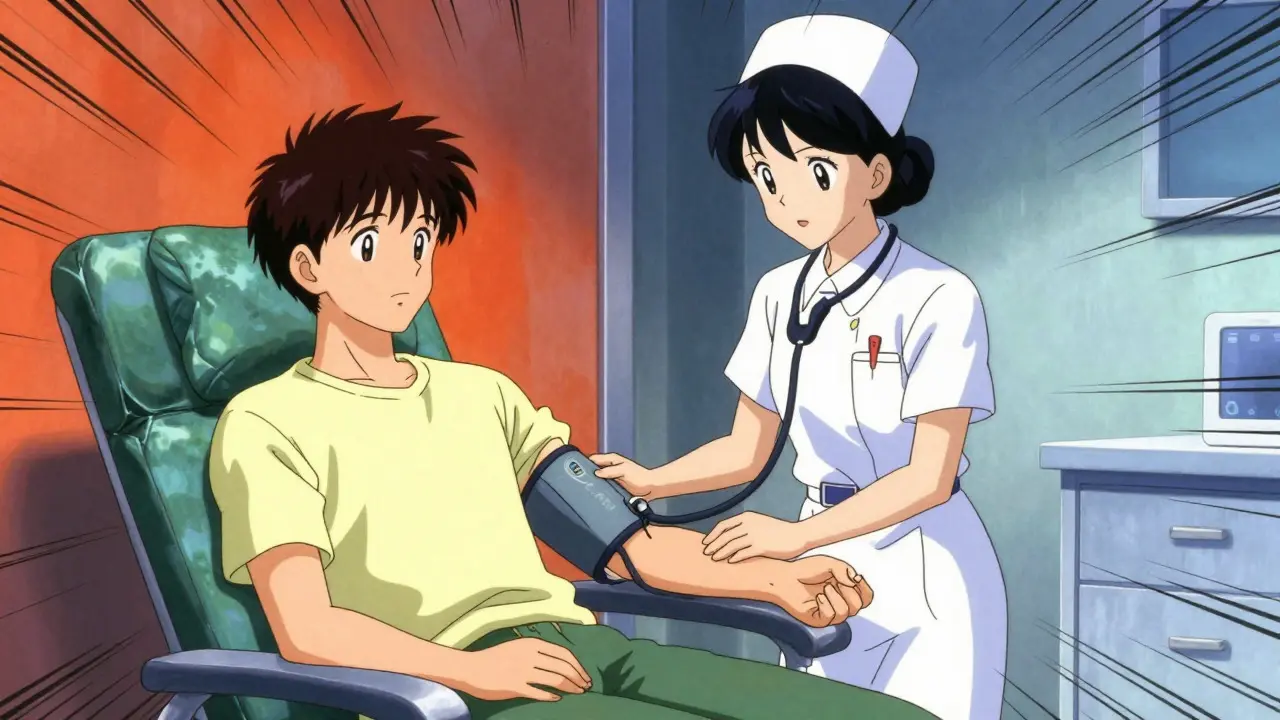
While dissociation affects your mind, esketamine affects your heart and vessels. Within 5 minutes of administration, systolic blood pressure begins to rise. It peaks around the same 40-minute mark as the dissociation and usually returns to baseline within 1.5 to 2 hours. In clinical data, maximum mean increases in systolic blood pressure ranged from 14 to 23 mmHg. For most healthy adults, this is a manageable spike. However, for individuals with pre-existing hypertension or cardiovascular disease, it requires careful attention.
Before starting treatment, you must be screened for uncontrolled high blood pressure. If your systolic BP is above 160 mmHg or diastolic above 100 mmHg, you may need to stabilize these numbers before receiving esketamine. During the monitoring period, nurses check your blood pressure every 5 to 10 minutes. This isn't just routine; it's a safety net. Rarely, if the spike is too high or symptomatic, rescue medications may be used, but this happens in less than 2% of cases. The transient nature of this effect means long-term cardiovascular risk is low, provided you follow the monitoring protocol.
The REMS Program and Clinic Requirements
You cannot buy Spravato is the brand name for esketamine nasal spray prescribed for treatment-resistant depression at a local pharmacy to take home. The FDA requires a Risk Evaluation and Mitigation Strategy (REMS) program. This means the drug is only available through certified healthcare settings. These clinics must have specific equipment, trained staff, and a dedicated space for administration and observation.
Here is what the 2-hour monitoring window looks like in practice:
- Pre-administration (15 mins): Vital signs are checked, and you sign a consent form acknowledging the risks.
- Administration (5 mins): You self-administer the nasal spray under supervision. The nurse ensures both nostrils receive the correct dose.
- Peak Monitoring (First 40 mins): Vital signs (BP, heart rate, oxygen) are checked every 5-10 minutes. This is the highest risk period for dissociation and BP spikes.
- Recovery (Remaining 80 mins): Checks become less frequent (every 15-30 mins) as the drug metabolizes and side effects subside.
- Discharge: Final vital sign check and assessment to ensure you are stable enough to leave.

Patient Experiences and Practical Tips
Talking to others who have gone through this can ease the unknown. On online forums, many users describe the initial dissociation as unsettling but short-lived. One common theme is that the "weirdness" feels less intense after the second or third dose. Patients often recommend bringing noise-canceling headphones, a blanket, and a calming playlist. Keeping the environment quiet and dim during the peak phase helps minimize sensory overload, which can worsen dissociative feelings.
Regarding blood pressure, some patients with controlled hypertension report no issues, while others find the spikes uncomfortable. If you have a history of high BP, make sure your primary care provider has cleared you for treatment. Communication is key. Tell your clinician if you feel lightheaded or anxious during the wait. They are used to managing these reactions and can offer reassurance or intervention if needed. Remember, the goal is to get through the 2-hour window safely to benefit from the rapid antidepressant effects that follow.
Comparison of Monitoring Parameters
| Parameter | Onset | Peak Time | Duration | Monitoring Frequency |
|---|---|---|---|---|
| Dissociation | 10-20 mins | 40 mins | 1.5 - 2 hours | CADSS score at 40 mins + continuous observation |
| Blood Pressure Elevation | 5 mins | 40 mins | 1.5 - 2 hours | Every 5-10 mins for first hour, then q15-30 mins |
| Sedation/Drowsiness | 15 mins | 30-40 mins | 1 - 2 hours | Visual assessment + vitals |
Future Directions and Access Challenges
As of 2026, the landscape for esketamine is evolving. Recent data suggests that personalized monitoring might be possible. Trials like SUSTAIN-2 indicated that patients who show stable vitals and minimal dissociation early on might eventually qualify for shorter monitoring periods, potentially reducing from 2 hours to 1 hour. This could improve access for working professionals who struggle to take half a day off.
However, geographic disparities persist. Urban areas have multiple certified centers, while rural regions may have none nearby. This creates a barrier for those who live far from cities. Technology is stepping in, with digital health companies developing remote monitoring tools. Yet, experts agree that some level of structured observation will remain necessary for the foreseeable future due to the inherent pharmacological profile of the drug. The balance between safety and accessibility remains the central focus of ongoing regulatory discussions.
How long does the dissociation last after taking esketamine?
Dissociation typically peaks at 40 minutes and resolves within 1.5 to 2 hours. Most patients do not experience dissociation beyond the mandatory 2-hour monitoring window.
Can I drive home after my esketamine session?
Yes, once you have completed the 2-hour monitoring period and your healthcare provider clears you. Your reflexes and alertness should be back to normal, but it is always best to ask your clinician for final confirmation before leaving.
What if my blood pressure is high during the appointment?
If your blood pressure spikes significantly or causes symptoms, the nurse will monitor you closely. In rare cases, they may administer rescue medication. If your baseline BP is uncontrolled (above 160/100 mmHg), you may need to delay treatment until it is stabilized.
Does the side effect get worse over time?
Generally, no. Many patients report that dissociation and sedation become less intense with repeated doses. Long-term safety data from the RECOVER study shows no cumulative worsening of these side effects over 52 weeks.
Who is not eligible for esketamine treatment?
Patients with uncontrolled hypertension, history of intracranial hemorrhage, aneurysm, or arteriovenous malformation are generally excluded. It is also indicated specifically for adults with treatment-resistant depression who have failed at least two other antidepressants.