
Calcium Channel Blocker Risk Estimator
Patient Profile & Meds
Interaction Risk Level
Calculating...
--Factors influencing this analysis:
- CYP3A4 Enzyme Activity
- Hepatic Clearance Rates
- Renal Excretion Dynamics
Why Blood Pressure Meds Sometimes Go Wrong
You take your morning pill for blood pressure. Maybe you also have a statin for cholesterol or a sleeping aid. On paper, this regimen looks solid. But sometimes, something shifts. Your blood pressure drops too low, or your heart beats slower than expected. Calcium Channel Blockers is a class of medications that inhibit calcium ion influx through voltage-gated channels, primarily used for cardiovascular conditions. They are staples in medicine, yet they carry a hidden complexity involving how your body breaks them down. We aren't talking about side effects that happen alone; we are talking about interactions. When multiple chemicals meet in your liver, the results can surprise even experienced clinicians.
The core issue lies in metabolism. Your body doesn't just flush these drugs out unchanged. It actively modifies them. If another drug blocks that modification pathway, the calcium channel blocker piles up in your system. This isn't theoretical. Recent data suggests that approximately 50 million Americans rely on these medications, making interaction management a critical public health topic. The difference between a therapeutic dose and a toxic one often comes down to a single enzyme in your liver.
Understanding the Two Main Families
Not all calcium channel blockers behave the same way. Think of them like cars: some are built for speed, others for endurance. To understand why interactions happen, you must first distinguish the chemical families.
| Feature | Dihydropyridines (DHPs) | Non-Dihydropyridines (Non-DHPs) |
|---|---|---|
| Examples | Amlodipine, Nifedipine, Felodipine | Verapamil, Diltiazem |
| Primary Action | Peripheral vasodilation (blood vessels) | Cardiac conduction suppression (heart rate/rhythm) |
| Interaction Profile | Generally lower inhibition potential | High substrate and inhibitor risk |
| Dosing Frequency | Often once daily | Often twice daily due to shorter half-life |
This distinction matters immensely when reviewing prescriptions. Amlodipine is a long-acting dihydropyridine calcium channel blocker known for its extended half-life and favorable interaction profile. Because it stays in the body for 30 to 50 hours, missing a dose matters less, and steady levels are easier to maintain. Conversely, Verapamil is a non-dihydropyridine agent that affects heart rhythm directly and acts as a potent inhibitor of hepatic enzymes. It wears two hats: it is metabolized by the liver, but it also blocks the liver's ability to process other drugs. That double role creates higher risk.
The Engine Room: CYP3A4 Enzyme Activity
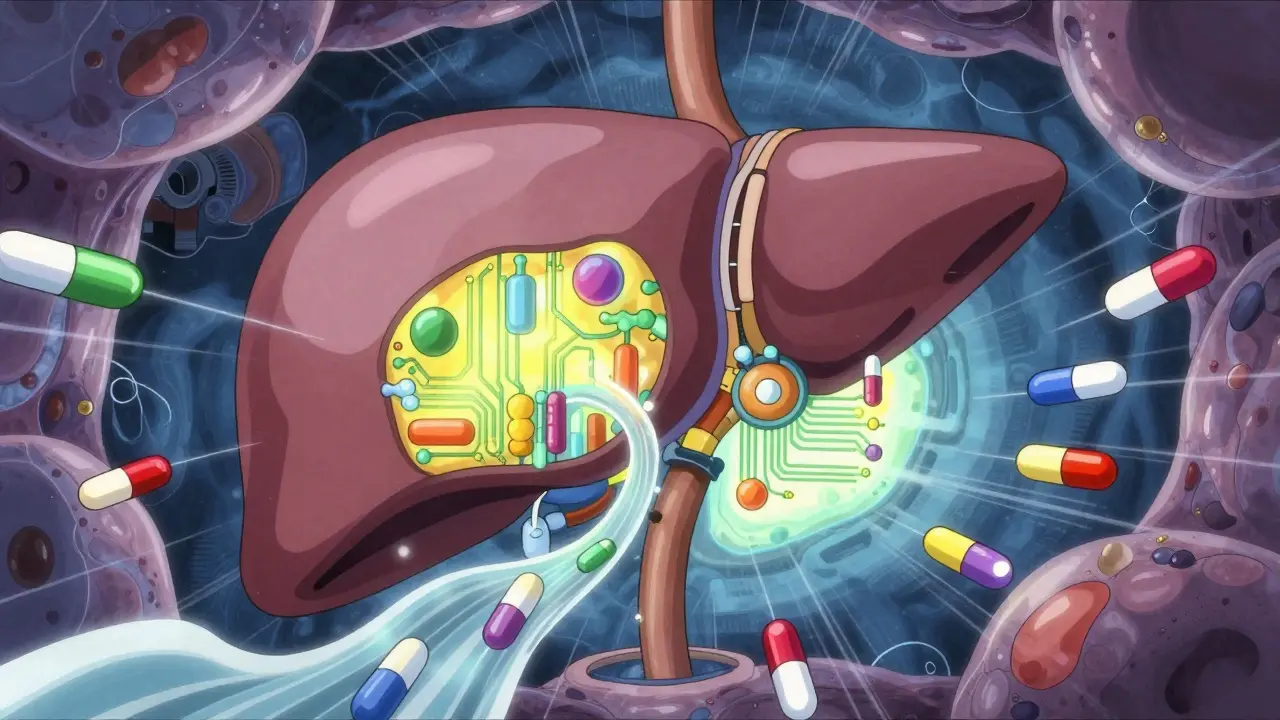
If you want to predict a crash, look at the liver. Specifically, look at an enzyme called cytochrome P450 3A4. We call this CYP3A4 for short. It is the primary worker responsible for breaking down most calcium channel blockers.
About 90% of dihydropyridine metabolism passes through this pathway. Even verapamil relies on it for roughly 70% of clearance. When CYP3A4 is working normally, it chops the drug molecules into water-soluble pieces that the kidneys can excrete. When CYP3A4 is blocked, those intact drug molecules remain in the blood.
Consider the bioavailability rates. Without interference, Nifedipine typically has low oral bioavailability ranging around 15-64%. This means much of the pill is destroyed before it ever enters the bloodstream. Now imagine taking a medication or eating a food that shuts down CYP3A4. Suddenly, that 15% absorption jumps to 60% or more. You aren't just getting a little extra medicine; you might be getting four times the intended dose. Clinical guidelines now emphasize screening for CYP3A4 interactions specifically because saturation kinetics mean small changes in inhibitor strength lead to exponential rises in plasma concentrations.
Real-World Triggers and Dangerous Combinations
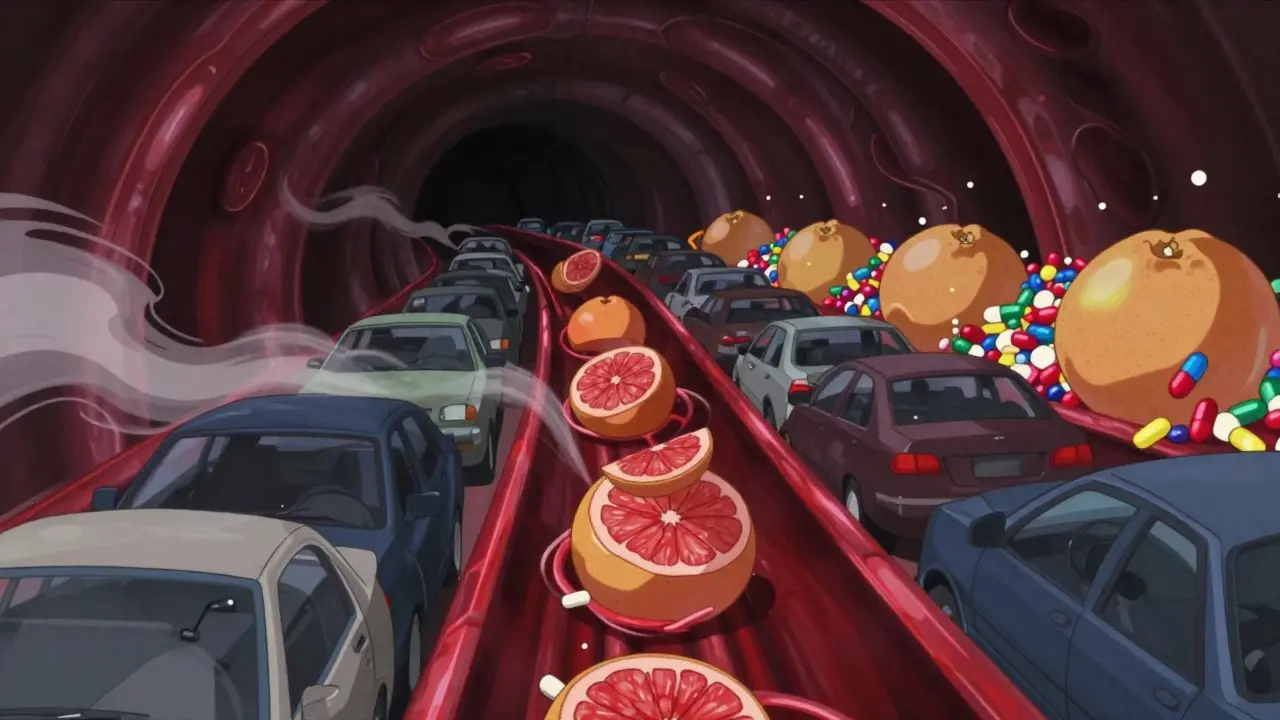
You might think interactions are rare in everyday life, but patient forums tell a different story. One of the most famous culprits is common in kitchens, not pharmacies: grapefruit juice. It contains furanocoumarins that irreversibly damage CYP3A4 in the gut wall. While the effect is local, it allows massive amounts of drug to bypass the liver's first pass.
Data from patient reports indicates that combining CCBs with grapefruit juice leads to unexpected hypotension in a significant number of cases. Some users reported emergency visits after consuming the juice with their morning medication. Beyond juice, prescription overlaps are frequent. Strong inhibitors like ketoconazole or ritonavir can increase CCB concentrations by 300% to 600%. If you are on a stable dose of verapamil and start a course of clarithromycin for an infection, your doctor must adjust the verapamil immediately. Failure to do so risks severe bradycardia or heart block.
Another silent killer is the combination with statins. Simvastatin is heavily cleared by CYP3A4. If you pair it with diltiazem, which inhibits the same enzyme, simvastatin levels skyrocket. Reports from clinical pharmacology journals note that diltiazem can increase simvastatin exposure by 400%. This dramatically raises the risk of muscle breakdown (myopathy). The risk is asymmetric. Patients over 65 experience these severe metabolic interactions significantly more often than younger adults due to age-related declines in liver function and kidney filtration rates.

Clearance Dynamics and Dosing Logic
How quickly your body removes the drug is just as vital as how it takes it in. Elimination half-life determines the dosing schedule. Immediate-release nifedipine has a half-life of merely 2 to 5 hours. You must take it frequently. Amlodipine, however, lingers for days. This pharmacokinetic reality dictates safety protocols.
Renal excretion handles the majority of the cleared drug mass-about 80 to 90%. However, less than 1% of the drug leaves the body unchanged. Most of what comes out is already broken down by the liver. This distinction is crucial for patients with kidney disease. Because the active drug isn't relying solely on the kidneys for exit, mild to moderate renal impairment often doesn't require dose changes for amlodipine. Verapamil is different. For patients with an estimated glomerular filtration rate (eGFR) below 60 mL/min, guidelines suggest reducing the verapamil dose by 50%. Ignoring this metric leads to accumulation.
We also see variability in protein binding. Amlodipine binds to albumin at 97.5%, while verapamil sits at 90%. If a patient is malnourished or has liver disease affecting protein synthesis, free drug levels rise. Unbound drug is active drug. Higher unbound concentrations mean stronger effects on blood pressure and heart rhythm. Therapeutic drug monitoring helps here, targeting trough levels between 50 and 150 ng/mL for verapamil to avoid toxicity without losing efficacy.
Emerging Tools and Safety Protocols
The landscape is shifting toward prevention. Electronic health records now include mandatory alerts when prescribing CCBs alongside known inhibitors. Epic Systems reported a drop in severe interaction events by 42% after implementing these checks. Pharmacies are spending closer to 13 minutes per prescription reviewing these interactions, often catching risks that busy physicians miss.
Regulatory bodies have responded to these risks. The FDA has issued numerous safety communications regarding metabolic interactions. New tools like interaction management software integrate directly with hospital systems to score risk in real-time. Pharmacogenomic studies are even showing that genetic variants in the CYP3A4 gene exist in about 27% of the population, meaning personalized dosing based on DNA testing may become standard care soon. Until then, the safest approach remains conservative dosing in older adults and avoiding the non-dihydropyridine class in patients on heavy polypharmacy regimens.
Safety is a moving target. As the aging population grows, the cost of managing these interactions is projected to reach $2.7 billion annually. The goal isn't to stop using these life-saving drugs, but to navigate the metabolic minefield with better maps.
Can I drink grapefruit juice while taking calcium channel blockers?
It is strongly advised to avoid grapefruit juice. It inhibits the CYP3A4 enzyme in the gut, which can increase the amount of medication entering your bloodstream by several hundred percent, leading to dangerously low blood pressure.
Which calcium channel blocker has the fewest interactions?
Amlodipine is generally considered to have the most favorable profile. Unlike verapamil or diltiazem, it does not act as a significant inhibitor itself, making it safer for patients taking multiple other medications.
Do kidney problems change my dosage?
For amlodipine, dose adjustment is rarely needed even with reduced kidney function. However, verapamil requires a 50% reduction if your eGFR is below 60 mL/min to prevent toxicity.
What symptoms indicate a dangerous interaction?
Watch for extreme dizziness, fainting, unusually slow heart rate, or swelling in the ankles. These signs suggest drug accumulation exceeding safe therapeutic levels.
Should elderly patients avoid non-DHPs?
While not strictly contraindicated, caution is essential. Elderly patients have reduced metabolic capacity, increasing the severity of interactions. Starting with the lowest dose and using agents like amlodipine is preferred.
Philip Wynkoop
March 27, 2026 AT 00:57Grapefruit juice is actually dangerous with these meds 😳
Monique Louise Hill
March 28, 2026 AT 15:23People really need to take responsibility for their own health habits instead of blaming doctors when they mess up their regimen 🙄 It is so easy to ignore warnings about diet and medicine interactions 💊🥭 But you must respect your body and read the labels properly before mixing anything
Aaron Olney
March 29, 2026 AT 00:18This is scarey stuff honestly my heart races just thinking about how much poison we put in our veins daily omg the liver cant handle it sometimes 🚑💀 i hope everyone stays safe cause accidents happen fast and nobody wants to end up in the hospital because of some fruit juice
Sabrina Herciu
March 30, 2026 AT 11:09The data regarding CYP3A4 inhibition is absolutely critical for pharmacokinetics. Specifically, the irreversible damage caused by furanocoumarins in grapefruit juice necessitates strict avoidance. Furthermore, verapamil acts as a potent inhibitor itself which complicates polypharmacy significantly. Patients must consult their providers before introducing any new supplement or medication. Dose adjustments are frequently required for renal impairment cases specifically. Safety protocols should be observed diligently by all parties involved in prescribing.
Paul Vanderheiden
March 31, 2026 AT 21:34don't worry too much about it aron most people just need to stick to the basics like avoiding the juice its all good you got this stay positive and keep taking care of your heart health matters but try not to stress so hard about every little pill or drink you consume life is about balance and finding joy in small things ❤️
Rohan Kumar
April 2, 2026 AT 11:46Big pharma doesn't want you to know the real cost of living on meds forever 👹💊 They make the juice dangerous so you buy more pills or switch to their newer expensive brands 🤡 Classic corporate strategy hiding behind enzyme activity nonsense 😂 Who cares about liver enzymes when profits are on the line anyway 🙅♂️
walker texaxsranger
April 2, 2026 AT 13:16bioavailability metrics are often overstated in clinical literature and population pharmacokinetics vary wildly due to genetic polymorphism cyp3a4 alleles differ across demographics rendering standard dosing protocols suboptimal for many ethnic groups despite guidelines ignoring pharmacogenomics until recently which delays optimal therapeutic index attainment in practice settings
Sophie Hallam
April 3, 2026 AT 08:22I think this information is really helpful for understanding why certain combinations are risky. It makes sense to check with a pharmacist when starting new treatments especially if you have existing conditions. Everyone manages their health differently but awareness helps prevent emergencies and keeps everyone safe from accidental overdoses or side effects.
tyler lamarre
April 4, 2026 AT 20:59That is a naive take considering most patients lack basic literacy regarding pharmaceutical mechanics. Your reliance on simple awareness overlooks the complex metabolic pathways discussed here. True understanding requires deep study not just checking with a pharmacist who is trained for dispensing not analysis. You seem to simplify risk assessment far too casually for such high stakes medical scenarios.
Shawn Sauve
April 6, 2026 AT 10:51Thanks for posting this clear guide it helps explain why my doctor switched my meds :D Always good to learn about interactions like grapefruit juice :) I feel much more informed now about my treatment plan :)
Eva Maes
April 8, 2026 AT 03:06your jargon salad is vomitingly pretentious and misses the actual human cost of neglecting these risks while you hide behind obscure academic buzzwords and pretend to be smarter than anyone else on the thread it is disgusting how you dismiss patient safety with lazy pseudo-scientific defensiveness instead of admitting simple advice works better for normal people trying to survive daily life
Devon Riley
April 8, 2026 AT 05:44Hey I understand where you are coming from but being harsh on others doesn't help anyone here we all want to be safe and healthy regardless of how much we know about the science it takes humility to ask for help and share knowledge kindly so please let us all support each other in managing our health needs without judging one another too hard 😊🤗
Kameron Hacker
April 9, 2026 AT 22:08We must confront the reality that systemic negligence in healthcare education endangers millions of individuals daily through preventable metabolic failures. The distinction between dihydropyridines and non-dihydropyridines is not merely academic trivia but a matter of life and death for those dependent on chronic therapy. Regulatory bodies fail adequately to protect consumers from common dietary hazards like citrus juices which remain ubiquitous in modern households. Pharmaceutical companies prioritize profit margins over transparent labeling regarding specific enzyme interactions during drug clearance phases. Patients are left navigating this minefield without proper maps or guidance from overwhelmed primary care physicians. The elderly demographic suffers disproportionately due to declining organ function which accelerates toxicity accumulation rates beyond safe thresholds. Electronic health record alerts often malfunction or get ignored by busy clinicians rushing through hundreds of prescriptions daily. We need mandatory pharmacogenomic testing for everyone over sixty years old before prescribing calcium channel blockers becomes standard protocol. Without aggressive legislative action now society faces rising costs from emergency room visits caused by simple interaction oversights. Ignoring the protein binding dynamics in liver disease patients is morally indefensible given current monitoring capabilities exist. The narrative surrounding amlodipine safety is slightly misleading because even favorable profiles demand vigilance against unbound drug levels. Public health spending reaches billions annually due to these manageable yet ignored complications that require immediate intervention strategies. Clinicians must stop assuming patient compliance with dietary restrictions and verify actual habits during follow-up appointments regularly. Safety is a moving target that demands constant recalibration of dosing logic based on real-time biological feedback loops. Ultimately we choose whether to view this as a scientific challenge or a moral failure of our collective healthcare infrastructure system.