

Imagine a person who is perfectly healthy one week, and by the next, they are experiencing hallucinations, sudden memory loss, or seizures. It looks like a psychiatric breakdown or a sudden onset of dementia, but it is actually the immune system attacking the brain. This is the reality of Autoimmune Encephalitis is an inflammatory disease where the body produces autoantibodies that attack neuronal surface or synaptic proteins in the brain. Often abbreviated as AE, this condition can be devastating if missed, but it is remarkably treatable if caught early.
For a long time, these cases were mysteries. The game changed in 2007 when researchers identified the anti-NMDAR antibody, proving that some "psychotic" episodes were actually biological attacks on the brain. Today, we know that while it is rare-affecting about 1 in 100,000 people annually-the window for recovery is narrow. Waiting for a lab test to confirm a diagnosis can be a mistake; starting treatment early is the single biggest factor in whether a patient returns to their normal life or suffers permanent disability.
Spotting the Red Flags
AE doesn't usually happen overnight. Most people experience a "prodrome"-a warning phase. About 32% of patients report a headache, fever, or a simple upper respiratory infection a few weeks before the neurological symptoms hit. When the disease actually takes hold, it usually progresses over less than three months.
Keep an eye out for these specific warning signs:
- Seizures: This is the most common first sign, appearing in nearly 38% of cases.
- Psychiatric Shifts: Sudden mood swings, hallucinations, or bizarre behavior occur in about 21% of patients.
- Cognitive Crash: Severe memory loss and a total inability to concentrate affect 85% of patients.
- Autonomic Failure: In severe cases, the body loses control over basic functions, leading to erratic heart rates and blood pressure swings.
- Sleep Chaos: Insomnia or excessive sleeping (hypersomnia) affects over 60% of patients.
One specific version of this is Limbic Encephalitis, which targets the limbic system. If you see someone with profound memory impairment (92% of these cases) and bilateral temporal lobe inflammation on an MRI, this is a major red flag.
Decoding the Antibodies
Not all AE is the same. The "flavor" of the disease depends on which protein the immune system is attacking. These are split into cell surface antibodies (which target the outside of the cell) and intracellular antibodies (which target the inside). Knowing the antibody helps doctors predict who is at risk and if there is a hidden tumor causing the reaction.
| Antibody | Common Patient Profile | Key Red Flag | Tumor Connection |
|---|---|---|---|
| anti-NMDAR | Young women (avg. age 21) | Psychosis, catatonia | High (Ovarian Teratoma) |
| anti-LGI1 | Older men (avg. age 60) | Faciobrachial dystonic seizures | Low |
| anti-GABABR | Adults | Severe seizures, insomnia | High (Small Cell Lung Cancer) |
| anti-CASPR2 | Middle-aged/Older adults | Neuromyotonia, insomnia | Moderate |
For instance, if a patient has anti-NMDAR encephalitis, there is a 50-80% chance they have an ovarian teratoma (a type of germ cell tumor). Removing that tumor is often the fastest way to jumpstart recovery. On the other hand, anti-LGI1 encephalitis often presents with hyponatremia (low blood sodium) in 65% of cases, which can be a huge clue for doctors during a blood test.
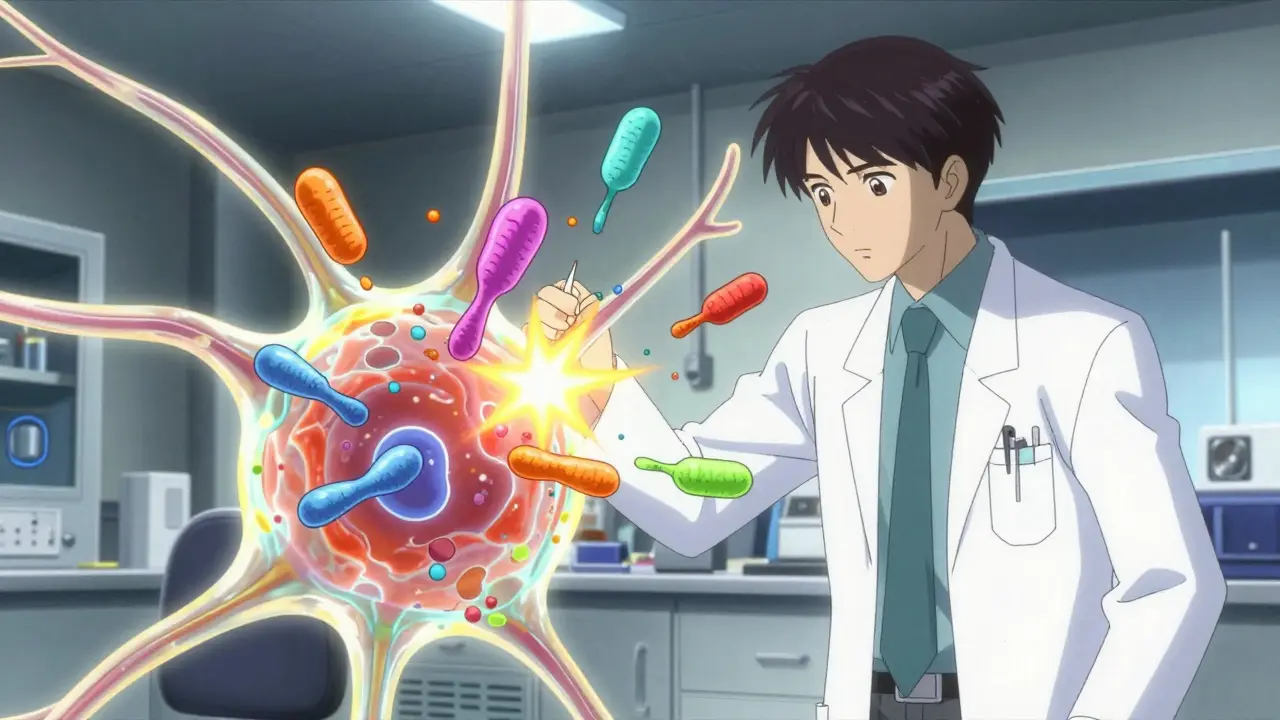
Diagnosis: AE vs. Viral Infection
The biggest challenge for doctors is telling the difference between an autoimmune attack and a viral infection (like Herpes Simplex Encephalitis). Both cause brain swelling and confusion, but the treatments are opposite. Giving steroids to someone with a viral infection can be dangerous.
Doctors use a few key tools to tell them apart:
- CSF Analysis: In AE, the white cell count in the cerebrospinal fluid is usually low (under 100 cells/μL). In viral infections, it's often hundreds or thousands.
- MRI Imaging: While many AE patients have normal scans, about 48% show focal inflammatory lesions. Viral encephalitis is much more obvious, showing abnormalities in 89% of cases.
- EEG Patterns: 76% of AE patients show brain wave slowing. They usually lack the "periodic lateralized epileptiform discharges" that are a hallmark of viral attacks.
The gold standard is testing both the blood (serum) and the CSF. Don't rely on just one; CSF testing is 15-20% more sensitive for antibodies like anti-NMDAR.
Treatment Strategies
Treatment is a tiered process. The goal is to stop the immune system from attacking the brain and, if possible, remove the trigger (like a tumor).
First-Line Therapy
The first step is usually high-dose steroids and antibodies. Methylprednisolone is typically given at 1 gram per day for five days. About 68% of patients respond to this within the first ten days. Many doctors also use IVIg (Intravenous Immunoglobulin), which provides healthy antibodies to neutralize the harmful ones.
Second-Line Therapy
If steroids don't work-which happens in about 30-40% of cases-doctors move to more aggressive B-cell depletion. Rituximab is a common choice here, showing a 55% response rate. Other options include cyclophosphamide or tocilizumab for those who don't respond to the standard path.
The "Emergency" Option
For patients in critical condition, Plasma Exchange (Plasmapheresis) is used to physically filter the antibodies out of the blood. This can lead to significant improvement in about 65% of critically ill patients within two weeks.

Recovery and Long-Term Outlook
The timing of treatment is everything. If you start immunotherapy within 30 days of the first symptom, the chance of a favorable outcome is 78%. If you wait longer than 45 days, that number drops to 42%. This is why experts emphasize that we should start treatment based on clinical suspicion even before the antibody results come back from the lab.
Recovery varies by antibody type. Those with anti-LGI1 have a higher complete recovery rate (55%) compared to anti-NMDAR (45%). However, the road isn't always smooth. About 40% of survivors deal with long-term issues:
- Cognitive Deficits: 32% struggle with executive function and memory.
- Psychiatric Struggles: 28% face ongoing depression or anxiety.
- Seizures: 22% require long-term anticonvulsant medication.
Management doesn't end when the inflammation stops. A multidisciplinary approach is key. Cognitive rehab can improve memory function by 65% over 12 weeks, and physical therapy can boost motor function by 50% in just two months. Even simple things like melatonin (3-5 mg) can help the 63% of patients who struggle with sleep disturbances.
Can autoimmune encephalitis be cured?
Many patients achieve substantial recovery (70-80%) with proper treatment. While some recover fully, others may have permanent cognitive or psychiatric changes. The likelihood of a full cure depends heavily on how quickly treatment started and the specific antibody involved.
What is the link between AE and tumors?
In about 30% of cases, AE is "paraneoplastic," meaning it is triggered by a tumor. The most famous example is the link between anti-NMDAR antibodies and ovarian teratomas. Removing the tumor is a critical step and often leads to rapid neurological improvement.
How do doctors test for these antibodies?
Doctors test both blood serum and cerebrospinal fluid (CSF). CSF testing is generally more accurate, especially for anti-NMDAR, providing 15-20% higher sensitivity than blood tests alone.
Does AE recur after treatment?
Yes, recurrence is possible. Anti-LGI1 has a higher recurrence rate at about 35%, while anti-NMDAR recurs in 12-25% of cases. Regular neurology follow-ups every 3-6 months for the first two years are recommended to monitor for relapse.
What happens if treatment is delayed?
Delaying treatment to wait for confirmatory antibody tests can worsen outcomes by up to 40%. Early intervention within the first 14 days is associated with a 32% higher likelihood of full recovery.
Next Steps for Patients and Caregivers
If you suspect a loved one is experiencing AE, the most important step is to get them to a neurologist immediately. Do not dismiss sudden behavioral changes as "just stress" or "early dementia," especially if they are accompanied by seizures or a recent flu-like illness.
For those already diagnosed, focus on a recovery plan that includes:
- Comprehensive Tumor Screening: If you have a high-risk antibody, screenings should be repeated every 4-6 months for two years.
- Cognitive Rehabilitation: Don't just wait for the brain to heal; structured therapy actively helps rebuild memory pathways.
- Mental Health Support: Depression is a common sequela; SSRIs are effective for about 70% of patients.
dwight koyner
April 7, 2026 AT 02:37The distinction between autoimmune encephalitis and viral infections is a critical point of clinical failure in many emergency departments. It is imperative that clinicians prioritize the lumbar puncture and CSF analysis early in the diagnostic pathway, as the risks associated with administering high-dose corticosteroids to a patient with active Herpes Simplex Encephalitis are severe and potentially fatal.
Darius Prorok
April 7, 2026 AT 13:29Basically, if you don't check the CSF, you're just guessing. Everyone knows blood tests aren't enough for NMDAR.
Jitesh Mohun
April 8, 2026 AT 08:31stop ignoring the tumor screen it is not a suggestion it is the only way some people actually survive this nightmare get the scans done now
Grace Lottering
April 9, 2026 AT 07:11Big Pharma loves these labels. It's all just a way to sell steroids. Wake up.
shelley wales
April 10, 2026 AT 22:02It is so heartening to see the recovery rates for those who get early treatment. For anyone currently in the thick of this, please know that cognitive rehab really does work and there is a path back to feeling like yourself again.
Nathan Kreider
April 11, 2026 AT 19:28Sending so much love to the families dealing with this right now. It must be so scary when a loved one changes like that, but it's great that there are actual treatments that work!
Jay Vernon
April 13, 2026 AT 18:38This is super helpful info! Thanks for sharing! 🌟🙏
Windy Phillips
April 14, 2026 AT 07:03One simply wonders if the "cognitive deficits" are merely a reflection of a fractured spirit... a lack of inner alignment...!!! Perhaps the medicine treats the brain, but ignores the soul's desperate cry for balance...!!!
Michael Flückiger
April 14, 2026 AT 21:21We can definitely beat this!!! Just keep fighting and keep pushing for the right diagnosis!!! It's all about that window of time, so stay assertive with the doctors!!! You got this!!!
Ruth Swansburg
April 16, 2026 AT 15:15Stay strong everyone! You can recover!
Stephen Luce
April 17, 2026 AT 06:34I've seen a few cases where the recovery was slow, but the multidisciplinary approach mentioned here is honestly the only way to go. The combination of physical therapy and mental health support makes a world of difference in the long run. It's not just about the drugs; it's about rebuilding the life that was interrupted. I think focusing on the small wins during the rehab phase helps patients stay motivated when the cognitive fog feels like it will never lift. The mention of melatonin is also a great tip because sleep is when the brain actually heals. Without decent sleep, the cognitive rehab just doesn't stick as well. It's a long road, but seeing someone regain their memory or their personality is a miracle in itself. We need more awareness so people don't just assume a 20-year-old has a psychiatric break. Early detection is literally everything in these scenarios. I've read that some people spend years in psych wards before a neurologist finally looks at them. That's the real tragedy. If we can just get the triage process right, the outcomes change completely. It's amazing how a tumor removal can basically flip a switch and bring someone back. The science here is incredible and the hope it provides is just immense. Just keep advocating for your loved ones and don't take 'no' for an answer if the symptoms don't fit a standard psych profile.