
Antibiotic & Dairy Interaction Checker
Interaction Results
Enter details to see results
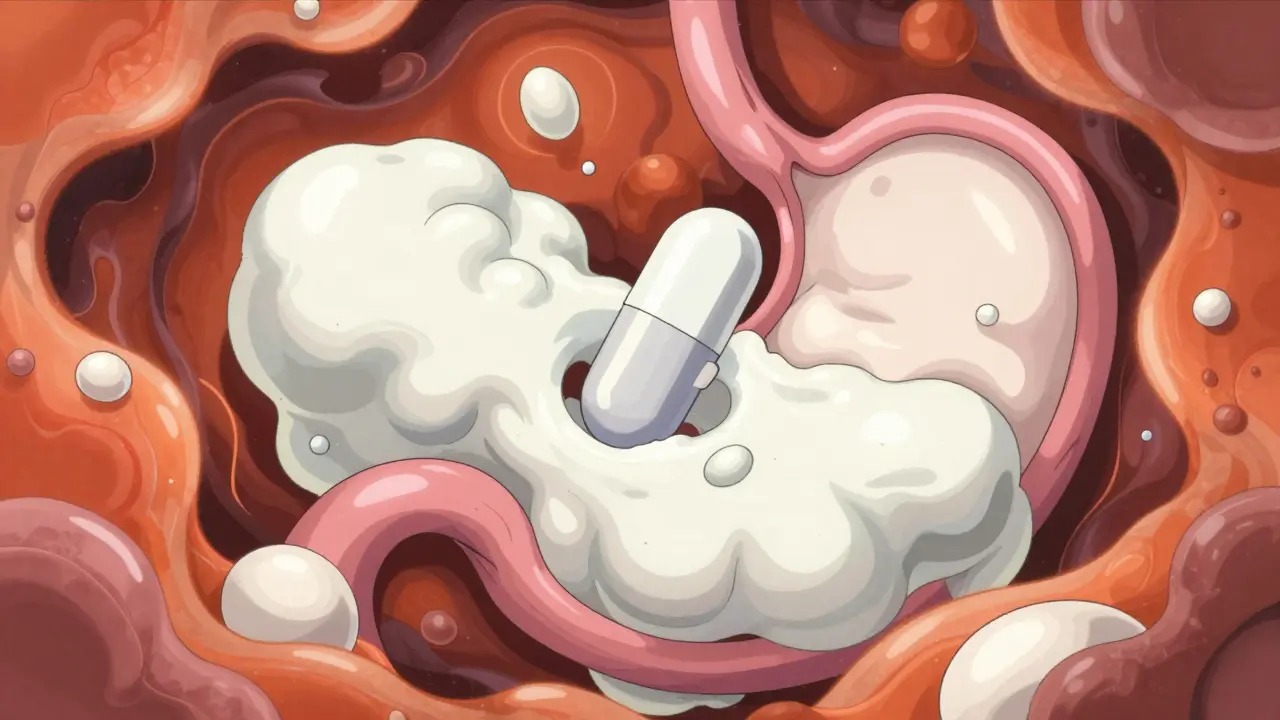
You take your morning coffee with milk, swallow your antibiotic pill, and head to work. It feels like a routine start to the day. But inside your stomach, a chemical reaction is quietly sabotaging your treatment. The calcium in that milk binds to the antibiotic, forming a lump that your body cannot absorb. You might as well have swallowed chalk.
This isn't just a minor inconvenience; it’s a primary reason why antibiotic treatments fail. When the drug doesn't reach your bloodstream in sufficient quantities, the bacteria causing your infection survive. They multiply, potentially becoming resistant to the very medicine meant to kill them. Understanding the mechanics of this interaction-specifically how calcium interacts with certain classes of antibiotics-is not optional advice. It is a critical component of effective healthcare.
The Chemistry of Failure: Chelation Explained
To understand why timing matters, you need to look at what happens in your gut. The process is called chelation. This is where metal ions, like calcium (Ca²⁺), bind tightly to organic molecules. In this case, the calcium from your yogurt or cheese latches onto the antibiotic molecule.
Imagine trying to push two magnets together with their same poles facing each other-they repel. Now imagine they snap together so hard they become a single, heavy object. That’s chelation. The resulting complex is large and insoluble. Your intestinal wall is designed to absorb small, soluble particles into the blood. It cannot absorb these giant, clumped complexes. So, the drug passes right through you, unused.
This phenomenon was first documented in the 1950s with the introduction of tetracyclines. Research published in the Journal of Clinical Pharmacology in 1957 showed exactly how calcium ions create these insoluble barriers. Today, the American College of Physicians lists this interaction as a high-priority safety concern. If you are taking certain antibiotics, eating dairy isn't just a dietary choice; it's a pharmacological event.
Which Antibiotics Are Affected?
Not all antibiotics hate milk. Some don't care at all. Knowing which class of drug you are on is the first step to avoiding treatment failure. Here is the breakdown of the major players:
| Antibiotic Class | Examples | Interaction Severity | Absorption Reduction |
|---|---|---|---|
| Tetracyclines | Tetracycline, Doxycycline, Minocycline | Severe (Level 1) | 20% - 75% |
| Fluoroquinolones | Ciprofloxacin, Levofloxacin | Moderate to Severe (Level 2) | 30% - 92% |
| Beta-Lactams | Amoxicillin, Penicillin V | Variable/Low (Level 3) | Minimal to >40% (varies by drug) |
Tetracyclines are the most sensitive. Calcium binds directly to specific positions on the antibiotic's molecular structure, creating complexes up to 100 times less soluble than the drug alone. Studies show that taking tetracycline with milk can reduce its bioavailability by up to 75%. Yogurt is even worse because its lower pH and higher calcium bioavailability accelerate the binding process.
Fluoroquinolones, such as ciprofloxacin, are also highly vulnerable. A landmark study in Clinical Pharmacology & Therapeutics found that ciprofloxacin plasma concentrations dropped by 70% when taken with milk and by a staggering 92% with yogurt. For serious infections, this drop means the drug concentration in your blood falls below the level needed to kill bacteria.
Beta-lactams are a mixed bag. While some, like cefalexin, see significant absorption drops, others like amoxicillin are relatively unaffected. Always check your specific prescription label, but generally, penicillins are safer to take with food than tetracyclines.
The Golden Rule: Timing Is Everything
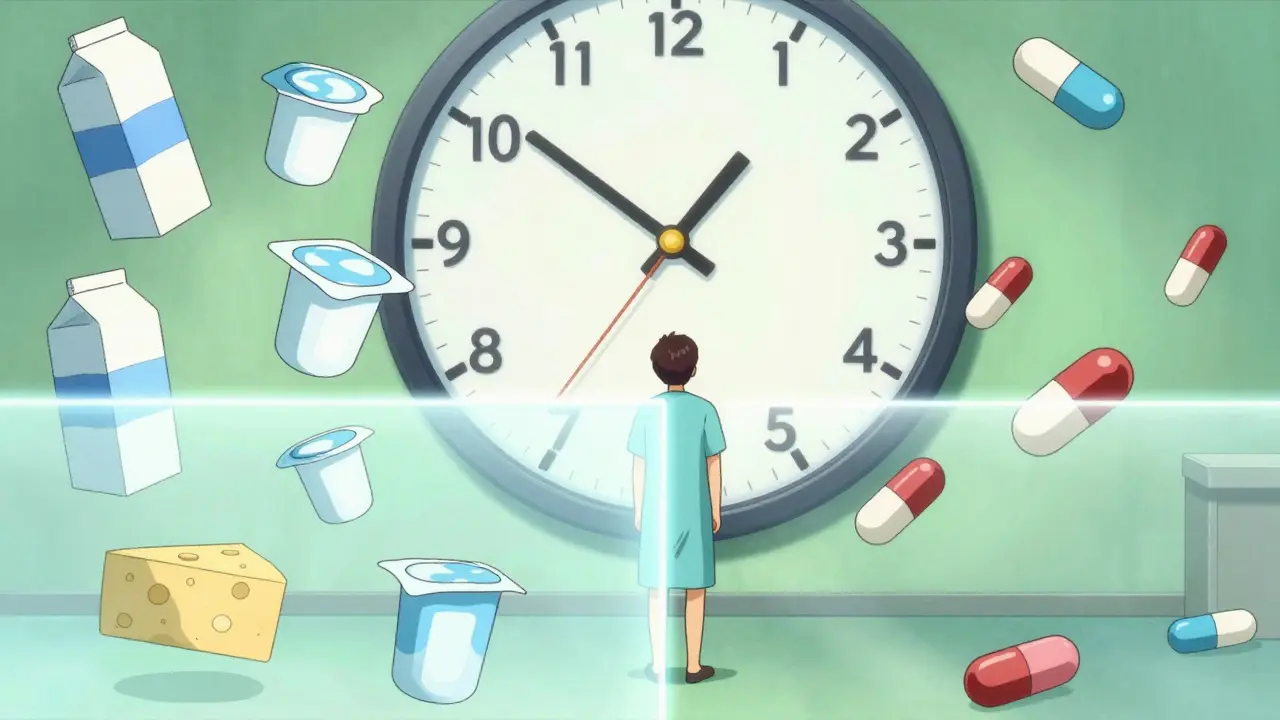
You don’t have to give up dairy forever. You just have to be strategic about when you consume it. The goal is to ensure the antibiotic has been absorbed before the calcium arrives, or vice versa.
Here are the standard separation windows recommended by clinical guidelines:
- Tetracyclines: Take the antibiotic at least 2 hours before or 4 hours after consuming dairy products. This wider window accounts for the strong binding affinity of these drugs.
- Fluoroquinolones: Maintain a gap of at least 2 hours before or 2 hours after dairy intake.
- Exceptions: Some newer formulations, like doxycycline monohydrate (e.g., Oracea), are modified-release and may be taken with food. However, unless your pharmacist explicitly tells you it’s safe, assume the strict timing applies.
Why the difference? Gastric emptying rates vary. Tetracyclines linger in the gut longer and bind more aggressively. Fluoroquinolones move faster but still require a clear path. Dr. John H. Bradley of the Cleveland Clinic noted that failing to adhere to these windows leads to subtherapeutic serum concentrations in 68% of patients who ignore the rules.
Hidden Calcium Traps
Most people think "dairy" means milk, cheese, and yogurt. But if you are trying to avoid calcium interactions, you need to broaden your definition. Any source of significant calcium can trigger chelation.
Consider these common pitfalls:
- Fortified Juices and Plant Milks: Almond, soy, and oat milks are often fortified with calcium carbonate or tricalcium phosphate. These bind just as effectively as cow's milk.
- Antacids: Products containing calcium carbonate (like Tums) are potent sources of calcium. Taking an antacid with your antibiotic is a recipe for disaster.
- Mineral Supplements: Multivitamins or standalone calcium supplements should follow the same 2-4 hour separation rule.
- Whey Protein: If you mix protein powder into your post-workout shake, remember it is derived from milk and contains calcium.
The threshold for significant interaction is approximately 200 mg of calcium. That’s roughly equivalent to 6 ounces of milk. If your breakfast cereal is fortified with vitamins and minerals, or if you add a splash of fortified almond milk to your coffee, you might be crossing that line without realizing it.
Real-World Challenges and Solutions
We know the science. We know the rules. So why do people still mess up? Because life is messy. A survey of 1,247 patients found that 63% experienced gastrointestinal side effects when taking tetracyclines on an empty stomach-the required state for optimal absorption. To stop the nausea, 29% intentionally consumed dairy, undermining the treatment.
Pharmacists report that 78% of patients misunderstand these timing requirements. One common error is thinking "dairy-free" means safe, only to drink cow's milk in tea thirty minutes later. Another is assuming that a small amount of creamer in coffee is negligible. It’s not. Even small amounts of calcium can initiate the binding process if the drug is present in the gut.
Here are practical strategies to stay compliant:
- Set Alarms: Use your phone to set reminders for both the medication time and the "safe to eat dairy" time.
- Choose Safe Foods: During the fasting window, stick to low-calcium options like plain toast, fruit (without fortified juice), or black coffee/tea.
- Read Labels: Check your vitamin bottles and plant-based milk cartons for calcium content.
- Ask Your Pharmacist: If you are on a twice-daily regimen, ask if there is a flexible schedule that fits your meal times better.
For those with lactose intolerance, this interaction is ironically easier to manage. A study from Jundishapur University of Medical Sciences found that lactose-intolerant patients had 18% higher antibiotic absorption rates, likely because they naturally avoided dairy during the critical window.
The Bigger Picture: Resistance and Safety
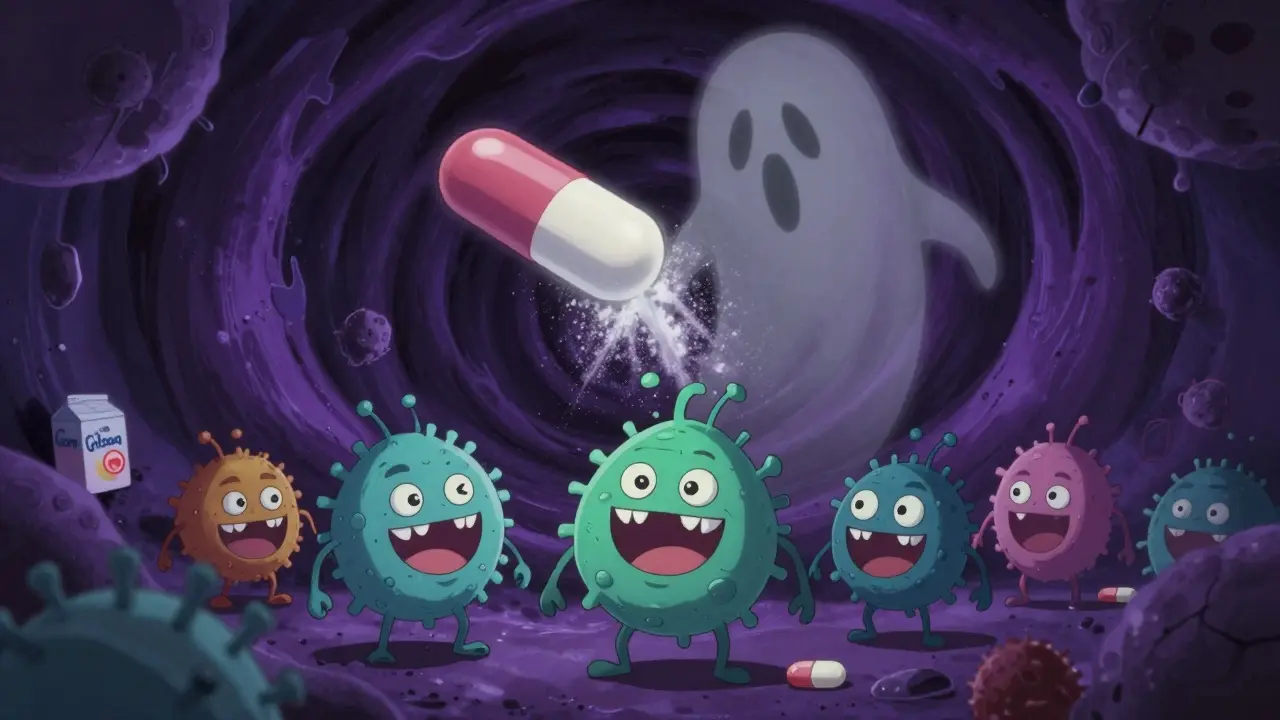
Ignoring these interactions isn't just about one failed prescription. It contributes to the global crisis of antimicrobial resistance. When bacteria are exposed to sub-lethal doses of antibiotics, they adapt. They develop mechanisms to survive. The WHO estimates that 1.27 million deaths annually are directly attributable to resistant infections.
By ensuring full absorption, you deliver a knockout blow to the bacteria rather than a warning shot. This reduces the likelihood of resistance developing. It also saves money. Patient non-adherence due to dietary confusion costs the US healthcare system an estimated $1.3 billion annually in repeat prescriptions and additional visits.
Regulatory bodies like the FDA have mandated labeling requirements since 1998 to warn patients about these interactions. Yet, confusion persists. The American Pharmacists Association ranks antibiotic-dairy interactions as the #3 preventable cause of antibiotic treatment failure in outpatient settings.
Frequently Asked Questions
Can I take amoxicillin with milk?
Yes, generally you can. Amoxicillin is a beta-lactam antibiotic and does not significantly interact with calcium in dairy products. Unlike tetracyclines or fluoroquinolones, amoxicillin absorption is not severely hindered by milk. However, always check your specific prescription instructions or consult your pharmacist, as individual formulations may vary.
How long do I have to wait after drinking milk before taking doxycycline?
You should wait at least 2 hours after consuming dairy before taking doxycycline, or take the doxycycline 2 hours before your next dairy meal. For maximum safety, many clinicians recommend a 4-hour gap after dairy consumption before taking the antibiotic, as tetracyclines are highly sensitive to calcium binding.
Does almond milk affect antibiotic absorption?
It depends on whether the almond milk is fortified. Most commercial almond milks are fortified with calcium carbonate or tricalcium phosphate to match the nutritional profile of cow's milk. If it contains added calcium, it will interact with sensitive antibiotics like tetracyclines and fluoroquinolones just like dairy milk. Check the nutrition label for calcium content.
rob van oudernallern
July 3, 2026 AT 21:02honestly this is so true i always forget to check the label and just grab whatever milk is in the fridge. my stomach would be killin me after taking doxy with yogurt lol
Sherrie Trecker
July 5, 2026 AT 01:05This article is absolutely terrifying in its implication that we are all incompetent fools who cannot manage our own basic biology without being lectured by a blog post. It is not 'sabotage' if you simply choose to take your medication at a different time, yet the tone suggests we are all doomed to fail unless we adhere to these rigid, arbitrary schedules. The pharmaceutical industry loves to blame patient error rather than designing drugs that are more stable in the presence of common dietary elements. It is a convenient scapegoat for their lack of innovation.
Mary Howarth
July 5, 2026 AT 16:08Oh my goodness! This is such an incredibly important piece of information to have right here! I mean, really, how many of us actually stop to think about the chemistry happening in our guts when we just want to get over a cold or an infection? It is truly amazing how much we can learn just by reading up on these things! And wow, did you know that yogurt is even worse than milk because of the pH levels? That is just fascinating! I feel so much better knowing that I can still enjoy my almond milk as long as I check the label for calcium carbonate! Thank you so much for sharing this wonderful knowledge with us all! Let's keep each other healthy and informed! :)
Sean Estabrooks
July 7, 2026 AT 00:19The chelation process described here is merely the tip of the iceberg regarding the systemic suppression of natural healing mechanisms by Big Pharma. They want you dependent on synthetic compounds that require strict adherence to artificial protocols, thereby keeping you tethered to their supply chain. The 'calcium trap' narrative is a classic distraction from the fact that these antibiotics are designed to be weak, ensuring repeat prescriptions and prolonged dependency. The real conspiracy lies in the fortification of plant milks with calcium carbonate, a deliberate move to sabotage alternative diets and push consumers back toward dairy consumption, which is heavily subsidized and controlled. Wake up!
Alana Frassinelli
July 7, 2026 AT 09:15i hear you guys but it is really hard to remember all this stuff when you are sick and feeling terrible. i always end up just eating whatever makes me feel a bit better even if it means my meds might not work as well. it feels like a lose lose situation sometimes. i wish doctors would just prescribe stuff that doesnt care what you eat.
Gavin Edley
July 8, 2026 AT 08:14Who cares about your gut chemistry when you're trying to live your life? This is absolute nonsense. I've taken amoxicillin with cheese for years and I'm fine. You people need to relax and stop letting every little medical guideline dictate your existence. It's about freedom, dammit. Eat the yogurt, drink the milk, and let the bacteria fight it out. Survival of the fittest applies to humans too, apparently.
jeremy pritchett
July 9, 2026 AT 18:09YOu gotta LISTEN to your body but also the SCIENCE. Its not rocket science its CHEMISTRY. If u dont follow the rules u r playing with fire. Get ur mind right and set those alarms. No excuses. BE STRONG. TAKE CONTROL OF UR HEALTH.
Kimberly Simbulan
July 11, 2026 AT 02:08Sure, because nothing says 'healthcare crisis' like worrying about whether my oat milk has enough calcium to ruin my antibiotic dose. Thanks for the panic attack. I'll just make sure to starve myself for four hours before taking my pills. That sounds totally sustainable and fun.
kavitha kumar
July 12, 2026 AT 19:32omg this is crazy i never knew this. my mom always told me not to mix food with medicine but she didnt say why. now i understand. thanks for telling us. i will tell my friends too. they need to know this.
fred morgan
July 12, 2026 AT 22:17The data presented regarding bioavailability reduction is consistent with established pharmacokinetic principles. Patients should adhere strictly to the separation windows outlined in clinical guidelines to ensure therapeutic efficacy.