
Have you ever dug through your medicine cabinet and found a bottle of pills with an expiration date from two years ago? It happens to all of us. We keep leftovers "just in case," only to forget they exist until we need them. The big question is: can you still take them? Is that headache gone if you pop the old ibuprofen, or are you risking your health?
The short answer is complicated. For most solid pills, the risk is low. But for certain critical drugs, taking an expired medication can be dangerous-or even fatal. Understanding what that printed date actually means helps you make smarter decisions about your health without throwing away money unnecessarily.
What the Date Actually Means
When you see an expiration date on a prescription or over-the-counter drug, it is not a random guess by the manufacturer. It is the final day the company guarantees the drug will maintain its full potency, purity, and safety when stored under specific conditions. This requirement comes from U.S. Food and Drug Administration (FDA) regulations established in 1979.
Manufacturers determine these dates through rigorous stability testing. They expose drugs to various environmental stresses-heat, humidity, and light-to see how long the active ingredients hold up. If a drug loses more than 10% of its labeled strength before the date, it fails the test. Most expiration dates are set conservatively, ranging from 12 to 60 months from the manufacturing date.
This guarantee protects you. It ensures that when you take the pill, you get exactly the dose prescribed. However, this guarantee assumes ideal storage conditions. If you store your meds in a hot car or a humid bathroom, they may degrade long before the printed date arrives.
The Military Study That Changed the Conversation
You might have heard rumors that expiration dates are just a way for companies to sell more drugs. There is some truth to the idea that many drugs last longer than stated, but it’s not because manufacturers are lying. It’s because science has shown that many stable drugs remain effective well past their labels.
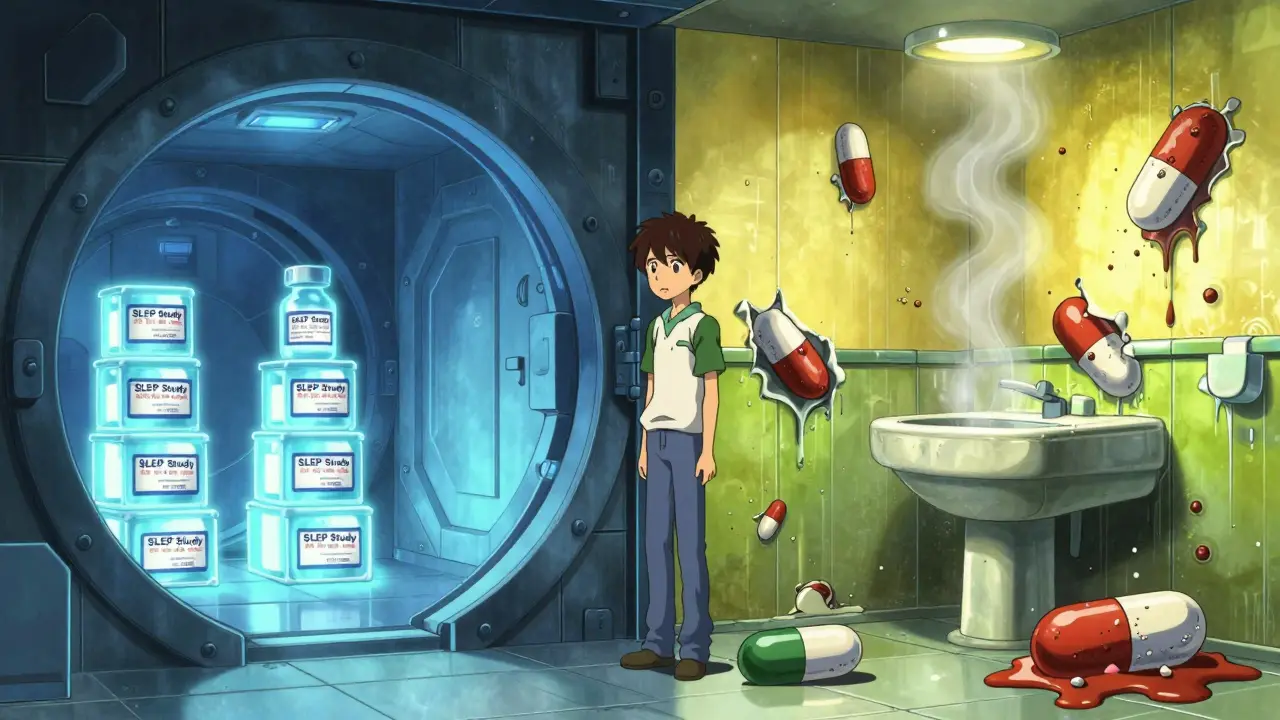
This insight largely comes from the Shelf Life Extension Program (SLEP), a massive study funded by the National Institutes of Health (NIH) and conducted for the U.S. military between 1985 and 2006. The goal was simple: save money. The Department of Defense was spending billions replacing stockpiled medications that were technically "expired" but potentially still good.
The results were surprising. Researchers tested 122 different drug products across 3,000 lots. They found that approximately 88% of these medications remained safe and effective for at least 15 years beyond their original expiration dates when stored in ideal conditions. For example, ciprofloxacin maintained 97% of its potency 12 years after expiration. Amoxicillin retained 94% effectiveness eight years later.
This data suggests that for many common, solid oral medications, the expiration date is a conservative estimate rather than a hard cliff where the drug suddenly becomes poison. However, "ideal conditions" is the key phrase here. Most people do not store their medicine in climate-controlled vaults like the military does.
High-Risk Exceptions: When Expired Drugs Are Dangerous
While the SLEP data offers hope for casual users of leftover painkillers, there are critical exceptions. Some medications degrade quickly or unpredictably, making them unsafe to use after expiration. Using these expired drugs can lead to treatment failure or severe health complications.
| Medication Type | Risk Level | Why It’s Dangerous |
|---|---|---|
| Nitroglycerin | High | Loses 50% potency within 3-6 months of opening the bottle, even before the expiration date. Critical for heart attacks. |
| Insulin | High | Degrades rapidly above 8°C (46°F). Loss of potency leads to uncontrolled blood sugar levels. |
| Liquid Antibiotics | High | Suspensions like amoxicillin-clavulanate become ineffective within 14 days of mixing, regardless of the printed date. |
| Epinephrine Auto-Injectors | High | EpiPens lose 15-20% potency annually after expiration. Underdosing during anaphylaxis can be fatal. |
| Warfarin | Moderate-High | Anticoagulant effects fluctuate unpredictably in expired formulations, creating dangerous bleeding risks. |
If you rely on any of these medications for life-sustaining therapy, never use an expired version. The Institute for Safe Medication Practices (ISMP) categorizes these as high-risk because degradation creates immediate danger. For instance, if you suffer an allergic reaction and your EpiPen is weak, it might not stop the airway closure. Similarly, taking degraded nitroglycerin during chest pain could fail to relieve the ischemia, leading to a heart attack.
Storage Conditions Matter More Than You Think
The biggest factor in whether your medication remains safe after expiration is how you stored it. The FDA’s stability tests assume specific temperatures and humidity levels. Your home environment rarely matches those lab conditions.
Many people keep medicines in the bathroom medicine cabinet. This is one of the worst places to store drugs. Showers create steam, raising humidity to 75-85% relative humidity (RH). High moisture accelerates chemical breakdown. Tablets can crumble, capsules can stick together, and liquids can grow bacteria.
To maximize shelf life:
- Keep medications in their original containers with child-resistant caps sealed tightly.
- Store them in a cool, dry place, ideally below 25°C (77°F) with humidity under 60% RH.
- Avoid places with temperature fluctuations, such as kitchens near ovens or cars parked in the sun.
- Protect light-sensitive drugs from direct sunlight by keeping them in opaque bottles.
Research from the European Medicines Agency shows that medications stored at 30°C experience 40-60% faster degradation rates than those stored at 25°C. A few degrees matter. If you live in a warm climate, consider using a dehumidifier in the storage room or keeping non-refrigerated meds in a drawer inside a closet rather than on a counter.
Signs Your Medicine Has Gone Bad
Even if the date hasn’t passed, your medication might be compromised. Before taking any drug, inspect it visually and olfactorily. Do not rely solely on the calendar.
Look for these warning signs:
- Discoloration: White tablets turning yellow or brown indicate oxidation or chemical breakdown.
- Unusual Odors: If a capsule smells sour, rancid, or different from usual, discard it.
- Physical Changes: Tablets that are crumbling, cracked, or stuck together have absorbed too much moisture.
- Liquid Issues: Cloudiness, precipitation (particles settling out), or separation in suspensions that don’t mix back up with shaking.
If you notice any of these changes, throw the medication away immediately. These physical cues often signal that the drug’s chemical structure has altered, which can reduce efficacy or create harmful byproducts.
How to Dispose of Expired Medications Safely
Once you decide a medication is too old or damaged, proper disposal is crucial. Flushing drugs down the toilet can contaminate water supplies, while throwing them in the trash poses risks to children and pets who might dig them out.
The best option is to use a drug take-back program. In the United States, the DEA hosts National Prescription Drug Take-Back Days twice a year (typically in April and October). In 2023, nearly 6,000 collection sites removed over 900,000 pounds of unused medications. Many local pharmacies also have permanent drop-off boxes.
If no take-back site is available, the FDA recommends mixing the drugs with an unappealing substance like dirt, cat litter, or used coffee grounds in a sealed plastic bag before throwing them in the household trash. Remove or scratch out personal information on the label first.
Note: Only flush medications if specifically instructed. The FDA maintains a "Flush List" for high-risk drugs like fentanyl patches and oxycodone immediate-release tablets, where the risk of accidental ingestion outweighs environmental concerns.
The Future of Expiration Dating
Technology is starting to change how we view expiration dates. The FDA launched a pilot program in 2023 testing real-time stability monitoring. Bluetooth-enabled sensors track temperature and humidity exposure throughout the supply chain. This data allows for dynamic expiration dates based on actual storage history rather than worst-case assumptions.
Early results show a 22% reduction in unnecessary discards for insulin products. Imagine buying a box of meds that tells you exactly how much potency remains based on how it was stored since the factory. Companies like Vesta Inc. are already producing smart packaging with time-temperature indicators (TTIs) that change color if the drug has been exposed to excessive heat.
While these technologies are not yet standard for consumers, they highlight a shift toward precision. Instead of a blanket "use by" date, we may soon have personalized shelf-life estimates. Until then, sticking to the printed date for critical drugs and exercising caution with others remains the safest approach.
Can I take expired ibuprofen or acetaminophen?
For most solid oral forms like ibuprofen or acetaminophen tablets, the risk of harm from taking them slightly past expiration is low, especially if they have been stored properly. Studies like the SLEP program show these drugs often retain potency for years. However, they may be less effective. If you are treating mild pain, it might work. If you need reliable relief for a serious condition, buy a new bottle.
Do expiration dates apply to vitamins and supplements?
Yes, but the standards are less strict than for pharmaceuticals. Vitamins and dietary supplements are regulated differently by the FDA. Their expiration dates indicate when the manufacturer guarantees potency. After that date, the vitamin content may decrease, but they generally do not become toxic. Taking an expired multivitamin is usually harmless, though less beneficial.
Why do liquid antibiotics expire so quickly?
Liquid antibiotics often come as powders that you mix with water. Once reconstituted, the solution is unstable and prone to bacterial growth and chemical degradation. Unlike solid pills, liquids lack preservatives in many cases. Most reconstituted antibiotics must be discarded within 10 to 14 days, regardless of the original package expiration date.
Is it illegal to sell expired medications?
Yes. In the United States and many other countries, it is illegal for pharmacies and retailers to dispense or sell medications past their expiration dates. The Drug Supply Chain Security Act requires tracking of expiration dates through the distribution chain. Selling expired drugs violates federal law and poses significant liability risks for businesses.
Does refrigeration extend the life of all medications?
No. Only medications that specifically require refrigeration should be stored in the fridge. Storing non-refrigerated drugs in cold temperatures can cause condensation when taken out, introducing moisture that speeds up degradation. Always follow the storage instructions on the label. If it says "store at room temperature," do not put it in the fridge.