
Thyroid Eye Disease (TED) isn’t just about dry eyes or puffy eyelids. It’s an autoimmune condition that attacks the tissues behind your eyes, causing swelling, pain, and sometimes vision loss. If you’ve been diagnosed with Graves’ disease, you’re at risk-up to half of those patients develop TED. But even people with normal or low thyroid levels can get it. The real danger? Waiting too long to treat it. Once the inflammation turns to scar tissue, you’re looking at permanent changes-and surgery.
What Does Thyroid Eye Disease Actually Feel Like?
Most people don’t realize how much TED affects daily life until it’s already advanced. It starts subtly: a gritty feeling in the eyes, like sand is stuck under the lids. Then comes light sensitivity, especially when driving at night or staring at screens. About 65% of patients report this. Pain behind the eyes, especially when moving them, hits nearly half of people. Redness isn’t just from tiredness-it’s swollen conjunctiva, often worse in the morning. You might notice your eyes bulging forward. That’s proptosis. In severe cases, it’s obvious-people comment on how ‘staring’ you look. Double vision is another red flag. If you see two images when reading or looking at a TV, it’s not just blurry eyes. It’s swollen eye muscles that can’t move in sync. About 28% of TED patients develop this. And yes, it affects both eyes in 89% of cases. Even if only one eye seems off, the other is likely involved too. Symptoms aren’t constant. They flare up during the active phase, which lasts 6 to 24 months. After that, things stabilize-but damage may remain. That’s why timing matters. Treatments work best early.Why Steroids Are Still the First Line of Defense
When TED is active, your immune system is firing off inflammation. Steroids calm that down. The go-to treatment? Intravenous methylprednisolone. It’s given as a weekly drip: 500 mg for six weeks, then 250 mg for another six. Studies show this works in 60-70% of moderate-to-severe cases. Why IV? Because it delivers higher doses directly into your bloodstream, with fewer side effects than pills. Oral prednisone is an option for milder cases. But here’s the catch: you gain weight-on average 8.2 kg. Blood sugar spikes in 18% of people. Bone thinning becomes a real risk. And even if you feel better, 25-30% relapse once the dose drops. That’s why doctors limit oral steroids to short bursts. There’s a strict cap on total IV steroid use: 4.5 to 5 grams. Go beyond that, and liver damage becomes a real threat. It happens in about 2.3% of patients. That’s why your doctor will monitor your liver enzymes closely. Steroids aren’t a cure-they’re a pause button. They reduce swelling, protect your vision, and buy time for other treatments to kick in.Biologics: A Game-Changer for TED
Before 2020, there was no drug that targeted the root cause of TED. Then came teprotumumab (Tepezza®). It’s not a steroid. It’s a monoclonal antibody that blocks the IGF-1 receptor, a key player in the inflammation behind TED. In the OPTIC trial, 71% of patients saw their eyes bulge back by at least 2 mm. Only 20% in the placebo group did. Double vision improved in 59% of those on teprotumumab-nearly triple the placebo rate. The treatment? Eight infusions over 21 weeks. First dose is 10 mg/kg, then 20 mg/kg every three weeks. It’s not cheap-around $360,000 per course in the U.S. But for many, it’s life-changing. One Reddit user shared: “After my 8th infusion, my proptosis dropped from 24mm to 20mm. I could finally look straight ahead again.” Side effects? Muscle spasms in 24%, hearing changes in 11%, and high blood sugar in 8%. The FDA added a boxed warning for these in 2021. But compared to steroids, the trade-off is better. No weight gain. No osteoporosis risk. Fewer systemic issues. Other biologics are in the pipeline. Satralizumab (Enspryng®), an anti-IL-6 drug, got FDA approval in 2023 for steroid-resistant TED. It’s given as a monthly shot under the skin. Early data shows 54% of patients had reduced bulging. Rituximab and tocilizumab are being studied too, but evidence isn’t strong enough yet.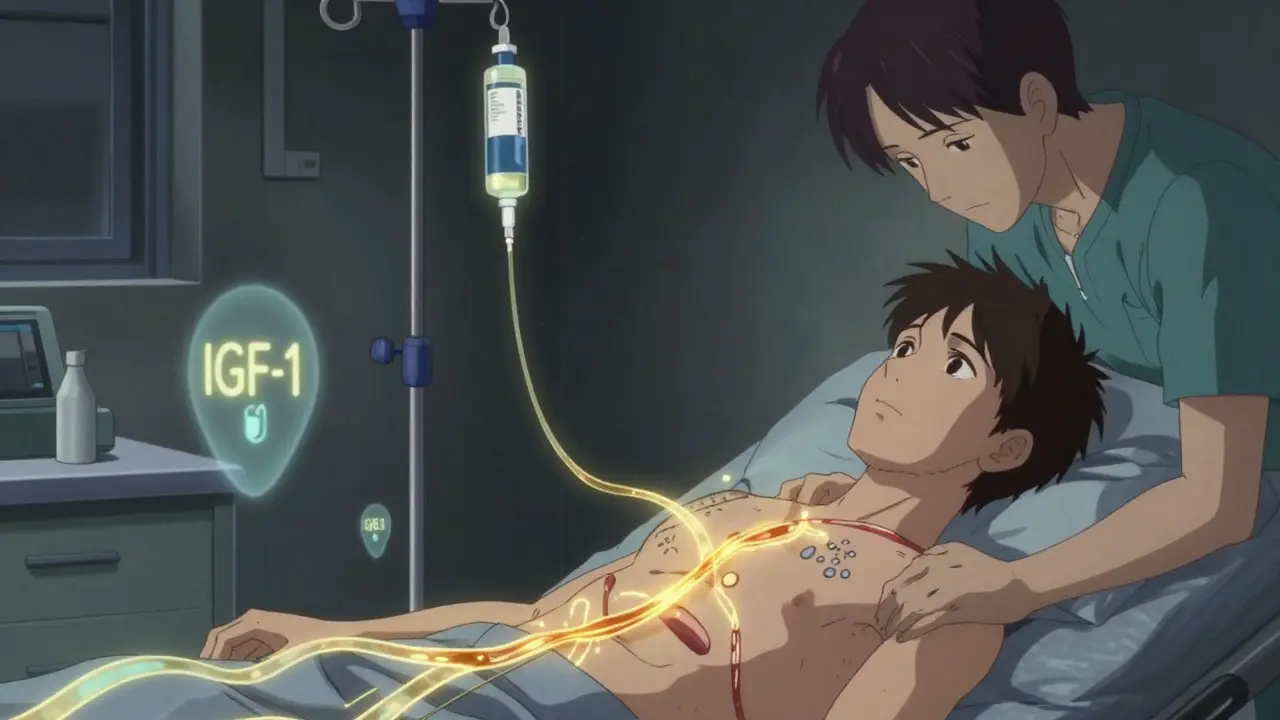
Who Gets Access? The Real-World Struggle
Just because a drug works doesn’t mean you can get it. Insurance denials are common. In 2023, 42% of patients reported being denied teprotumumab. Medicaid patients face the biggest hurdles-67% struggle with coverage versus 28% of those with private insurance. The prior authorization process takes an average of 47 days. That’s almost two months of inflammation unchecked. Some patients pay $5,000 per infusion out of pocket-even with insurance. That’s why many delay treatment, hoping symptoms will improve on their own. They don’t realize: every week you wait, the chance of permanent damage grows. By the time surgery is needed, you’re facing risks like vision loss (0.5%), new double vision (15%), or chronic sinus infections (8%). Access also depends on location. Only 45% of ophthalmologists in the U.S. routinely use biologics. In rural areas, that number drops to 28%. If you don’t live near a major medical center, getting the right care can mean driving hours or relocating.What About Selenium and Other Supportive Treatments?
Selenium isn’t a cure, but for mild TED, it helps. Taking 200 mcg daily for six months improves quality of life scores by 23% compared to placebo. It’s cheap, safe, and backed by a Cochrane review. It’s not a replacement for steroids or biologics-but if you’re in the early stage and can’t access stronger treatments, it’s a solid first step. Preservative-free artificial tears? Essential. Sodium hyaluronate drops (0.15-0.3%) reduce grittiness and dryness. About 85% of patients feel better within four weeks. Sleeping with your head elevated helps reduce morning puffiness. Sunglasses cut light sensitivity. Prisms in glasses fix double vision-if the muscle imbalance is under 15 prism diopters. Beyond that, surgery is needed.
When Surgery Becomes Necessary
If inflammation has turned to scar tissue, drugs won’t fix it. That’s when surgery steps in. Orbital decompression removes bone around the eye socket to create space. It reduces bulging by 2-5 mm. Strabismus surgery repositions eye muscles to fix double vision. Eyelid surgery corrects retraction so you can blink properly. But here’s the catch: surgery only happens after TED goes inactive. That’s usually after 1-3 years. Rush it, and you risk worsening symptoms. Surgeons wait until your eyes stop changing-no more redness, swelling, or pain. Then they map out the plan. Even then, complications happen. 15% of patients get new or worse double vision after decompression. That’s why it’s a last resort.The Future of TED Treatment
The TED market is exploding. It was worth $1.2 billion in 2023. By 2030, it’s projected to hit $4.7 billion. Amgen’s acquisition of Horizon Therapeutics for $28 billion shows how big this is. A biosimilar of teprotumumab is coming by 2025-expected to cut costs by 30-40%. New trials are testing combinations. The TOPAZ trial is looking at teprotumumab plus selenium. Early results show 82% response rate-better than either alone. Researchers are also hunting for genetic markers. If you carry certain genes, you might be more likely to develop TED or respond to specific drugs. Within five years, we could be personalizing treatment based on your DNA. But the biggest challenge remains: catching it early. Many patients see their endocrinologist for thyroid issues and never get screened for eye symptoms. Doctors need to ask: “Do your eyes feel gritty? Are they bulging? Do you see double?” A simple Clinical Activity Score (CAS) check-asking about pain, redness, swelling-can catch TED before it escalates.What You Should Do Now
If you have Graves’ disease or unexplained eye symptoms:- See an ophthalmologist who specializes in TED-not just any eye doctor.
- Get a CT or MRI scan to check for muscle enlargement.
- Ask for a TRAb blood test. Levels above 15 IU/L mean higher TED risk.
- If you smoke, quit. Smoking increases your risk by nearly 8 times.
- Start selenium (200 mcg daily) if symptoms are mild.
- Use preservative-free artificial tears daily.
- Don’t wait for symptoms to get worse. Early treatment prevents surgery.
Sangeeta Isaac
January 20, 2026 AT 21:34Been through this with my mom-TED doesn’t just change your eyes, it changes how you see yourself. The staring thing? People don’t get it until they’ve been asked if they’re mad at them while just trying to blink. I wish more docs would screen for it early. Selenium helped her a ton before we got her on IV steroids. Still, the cost of Tepezza? Insane. We had to fight insurance for 5 months. She’s better now, but the system is broken.
Kevin Narvaes
January 21, 2026 AT 12:18so like… if your eyes bulge out and you’re not even tryin to look intimidating, is that a vibe or a medical emergency? 🤔
Malvina Tomja
January 23, 2026 AT 01:47Let’s be real-Tepezza is a miracle drug for the 1% who can afford it. Meanwhile, the rest of us are taking selenium like it’s a vitamin and hoping for the best. You think your insurance cares about your vision? They care about their profit margins. And don’t get me started on how rural patients are just… forgotten. This isn’t healthcare. It’s a lottery.
Dee Monroe
January 24, 2026 AT 21:10There’s something deeply human about how this disease sneaks up on you-not just the physical changes, but the isolation that comes with it. You start avoiding mirrors. You stop going out because you don’t want people to stare. And yet, when you finally find a treatment that works-when your eyes stop feeling like they’re being held open by invisible hands-you realize how much you’d been holding your breath. It’s not just about vision. It’s about coming back to yourself. I’m grateful for the science, but even more for the people who kept showing up-even when I didn’t say much.
Amber Lane
January 25, 2026 AT 01:04Quit smoking. Seriously. It’s the one thing you can control.
Glenda Marínez Granados
January 25, 2026 AT 17:30So Tepezza fixes your eyes but gives you muscle spasms… and we call this progress? 🤡
Barbara Mahone
January 26, 2026 AT 02:52As someone who grew up in a household where thyroid issues were routine, I appreciate the clinical detail here. But I also want to acknowledge the quiet suffering-people who can’t afford time off work, who don’t have advocates, who are told it’s just ‘dry eyes.’ This isn’t just medicine. It’s dignity.
shubham rathee
January 27, 2026 AT 20:41Did you know the FDA approved Tepezza because of a lobbyist from a pharma company that also owns a ski resort? Coincidence? I think not. The real cure is sunlight and clean water. Not biologics. Wake up people
Alex Carletti Gouvea
January 28, 2026 AT 11:26Why are we spending $360K on eye drugs when we can’t fix the VA? This is why America’s falling apart. Prioritize real problems. Not rich people’s eyelids.
Andrew Rinaldi
January 29, 2026 AT 20:02I think what’s missing here is the emotional toll on families. My sister went from being the life of the party to barely leaving her room. It took years for her to feel like herself again. The science matters, but so does the patience, the listening, the quiet presence. Healing isn’t just in the infusion room-it’s in the kitchen, at 2 a.m., with tea and silence.
Samuel Mendoza
January 30, 2026 AT 16:58Biologics? More like biowaste. You think science fixed this? Nah. The body heals itself. Steroids are poison. Tepezza is a scam. Go drink lemon water and stop believing pharma fairy tales.
MAHENDRA MEGHWAL
February 1, 2026 AT 13:04As a medical professional from India, I have witnessed the devastating impact of delayed diagnosis in resource-limited settings. The lack of awareness among general practitioners, the stigma associated with visible eye changes, and the absence of affordable biologics create a perfect storm. While the data presented is accurate, it reflects a system designed for the privileged. We need global equity-not just innovation. Selenium, education, and basic screening protocols could save thousands in low-income regions. Let us not celebrate breakthroughs while leaving the most vulnerable behind.
lokesh prasanth
February 2, 2026 AT 19:28Tepezza works but costs more than my car. Also my spelling is bad but i still know more than you