
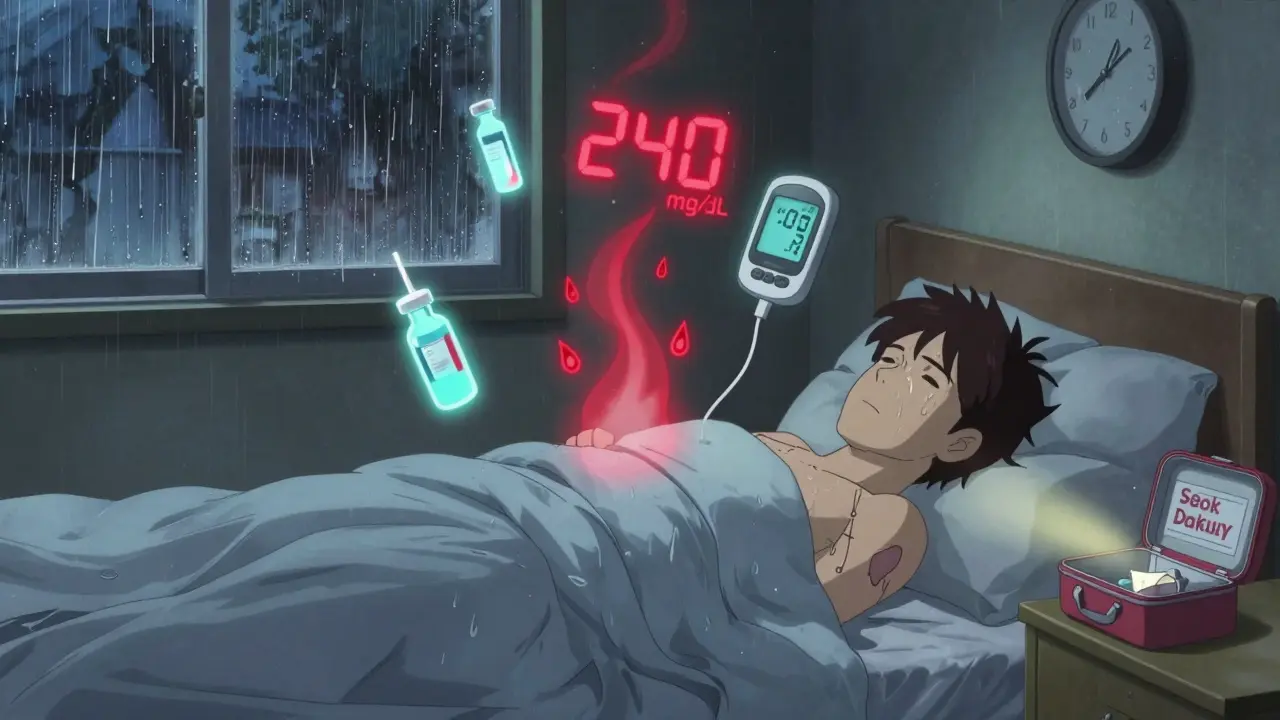
When you’re sick, your body goes into survival mode. That’s fine if you’re healthy-but if you have diabetes, it can turn dangerous fast. Illness triggers stress hormones like cortisol and adrenaline, which spike your blood sugar even if you’re not eating. Without the right actions, this can lead to diabetic ketoacidosis (DKA), a life-threatening condition that sends thousands to the hospital every year. The good news? There are clear, proven rules to follow. They’re not complicated, but they require discipline. Skip them, and you risk serious harm. Follow them, and you can get through sickness without ending up in the ER.
Never Stop Your Insulin
This is the most important rule, and it applies to everyone with diabetes who takes insulin-whether you’re on injections or a pump. Insulin doesn’t take a day off when you’re sick. In fact, you need more of it. Your body is fighting infection, and that means your cells are resisting insulin. Even if you can’t eat, your liver keeps releasing glucose. If you skip your long-acting insulin (like Lantus, Levemir, or Basaglar), your blood sugar will keep climbing, and your body will start breaking down fat for energy. That’s how ketones build up. Studies show that up to 30% of DKA cases happen because people stop or reduce their insulin when they’re sick. You might think, “I’m not eating, so I don’t need insulin.” That’s a dangerous myth. The American Diabetes Association and the International Diabetes Federation both say: keep your basal insulin on. For most people, that means taking your usual dose. But if your blood sugar stays above 240 mg/dL for several checks, you may need to increase your basal rate by 20% for 12 hours. Pump users should set a temporary basal increase. Those on multiple daily injections should add a correction dose every 3-4 hours, even if they’re not eating.Check Your Blood Sugar Every Few Hours
You can’t manage what you don’t measure. During illness, check your blood sugar at least every 3 to 4 hours-even through the night. For children, the recommendation is even tighter: every 2 to 3 hours. This isn’t just about tracking numbers. It’s about catching trends. If your glucose keeps climbing, you’re at risk. If it drops too low, you’re at risk too. Use these thresholds as your guide:- Below 100 mg/dL: You might be going low. Take 15 grams of fast-acting carbs (like juice or glucose tabs).
- Between 100 and 180 mg/dL: You’re in a safe zone. Keep hydrating and monitor.
- Above 180 mg/dL: You need to act. Give a correction dose of insulin.
- Above 240 mg/dL: Check for ketones. Don’t wait.
Many people rely on fingerstick tests, but if you use a continuous glucose monitor (CGM), pay attention to trends. If over half your readings are above 250 mg/dL for 12 hours straight, treat it like a red flag. That’s when you should consider calling your doctor.
Hydration Is Non-Negotiable
When you’re sick, your body loses fluids through fever, breathing faster, vomiting, or diarrhea. For someone with diabetes, that’s a double threat. High blood sugar pulls water out of your cells, and if you don’t replace it, you get dehydrated fast. Dehydration makes ketones worse and can push you into DKA. Drink fluids constantly. Aim for 6 to 8 ounces every hour. That’s about a glass of water every 60 minutes. For kids, the rule is simpler: drink their age in ounces per hour. A 10-year-old should drink 10 ounces every hour. If you’re vomiting, try small sips every 10 minutes. Don’t wait until you’re thirsty. By then, you’re already behind. What you drink matters too:- If your blood sugar is below 100 mg/dL: Use sugary fluids like regular soda, juice, or Gatorade. 4 ounces of juice gives you about 15 grams of carbs.
- If your blood sugar is between 100 and 180 mg/dL: Mix half sugary fluid with half water. This keeps your glucose steady without spiking.
- If your blood sugar is above 180 mg/dL: Stick to sugar-free fluids like water, diet soda, or broth. Avoid alcohol-based drinks-they can spike or crash your sugar.
Keep an 8-ounce measuring cup handy. Guessing how much you’re drinking leads to under-hydration. If you can’t keep fluids down for more than 4 hours, go to the ER. IV fluids are often needed to break the cycle.
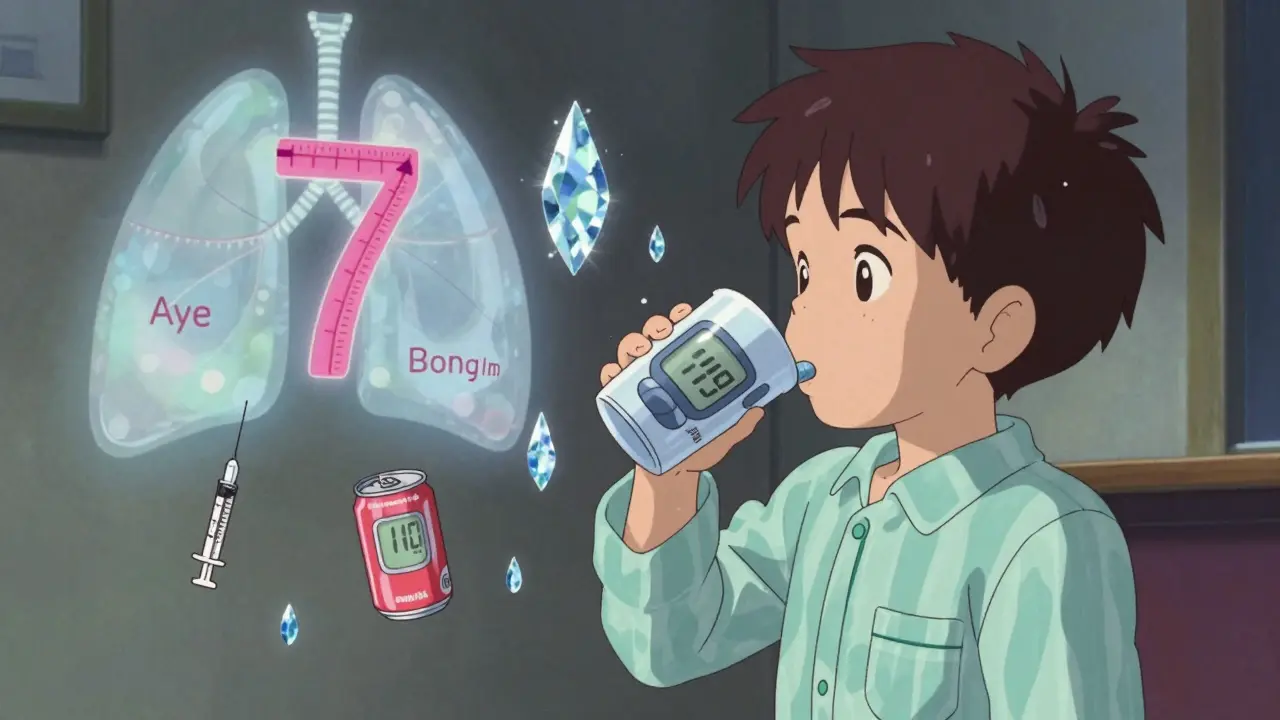
Test for Ketones-Don’t Guess
Ketones are your body’s warning sign that it’s running out of insulin. When glucose can’t enter cells, your body burns fat instead. That produces ketones, which build up in your blood and urine. High ketones + high blood sugar = DKA risk. You must test for ketones if your blood sugar is above 240 mg/dL, or if you feel nauseous, have stomach pain, or are breathing fast. Use a blood ketone meter if you have one. They’re more accurate than urine strips. Urine strips can be misleading-they show ketones from hours ago, not what’s happening right now. Here’s what the numbers mean:- Under 0.6 mmol/L: Normal. Keep monitoring.
- 0.6 to 1.5 mmol/L: Moderate. Increase insulin and hydrate. Recheck in 2 hours.
- Above 1.5 mmol/L: High. This is an emergency. Call your doctor or go to the ER. If you use a pump, change your infusion site immediately. A clogged site could be the cause.
Many people don’t know how to use ketone strips correctly. Some use expired strips-once opened, they lose accuracy after 6 months. Others use urine strips when blood meters are recommended. The CDC says over 40% of people get this wrong. Don’t be one of them. Keep fresh ketone strips in your sick-day kit. Test early, test often.
Type 1 vs. Type 2: Key Differences
Not all diabetes is the same, and sick day rules aren’t one-size-fits-all. For Type 1 diabetes, insulin is your lifeline. You must never skip it. Even if you’re vomiting and can’t eat, you still need basal insulin. Your body will make ketones fast without it. For Type 2 diabetes, things are more flexible-but not always. If you’re on insulin, follow the same rules as Type 1. If you’re only on oral meds (like metformin), you might not need to check ketones unless your blood sugar stays above 240 mg/dL for more than a day. But if your glucose spikes and you feel unwell, your doctor may advise starting insulin temporarily. That’s not unusual. Illness can change how your body responds. The CDC recommends keeping blood sugar between 110 and 180 mg/dL during illness for Type 2 patients. That’s looser than your normal target, but it’s safer than chasing perfect numbers when you’re sick.Prepare a Sick-Day Kit Before You Get Sick
Waiting until you’re ill to gather supplies is a mistake. Build a kit now:- Extra insulin (vials or cartridges)
- Unexpired ketone test strips (check expiration date)
- Blood glucose meter with extra batteries
- Glucose tablets or juice boxes
- Sugar-free fluids (water, diet soda, broth)
- 15-gram carb snacks (gel, crackers, applesauce)
- 8-ounce measuring cup
- List of emergency contacts and your doctor’s number
- Glucagon kit (if prescribed)
Keep this kit in one place-like your medicine cabinet or a drawer near your bed. Check it every 3 months. Replace expired items. Make sure your insulin isn’t past its shelf life. A single expired ketone strip can give you a false negative and delay life-saving action.
When to Call for Help
You don’t have to handle this alone. Know the warning signs that mean you need medical help:- Blood ketones above 1.5 mmol/L
- High blood sugar that doesn’t drop after 2 correction doses
- Vomiting for more than 4 hours
- Confusion, drowsiness, or trouble breathing
- Weight loss of 5 pounds or more in a few days
- Feeling too sick to drink anything
These aren’t just suggestions. They’re red flags. Delaying care can lead to hospitalization. The CDC reports that 27% of diabetes-related hospitalizations are due to DKA during illness. Most of those cases could have been prevented with early action.
Common Mistakes and How to Avoid Them
People make the same mistakes over and over:- Skipping insulin because they’re not eating.
- Drinking sugary drinks when their blood sugar is already high.
- Using old ketone strips or urine strips instead of blood meters.
- Waiting too long to call the doctor.
- Taking OTC cold medicines with sugar or alcohol-these can spike or crash blood sugar.
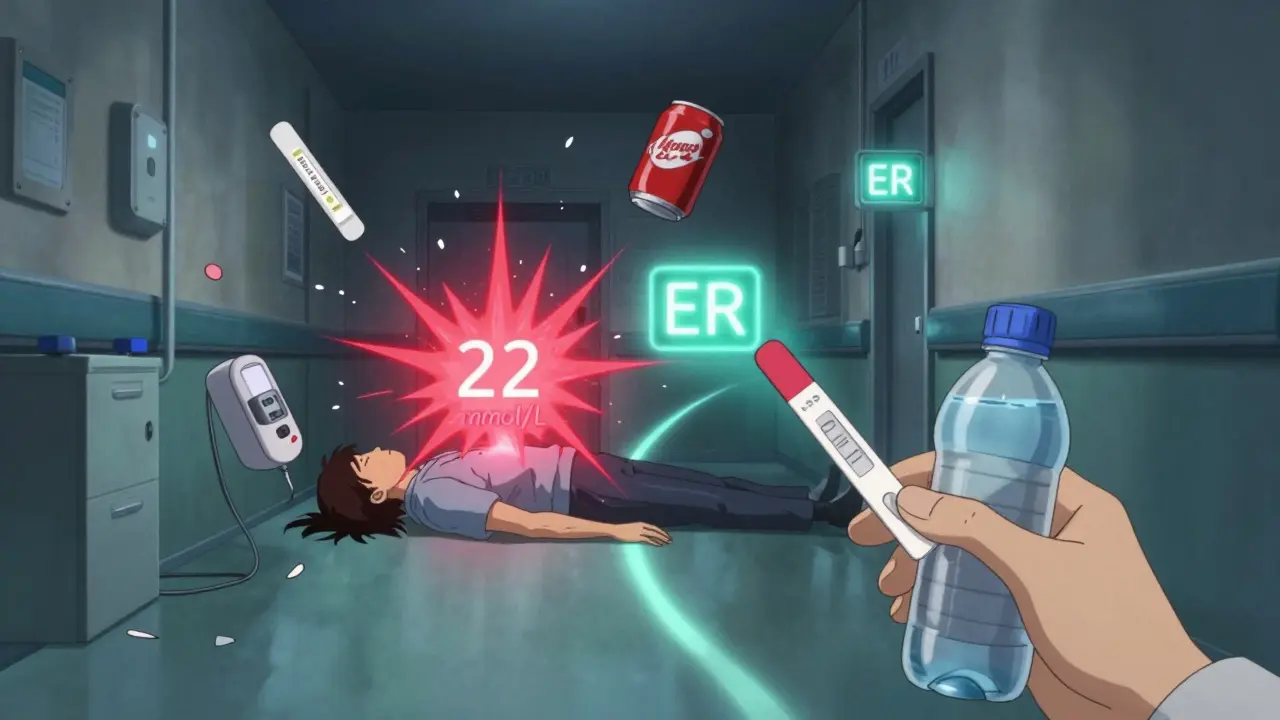
One Reddit user shared: “I thought I was doing the right thing by skipping insulin when I couldn’t eat. I ended up in DKA with ketones at 22 mmol/L.” That’s a nightmare scenario-but it’s preventable. Stick to the rules. Even when you feel awful. Even when you don’t understand why.
What’s Changing in 2026
Guidelines keep improving. The ADA updated its 2023 guidelines to include CGM trends. If your sensor shows 50% of readings above 250 mg/dL for 12 hours, treat it like a high ketone reading. The CDC now has specific advice for viral illnesses like RSV and flu-they cause 37% more insulin resistance than bacterial infections. And by 2025, AI tools may help predict when you’re at risk based on early symptoms like fatigue or fever. But for now, the core rules haven’t changed: keep insulin on, drink fluids, check ketones, and act fast.Should I stop my insulin if I’m vomiting and can’t eat?
No. Never stop your insulin, even if you’re not eating. Your body still needs insulin to stop ketone production. If you’re vomiting, try taking small sips of fluids and give your usual basal dose. If you can’t keep anything down for more than 4 hours, go to the ER for IV fluids and insulin.
Can I use urine ketone strips instead of blood ketone meters?
Blood ketone meters are more accurate and give real-time results. Urine strips show ketones from hours ago, so they can be misleading. If you only have urine strips, use them-but if they show moderate or large ketones, treat it as an emergency. Still, invest in a blood ketone meter. It’s safer and more reliable.
How much fluid should I drink if I’m a child with diabetes?
Children should drink their age in ounces per hour. For example, a 7-year-old should drink 7 ounces every hour. If blood sugar is below 100 mg/dL, use sugary fluids. Between 100 and 180 mg/dL, mix half sugary fluid with half water. Above 180 mg/dL, use sugar-free fluids only.
Do I need to check ketones if I have Type 2 diabetes?
If you take insulin for Type 2 diabetes, yes-check ketones if your blood sugar is above 240 mg/dL. If you only take oral meds (like metformin), you don’t need to check ketones unless your blood sugar stays above 240 mg/dL for more than a day or you feel very unwell. But if you’re unsure, it’s safer to test.
What should I do if my blood sugar drops too low while I’m sick?
Treat low blood sugar the same way you would when you’re well: take 15 grams of fast-acting carbs (like 4 ounces of juice or 3-4 glucose tabs). Wait 15 minutes, then recheck. If it’s still low, repeat. Don’t skip insulin completely-just give a smaller correction if needed. Always keep sugar on hand during illness.
Can I use over-the-counter cold medicines?
Some OTC cold medicines contain sugar, alcohol, or decongestants that can raise or lower blood sugar. Always check labels. Choose sugar-free versions. If you’re unsure, ask your pharmacist or doctor. Avoid alcohol-based cough syrups-they can interfere with your metabolism and mask symptoms of low blood sugar.
How long should I keep checking ketones after I start feeling better?
Keep checking ketones for at least 24 to 48 hours after you start feeling better. Your body can still be in stress mode, and ketones can linger. Don’t stop monitoring just because your appetite returns. Continue checking blood sugar every 3 to 4 hours until you’re back to your normal routine.
If you’re ever unsure, call the ADA’s 24/7 helpline at 1-800-DIABETES. They handle over 12,000 sick-day calls each month. You don’t have to figure this out alone. Stay calm, follow the rules, and act fast. Your body is fighting hard-don’t let a preventable mistake make it harder.
Jefferson Moratin
March 25, 2026 AT 02:34Insulin isn't a suggestion-it's a physiological necessity. The body doesn't care if you're sick or not; it responds to biochemical signals. When cortisol rises during infection, hepatic gluconeogenesis accelerates regardless of caloric intake. Skipping basal insulin creates an insulin-deficient state that forces lipolysis, leading to ketogenesis. This isn't opinion. It's biochemistry.
Studies from the Joslin Diabetes Center confirm that DKA incidence in Type 1 patients rises by 300% when basal insulin is withheld during illness. The myth that ‘no food = no insulin’ is dangerously naive. Your liver doesn't take a vacation. Neither should your pump.
Hydration isn't optional either. Hyperglycemia induces osmotic diuresis. You're losing water faster than you can replace it. That’s why the 6–8 oz/hour rule exists-it's not arbitrary. It's calculated to offset renal water loss.
And ketone testing? Blood meters aren't a luxury. Urine strips are retrospective. They tell you what happened 2–4 hours ago. By then, you're already in metabolic crisis. Real-time data saves lives.
This isn't about discipline. It's about understanding systems. Diabetes isn't a lifestyle-it's a continuous physiological negotiation. Treat it like one.
And yes, the 2026 CGM trend thresholds are validated. If 50% of readings exceed 250 mg/dL for 12 hours, you're in a pre-DKA state. Don't wait for ketones to spike. Act on the trend.
There's no ‘maybe.’ There's only data, response, and consequence.
Caroline Dennis
March 26, 2026 AT 15:20Basal insulin on. Always. Even if you’re puking. Even if you’re sleeping. Even if you feel like giving up. Your body is burning fat because it’s starved for insulin-not food. Ketones don’t care how you feel. They only care about your glucose and insulin levels.
Check BG every 3 hours. Set alarms. Use CGM trends like a radar. If half your readings are above 250, treat it like a red alert. Don’t wait for ketones to hit 1.5 before you move.
Hydrate like your life depends on it-because it does. Sugar-free fluids when high. Diluted juice when low. No guessing. Measure. Adjust. Repeat.
Keep your sick kit stocked. Expired strips? Useless. Empty insulin vials? Dangerous. A 10-minute prep saves a hospital trip.
You’re not weak for needing help. You’re smart for planning ahead. Stay sharp. Stay safe.
Zola Parker
March 26, 2026 AT 22:52Okay but what if I just really hate insulin? 😒
I mean, like… I’m sick, I’m tired, I don’t wanna poke myself. Why can’t my body just chill for once?? 🤷♀️
Also, I tried the ketone strips once and they said ‘negative’ but my sugar was 400. So… are they lying?? 😭
And why does everyone act like I’m a robot if I skip a dose? I’m not a machine. I’m a human with a cold. Can’t we just… chill??
Also, why is everyone so serious? Can’t we just laugh about this? 😅
florence matthews
March 27, 2026 AT 07:35Hi everyone, I’m from Canada and I just wanted to say thank you for this thread. My sister has Type 1 and she’s been through DKA twice because she didn’t know how to manage sickness. This guide is so clear and compassionate.
I love how it breaks down hydration by age-my niece is 6 and she drinks 6 oz/hour now, and it’s become a game. ‘One sip for the dragon, one sip for the unicorn!’ 😊
Also, I switched to blood ketone meters after reading this. The difference is night and day. No more guessing. No more panic.
For anyone feeling overwhelmed: you’re not alone. I cried the first time I had to give insulin while my sister was vomiting. But we got through it. Together.
Keep going. You’re doing better than you think. 💙
Kenneth Jones
March 29, 2026 AT 03:05You people are overcomplicating this. No insulin? Bad. Drink water? Good. Test ketones? Necessary.
Stop reading essays. Just follow the damn rules.
If you’re too lazy to check your sugar every 3 hours, you shouldn’t have diabetes.
End of story.
Raphael Schwartz
March 30, 2026 AT 20:05why do we even have to do all this? its just diabetes. why cant the government just fix this? i mean, im american. we got space rockets and ai. why cant we have a pill that fixes this when your sick?
also i skipped insulin once and i was fine. so who cares?
and why do they want us to drink so much water? its just water. its free. why make it a big deal?
im just saying. this feels like overkill.
and why are all these rules so complicated? i cant even read this whole thing. my phone is too small.
Marissa Staples
March 31, 2026 AT 19:35I think there’s something beautiful in how this is just… biology. No judgment. No fluff. Just your body needing insulin because it’s under stress. It doesn’t care if you’re having a bad day. It just asks for what it needs.
I used to feel guilty for needing more insulin when I was sick. Like I was failing somehow. But it’s not failure-it’s adaptation.
Hydration isn’t about willpower. It’s about survival. And ketone strips? They’re not tools to scare you. They’re messengers. Quiet, scientific messengers.
Maybe the real lesson here isn’t how to manage diabetes during illness.
It’s how to listen to your body when it’s screaming.
And then, quietly, do what it asks.
Grace Kusta Nasralla
April 1, 2026 AT 07:15I don’t know why I’m even commenting. I just… I don’t have the energy. But I read this and I cried. Not because I’m sad. Because I finally felt seen.
I’ve been sick for three days. I skipped my basal once. I thought I was being smart. I was wrong.
I checked my ketones at 1.8. I didn’t know what to do. I called my mom. She drove to my apartment. She held my hand while I cried and gave myself a correction.
I’m okay now. But I didn’t know I needed someone to say: it’s okay to need help.
Thank you for writing this. Even if I didn’t say it before-I needed to hear it.