

You have a headache. Your sinuses are clogged. Or maybe that familiar heartburn is creeping up your chest again. You reach for the cabinet, grab a box of something you’ve used for years, and pause. Is this actually safe for the baby? It’s one of the most stressful moments in pregnancy. The instinct to feel better is strong, but the fear of causing harm is stronger.
Here is the hard truth: no over-the-counter (OTC) medication is guaranteed 100% safe during pregnancy. Ethical constraints mean we rarely get large-scale clinical trials on pregnant women, so much of what we know comes from observational studies and decades of usage data. However, that doesn’t mean you’re flying blind. Medical consensus has established clear guidelines on which drugs are generally considered low-risk and which ones carry significant dangers depending on how far along you are.
The goal isn’t to live in fear of every pill, but to make informed choices. This guide breaks down the essential questions you need to ask yourself-and your doctor-before taking any medication, from pain relievers to cold remedies.
The Golden Rule: Consult Before You Consume
Before looking at specific drug names, understand the framework doctors use. According to the Centers for Disease Control and Prevention (CDC), certain medications can increase risks for birth defects, prematurity, or pregnancy loss. Because of this, the standard advice from organizations like the American College of Obstetricians and Gynecologists (ACOG) is simple: check with your provider first.
Why is this step non-negotiable? Because "safe" is relative. A drug might be safe in the second trimester but dangerous in the third. It might be safe for you, but risky if you have high blood pressure or kidney issues. In fact, data from UNC Medical Center shows that 32% of pregnant patients start OTC meds without asking their doctor, mostly for colds, headaches, and heartburn. Many of these cases involve unnecessary risk because the patient didn’t know about ingredient interactions.
When you do talk to your provider, don’t just ask, "Is Tylenol okay?" Instead, use the five-question framework recommended by family health centers:
- Is it absolutely necessary? Can you wait it out or use a non-drug remedy?
- What is the lowest effective dose? Taking more than needed increases exposure without adding benefit.
- What is the shortest duration? Avoid long-term daily use unless prescribed.
- Are there non-pharmacological alternatives? Sometimes rest, hydration, or physical barriers work better.
- Has my provider approved this specific brand/formulation? Multi-symptom products often hide unsafe ingredients.
Pain Relief: Why Acetaminophen Wins (For Now)
If you need to take a painkiller, Acetaminophen (known as Tylenol) is the universal recommendation. It is widely regarded as the safest analgesic across all three trimesters. The typical dosage guideline is 650-1,000 mg every four hours, not exceeding 4,000 mg in 24 hours.
However, even here, nuance matters. While major bodies like ACOG endorse acetaminophen, recent research has sparked some debate. Some emerging studies suggest potential links between prolonged, high-dose acetaminophen use and neurodevelopmental issues in children. These findings are preliminary and not yet confirmed by regulatory bodies, but they highlight why you should stick to the lowest effective dose for the shortest time possible. Don’t take it preventatively; take it only when you truly need relief.
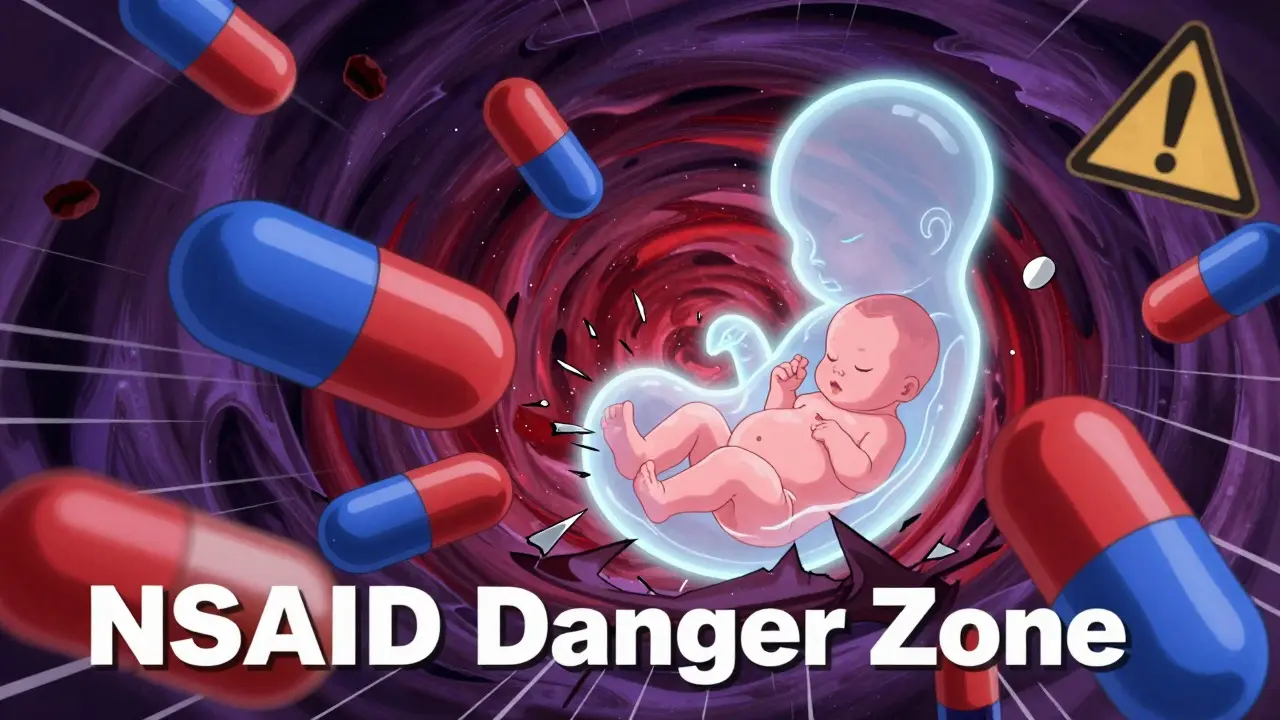
The NSAID Danger Zone: Ibuprofen and Naproxen
This is where things get critical. Nonsteroidal anti-inflammatory drugs (NSAIDs), including Ibuprofen (Advil, Motrin) and Naproxen (Aleve), are common household staples. But during pregnancy, they carry serious warnings.
The Food and Drug Administration (FDA) issued a strict warning in October 2020: avoid NSAIDs at 20 weeks or later. Why? They can cause low amniotic fluid and kidney problems in the developing fetus. If taken in the third trimester, they can lead to premature closure of the ductus arteriosus, a vital fetal heart vessel, potentially causing heart failure.
But it’s not just late pregnancy. Meta-analyses suggest that using NSAIDs in the first trimester may increase the risk of miscarriage by 1.6 times. Given that acetaminophen is a safer alternative for pain and inflammation, most doctors will tell you to skip the Advil entirely during pregnancy.
| Medication | Active Ingredient | Safety Profile | Key Risks |
|---|---|---|---|
| Tylenol | Acetaminophen | Generally Safe (All Trimesters) | Liver damage if overdosed; emerging neurodevelopmental concerns (preliminary) |
| Advil/Motrin | Ibuprofen | Avoid (Especially after 20 weeks) | Kidney issues, low amniotic fluid, miscarriage risk in 1st trimester |
| Aleve | Naproxen | Avoid (Especially after 20 weeks) | Similar to Ibuprofen; cardiac complications in fetus |
Cold, Cough, and Allergy: Read the Label Twice
Cold and flu season is terrifying when you’re pregnant because multi-symptom products are traps. A bottle labeled "Cold & Flu Relief" might contain five different drugs, one of which could be unsafe. Always look for "plain" versions of medications.
Allergies: Second-generation antihistamines like Loratadine (Claritin) and Cetirizine (Zyrtec) are preferred throughout pregnancy. Newer data from 2023 also supports the safety of Fexofenadine (Allegra). Older options like Chlorpheniramine are acceptable, but Diphenhydramine (Benadryl) requires a chat with your doctor due to side effects like drowsiness and potential interactions.
Congestion: This is a major red flag area. Pseudoephedrine (Sudafed) is linked to a 2.2-fold increased risk of gastroschisis (a abdominal wall defect) when used in the first trimester. Most providers advise avoiding it entirely during the first trimester and limiting use afterward. Saline nasal sprays are a safer, drug-free alternative.
Cough: Dextromethorphan, found in plain Robitussin or Delsym, is generally considered safe at package-directed dosages. Just ensure the product doesn’t also contain phenylephrine or guaifenesin unless your doctor says otherwise.
Heartburn and Digestion: Antacids Are Usually Fine
Heartburn affects nearly half of pregnant women due to hormonal changes and pressure from the growing uterus. The good news is that many digestive aids are safe.
Calcium Carbonate (Tums) is safe and provides calcium, though you should stay under 2,000 mg daily to avoid constipation or kidney stones. Combinations of aluminum hydroxide and magnesium hydroxide (like Maalox or Mylanta) are also approved. For stronger acid reflux, Famotidine (Pepcid AC) is an accepted alternative. Just watch out for hidden sodium levels in some antacid brands, which can affect blood pressure.

Hidden Dangers: Herbal Remedies and "Natural" Products
There is a dangerous misconception that "natural" means safe. In reality, herbal supplements are largely unregulated by the FDA in terms of potency and purity. The Birth Injury Center reports that 18% of medication-related pregnancy complications stem from innocuous-seeming OTC meds and herbal remedies.
Avoid herbal teas containing black cohosh, blue cohosh, or dong quai, as they can stimulate uterine contractions. Even common herbs like ginseng or ephedra can raise blood pressure. Always treat herbal supplements with the same caution as prescription drugs. Create a complete inventory of everything you take-including vitamins and teas-at your first prenatal visit.
Practical Steps for Safer Symptom Management
So, what do you do when you’re suffering? Here is a practical checklist to navigate OTC decisions:
- Check the inactive ingredients. Some "alcohol-free" cough syrups still contain ethanol. Check for artificial sweeteners or dyes if you have sensitivities.
- Avoid combination products. Buy single-ingredient medicines. If you have a cough and a fever, buy separate bottles rather than a "Total Cold" syrup that adds unnecessary drugs.
- Track your intake. Keep a log of what you take, when, and why. This helps your provider spot patterns or overuse.
- Try non-drug remedies first. For congestion, use a humidifier. For heartburn, eat smaller meals and elevate your head while sleeping. For headaches, try a cold compress and hydration.
- Verify with your pharmacist. Pharmacists are medication experts. If your doctor is busy, call the pharmacy. They can instantly tell you if a specific brand formulation is pregnancy-safe.
Pregnancy is a time of heightened sensitivity, but it doesn’t mean you have to suffer through symptoms. By understanding the difference between acetaminophen and ibuprofen, recognizing the risks of pseudoephedrine, and always reading labels, you can protect both yourself and your baby. When in doubt, pick up the phone. That five-minute call with your provider is worth the peace of mind.
Is Tylenol completely safe during pregnancy?
Tylenol (acetaminophen) is currently considered the safest pain reliever for all trimesters by major medical organizations like ACOG. However, it should be used at the lowest effective dose for the shortest duration. Recent preliminary studies have raised questions about long-term high-dose use and neurodevelopment, so avoid excessive daily consumption unless directed by your doctor.
Can I take Advil or Motrin for back pain?
Generally, no. Ibuprofen (Advil/Motrin) is an NSAID and carries risks. In the first trimester, it may increase miscarriage risk. After 20 weeks, it can cause kidney problems and low amniotic fluid in the fetus. Stick to acetaminophen for pain relief unless your doctor specifically advises otherwise.
Which allergy medicine is best for pregnancy?
Second-generation antihistamines like Loratadine (Claritin), Cetirizine (Zyrtec), and Fexofenadine (Allegra) are preferred because they are less likely to cause drowsiness and have strong safety records. Avoid decongestants like Sudafed (pseudoephedrine) in the first trimester due to birth defect risks.
Are natural herbal remedies safe for morning sickness?
Not necessarily. Many herbal supplements are unregulated. Ginger tea or candies are often recommended for nausea, but avoid complex herbal blends containing black cohosh or dong quai, which can stimulate the uterus. Always consult your provider before starting any herbal supplement.
How do I know if a multi-symptom cold medicine is safe?
You usually shouldn't take them. Multi-symptom products often contain combinations of drugs, some of which may be unsafe (like phenylephrine or pseudoephedrine). Instead, treat individual symptoms with single-ingredient products approved by your doctor, such as plain dextromethorphan for cough or acetaminophen for fever.