
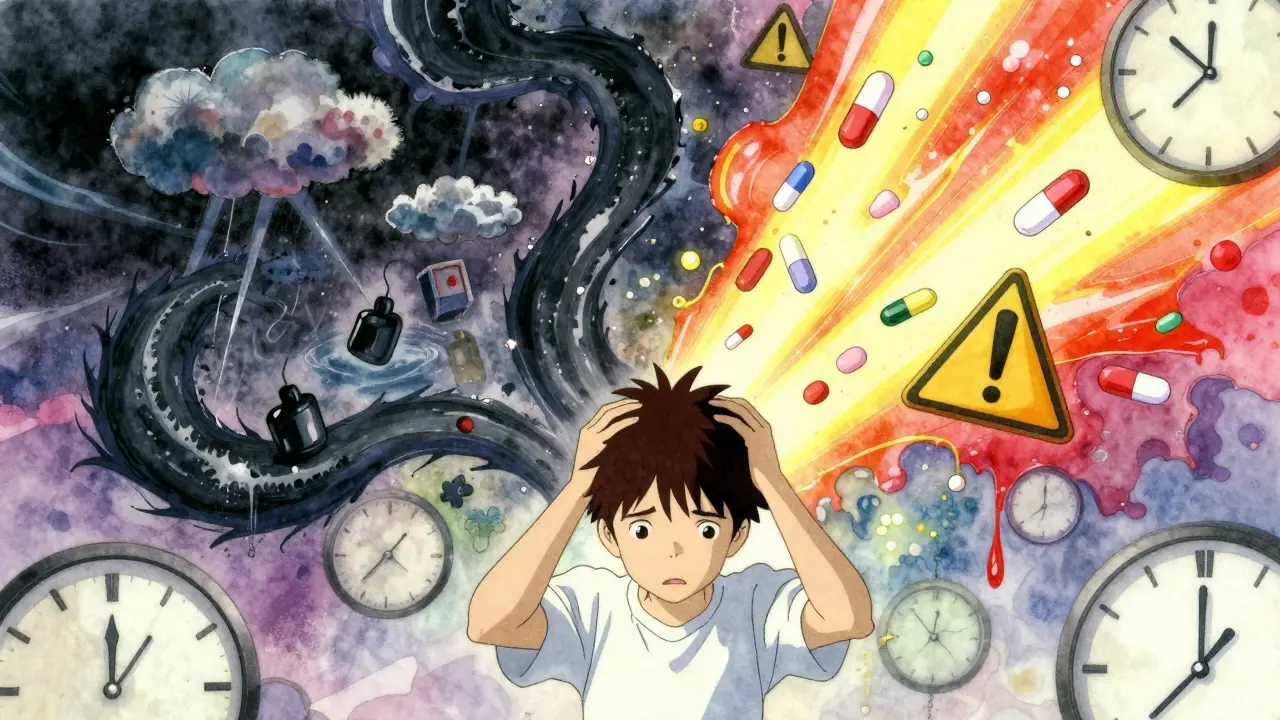
Feeling worse after starting a new pill? It’s a common fear: is this your illness getting worse-or is it the medicine itself? You’re not alone. In the UK alone, over 200,000 people each year end up in hospital because a side effect was mistaken for disease progression. The truth? Many symptoms you think are your condition flaring up are actually your body reacting to the drug meant to help you.
What’s the Difference, Really?
Disease symptoms are what your illness does to you. If you have depression, your brain isn’t producing enough serotonin-that’s the disease. The fatigue, the sleeplessness, the brain fog? Those are symptoms. They’re the direct result of the condition. Side effects are what the medicine does to your body that it wasn’t supposed to. Take a common blood pressure drug like lisinopril. Its job is to relax blood vessels. But it can also trigger a dry, persistent cough. That cough isn’t your heart disease-it’s your lungs reacting to the drug. The same goes for antidepressants causing sexual dysfunction or statins causing muscle aches. These aren’t signs your condition is worsening. They’re side effects. The World Health Organization defines side effects as unintended responses to medication at normal doses. That’s key. You’re taking the right amount. The problem isn’t overdose-it’s biology.Timing Is Everything
One of the clearest clues? When the symptom showed up. If you started a new medication last week and suddenly feel dizzy, nauseous, or unusually tired? That’s a red flag. Most side effects appear within days to four weeks after starting a drug. For example:- Antihistamines like diphenhydramine cause drowsiness within hours.
- SSRIs like sertraline often cause nausea or insomnia in the first 10-14 days.
- Long-term steroids can lead to weight gain or bone thinning after months.
Dose Matters
Try this: if you increase your dose and your symptom gets worse? That’s a classic side effect. About 70% of side effects are dose-dependent. Take a beta-blocker for anxiety. You go from 10mg to 20mg and suddenly you’re exhausted all day? That’s not your anxiety returning-it’s the drug kicking in harder. Disease symptoms don’t care about dosage. Your joint pain won’t vanish because you took less ibuprofen. Your depression won’t get worse because you skipped a dose of your antidepressant. But your dizziness? It might vanish if you lower the dose of your blood pressure med.Common Side Effects vs. Common Disease Symptoms
Here’s a real-world breakdown so you know what to watch for:| Symptom | More Likely Side Effect | More Likely Disease Symptom |
|---|---|---|
| Nausea | Antibiotics, SSRIs, NSAIDs | Stomach flu, ulcers, gallbladder issues |
| Insomnia | SSRIs, stimulants, corticosteroids | Depression, chronic pain, anxiety disorders |
| Fatigue | Antihistamines, beta-blockers, statins | Thyroid disease, anemia, chronic fatigue syndrome |
| Headache | ACE inhibitors, blood pressure meds, withdrawal from caffeine | Migraine, high blood pressure, sinus infection |
| Weight gain | Antidepressants, antipsychotics, corticosteroids | Hypothyroidism, Cushing’s syndrome |
| Cough | ACE inhibitors (lisinopril, enalapril) | Respiratory infection, asthma, COPD |
Notice how some symptoms overlap? That’s why so many people get confused. But the context changes everything.
What About Allergic Reactions?
These are different. Allergies aren’t side effects-they’re immune responses. They’re sudden, unpredictable, and dangerous. Signs of an allergic reaction:- Rash or hives (especially if it spreads)
- Swelling of lips, tongue, or throat
- Difficulty breathing
- Dizziness or fainting
How to Track It Right
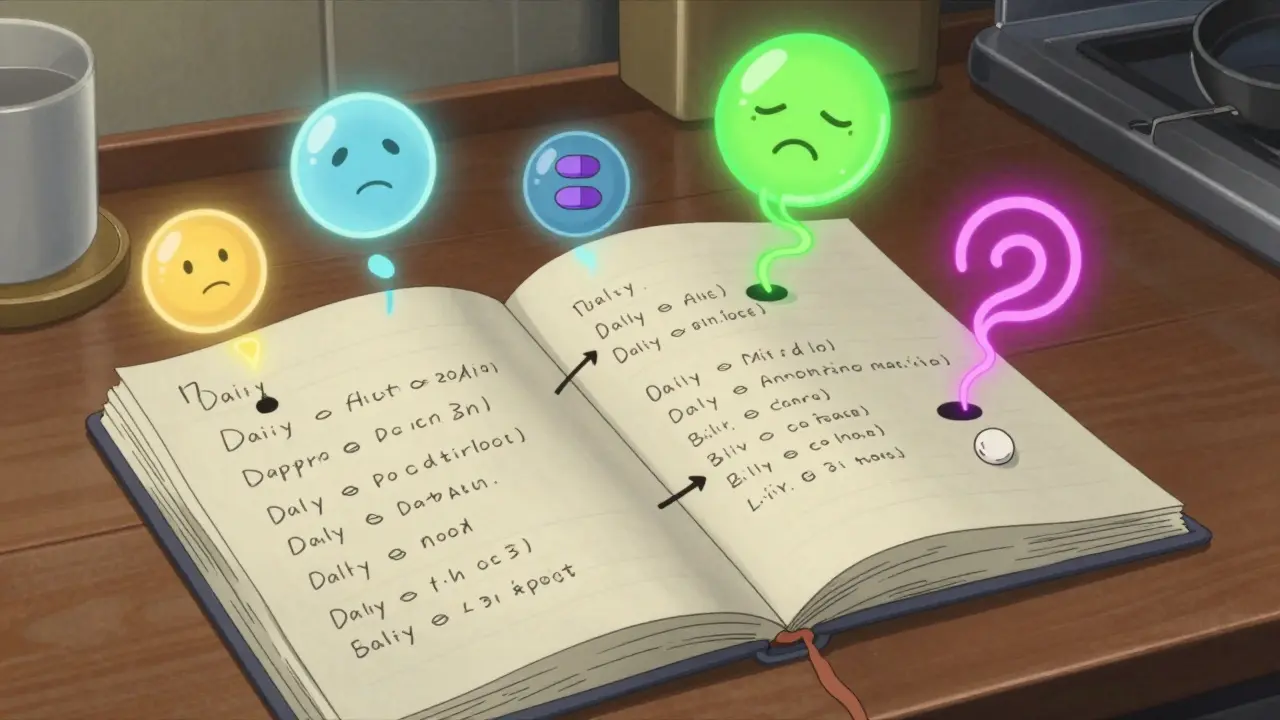
Most people guess. That’s why so many side effects go unreported. The best tool? A simple symptom journal. Write down every day:- Time you took each medication
- Dosage
- Any new symptom (rate severity 1-10)
- Duration (how long it lasted)
- Anything else unusual (stress, sleep, diet)
What to Do When You’re Not Sure
Don’t stop your medication on your own. But do speak up. Here’s what to ask your doctor:- “Could this symptom be a side effect of my medication?”
- “Is this symptom listed as common in the patient leaflet?”
- “Would lowering the dose help, or switching to another drug?”
- “Should we try a short break-just a few days-to see if it gets better?”

Why This Matters More Than You Think
Mistaking a side effect for disease progression leads to real harm. People get more pills added to treat symptoms that aren’t even real. A 2021 study found that 32% of patients with chronic illness were given extra treatments because they misread side effects as worsening disease. In older adults, this is especially dangerous. About 1 in 5 new dementia diagnoses in people over 70 are actually caused by anticholinergic drugs-medications for allergies, bladder issues, or depression. Stop the drug, and the memory problems often vanish. And it’s not just physical. Mental health patients often stop taking their antidepressants because they think their anxiety is getting worse. In reality, it’s the SSRI causing temporary agitation. That’s not failure-it’s a side effect. And it usually passes.What’s Changing Now
Technology is helping. Electronic health records now flag potential side effects based on your age, other meds, and medical history. AI tools like MedAware can predict which symptoms are likely drug-related with over 90% accuracy. Pharmacogenomic testing is becoming more common too. Some insurers now cover DNA tests that tell you if you’re genetically more likely to react badly to certain drugs. If you’re on a high-risk medication, ask your doctor if this is an option. The FDA and European regulators now require drug companies to clearly explain the difference between disease symptoms and side effects in patient leaflets. That’s new. And it’s helping.Final Tip: Don’t Assume It’s All in Your Head
If you feel something’s off, it probably is. Too many people are told, “That’s just part of your condition,” when it’s actually the pill. You have the right to question it. Keep a journal. Track timing. Talk to your pharmacist. Ask for the patient leaflet. You don’t need to be a doctor to spot the pattern. Your body is trying to tell you something. Listen. Then act-with your doctor, not against them.How do I know if my nausea is from my medication or my illness?
If you started the medication within the last 1-2 weeks and the nausea began shortly after, it’s likely a side effect. Common culprits include antibiotics, SSRIs, and NSAIDs. Disease-related nausea usually comes with other signs like vomiting, fever, or abdominal pain. Track when you take the pill and when nausea hits. If it’s consistent with dosing times, it’s probably the drug.
Can side effects go away on their own?
Yes-about 60-70% of common side effects improve within 2-4 weeks as your body adjusts. Drowsiness from antihistamines, mild nausea from antidepressants, and dry mouth from blood pressure meds often fade. But if symptoms get worse, or if you develop new ones like rash or breathing trouble, contact your doctor immediately.
Why do some people get side effects and others don’t?
Genetics, age, liver and kidney function, and other medications all play a role. Some people metabolize drugs faster or slower, making side effects more likely. Older adults and those on five or more medications are at higher risk. Pharmacogenomic testing can now identify genetic risks before you even start a drug.
Is it safe to stop a medication if I think it’s causing side effects?
Never stop a medication abruptly without talking to your doctor. Some drugs, like antidepressants or blood pressure meds, can cause dangerous withdrawal effects. Instead, document your symptoms and schedule a review. Your doctor can help you taper safely or switch to an alternative.
What should I bring to my doctor’s appointment to help figure this out?
Bring your medication list (including doses and times), your symptom journal (even if it’s handwritten), and the patient leaflets for each drug. If you use a pill organizer, bring that too. The more precise your timeline, the easier it is to spot patterns. Don’t rely on memory-write it down.
Prakash Sharma
January 7, 2026 AT 16:08Why do Americans always think drugs are the problem? In India, we take 10 pills at once and still run marathons. Your body’s weak, not the medicine.
christy lianto
January 9, 2026 AT 02:20I was on sertraline for 6 weeks and felt like a zombie. My doctor said 'it's just your depression getting worse.' I stopped. Two days later, I could breathe again. No more SSRIs for me.
Ken Porter
January 9, 2026 AT 21:41Stop overcomplicating this. If it started after the pill, it’s the pill. End of story.
Lois Li
January 10, 2026 AT 18:23I keep a notebook. I write down what I take, when, and how I feel. It’s not glamorous, but it saved me from being prescribed three more drugs for symptoms that were just side effects. You don’t need an app. Just a pen and honesty.
Luke Crump
January 10, 2026 AT 23:35Let me ask you this: if your body is a temple, then every pill is a vandal with a PhD. We’ve turned healing into a casino where the house always wins-pharma, doctors, insurance. You think your nausea is from lisinopril? No. It’s from the system that told you to swallow it without asking. We’ve outsourced our intuition to a pill bottle. And now we’re surprised when our bodies scream back?
What if the real disease isn’t depression or hypertension-but the belief that we’re broken and need fixing by a chemical? What if the side effect isn’t the dry cough-it’s the silence we’ve been taught to keep when the system tells us to take more?
I stopped taking my statin after 18 months of muscle pain. My doctor said, 'It’s just aging.' I said, 'Then why did the pain vanish the day I stopped?' He shrugged. I’m not a lab rat. I’m a human being with a nervous system that remembers.
Pharmacogenomics? Cool. But why aren’t we taught this in school? Why do we need a symptom journal just to be believed? We’re drowning in data but starving for trust-in our bodies, in our instincts, in each other.
Next time you feel off after a pill, don’t ask if it’s the disease. Ask: who benefits if I believe this is normal? And then-just for a second-listen to your body before you reach for the next bottle.
Molly Silvernale
January 12, 2026 AT 19:26It’s funny… the same people who will tell you 'listen to your body' will also hand you a 12-page leaflet full of Latin names and say 'this is your body talking.' We’ve turned intuition into a compliance checklist. I don’t need an app-I need someone to look me in the eye and say, 'I believe you.'
Donny Airlangga
January 13, 2026 AT 11:15My mom took blood pressure meds for years. Started getting confused, forgetful. Doctor said 'it’s just getting older.' She stopped the meds on her own, didn’t tell anyone. Two weeks later, she remembered her own birthday. Turns out it was an anticholinergic. She’s fine now. Don’t assume it’s aging. Assume it’s the pill.
Kristina Felixita
January 13, 2026 AT 12:03Just started a new antidepressant and felt like my brain was full of static… for like 3 days. Then it faded. I almost quit because I thought I was failing. But my therapist said, 'That’s the drug adjusting, not you.' Now I’m stable. Don’t panic at day 2. Wait. Track. Breathe.
Evan Smith
January 14, 2026 AT 12:36So… you’re saying I shouldn’t blame my laziness on my statins? I’m shocked. Truly. Next you’ll tell me my hangover isn’t from the blood pressure med.
Annette Robinson
January 15, 2026 AT 13:50I used to think side effects were just 'part of the deal.' Then I realized: no one ever tells you that your fatigue from beta-blockers might be mistaken for your thyroid condition worsening. I almost got put on more meds. Instead, I asked for a dose reduction. It worked. Trust your gut. Ask the questions. You’re not being difficult-you’re being smart.
Dave Old-Wolf
January 15, 2026 AT 17:09My cousin took an antibiotic and got dizzy. Thought it was her migraines coming back. She kept taking it. Ended up in the ER. Don’t guess. Track it. Even if it’s just on your phone notes.
swati Thounaojam
January 15, 2026 AT 18:46in india we dont have time to journal. we just take the pill and hope. but yes, if u feel weird after new med, ask doc. simple.
Aubrey Mallory
January 17, 2026 AT 05:01Let me be clear: if you’re told your symptoms are 'just part of the disease' and you feel like you’re being gaslit-YOU’RE NOT CRAZY. I’ve seen it too many times. Women, especially, are told their pain is anxiety. Elderly people are told it’s aging. People of color are told it’s 'cultural.' It’s not. It’s often the drug. Document it. Bring your list. Say, 'I think this is a side effect.' And if they brush you off? Find a new doctor. Your health isn’t a suggestion.
Manish Kumar
January 18, 2026 AT 14:44Here is the existential truth: modern medicine has turned the human body into a machine that must be calibrated by invisible forces-pills, algorithms, patents. We have forgotten that the body is not a problem to be solved but a conversation to be had. The cough from lisinopril? It is not a malfunction. It is a message. A whisper from the lung saying, 'I am not your target.' We have become deaf to the body’s poetry because we are addicted to the certainty of the pill. But certainty is the illusion. The body does not lie. It only speaks in symptoms when we refuse to listen. So ask not, 'Is this the disease?' but 'What is the body trying to tell me that the doctor has not yet heard?'
Joanna Brancewicz
January 19, 2026 AT 21:51SSRIs cause GI side effects via 5-HT3 receptor activation in the gut-hence nausea. That’s pharmacology. If nausea persists beyond 14 days, consider switching to a non-SSRI like bupropion. Always rule out CYP2D6 poor metabolizer status if side effects are severe. Also, check for drug interactions-especially with NSAIDs or MAOIs.