
Checking the date on a pill bottle feels like second nature. We glance at it, toss it in the cabinet if it’s good, or bin it if it’s not. But what happens when that date passes? For most of us, the idea is simple: expired means unsafe. The reality is more complicated, and for a specific group of life-saving drugs, it is dangerous.
The U.S. Food and Drug Administration (FDA) requires every medication to have an expiration date. This isn't just bureaucratic red tape; it marks the last day the manufacturer guarantees the drug retains its full potency and safety. While some solid pills might still work months after that date, others degrade into useless-or even toxic-compounds almost immediately. Using the wrong expired medicine can mean the difference between managing a chronic condition and ending up in the emergency room.
Why Expiration Dates Matter More Than You Think
It helps to understand where these dates come from. Pharmaceutical companies don’t pick random days on the calendar. They conduct rigorous stability testing under strict conditions to determine how long a drug remains stable. The FDA mandates this process to ensure you get exactly the dose prescribed by your doctor.
Here is the catch: stability depends heavily on storage. A study cited by Providence Health in 2023 highlights that while many drugs remain effective long past their printed date if stored perfectly, real-world conditions are rarely perfect. Humidity, heat, and light accelerate chemical breakdown. When a drug breaks down, two things can happen. It either loses its strength, making it ineffective against your illness, or it transforms into new chemical compounds that could harm your body.
Dr. Sarah Reissig, a Clinical Pharmacy Specialist at University Hospitals Cleveland Medical Center, notes that very few medications become outright toxic when expired. Most simply lose effectiveness. However, "in some situations, taking expired medications can have serious health consequences." That distinction is vital. For common painkillers, losing effectiveness is annoying. For critical emergency drugs, it can be fatal.
The High-Risk List: Medications to Never Use Expired
Not all expired medicines are created equal. Some pose immediate, severe risks. If you find any of the following in your home, do not take them. Dispose of them properly instead.
| Medication Type | Primary Risk | Potency Loss Estimate |
|---|---|---|
| Insulin | Loss of glucose control; protein aggregates | Up to 35% bioavailability reduction |
| Nitroglycerin | Rapid chemical degradation | 40-60% loss within 6 months post-expiry |
| Epinephrine Auto-Injectors | Ineffective during anaphylaxis | ~15% potency loss per year |
| Liquid Antibiotics | Bacterial contamination; treatment failure | Variable; linked to 12% incomplete resolution cases |
| Tetracycline Antibiotics | Renal tubular damage (toxicity) | N/A (Chemical transformation) |
| Rescue Inhalers (Albuterol) | Fails to open airways during attack | 25-30% decrease at 6 months post-expiry |
| Eye & Ear Drops | Bacterial growth causing infection | Preservative failure leads to ulcers/otitis |
Insulin: The Silent Threat
If you rely on insulin to manage diabetes, treating the expiration date as a suggestion is a gamble with your health. Insulin is a protein, and proteins are fragile. According to a 2023 pharmacological review by the Cleveland Clinic, insulin loses its glucose-lowering effectiveness after expiration. Temperature fluctuations make this worse.
Research published in the Journal of Diabetes Science and Technology in 2021 found that expired insulin may contain protein aggregates. These clumps reduce the drug's bioavailability by up to 35%. In plain English, your body can't absorb enough of the drug to lower your blood sugar effectively. You might think you’re covered, but your levels could spike dangerously high without warning.
Nitroglycerin: Heart Relief That Fades Fast
Nitroglycerin tablets are used to relieve angina, chest pain caused by reduced blood flow to the heart. This medication is notoriously unstable. It degrades rapidly once exposed to air and moisture, which is why those little glass bottles exist.
A 2023 analysis from University Hospitals Cleveland Medical Center showed that nitroglycerin potency drops by 40-60% within just six months past its expiration date. If you suffer an angina attack and pop an expired tablet, it likely won’t dilate your blood vessels fast enough. In a cardiac event, seconds count. An ineffective dose delays proper treatment and increases the risk of heart damage.
Epinephrine Auto-Injectors: Don't Gamble with Allergies
For people with severe allergies, an epinephrine auto-injector (like an EpiPen) is a lifeline. It treats anaphylaxis, a sudden and severe allergic reaction that can close your throat and drop your blood pressure.
Mylan Pharmaceuticals’ stability data indicates that epinephrine loses about 15% of its potency every year after expiration. Swedish Health Services explicitly states in their 2023 emergency guidelines that expired epinephrine should never be relied upon for acute reactions. Why? Because in an anaphylactic shock, partial effectiveness isn't enough. You need the full dose to reverse the reaction. University Hospitals documented 14 cases where patients delayed emergency care because they tried using expired pens, resulting in three hospitalizations due to inadequate symptom control.
Liquid Antibiotics and Tetracyclines: Toxic Risks
Antibiotics come in various forms, but liquid suspensions and certain classes like tetracyclines carry unique dangers. Liquid antibiotics, such as amoxicillin suspension, stop working effectively over time. Worse, their preservative systems fail. Once those preservatives break down, bacteria can grow inside the bottle. Drinking contaminated antibiotic syrup doesn’t cure your infection; it adds a new one.
The FDA noted in a 2019 study that expired liquid antibiotics contributed to 12% of incomplete infection resolution cases. Meanwhile, tetracycline-class antibiotics have a darker history. Since 1963, the FDA has warned that tetracycline degrades into toxic compounds that can cause renal tubular damage. Taking expired tetracycline isn’t just ineffective-it can actively harm your kidneys.
Rescue Inhalers and Eye Drops
Albuterol inhalers are rescue devices for asthma attacks. Research shows bronchodilator effectiveness decreases by 25-30% just six months past expiration. If your airways are constricting, you need maximum power to open them. An expired inhaler might leave you gasping.
Similarly, eye and ear drops are prime targets for bacterial growth. The preservatives in these liquids expire quickly. The Cleveland Clinic reported 17 cases of Pseudomonas keratitis-a serious corneal ulcer-linked directly to using expired eye drops between 2020 and 2022. Putting non-sterile liquid into your eyes or ears invites infection that can lead to permanent damage.
Storage Matters: How You Keep Meds Changes Their Life
Even before a medication expires, poor storage can ruin it. Many people keep medicine cabinets in the bathroom. It’s convenient, but it’s a terrible environment for drugs. Steam from showers creates humidity, and temperature swings from hot water affect stability.
Cleveland Clinic research found that medications stored in bathroom cabinets degrade 2.3 times faster than those kept in bedroom dressers. Heat and light are also enemies. Sunlight breaking through a window can alter the chemical structure of pills and liquids. Always store medications in a cool, dry place away from direct light. If your home gets very hot in summer, consider moving sensitive meds to a cooler room, though never the refrigerator unless specifically instructed (moisture can condense on cold pills).
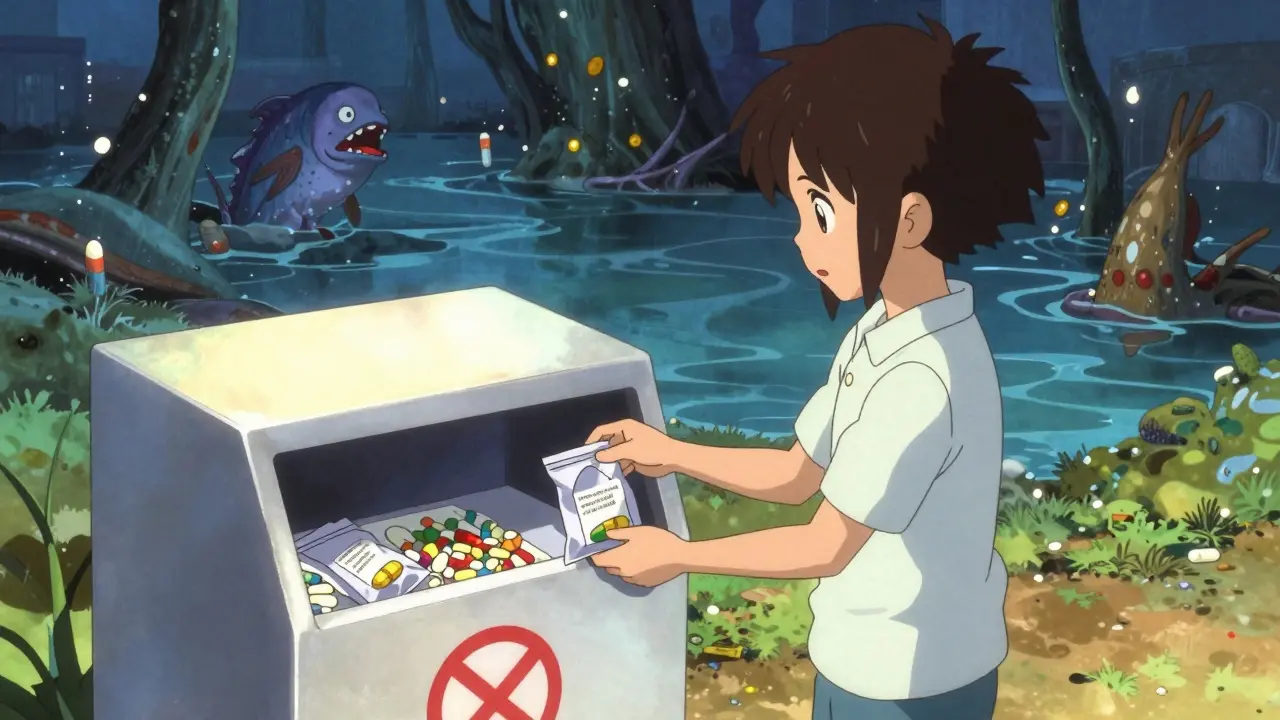
How to Dispose of Expired Medications Safely
Once you’ve identified expired meds, don’t just throw them in the trash or flush them down the toilet. Flushing introduces pharmaceutical compounds into waterways. The U.S. Geological Survey found pharmaceutical residues in 80% of U.S. waterways in 2021. Trashing them exposes pets, children, or wildlife to potential ingestion.
The best option is a drug take-back program. The DEA’s National Prescription Drug Take Back Day collected over 900,000 pounds of unused medications in 2022 alone. Many local pharmacies and police stations have permanent drop-off boxes. Check with your pharmacist for local options.
If no take-back program is available, the FDA recommends mixing the medications with an unappealing substance like dirt, used coffee grounds, or cat litter in a sealed plastic bag before placing them in the household trash. Remove personal information from the prescription labels first. Note that some controlled substances with high abuse potential have specific flushing instructions provided by the DEA; always check the label or insert for these exceptions.
When Is It Okay to Ignore the Date?
You might have heard stories about the Department of Defense’s Shelf Life Extension Program (SLEP), which found that 88% of tested solid dosage forms remained usable well past expiration. While true, this applies primarily to dry, stable pills stored in ideal conditions. It does not apply to the high-risk list above.
For everyday over-the-counter pain relievers like ibuprofen or acetaminophen, a month or two past expiration is unlikely to cause harm, though they may be slightly less potent. However, relying on this rule for prescription drugs, especially those requiring precise dosing like thyroid medications (levothyroxine), is risky. The American Thyroid Association notes that even a 10% potency reduction in expired levothyroxine can trigger significant thyroid dysfunction in 68% of patients.
When in doubt, replace it. The cost of a new prescription is far lower than the cost of an emergency room visit.
Can I take expired Tylenol or Ibuprofen?
Generally, yes. Solid, over-the-counter pain relievers like acetaminophen (Tylenol) or ibuprofen often retain potency for years past their expiration date if stored properly. They are unlikely to become toxic. However, they may be slightly less effective. Do not use this logic for prescription medications, liquids, or injectables.
What happens if I accidentally take an expired antibiotic?
If it’s a standard oral antibiotic like amoxicillin, the main risk is that it won’t fully kill the bacteria, leading to treatment failure or antibiotic resistance. If it is tetracycline, there is a risk of kidney damage due to toxic degradation products. Contact your doctor immediately if you suspect you took an expired antibiotic and symptoms persist.
Why shouldn't I flush medications down the toilet?
Flushing medications introduces active pharmaceutical ingredients into the water supply, affecting aquatic ecosystems and potentially contaminating drinking water sources. Only flush medications if the package specifically instructs you to do so, usually due to high risk of accidental overdose or abuse.
Does storing medicine in the fridge extend its life?
Only if the label says "refrigerate." Storing regular pills in the fridge can introduce moisture, which causes them to break down faster. Always follow the storage instructions on the packaging. For most standard medications, a cool, dry closet is better than the fridge.
How do I know if my Epinephrine auto-injector is expired?
Check the date printed on the device itself. Additionally, look at the solution through the viewing port. If the liquid is discolored, cloudy, or contains particles, it is compromised regardless of the date. Replace epinephrine auto-injectors precisely on their expiration date.