
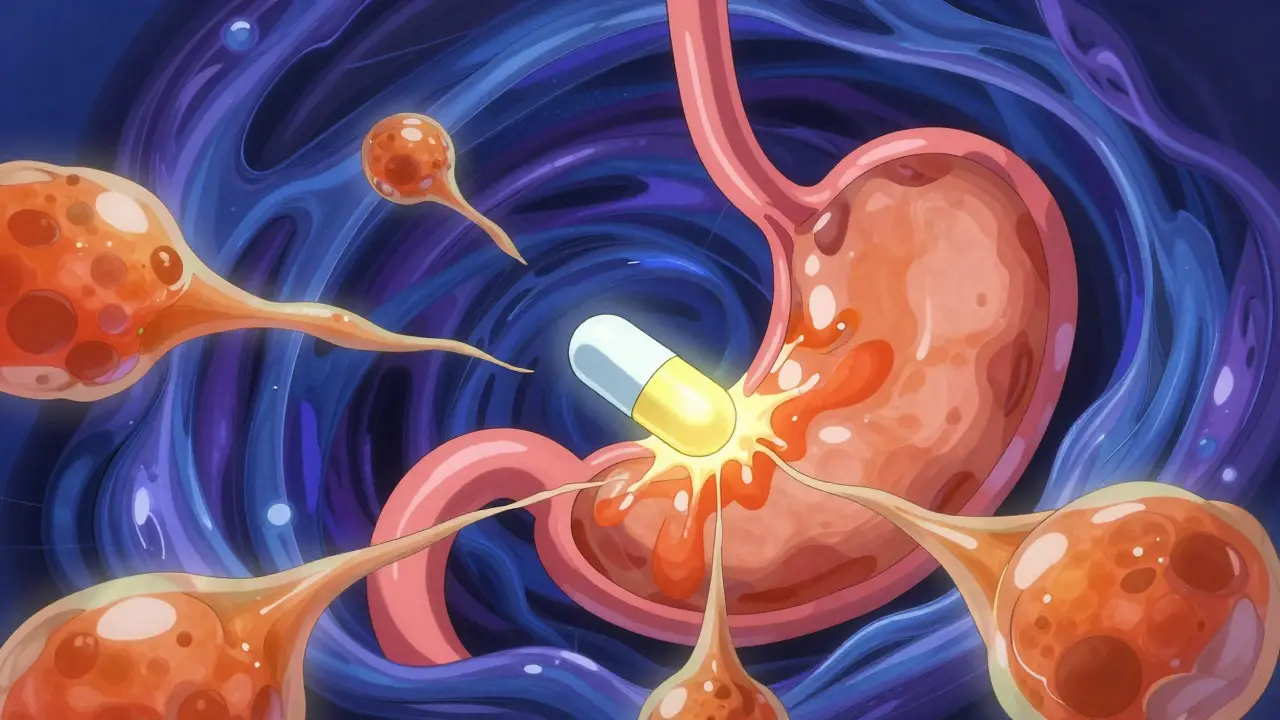
You pop your morning pill, wash it down with water, and then reach for that spoonful of fiber powder to help your digestion. It sounds like a responsible health routine, but you might be accidentally flushing your medicine out of your system before it ever works. This isn't just a theoretical worry; it is a documented chemical reality that affects thousands of people every day.
Fiber does more than just add bulk to your stool. When you take concentrated fiber supplements are concentrated sources of dietary fiber designed to improve digestive health and manage conditions like constipation or high cholesterol, such as psyllium or methylcellulose, they act like a sponge in your gut. They can bind to medications, trapping them so your body cannot absorb them into the bloodstream. If you want your medicine to work, timing is everything. Here is how to separate your doses safely without giving up the benefits of fiber.
Why Fiber Blocks Your Medicine
To understand why this happens, you need to look at what fiber actually does inside your body. Unlike carbohydrates or proteins, your stomach doesn't digest fiber. It passes through your digestive tract largely intact. Dr. Soheyla Gharib from Harvard University Health Services explains that because fiber remains undigested, "it's possible that the medication may get swept along with the fiber, so it will be excreted instead of fully absorbed."
This process involves two main mechanisms. First, there is adsorption. Think of the fiber particles as tiny magnets or sticky nets. As your medication dissolves in your stomach, these fiber particles can physically trap the drug molecules through electrostatic or hydrophobic interactions. Second, fiber speeds up gastrointestinal transit. By increasing the bulk of your stool, it moves things through your intestines faster. If food and medicine move too quickly, your body simply doesn't have enough time to pull the active ingredients out of the mixture and into your blood.
The result? You take your pill, but your body only gets a fraction of the dose. For some drugs, a small drop in absorption is annoying. For others, it can be dangerous.
Which Medications Are Most at Risk?
Not every pill reacts to fiber in the same way. Some drugs are highly sensitive to changes in absorption, while others are relatively stable. Knowing which category your medication falls into helps you decide how strict you need to be with your timing.
| Medication Class | Specific Examples | Risk Level | Recommended Separation |
|---|---|---|---|
| Thyroid Hormones | Levothyroxine | High | At least 4 hours apart |
| Antidiabetics | Metformin | Moderate to High | 2-4 hours apart |
| Mood Stabilizers & Antipsychotics | Lithium, Olanzapine | High | 2-4 hours apart |
| Anticonvulsants | Carbamazepine | Moderate | 2-4 hours apart |
| Statins (Cholesterol) | Lovastatin, Rosuvastatin | Variable | 1-2 hours apart |
Thyroid medications, particularly levothyroxine is a synthetic thyroid hormone used to treat hypothyroidism and requires precise dosing for effectiveness, are notoriously difficult to absorb even under ideal conditions. A study published in Nutrition Hospitalaria found that taking fiber supplements like oat bran or psyllium husk significantly decreased the bioavailability of levothyroxine. In some cases, patients saw their LDL cholesterol levels spike because their statin medication wasn't working properly due to interference from pectin fiber.
For diabetes management, metformin is a first-line medication for type 2 diabetes that helps control blood sugar levels is another concern. If fiber binds to metformin, your blood sugar could rise unexpectedly. Similarly, psychiatric medications like lithium and olanzapine have narrow therapeutic windows. This means the difference between a helpful dose and an ineffective one is very small. Losing even 10% of absorption can lead to mood instability or breakthrough symptoms.
The Golden Rule: Timing Is Everything
If you are taking any prescription medication, the general consensus among medical experts is clear: do not take them at the same time. But how long is "long enough"?
Most authoritative sources, including WebMD and Harvard Health Publishing, recommend a separation window of at least two hours. However, for high-risk medications like levothyroxine or lithium, many specialists suggest stretching that gap to four hours. The goal is to ensure that the medication has been fully absorbed by your intestinal lining before the fiber arrives to sweep the area clean.
Here is a practical way to think about it:
- Morning Meds: Take your pills first thing after waking up, with a full glass of water. Wait at least two hours before having breakfast or taking your fiber supplement.
- Evening Meds: If you take medication at night, try to take it with dinner or shortly after. Then, wait until bedtime-ideally two to three hours later-to take your fiber. Avoid taking fiber right before bed anyway, as it can cause bloating and gas that disrupt sleep.
- Lunchtime Fiber: If you prefer taking fiber midday, make sure your morning meds were taken early and your evening meds are scheduled late enough to create that buffer zone.
Dr. Gharib specifically advises taking medications "two to three hours before or after your fiber supplement." This creates a safe corridor where your body can do its job without interference.

Psyllium Husk vs. Other Fibers
Not all fiber is created equal when it comes to drug interactions. The type of fiber matters because different fibers have different binding capacities and effects on gut motility.
Psyllium husk is a soluble fiber derived from the seeds of Plantago ovata, commonly used in supplements like Metamucil for constipation relief is perhaps the most popular supplement. Studies show it can interfere with calcium absorption in some contexts, though an NIH-funded study found no significant interaction with calcium in postmenopausal women. However, its effect on drugs like levothyroxine is well-documented. Because psyllium forms a gel-like substance in the gut, it is particularly effective at trapping particles.
In contrast, insoluble fibers like cellulose may have less impact on certain drugs. One study found no significant interaction between cellulose dispersion and theophylline. But here is the catch: most commercial fiber supplements are blends. They often contain both soluble and insoluble fibers. Unless you know the exact composition and have checked with your pharmacist, it is safest to assume that any fiber supplement could potentially interact with your medication.
Food Fiber vs. Supplement Fiber
You might wonder if eating a bowl of oatmeal or a salad poses the same risk. Generally, no. Whole foods contain fiber, yes, but they also contain fats, proteins, and other compounds that slow down digestion and help distribute the fiber throughout the meal. The concentration of fiber in a single spoonful of powder is much higher than what you would naturally consume in a balanced meal.
However, if you are on a very high-fiber diet combined with strict medication schedules, the principle still applies. If you eat a massive portion of bran cereal at the same time you take your thyroid medication, you might see a dip in efficacy. The key difference is that whole foods provide a variety of micronutrients and slower digestion rates, whereas supplements deliver a concentrated hit of fiber that acts quickly and aggressively in the gut.

Practical Tips for Daily Management
Managing multiple pills and supplements can feel like a scheduling nightmare. Here are some concrete steps to make it easier:
- Use a Pill Organizer with Time Slots: Don't just separate AM and PM. Consider splitting your day into four quadrants: Early Morning, Late Morning, Afternoon, Evening. Assign specific tasks to each slot.
- Hydrate Aggressively: Fiber supplements require water to work safely. WebMD warns that taking fiber without at least 8 ounces (240 ml) of liquid can cause it to swell in the throat, leading to choking. Drinking plenty of water also helps flush your system and aids overall absorption.
- Talk to Your Pharmacist: Pharmacists have access to detailed databases on drug interactions. Ask them specifically: "Does my current medication list include any drugs known to bind with fiber?" They can give you personalized timing advice based on your exact prescriptions.
- Monitor Your Symptoms: If you start taking fiber and suddenly notice your condition worsening (e.g., fatigue returning with thyroid issues, or mood swings with bipolar disorder), suspect an absorption issue. Check your timing immediately.
- Don't Quit Fiber: Despite these risks, fiber is crucial for heart health, stroke prevention, and diabetes management. Harvard Health emphasizes that 90% of adults don't get enough fiber. The solution isn't to stop taking fiber; it's to space it out correctly.
Common Mistakes to Avoid
One common error is assuming that "natural" means "safe to mix." Just because fiber comes from plants doesn't mean it plays nice with synthetic drugs. Another mistake is taking fiber with meals that contain medications. If you take a pill with lunch, don't add a fiber shake to that same meal. Treat the medication as the priority event and schedule the fiber around it.
Also, avoid the temptation to double up. If you missed your morning fiber dose, don't take a double dose at night alongside your evening meds. Stick to your separated schedule to maintain consistent drug levels in your blood.
How long should I wait after taking levothyroxine before having fiber?
You should wait at least 4 hours after taking levothyroxine before consuming fiber supplements. Levothyroxine is highly sensitive to absorption blockers, and studies show that even small amounts of fiber like psyllium or oat bran can significantly reduce its effectiveness if taken too close together.
Can I take fiber supplements with metformin?
Yes, but you must separate the doses. Take your metformin at least 2 to 4 hours before or after your fiber supplement. Taking them together can reduce the amount of metformin your body absorbs, potentially leading to higher blood sugar levels.
Does dietary fiber from food affect medication absorption?
Generally, dietary fiber from whole foods has a lesser impact than concentrated supplements because it is distributed throughout a meal with fats and proteins. However, if you are eating extremely high-fiber meals, it is still wise to separate those meals from critical medications by at least 1-2 hours to ensure optimal absorption.
What happens if I take fiber and medication at the same time?
The fiber may bind to the medication, preventing your body from absorbing the full dose. This can lead to reduced effectiveness of the drug, meaning your condition (such as high cholesterol, thyroid imbalance, or depression) may not be properly controlled. In severe cases, this could lead to health complications.
Is psyllium husk worse than other fibers for drug interactions?
Psyllium husk is a soluble fiber that forms a gel in the gut, making it particularly effective at trapping medications. While all fiber supplements carry some risk of interaction, psyllium and methylcellulose are among the most commonly cited in clinical studies for reducing drug bioavailability. Always check with your pharmacist regarding the specific fiber product you are using.
Do I need to separate fiber from over-the-counter painkillers?
For occasional use of over-the-counter painkillers like ibuprofen or acetaminophen, the risk is generally low. However, if you are taking these medications regularly or in high doses, it is still best practice to separate them from fiber supplements by at least 2 hours to ensure consistent pain relief and minimize potential irritation.