

Depression doesn’t care how hard you try to push through it. If you’ve tried SSRIs like sertraline or fluoxetine and still feel stuck, your doctor might mention Emsam - the skin patch version of selegiline. But is it really better than the alternatives? And if it is, who benefits the most? This isn’t about marketing. It’s about real differences in how these drugs work, what side effects you’ll actually feel, and whether the cost and restrictions are worth it.
What Is Emsam (Selegiline)?
Emsam is a transdermal patch containing selegiline, a monoamine oxidase inhibitor (MAOI) approved for treating major depressive disorder in adults. Unlike older MAOIs that came as pills and required strict diets, Emsam delivers medication through the skin, which lowers the risk of dangerous food interactions at lower doses.
Selegiline blocks the enzyme monoamine oxidase-B (and at higher doses, also monoamine oxidase-A), which breaks down neurotransmitters like serotonin, dopamine, and norepinephrine. More of these chemicals stay active in your brain, which can lift mood. The patch form means you don’t swallow the drug - it’s absorbed slowly through your skin, usually applied once daily to the upper arm, thigh, or torso.
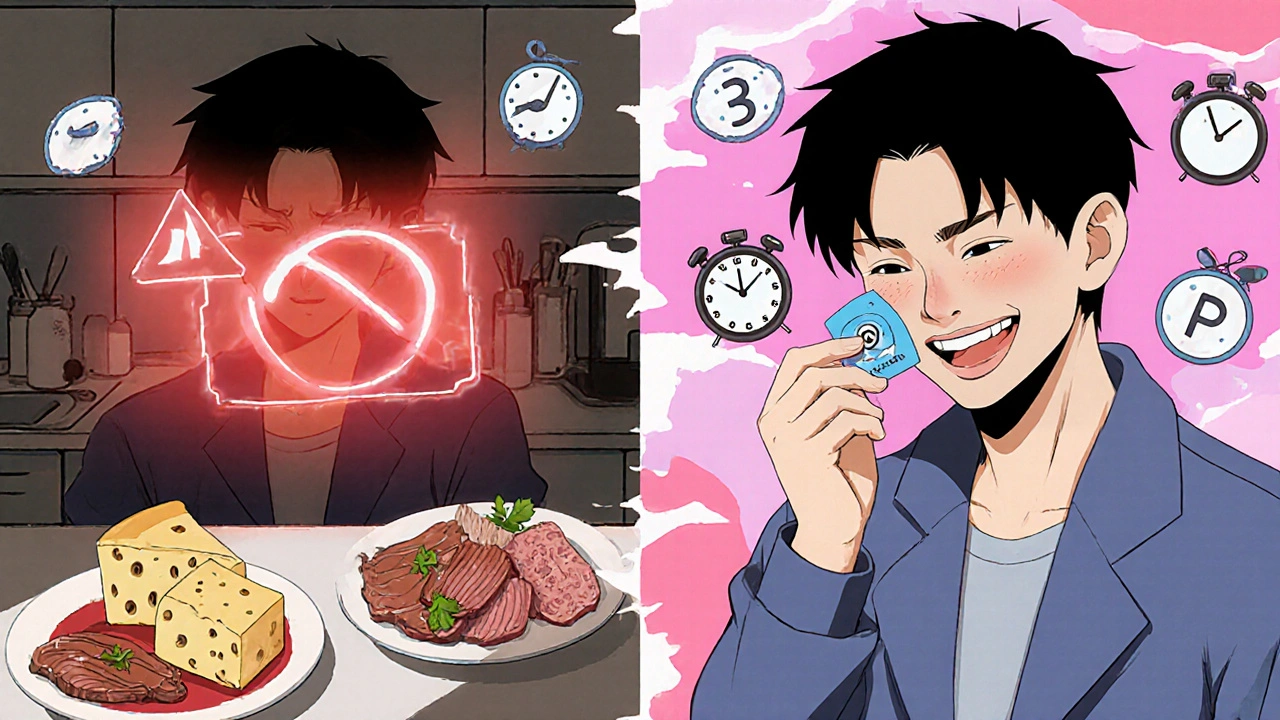
Emsam comes in three strengths: 6 mg/24 hours, 9 mg/24 hours, and 12 mg/24 hours. The lowest dose (6 mg) doesn’t require dietary changes. At 9 mg and 12 mg, you must avoid foods high in tyramine - aged cheeses, cured meats, tap beer, and fermented soy - because they can trigger a dangerous spike in blood pressure.
How Emsam Compares to Other Antidepressants
Most people start antidepressant treatment with SSRIs or SNRIs. But if those fail, the options get more complex. Here’s how Emsam stacks up against the most common alternatives.
Emsam vs. SSRIs (Sertraline, Escitalopram, Fluoxetine)
SSRIs are the first-line treatment for depression because they’re generally safe, well-tolerated, and have fewer dietary restrictions. But they don’t work for everyone. Studies show about 30-40% of people don’t respond adequately to SSRIs after 8-12 weeks.
Emsam has a different mechanism. While SSRIs only block serotonin reuptake, Emsam increases serotonin, dopamine, and norepinephrine all at once. This can make a difference for people with depression that includes low energy, lack of motivation, or brain fog - symptoms that don’t always improve with SSRIs alone.
Side effects differ too. SSRIs often cause sexual dysfunction, weight gain, or nausea. Emsam’s most common side effects are skin irritation at the patch site, insomnia, and dry mouth. But unlike SSRIs, Emsam doesn’t typically cause sexual side effects - a major plus for some users.
Emsam vs. SNRIs (Venlafaxine, Duloxetine)
SNRIs like venlafaxine (Effexor) and duloxetine (Cymbalta) boost both serotonin and norepinephrine, making them closer to Emsam in action. But they still don’t affect dopamine. That’s where Emsam can shine - especially for people who feel mentally sluggish or unmotivated even after trying SNRIs.
SNRIs often cause increased blood pressure, sweating, and withdrawal symptoms if stopped abruptly. Emsam doesn’t typically cause withdrawal, but stopping it suddenly can lead to rebound depression. Also, SNRIs are pills taken daily. Emsam is a patch - which some people prefer for consistency, especially if they forget pills.
Emsam vs. Older MAOIs (Phenelzine, Tranylcypromine)
Before Emsam, MAOIs like phenelzine (Nardil) and tranylcypromine (Parnate) were the go-to for treatment-resistant depression. But they came with major downsides: strict diets, frequent blood pressure checks, and dangerous interactions with over-the-counter cold medicines.
Emsam changed the game. At the 6 mg dose, you can eat normally. Even at 9 mg and 12 mg, the risk of tyramine reactions is lower than with oral MAOIs because the patch delivers the drug more steadily. This makes Emsam the most practical MAOI option today.
However, oral MAOIs are cheaper. If cost is a barrier and you’re willing to follow a strict diet, phenelzine might still be an option - but only under close supervision.
Emsam vs. Bupropion (Wellbutrin)
Bupropion is unique among antidepressants because it mainly affects dopamine and norepinephrine, not serotonin. That’s why it’s often used for depression with fatigue or low drive - the same profile Emsam targets.
Both can help with weight loss and don’t cause sexual side effects. But bupropion is a pill, taken one to three times a day. Emsam is a patch, applied once daily. Bupropion carries a seizure risk, especially at higher doses. Emsam doesn’t. On the flip side, bupropion is available as a generic and costs far less than Emsam.
Who Is Emsam Best For?
Emsam isn’t for everyone. But for certain people, it’s the missing piece.
- You’ve tried at least two SSRIs or SNRIs with little or no improvement.
- Your depression includes low energy, poor motivation, or difficulty concentrating - not just sadness.
- You want to avoid sexual side effects common with SSRIs.
- You’re okay with applying a patch daily and monitoring for skin irritation.
- You’re willing to avoid high-tyramine foods if prescribed the 9 mg or 12 mg dose.
It’s also a good option for people who struggle with remembering to take pills. The patch stays on for 24 hours - no daily dosing reminders needed.
What Are the Downsides?
Emsam isn’t perfect. Here’s what to watch for:
- Cost: Emsam is expensive - often over $600 per month without insurance. Even with coverage, copays can be high. Generic selegiline patches are not available in the U.S.
- Skin reactions: Redness, itching, or burning at the patch site happens in up to 20% of users. Rotating application sites helps.
- Insomnia: Because it boosts dopamine and norepinephrine, Emsam can make it hard to sleep. Applying the patch in the morning helps.
- Drug interactions: Emsam can’t be used with other antidepressants, stimulants, or certain pain meds like tramadol or dextromethorphan. You need at least a 14-day washout period before switching to or from other drugs.
Real-World Experience: What Patients Say
One patient, a 42-year-old teacher, tried sertraline, venlafaxine, and bupropion over three years. None lifted her brain fog or restored her energy. After starting Emsam 9 mg, she noticed a shift in about three weeks: "I stopped dreading Mondays. I could think clearly for the first time in years. The patch didn’t bother me, and I didn’t have to count pills. The only thing I missed was cheese - but I didn’t miss feeling empty."
Another, a 58-year-old man with treatment-resistant depression, switched from phenelzine to Emsam. "I used to have to check every label. Now I just put the patch on and forget about it. My blood pressure is stable. I can have a glass of wine now and then. It’s life-changing."
When Not to Use Emsam
Emsam isn’t safe for everyone. Avoid it if you:
- Have uncontrolled high blood pressure
- Are taking other MAOIs or have taken them in the last 14 days
- Are using opioids like tramadol, fentanyl, or meperidine
- Have pheochromocytoma (a rare adrenal tumor)
- Are pregnant or breastfeeding - data is limited
Also, don’t start Emsam if you’ve had a recent heart attack or stroke. Talk to your doctor about your full medication list before starting.

Alternatives If Emsam Isn’t Right
If Emsam’s cost, patch application, or dietary rules don’t fit your life, here are other options:
- Repetitive Transcranial Magnetic Stimulation (rTMS): A non-drug treatment that uses magnetic pulses to stimulate brain areas linked to mood. No systemic side effects. Covered by most insurance for treatment-resistant depression.
- Ketamine or Esketamine (Spravato): Fast-acting for severe, treatment-resistant depression. Administered in a clinic. Not for long-term daily use.
- Psychotherapy + medication combination: CBT or interpersonal therapy paired with a different antidepressant can boost results.
- Generic bupropion: If cost is the issue and you don’t need serotonin boost, bupropion remains a strong, affordable alternative.
Final Thoughts: Is Emsam Worth It?
Emsam isn’t a magic bullet. But for people who’ve tried everything else and still feel trapped in depression, it’s one of the few options that can make a real difference - especially if low energy, brain fog, or lack of motivation are your main symptoms.
It’s not the cheapest. It’s not the easiest. But it’s one of the most targeted treatments available for treatment-resistant depression that doesn’t involve hospital visits or invasive procedures.
If you’re tired of feeling like your current meds are just managing symptoms - not fixing them - talk to your doctor about Emsam. Bring a list of what’s worked and what hasn’t. Ask about patch application, dietary needs, and cost assistance programs. Many manufacturers offer savings cards that bring the monthly cost down to under $50 for those with insurance.
Can I drink alcohol while using Emsam?
At the lowest dose (6 mg), moderate alcohol use is generally safe. At higher doses (9 mg and 12 mg), alcohol can increase the risk of high blood pressure and should be avoided. Always check with your doctor - even small amounts can interact unpredictably.
How long does it take for Emsam to work?
Most people start noticing changes in mood and energy between 2 and 4 weeks. Full effects may take up to 6-8 weeks. Don’t stop if you don’t feel better right away - give it time.
Does Emsam cause weight gain?
Unlike most antidepressants, Emsam doesn’t typically cause weight gain. Some users report slight weight loss due to increased energy and reduced emotional eating. This makes it a good option for people concerned about weight-related side effects.
Can I use Emsam with other antidepressants?
No. Emsam must never be used with SSRIs, SNRIs, or other MAOIs. You need a 14-day washout period before switching to or from any other antidepressant. Mixing them can cause serotonin syndrome - a life-threatening condition.
Is there a generic version of Emsam?
No. The transdermal patch form of selegiline is only available under the brand name Emsam in the U.S. Oral selegiline (as tablets or orally disintegrating tablets) is available generically, but it’s not the same as the patch and has different dosing and interaction risks.
Next Steps If You’re Considering Emsam
Don’t switch medications on your own. Talk to your psychiatrist or primary care provider. Bring this information with you. Ask:
- Have I tried enough other antidepressants before considering Emsam?
- Can I afford it, or is there a patient assistance program?
- What’s my current diet like - can I manage the tyramine restrictions if needed?
- Am I taking any medications that could interact with Emsam?
If you’re still unsure, ask about a trial of bupropion or rTMS first. But if your depression has been stubborn and your energy is still gone - Emsam might be the quiet breakthrough you’ve been waiting for.
Sherri Naslund
November 20, 2025 AT 04:27Ashley Miller
November 21, 2025 AT 14:04Martin Rodrigue
November 23, 2025 AT 07:33Ankita Sinha
November 23, 2025 AT 15:52Abdula'aziz Muhammad Nasir
November 23, 2025 AT 18:08Tara Stelluti
November 24, 2025 AT 04:23Danielle Mazur
November 25, 2025 AT 19:19Freddy Lopez
November 27, 2025 AT 05:35Brad Samuels
November 29, 2025 AT 03:18Mary Follero
November 29, 2025 AT 07:36Will Phillips
November 30, 2025 AT 14:36