
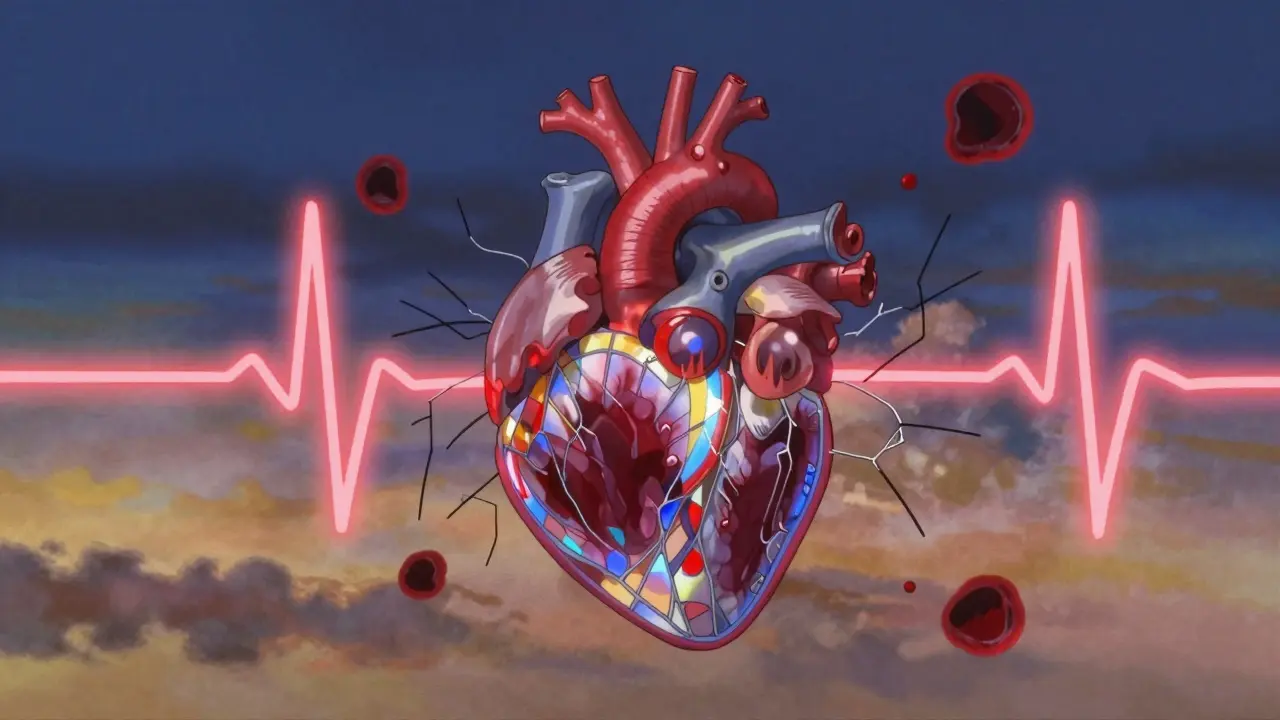
When your heart skips a beat, races too fast, or drags along like a slow engine, it’s not just a funny feeling-it could be an arrhythmia. These aren’t just random hiccups in your pulse. They’re signals your body is trying to tell you something’s off. And while some arrhythmias are harmless, others can lead to serious problems like stroke, heart failure, or sudden collapse. Let’s break down three of the most common types: atrial fibrillation, bradycardia, and tachycardia-what they really mean, how they feel, and what you can do about them.
What Is Atrial Fibrillation?
Atrial fibrillation, or AFib, is the most common serious heart rhythm problem. Think of your heart as a house with two sets of rooms: the upper chambers (atria) and the lower chambers (ventricles). In AFib, the atria start firing off chaotic electrical signals-like a bunch of people shouting at once-instead of sending one clear signal to kickstart the heartbeat. The result? Your heart beats fast, irregularly, and often weakly.
It doesn’t always feel dramatic. Some people notice a fluttering in their chest, like a fish flopping inside. Others feel dizzy, tired, or winded after walking up stairs. A lot of folks don’t feel anything at all. That’s the scary part. You can have AFib and not know it-until you have a stroke. That’s because the chaotic beating lets blood pool in the atria, forming clots. If one breaks loose, it can travel to your brain. AFib increases stroke risk by five times, according to the American Heart Association.
Doctors diagnose it with a simple ECG. If your pulse feels uneven when they check it, they’ll order one. For those with occasional episodes, a wearable monitor that records your heart for 24 hours or longer might be needed. It’s not just about the rhythm-it’s about what’s causing it. High blood pressure, sleep apnea, obesity, and even too much alcohol can trigger it. Even if you feel fine, treating AFib isn’t optional. It’s about preventing clots, not just fixing the beat.
What Is Bradycardia?
Bradycardia means your heart is beating too slowly-usually under 60 beats per minute. But here’s the twist: for some people, that’s normal. Athletes, for example, often have slow resting heart rates because their hearts are strong and efficient. Their hearts don’t need to beat often to pump enough blood.
But if you’re not an athlete, and your heart is creeping below 50 beats per minute while you’re sitting still, that’s a red flag. Symptoms include fainting, dizziness, fatigue, shortness of breath, and trouble concentrating. You might feel like you’re running on empty, even when you’re not moving.
What causes it? Sometimes it’s the natural aging process-the heart’s electrical system wears out. Other times, it’s from medications like beta-blockers, an underactive thyroid, or damage from a heart attack. In some cases, the signals from the heart’s natural pacemaker (the sinoatrial node) just stop working right. Or, the signals get blocked on their way to the lower chambers. This is called heart block.
If your bradycardia is causing symptoms, you’ll likely need a pacemaker. It’s a tiny device implanted under your skin that sends electrical pulses to keep your heart beating at a steady rate. Modern pacemakers adjust automatically-you don’t need to think about them. They’re not a cure, but they restore normal function. And if you’re on meds that slow your heart, your doctor might adjust the dose. Never stop taking heart meds on your own.
What Is Tachycardia?
Tachycardia is the opposite of bradycardia: your heart beats too fast-over 100 beats per minute at rest. There are different kinds, but the most common ones start in the upper chambers (supraventricular tachycardia) or lower chambers (ventricular tachycardia). The first type often comes on suddenly and goes away just as fast. The second is more dangerous.
Supraventricular tachycardia (SVT) can feel like your heart is racing out of nowhere. You might get lightheaded, short of breath, or have chest pain. It’s often triggered by stress, caffeine, dehydration, or lack of sleep. It’s usually not life-threatening, but it can be exhausting. Some people learn to stop it by doing the Valsalva maneuver-holding their breath and bearing down like they’re having a bowel movement. Others need medication or a procedure called ablation.
Ventricular tachycardia (VT) is different. It starts in the lower chambers and can lead to cardiac arrest. If you have a history of heart disease, a prior heart attack, or weakened heart muscle, VT is a serious concern. Symptoms include palpitations, fainting, or sudden collapse. It often needs immediate treatment with an implantable cardioverter-defibrillator (ICD), which can zap your heart back into rhythm if it goes haywire.
Doctors use ECGs and sometimes an electrophysiology study to figure out where the fast rhythm is coming from. Treatment depends on the type, how often it happens, and whether you have other heart problems. Lifestyle changes-cutting back on caffeine, alcohol, and stress-can help. But if it keeps coming back, ablation is often the best long-term fix.
How Are They Treated?
There’s no one-size-fits-all fix. Each arrhythmia needs its own approach.
For AFib, the goal is twofold: control the heart rate and prevent strokes. Medications like beta-blockers or calcium channel blockers help slow the heart. Drugs like amiodarone or flecainide try to restore normal rhythm. But the biggest concern is blood thinners-warfarin, dabigatran, rivaroxaban-to stop clots. If meds don’t work, a procedure called cardioversion can reset the rhythm with a controlled electric shock. For people who keep having AFib despite meds, ablation is an option. Newer techniques like pulsed field ablation use electrical pulses instead of heat or cold to scar the problematic tissue, reducing risks.
For bradycardia, if symptoms are present, a pacemaker is the standard solution. It’s a minor surgery, usually done under local anesthesia. Most people go home the same day. Pacemakers today last 5 to 15 years and can be monitored remotely.
For tachycardia, lifestyle tweaks often help. Avoiding triggers like energy drinks or excessive caffeine can make a big difference. Medications like beta-blockers or antiarrhythmics are common. If those fail, ablation is highly effective-especially for SVT. In fact, many people with SVT never have another episode after one ablation. For VT, especially with heart damage, an ICD is often implanted to prevent sudden death.
What Can You Do?
You can’t always prevent arrhythmias, but you can reduce your risk.
- Keep your blood pressure in check. High blood pressure is one of the biggest triggers for AFib.
- Watch your weight. Obesity increases the strain on your heart.
- Limit alcohol. Even moderate drinking can trigger AFib in some people.
- Quit smoking. Smoking damages heart tissue and raises the risk of all types of arrhythmias.
- Manage stress. Anxiety and chronic stress can trigger or worsen fast heart rhythms.
- Get enough sleep. Sleep apnea is strongly linked to AFib.
- Know your pulse. Check your wrist once in a while. If it feels irregular or too slow/fast, get it checked.
If you’ve ever felt your heart pound out of nowhere, or noticed your pulse skipping beats, don’t ignore it. You might think it’s just nerves or too much coffee. But arrhythmias don’t always wait for symptoms to get worse before they cause damage.
When to See a Doctor
You don’t need to panic over every skipped beat. But if you notice any of these, see your doctor:
- Your pulse feels irregular or erratic
- You get dizzy, faint, or nearly pass out
- You’re short of breath without exertion
- You feel chest pain or pressure
- You’re unusually tired, even after rest
- You have a family history of sudden cardiac death
Early detection saves lives. A simple ECG can catch AFib before it leads to a stroke. A pacemaker can keep your heart beating when it’s too slow. Ablation can free you from constant racing. You don’t have to live with an unreliable heartbeat.
Can arrhythmias go away on their own?
Sometimes, yes. Occasional skipped beats or brief episodes of SVT can resolve without treatment, especially if triggered by caffeine, stress, or dehydration. But persistent or recurring arrhythmias-especially AFib or ventricular tachycardia-rarely fix themselves. Left untreated, they often worsen over time and increase the risk of stroke, heart failure, or sudden cardiac arrest. Don’t wait for it to disappear.
Is atrial fibrillation dangerous if I don’t have symptoms?
Absolutely. Many people with AFib don’t feel anything, but their hearts are still beating irregularly, which lets blood pool and form clots. These clots can travel to the brain and cause a stroke-even if you feel fine. That’s why doctors recommend blood thinners for most people diagnosed with AFib, regardless of symptoms. Silent AFib is just as dangerous as symptomatic AFib.
Can I exercise if I have an arrhythmia?
Yes, in most cases-but it depends on the type and severity. Regular, moderate exercise helps heart health and can reduce AFib triggers like obesity and high blood pressure. But intense endurance sports can sometimes worsen arrhythmias, especially in people with untreated AFib or VT. Always talk to your doctor before starting or changing an exercise routine. If you have an ICD or pacemaker, there are usually few restrictions, but avoid direct blows to the chest.
Do all arrhythmias need medication or surgery?
No. Many people with occasional, harmless arrhythmias-like premature beats-don’t need any treatment at all. The key is whether the rhythm is causing symptoms or increasing risk. If you’re not having symptoms and your heart structure is normal, your doctor might just monitor you. But if your arrhythmia is linked to stroke risk (like AFib), heart failure, or fainting (like VT), treatment is necessary. Medication, ablation, or devices are used only when needed.
Can lifestyle changes really help with arrhythmias?
Yes, and they’re often the first step. Losing even 10% of your body weight can reduce AFib episodes by over half. Cutting alcohol, quitting smoking, managing sleep apnea, and reducing stress can all significantly improve heart rhythm stability. For some people, lifestyle changes alone are enough to control their arrhythmia without drugs or procedures. But they work best when combined with medical advice-not instead of it.
Hariom Sharma
February 21, 2026 AT 04:04Man, I never thought my coffee habit could be silently wrecking my heart. Just cut back to one cup a day after reading this, and my palpitations? Gone. Seriously, lifestyle stuff isn’t just fluff-it’s life-saving. Thanks for laying it out like this.
Nina Catherine
February 21, 2026 AT 15:43omg i had no idea afib could be silent?? i thought if you dont feel it its fine?? like wtf why dont more people talk about this?? my grandma had a stroke and they only found out she had afib after..
Taylor Mead
February 23, 2026 AT 13:13Had SVT last year-felt like my chest was gonna explode. Did the Valsalva trick and it worked like magic. Now I carry a water bottle everywhere. Hydration = my new cardio routine. Also, no more energy drinks. Lesson learned the hard way.
Amrit N
February 24, 2026 AT 23:59bradycardia in athletes is wild. my cousin runs marathons and his resting HR is 42. doc said its perfect. but if i had that i’d be panicking. heart is a weird machine.
Greg Scott
February 25, 2026 AT 17:38My dad got a pacemaker last year. Said it felt like getting a new battery. Now he hikes, dances, and complains about how slow his phone charger is. Best upgrade ever.
Arshdeep Singh
February 26, 2026 AT 01:15Everyone’s obsessed with tech fixes-pacemakers, ablation, ICDs-but nobody talks about how modern diets and stress are the real culprits. We’re not designed to be glued to screens, eating processed junk, and sleeping 5 hours. Your heart isn’t broken-it’s betrayed. Fix the environment, not just the rhythm.
Courtney Hain
February 27, 2026 AT 03:17Let me tell you something they don’t want you to know. The pharmaceutical industry and device manufacturers are making billions off arrhythmias. Did you know the FDA approves most of these drugs with tiny trials? And ablation? It’s often overused. I’ve seen 3 people get pacemakers who didn’t need them. The real cure? Cold showers, grounding, and avoiding EMFs. Your phone in your pocket? That’s a silent arrhythmia trigger. I’ve been researching this for 12 years. No one listens.
Davis teo
February 28, 2026 AT 13:41I had a near-death experience from VT last year. I was at the gym, felt my chest go weird, then blacked out. Next thing I know, EMTs are yelling, AED beeping, and my heart’s been zapped back to life. Got an ICD. Now I carry a card that says ‘DO NOT PANIC-THIS IS NORMAL.’ My life’s different now. I cry more. I hug harder. I live like every beat is a gift. Thanks for writing this. It felt like someone finally understood.
Maddi Barnes
March 2, 2026 AT 09:24Okay but can we talk about how ridiculous it is that we’re told to check our pulse like it’s a weather app? 🤭 I tried. My wrist felt like a drum solo. Then I downloaded this app that says ‘your heart is chill, sis’ and I cried. Not because it’s accurate-because I needed to hear that. Also, I’m 34, never smoked, but my AFib started after my divorce. Stress? Trauma? Your heart remembers. 🧠💔
Robert Shiu
March 4, 2026 AT 04:55Just want to say this post saved my mom. She ignored her palpitations for 2 years. Thought it was anxiety. Got diagnosed with persistent AFib last month. Started on blood thinners and a wearable monitor. Now she’s biking again. You don’t need to be a hero to save your life-just listen to your body. Thank you.
Laura B
March 4, 2026 AT 18:18Interesting how we treat arrhythmias as purely medical issues, but they’re often deeply tied to emotional and social stress. The body doesn’t separate heart from mind. If someone’s chronically anxious, overworked, or isolated, their rhythm reflects that. We need more holistic care-not just ECGs and pills. Maybe therapy should be part of cardiac rehab.
Jana Eiffel
March 4, 2026 AT 23:05Arrhythmias are not merely physiological anomalies-they are metaphysical interruptions in the rhythm of being. The heart, as the ancient Greeks understood, is not merely a pump, but the seat of the soul’s harmony. When it falters, it does not merely malfunction-it sings a dissonant aria of existential dislocation. To treat it with pharmacology alone is to silence the voice of the body’s deepest wisdom. Perhaps the arrhythmia is not the disease, but the message. And we, in our haste to restore order, have forgotten how to listen.
aine power
March 5, 2026 AT 12:31AFib isn’t a disease. It’s a lifestyle upgrade warning.
Jeremy Williams
March 6, 2026 AT 07:21While I appreciate the clinical thoroughness of this piece, I must note that the omission of traditional Eastern medicine approaches-particularly acupuncture and qigong in the management of arrhythmias-is a significant gap in the discourse. Studies from the Beijing University of Chinese Medicine, for instance, demonstrate measurable improvements in HRV and AFib burden through regulated breathwork and meridian stimulation. To dismiss these modalities as anecdotal is to ignore centuries of empirical observation. A truly comprehensive approach must integrate both technological precision and ancestral wisdom.